About 2,000 years ago, Jesus rode into Jerusalem to the cheers of the crowds honoring a king waving palms and laying their mantles on the ground to protect Jesus from the dirt in the city streets. But Jesus knew this would be his last entrance into Jerusalem. He was walking into the hands of his executioners. Armed with faith in the Father and the courage of the Holy Spirit, he entered the city where he would be scorned, insulted, brought to trial with false charges and eventually he would be killed.
On Thursday of that week Jesus borrowed an upper room where he was to eat the Passover meal with his friends, the 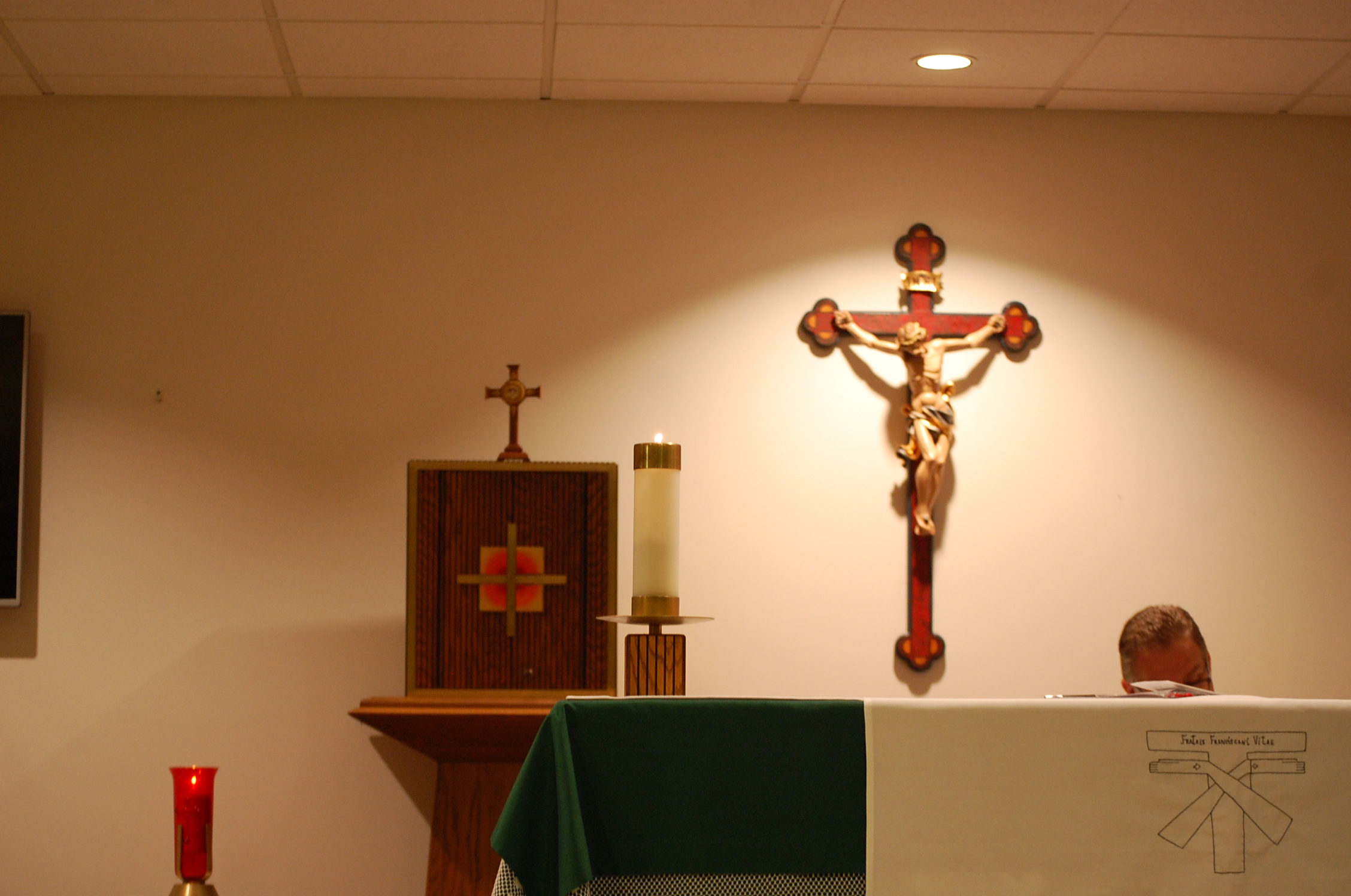 apostles. It was at the meal that he gave the Apostles the power to do as he had done, change bread and wine into his body and blood.
He gave this gift to his apostles, not only for their benefit, but for the benefit of all who would listen to the preaching of the Good News that the man executed on Friday walked out of his tomb on Sunday morning.
For the first 200 years or so after the passion, death and resurrection of Christ, many believers were executed in the cruelest forms, because they refused to deny the truth that they knew about Jesus the Christ. These martyrs were not morose men and women who wanted to die and who deliberately sought death. Like Jesus, they loved their friends, family, and home. But like Jesus, they could not deny the truth, even if it cost them their lives.
Today, millions of Christians around the world celebrate Palm Sunday, the day when Jesus made his triumphant entry into the city of execution. Unfortunately, many people regard it as a special day of the year when they received blessed palm branches. Churches are packed with people who would normally miss Sunday Mass. On this Sunday, they get something for free and fulfill a cultural and family tradition.
We have forgotten that Jesus did not enter Jerusalem to be honored with palms and “hosannas”. The palms were icing on the cake. Jesus entered Jerusalem to suffer and give his life to redeem mankind. He was willing to put up with false accusations, disrespect, scourging, a crown of thorns penetrating his head, and finally nails trespassing through his hands and feet.
Palm Sunday should remind us of Jesus’ obedience to the father, of his humility, his dignity, and his love for mankind. These were the forces that led him to the cross, not the political power of the high priests and the Romans.
Today, many of us respond with drama, vitriol and even violence when someone says or does something disrespectful. The common excuse is, “I’m not Jesus.”
True enough, none of us are Jesus. But Jesus says to us, “Take up your cross and follow me.” He makes this imperative several times in the Gospels. Yet, many of us recoil from the slightest offense, an illness, an unwanted pregnancy, poor health, and anything that could potentially inconvenience us or cause pain. Just as the martyrs did not seek death, nor did Jesus, the voice of God the Father must be heard and obeyed. We’re not commanded to be doormats, to seek to get sick, or to take an aggressive stand when we believe that we’re being humiliated.
We are called to be like Christ, to speak the truth when others try to hurt us or hurt another person; but we are not called to punish the world for its sins, cruelty, or foolishness. That’s not the man that we see entering Jerusalem on  Palm Sunday. Jesus simply spoke the truth and took the consequences for preaching the truth.
For those of us who attend mass on Palm Sunday, the question is, are we willing to speak the truth with dignity and respect? Are we willing to accept pain and suffering that is a natural part of life, without reneging, bullying others under the pretext of suffering, or casting doubt on God? Are we willing to keep silent, as Jesus did when he faced the Sanhedrin, realizing that there was nothing he could say that would change their mind and their arrogance? Are we willing to respond to others as Christ responded to the questions asked by Pontius Pilate, with dignity, honesty, respectfully and frankness, without argumentation or vitriol?
Palm Sunday is the first day of Holy Week. The week is holy because Christ’s words and actions were not driven by sin, desire to get revenge, an urge to punish the world, or an effort to hide his true mission. His humility, living the truth and his love for those who sinned as well as those who were holy never wavered. In the face of pain and death he says to the Father, “Not my will be done, but yours.”
On this great day of the liturgical year, we must think about how we respond to natural events that may be painful, how we respond to those who are rude or even cruel, how we respond to those who surround us when we’re sick or dying. Palm Sunday is the beginning of a week where we remember Christ’s life, death, and resurrection. Palms should be the needle of the compass to guides our lives. Holy Week is made holy by Christ’s passion and death. Those of us who act contrary to Christ’s actions, soil that which is holy.
 Let us never forget that Christ gives us the Holy Spirit who strengthens us with the necessary grace to face any difficulty. But we must be willing to do as Christ did. Seek opportunities for silence and avoid the distractions of the world, to hear the voice of the Holy Spirit guiding us to make every week of the year, holy.


 3.
3. Franciscans of Life