SOLEMNITY OF ST. FRANCIS


Life around the here is moving rather quickly this week.  Several things are converging at the same time.  The big thing is the upcoming Solemnity of Saint Francis on October 3rd and 4th.  The plan is to get together with other Franciscans around the area on Sunday, October 3.  The Secular Franciscans are having a profession that day.  Therefore, we’ll be there to welcome a new sister into the Franciscan family, along with one of the Friars Minor of the Holy Name Province.  Later that evening we will gather to celebrate the Transitus of our Holy Father St. Francis.

The Transitus is a beautiful celebration.  It takes place within the Liturgy of the Hours.  During the celebration, we recall Francis’ passing from this world into eternity.  If you have ever been to a Jewish Seder, the Transitus follows that format.  One person asks the story and then it is narrated through prayers, songs and scripture readings.   It is flanked on both sides with the parts of Vespers, the Psalter at the beginning and the Gospel canticle and prayers of intercession on the concluding side.  There is always a relic and lots of candles and incense too.  On the morning of the 4th we celebrate the solemn mass for the Solemnity of St. Francis.   Since the different Franciscan communities down here are small, several communities gather for this great feast.  It’s a wonderful tribute to our Holy Father, because it’s one of the few times a year when the communities gather as one family acknowledging their common Franciscan heritage.

But the Solemnity of St. Francis is more than just a memory.  If it were that alone, it would be like any other national holiday in which we remember a national hero.  It’s a time to thank God for the gift of our call to serve him following it the footsteps of St. Francis.  God will never be outdone in generosity.  He not only calls Francis to the perfection of the Gospel, but he shared that call with millions of men and women around the world from 1209 to this day.  It’s incredible to think that no matter how small one Franciscan community is, that we belong to a much larger family that finds itself around the world and that spans eight-centuries.

To better prepare for this celebration, the Brothers of Life have taken this week to spend more time in prayer, reading and studying.  We are out less.  But we have doubled our time before the Blessed Sacrament.   We’re very fortunate, because there is a parish about five-minutes from our house that has daily adoration from early in the morning to the evening.  It’s a wonderful experience to be there with Jesus.  I can’t explain it.  You just have to experience it for yourself.  But you just can’t leave once you realize how wonderful God is and how present he truly is in the Blessed Sacrament.  It’s incredible to look at the host and realize that this is the same man who walked through all those cities and towns in Palestine healing the sick, preaching, making people feel loved and wanted by God, feeding the hungry and forgiving sin.  I’m in awe at the thought that this was the same man with whom the Apostles spoke, ate and slept for three-years.

St. Francis of Assisi wrote a wonderful prayer that he recited before the Blessed Sacrament, before every crucifix and every time that he remembered the Blessed Sacrament but was unable to get to a Church.  “We adore you O Christ and we bless you, here and in all of your churches throughout the whole world, because by your holy cross you have redeemed the world.”  It’s beautiful to think that one can remember the most Blessed Sacrament, when one cannot get there and still be closes to the Lord.    Being there, with another brother kneeling next to you just adds to your love of neighbor and experience of God’s love.

Published in: on September 29, 2010 at 6:07 PM  Leave a Comment  

Are they really disposable?


 The issue of the poor and other marginalized people in society transcends political affiliation and social strata.

We live in a world where human beings are objectified – they’re treated as objects. If a certain person or group of persons does not produce or benefit society in any significant way, they are marginalized by society and looked at as somebody not really worthy of any human kindness or charity.

For instance, being made aware of a couple’s pregnancy, the couple may deliberate between themselves and see the child (or tissue mass as others may refer to this emerging life) as a hindrance to plans they’ve already made for themselves.

Maybe the child will be viewed as a financial burden which would rob them of certain other things they are working for in their lives. Maybe he/she will be viewed as a hindrance to their careers and professional aspirations. After all, it will be years before such a creature will be able to make itself “useful”. So the child is aborted and the problem is “solved.”

The aged and dying relative who has been relegated to a hospital bed and shows no signs of improvement ought to be “released” from their condition since the chance of their recovery is small. Besides, it will save a lot of money in medical costs, which can be put to more useful (or selfish) purposes.

The poor who live under overpasses and in back alleys who can make no real contribution to society are viewed oftentimes and undue burdens on society. They can’t contribute anything, so they deserve nothing in return. It all boils down to perceived worth of a human being and their dignity.

The Catholic Church has always held that life is sacred from conception to natural death. All human life! A human’s worth is not determined by what they offer, but by who they are – A living human being created by God and for God and in His Image!

But our society is too practical for all of this. It can simplify everything down to an ugly and devilish ideal of cost effectiveness. A human is only worth what it can give to me or to something that may benefit me down the road.

We don’t see Christ in the poor anymore – we see just another burden on society. This isn’t a political issue, it’s a natural effect of a depraved society steeped in commercialism and meism (“me” being the center of all that is and all that matters).

Written by:  Br. Pieter (Candidate)

Published in: on September 4, 2010 at 5:15 AM  Leave a Comment  

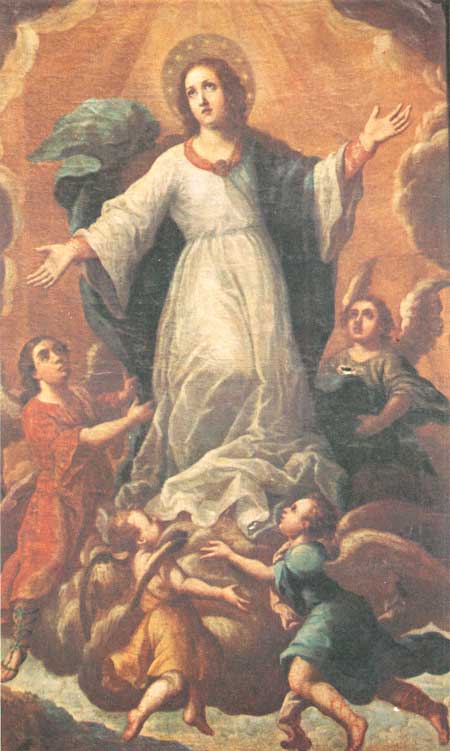
The Assumption of Mary and the Culture of Life


Many may wonder what the importance of the Assumption of Mary may be.   Some people actually deny it.  Others think that they know. The truth of the Assumption is best understood in light of the Culture of Life.  Christ came to bring life that we may have it to the fullest.  He states this unequivocally and abashedly in the Gospel.   He also promises that he who believes in him will not perish.  So why doubt the assumption of Mary?  Christ keeps his promise.  He brings life and brings it to the fullest.

The fullness of life is found when the mind, body and soul are oriented toward Christ and absorbed into his mystery.  This is the promise that God makes to us through his Son.  To prove that his words are not empty Christ always provides signs.  Remember what he says, “So that you may know that the Son of Man has the power to forgive sins, I say take up your bed and walk.”   The miracle affirms Christ’s power and majesty over life and death.  It affirms his power over sin and corruption.

In the Old Testament, the Law is given to Moses.  “You shall not kill.”  God cannot be clearer.  Life is sacred, in every stage and in all of its dimensions.  Therefore, it is his desire that man treasure human life as he does.  It is God’s wish to save us from death, not only spiritual death, but also physical death.  “Let him who has no sin throw the first stone. Now go and sin no more.”

The Assumption of Mary is the most pro-life sign from God himself.  It speaks more about Christ than it does about Mary.  Those who look at it as if to say that Mary is being elevated to the status of a goddess are missing the point.  Mary is elevated to  that which is hers by right of her creation.  She is a daughter of the Father, saved in heart, mind, body and soul through the life, death and resurrection of Christ.  God offers us Mary as proof that he keeps his promises.

God never forgets his promises.  He constantly gives us signs to remind us that he has not forgotten us.  The Assumption is such a sign.  The woman who cooperated perfectly with the will of the Father, Son and Holy Spirit is the first to be granted the fullness of eternal life, in body and soul.

Look at the Assumption of Mary as sign of God’s great love for human life.  It is comprehensible that the Father would restore the physical life of the Son on Easter Sunday; after all, that’s his son.  Here, he takes another human being and restores that person to life in body and soul.  He makes a statement about the dignity and sacredness of human life.  It is his will that human life not suffer the effects of evil. 

Mary, who is has done everything according to the will of the Father is the first creature, but not the last, to enter the gates of heaven with body and soul.  Why?  Because it is God’s will that the Culture of Death shall never prevail.  He delivers to us a sign that the Gospel of Life shall triumph.  Mary is the sign, given to us by Christ.  Through Mary’s assumption, Christ makes a statement about him and the sacredness of human life.  It is his wish to see life protected from evil.  It is his will that every human being shall be protected from sin.  It is his plan to restore physical and spiritual life to all men.  Therefore, he does what is in his power to do.  He protects human life from the corruption of sin.  Mary’s assumption is the sign that Christ will keep his promise.  The Assumption of Mary is a sign of the sacredness of life and Christ’s invitation to join him in the protection of human life.

Published in: on August 15, 2010 at 2:43 AM  Leave a Comment  

When can we stop supporting the dying?


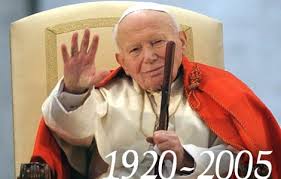
Many people misunderstand the difference between relieving suffering, accelerating death and extraordinary means of preserving life.  Let’s try to get this right.  If the person is Catholic, the answer is straightforward.  In Evangelium Vitae, Pope John Paul II, invokes the authority of Peter and declares that it is always wrong to euthanize or abort a human being.  Any Catholic who questions or challenges the authority of Peter to declare that something is always morally wrong places himself in a very dangerous position.  It begs the question, how can one be Catholic, but ignore what Peter has authoritatively condemned as evil?  This raises the discussion to a whole other level.  The question is no longer about the subject of euthanasia, but about fidelity to the Church.  Tonight, during compline, we sang “To Jesus Christ, Our Sovereign King.”  If we apply Lex Orandi, Lex Credendi, (the law of prayer is the law of faith), then the answer is simple.  There is a verse in that hymn (prayer), “To you and to your Church great King, we pledge our heart’s oblation.”  I cannot pledge oblation to Christ and not to the Church.  Christ and the Church are inseparable.  What Peter binds, remains bound by Christ himself until Peter unbinds it.
Catholic law does not bind Non-Catholics.  This is a teaching of the Catholic Church.  There are many reasons why they are not bound, but that’s a topic for another thread.  However, natural law binds every created thing and being. Natural law commands that we do everything in our power to minimize and even eliminate human suffering.  However, natural law also says that suffering is part of the definition of being alive.  All living beings suffer, even plants.  Suffering takes on different expressions for different life forms.  However, there is no life form that does not suffer.  Why not?  Because suffering is built into the fabric of life.  It is one of the many threads that hold life together. 

Those who say that we are accelerating a person’s death to protect them from suffering are also protecting themselves.  As human beings, we suffer when our loved ones suffer.  The measure is not very altruistic.  The issue is not whether we should or should not try to minimize suffering.  The question on the table is whether we have the right to accelerate death.  To take away life support that does no harm to the patient accelerates the patient’s death. 

Human beings have two kinds of rights:  civil rights and human rights.  Under civil rights, the state has the duty to provide every person with the protection necessary to live until natural death.  I have a right to expect the state to protect my right to live.  When the state legislates that there are circumstances in which my death can be accelerated, even though I am not a threat to society, the state has overstepped its authority.  The State exists to protect the citizen.  When a democratic society, such as the USA, allows the State to pass legislation authorizing euthanasia, abortion and capital punishment, we are authorizing death by our vote.  That is contrary to what the State should be doing and the citizens are voting contrary to the concept of democracy.  No one ever said that democracy meant to do whatever one wishes to do.  In fact, that kind of thinking is nihilistic.  There have to be restraints in every civilized society.

Human beings also have human rights or natural rights.  These are written into our very nature.  Because we are human, we have the right to live as human beings, not as rocks.  Human beings often have to suffer, because it’s unavoidable.  To live with unavoidable suffering is part of being human.  To accelerate death to avoid suffering is an attempt to do away with a part of our humanity.  This raises a major ethical question.  Where do we stop?  What sufferings do we tolerate and what sufferings justify terminating a life or accelerating a death?  Parents suffer because of the poor choices that their children make.  The unemployed person suffers.  The wife whose husband cheats on her suffers.  The child who is struck by a bus and has to live in a wheelchair suffers.  People with chronic pain suffer.  We would have to make a list of what suffering is permissible and what suffering is not.  When a person crosses over into suffering that we arbitrarily decide is not permissible, do we allow them to take their lives or accelerate his death?

The issue is not whether a person should die a natural death.  The issue is this.  It is natural for a person to have: food, water, oxygen, antibiotics, pain killers, love, companionship, and whatever else makes him comfortable while waiting for death.    To take these away, when they are not contraindicated, knowingly and deliberately accelerates death.

Notice that I use the word “contraindicated.”  Contraindicated is any form of care that will hurt the patient or that will cause the patient unnecessary stress.  There are patients who cannot tolerate water, because it is painful.  In that case, water is contraindicated.  We should not cause pain unless there is a reasonable belief that it will heal.  It’s like giving you a vaccine.  Injections hurt and the flu shot often makes people very sick during the first 48 hours.  To give water to such a patient is cruel.  It is natural to withdraw the water.  Why?  Because it is natural to minimize the discomfort.  Your intention is not to accelerate death.

There are times, when the intention may not be to accelerate death.  There are times when the caregivers believe that certain supports are unnecessary, because the person is going to die, regardless.  In those cases, one has to examine reality.  We are all going to die.  However, we don’t stop eating and drinking today, because death is going to catch-up with us.  If more than one medical expert, independently, determines that the person will die within hours, regardless of what we do, there is no moral obligation to intervene.  We can allow death to arrive naturally.  In that case, we are not accelerating death.  It’s going to happen in a few hours.

If there is no immediate danger of death or we are unable to say how long before death arrives, then we have another ethical quandary.  We cannot accelerate it.  Therefore, we must continue to provide life support, even though the person has a terminal condition.  Terminal is not the same as imminent.  I live with three terminal illnesses.  Unless the brothers’ driving kills me first, one of these conditions or the complications will kill me.  There are days, such as this week, when the pain has been so severe that I have missed morning mass and morning prayers.  I have to take medications that knock me out and don’t let me get up on time.  I still get up and go to my pregnancy centers and I still go to the parishes and preach on the Gospel of Life.  The pain is excruciating.  Nevertheless, I have a moral obligation to live for the sake of the vulnerable.  I’m a social being.  God created us as such.  Therefore, I have a moral obligation to stay alive as long as I can, to fulfill my obligations to others.  I have an obligation to be here for my brothers, primarily.  I made vows to this community.  I am a widowed parent and I have a secondary obligation to remain alive for my children.  I have siblings and I have a moral obligation to remain in their lives.  Life is not about me.  Those who advocate that life be about the individual are advocating something that is contrary to natural law.  Human beings are not islands. 

Whether one is a Catholic or an atheist, the rules are the same; because Catholic moral teaching is based on four legs and one of them is natural law.  We must live and die as human beings live and die.  We cannot redefine humanity or natural law, because we have no jurisdiction over natural law.  We must work with natural law.  When natural law allows us to find means to alleviate suffering without terminating life, then we have a duty to use what is available to us. Natural law does not say that human beings terminate their lives or accelerate their deaths.  Human beings made that up.   It is in natural law that any living being fight for his life until death wins out.  If we accept euthanasia, abortion, assisted suicide, then why not accept the extinction of the human species or any other species?  We fight to save endangered animals of the lower species, but we easily give up on an endangered human being in the name of relief from suffering.

Published in: on August 14, 2010 at 5:23 AM  Leave a Comment  

My sister is dying . . .


I  just came back from spending two days with my sister who is in hospice.  I was in awe and greatly saddened by her situation.  One is always saddened by the imminent death of a loved one, but more when others take it upon themselves to accelerate a person’s passing.  When I arrived, I was expecting to see my sister in a weakened state because of her illness.  What I did not expect was to see that her feeding tube, hydration and antibiotics had been removed.

I quickly asked why this had been done and was told that the doctors had informed her husband that there was nothing else that they could do to preserve her life.  Unfortunately, her husband, who seems not to understand the concept of “death with dignity” authorized the removal of life support systems that are ordinary:  water, food, and medication.  After serious attempts to reason with him about the immorality of this choice, I found that I was talking to myself.  When I inquired about the legal way to get around this, I found out that the state considers such measures extraordinary and that the next of kin or the guardian appointed by the patient has the legal authority to authorize the removal of feeding tubes, water and medication.  There is no legal recourse.

We live in a society that has clouded the judgment concerning the dignity of life and the dignity of the terminally ill and redefined “death with dignity.”  One no longer dies with the dignity of sons and daughters of God.  One dies according to an arbitrary definition of dignity that is based on our fear of suffering and our desire not to deal with pain, forgetting all along that suffering and pain are as much a part of life as are joy and pleasure.

When I founded the Brothers of Life I never thought that I would be having this discussion and debate within my family; but here I am.  The devastating blow of the Culture of Death has permeated every family, from the pagan to the Christian family.  Men are no longer consumed with the search for the Will of God, but the search for escape.  More than ever do we need men who will protect and stand as prophetic voices that cry out in the wilderness preparing the way of the Lord of Life.

As I spoke with my brother-in-law and other family members, I was reminded of the Gospels.  It is interesting to note that there is no single story in the Gospel where Jesus allows someone to die, except himself.  Even this was not an acceleration of the events.  He died at the time and in the manner determined by his Father from all eternity.  Through the Scriptures we see Jesus raise the dying, healing the sick and calling the dead out of their tombs.  This is the image of the Brother of Life.  This is the image that was presented to us in Scripture, not only for our brothers, but also for everyonSee full size imagee who believes that we may have life and have it in abundance.  It is not our call to accelerate the death of a person, even in the hope of relieving their pain and suffering.  Christ calls us to do as he did, to relieve the pain and suffering of the sick and the dying by treating them with dignity and doing all that is within our power to protect their lives.  Christ is the eternal Son of the Father.  He had the power to heal and to raise the death.  We may not have that power, but we have the power of Truth and of prayer.  Let us join together to proclaim the Gospel of Life within our families and to the world.  Let no man perish because he believes that he is a burden.  The only human burden is sin, but Christ relieves us of that burden through contrition and absolution.

Published in: on August 10, 2010 at 3:55 AM  Comments (1)  

Called to intimacy with Mary and the Angels


On August 2 the Franciscan family celebrates the Feast of Our Lady of the Angels.  It is no coincidence that the second chapel and the cradle of the Franciscan Family should be named after Our Lady and under such an auspicious title.  This was really an act of Divine Providence.

The Lord saw fit to gather the sons of St. Francis around his mother, just as the angels gather around her.  Mary’s connection with angels goes back to her life at Nazareth.  Let us remember that it was through the message that Gabriel delivered that she becomes the Mother of God in the Second Person of the Most Holy Trinity.  From scripture, we see the intimacy between Mary and God’s angels, in this case Gabriel the Archangel.  From the earliest days of the Franciscan Family, there is a clear call to the brothers to live in the same intimacy as Mary, the angels and man lived in Sacred Scripture.  Let’s not get too far ahead of the story.  It’s always better to begin a book at the first chapter.

In Genesis 3:15 God tells Satan, “And I will put enmity between you and the woman, and between your offspring and hers; he will crush your head, and you will strike his heel.”  From the moment of creation, we see Mary’s role in the salvation of her people.  She will bear a son who will crush the serpent’s head.  There are two important details here.  First, this is a clear prophecy about the birth and mission of Christ and the Church.  Second, it is very clear that Mary will bring Life into the world.  Notice the upper case “L”.  Life is not only a biological phenomenon, but he is also a person, Jesus Christ.  If we are Brothers of Life, then we are brothers of Christ.  Like Mary, the Brothers of Life cooperate with grace so that Jesus can enter into the world and all will come to know him and love him.  Without Mary’s example and her prayers, this becomes a daunting task.  We would not know how to live as brothers to Christ or how to bring his life to others.  We look to Mary to teach us how to be brothers to her son.

Many Protestants would say that this is unnecessary, “We can go directly to Christ.”  The glitch here is that God has given Mary to the world to point to the Son.  “His mother said to the servants, ‘Do whatever he tells you’,” (Jn 24:5).  Like Mary, the Brother calls the world to do whatever He tells us.  While it may be true that one can bypass Mary and deal directly with Christ, it plays out very differently in Scripture, the early Church and the Christian tradition.  Mary approaches Life on behalf of her friends who were hosting the wedding.  Then she directs them back to Life.

In Luke’s Gospel, the angel approaches Mary and then she leaves to serve her cousin Elizabeth.   We see Mary intimately involved in the lives of the faithful and the not so faithful, from Genesis to the Book of Revelation.

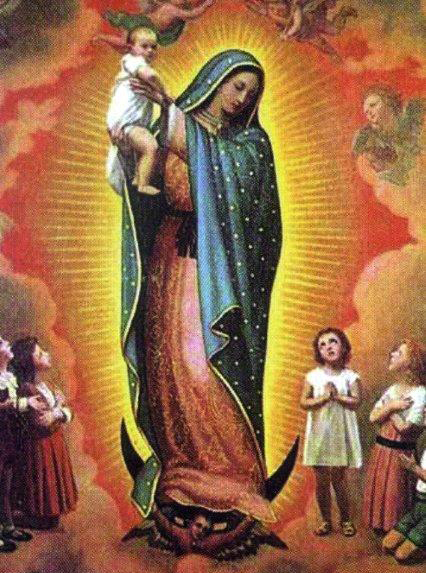
“A great sign appeared in the sky, a woman clothed with the sun, with the moon under her feet, and on her head a crown of twelve stars,” (Rv 12:1).

We all know that there was a woman who came from one of the Abrahamic tribes, which happened to be twelve.  In addition, we know that there was a woman with the apostles who were twelve, reduced by one after Judas’ betrayal and back to twelve after the selection of Matthias.  That woman was Mary of Nazareth, the Mother of the Lord.  There is no doubt as to the intimate relationship between Mary, heaven and man.  As Brothers of Life, we aspire to this same intimacy with heaven and man.

Let’s look at one more passage in Rv. 12:6-7a.  “The woman herself fled into the desert where she had a place prepared by God, that there she might be taken care of for twelve hundred and sixty days.  Then a war broke out in heaven; Michael and his angels battled against the dragon.”  Again, the writer of Revelation establishes a link between Mary and the angels, this time with Michael.  This is not extrapolation.  The two verses were written together.  The author intended to place Mary, Michael and the other angels into the same frame.  In addition, stop and ask, “Who took care of the woman for twelve hundred and sixty days?”  Just before this passage, Revelation tells us that the woman gave birth to a son who was threatened by the dragon and rescued by the angels, (Rv 12:5).  We have two images at work here.  There is the threat to the life of the unborn by the dragon that stood before the woman about to give birth.  We have a clear reference to infanticide.  The dragon wanted the life of the child born to the woman.  However, the woman and the angels do not yield to the dragon.  Instead, the child is “caught up to God and his throne,” (Rev. 12:5).  Mary not only brings Life into the world, with the angels she also protects Life.  The man who is to be a brother must be like Mary.  He must protect Life and like Mary, he depends on Divine Assistance to do so.

Finally, we conclude with the passage from Gn 27:29  “May peoples serve you, and nations bow down to you; be master of your brothers, and may your mother’s sons bow down to you. Cursed be those who curse you, and blessed be those who bless you.”  To whom do the Franciscan Brothers of Life bow? Is it not to Jesus Christ?  Who is his mother?  Is it not Mary of Nazareth?

Published in: on July 31, 2010 at 7:16 PM  Leave a Comment  

Imagine Yourself . . .


Have you thought of serving God as a brother, committed to living the Gospel in total obedience to Christ, without any property of your own and in chastity?  God may be calling you to walk in the sandals of St. Francis of Assisi as a Franciscan Brother of Life.  Think about it.  Pray over it.  The Lord is looking for men to stand in his place serving the unborn and their parents.  Can you see yourself waking up early to spend time in prayer, then moving along the rest of your day to a pregnancy center.  There you’ll meet men like you.  But unlike you, they are in a state of despair.  They have discovered that they are going to be fathers and they’re afraid.  Their fear is driving them to want to destroy their unborn child in the womb.  No one is there to help them sort it all out.  Won’t you be Christ’s mouth and hands?  Won’t you speak for the unborn child?  He too is our brother.  Won’t you be a brother to these fathers who are about to murder their unborn children?  Maybe you see yourself praying in front of an abortuary or praying by the bedside of someone who is sick and dying.

As a Brother of Life you will walk in the footsteps of Christ, as St. Francis did.  But you will do so among the most vulnerable:  the unborn, the sick and the elderly.  We all want them to be protected from the Culture of Death, but few men are stepping up to the plate.  If we truly believe in the Gospel of Life, then we should be willing to do as St. Francis did, to leave everything behind to follow Christ and to serve those whose lives are threatened by abortion, euthanasia, capital punishment, war, infanticide and other horrors against human dignity and human life.

The Brothers of Life will not happen unless men like you step up to the plate and like Samuel say, “Here I am Lord.  I’ve come to do your will.”  You will have to sacrifice much.  This is true.  This is not an easy path to follow.  You will be asked to give up the most prized gift that a man has received from God, the right to marriage and a family.  But like Maximilian Kolbe, the patron of the Brothers, you will be laying down your life so that a father and his child will have life.  Remember, there is no greater honor and no greater love than to lay down your life for your brother.

The Brothers of Life are just emerging and we’re looking for men just like you who are interested in building something beautiful for God from the bottom up.  St. Francis began as a builder.

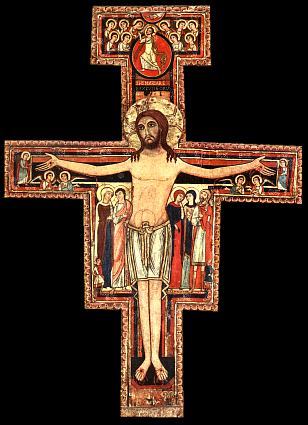
While praying in front of an icon of the crucified Christ in the Chapel of San Damiano in Assisi, he heard the voice of Christ say to him, “Francis, go repair my house.  Can’t you see that it has fallen into ruins?”  Christ is calling again.  His house is falling into ruins.  This time its greatest threat is the threat against human life.  The life of the unborn, the vulnerable, the sinner and the elderly are threatened every day as a matter of convenience for those who don’t see that God has a plan for all of us.  As Franciscans, we proclaim to the world that God can be trusted, that he has a plan and that plan is to give us life in abundance, here and in eternity.

If you’re interested in becoming a builder, won’t you come to the Franciscan Brothers of Life and help build this young community for Love of God, your brothers and sisters and of his entire Church?  Go to www.franciscansoflife.org and check it out.

Brother Jay, FFV

Published in: on July 19, 2010 at 7:36 AM  Leave a Comment  

Fathers, Sons and Brothers to All


God is to be found in many places and in many ways.  However, some of us are fortunate enough to be found by God.  This was the story of our Holy Father, Francis of Assisi.  Francis looked for God in the world around him, but could not see him.  It was when he allowed God to find him that he saw him everywhere.

Today, God calls men to open ourselves and allow Christ to find us.  He wants to find us, but we have to want to be found.  God will not violate our wishes.  He is a gentle God, a loving God, a respectful God.  When we place ourselves in his path, we find ourselves in Christ Jesus.  Christ becomes our Lord and our all, as our Holy Father Francis said.  Again, there are many ways to find God and many places where God can find us, for nothing is impossible for God.   God, who from all eternity has loved us, today calls men from every race and every land to meet him in the most vulnerable members of society, the unborn, the sick and elderly whose lives are reaching their sunset in this world to enter the eternal sunrise of the next.

Our call is not one to be social workers or political activists.  That is the proper role of the secular world.  God calls us to be totally his, totally immersed in him through a life of prayer, penance, and brotherhood with all people.  This is the image of Christ and the Church that we find in Francis of Assisi.  Brother Francis was not a peace activist, an environmentalist, a social worker for the poor and the sick.  In his poverty, he was richer than that.  Brother was just that, everyone’s brother.  He knew and understood that Christ our brother was to be found in relationship with all men as sons and daughters of God.  Therefore, peace is not an option, but a vocation.  When we discover our brotherhood with all people, we discover that we cannot live in any other relationship with them than in a relationship of peace and grace.

As Mother Teresa once said, “Abortion is the greatest threat to peace.”   God calls brothers, through the child in the womb, to live in peace with the world.  We must be like John the Baptist, who hears the cry of the Lord even in the womb of his mother, Elizabeth.  And like John, we must respond to Christ in the womb, not with anger and hostility, but with great love and joy.  As brothers we embrace Mary.  We desire to become like her.  Mary took Christ to John the Baptist, while both children were still in the womb.  The Brother of Life takes Christ to the unborn, by serving his mother and father, as Mary served Elizabeth and Zachariah.

God is placing a challenge on the table for today’s man.  He is challenging us to remember him and not forget Love.  When we, who are men, forget the most precious gift that God has given us, the capacity to be husbands and fathers, brothers and sons, something that no woman can ever become, we forfeit part of who we are.  We cease to be true.  No man can follow Christ and forget Truth.  Francis understood this.  One day, while struggling with temptation, he ran out into the snow and built three figures of snow.  He then turned to himself and said, “This is my family, my spouse, my son and my daughter.”  In his celibate state, our Holy Father Francis acknowledged that he was given a gift to give back to the Lord, his manhood.  Only a real man can live and love as a man.  Only a real man can hear the voice of Christ in the preborn child who today’s Pilate has sentenced to die.  The unborn child whose life is threatened needs a father.  The elderly person who believes that he has become a burden to his family needs a son.  The sick individual who has lost all hope needs a brother.  Only Christ can be father, son and brother.  That is why we follow Francis.  Francis takes on the image of Christ in his life.  He responds to Christ’s call to be perfect as he is perfect.  Francis begins the journey toward perfection.  Along that journey, he strives to be a holy father to all men, a gracious brother, and a faithful son.

Published in: on July 12, 2010 at 3:23 AM  Comments (1)  

Calling Catholic Men


Hey Guys

Published in: on July 10, 2010 at 4:50 PM  Leave a Comment  

Artificial Contraception Can Do Irreparable Damage to Human History


I could probably sit here and rewrite every encyclical and Church document on contraception, but you have probably heard about it, read it or are not interested in hearing it again.  So I won’t do that.  Instead, I’ll share some thoughts on contraception, parenting, and family from a very purely Franciscan perspective.

 I don’t know how many people know this, but Francis of Assisi was one of seven children.  We only know the name of one of his younger brothers, Angelo.  Since we don’t know the rest, nothing is ever mentioned of them except that they existed.  There is also a passing reference in one of the early letters of one of the friars to a certain Brother Giovanni who was Francis’ nephew.  It’s very interesting, because that was Francis’ birth name.  He was baptized Giovanni Bernadone.  He was born while his father was away on a trip to France.  When he returned, he found his first-born son and gave him the nickname, Francesco, Little Frenchman.  As far as we know, he was the first person in history to be named Francesco. 

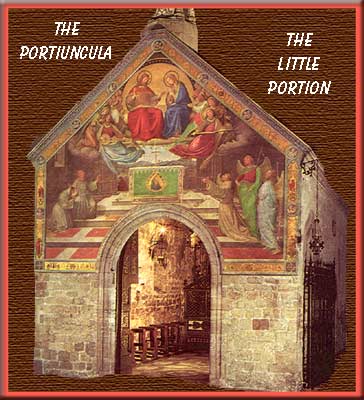
What does this have to do with contraception?  Well, let’s pretend that Francis had never been born in 1182.  There would not be over one million Franciscan men and women in the world.  There would not be over 100 Franciscan saints and blessed.  We probably would have had to wait for the Christmas crib to be invented by someone else or it may not have been invented.   The world would not have had all of the ministries that the Franciscan order has provided for the Church during the last 800 years.  Catholicism would not have come to the Americas the way that it did.  Many people do not know that Christopher Columbus was a Secular Franciscan or that the first missionaries to the New World were Franciscan Friars.  The City of Los Angeles was named after Our Lady of the Angels or the Portiuncula, the first house of the Franciscan order.  Sacramento, California and Corpus Christi, Texas were named after the Blessed Sacrament, which devotion was spread through Europe by St. Francis of Assisi and his sons.  Let’s not forget San Francisco, California.

Teresa of Avila would not have read the writings of Francisco de Osuna, the Franciscan mystic who inspired her during her early years as a Carmelite nun or she would not have had the strong spiritual guidance and influence of Brother Peter of Alcantara, a Franciscan saint who was her spiritual friend and often her confessor.  He was also her greatest teacher on detachment.

Mother Teresa would have had to look in another direction for her inspiration when writing her constitutions.  The two saints upon whom she drew were St. Benedict for his guidance on the contemplative life and St. Francis of Assisi for his guidance on spiritual childhood and total obedience on the Will of God.

This brings us to the most important question of this blog entry.  Are we aware of the value of one life?  Are we aware of how one life can change history?  How different would history be without Francis and his sons and daughters?  What great holiness, intellectual and pastoral achievements have been made within the Church and in the world, because someone allowed the grace of God to work in their lives rather than interfere with the natural process of love and procreation.

Francis of Assisi was just one person, a single man born 800 years ago in a small mountain town in Italy.  Nevertheless, his influence is very much alive.  Had his parents chosen to follow the path of contraception, none of this would have happened.  Francis would not have been born.  Under his guidance and inspiration, millions of men and women from every continent on earth, for eight centuries, have been inspired to serve God and neighbor in ways that have changed the world.  One single life, one drop in the great ocean of humanity, has served as the means through which God has given so many gifts to the world and so many graces to the souls of men and women. 

It is easy to think that we can use artificial contraception once and it will not make much of a difference.  However, what if that one time had been the time when Francis of Assisi was to be conceived?  What if that one time had been the moment when you and I were to be conceived?  If you have children, imagine the world without them.  Had your parents chosen to use contraception and you had never been born, those children whom you so love would not be here.  One single moment of interference with God’s plan for humanity can be the most destructive act that any human being can commit.  It can change history.

Published in: on July 4, 2010 at 2:31 AM  Leave a Comment