The Christmas season is upon us, and I find myself with a few days of “vacation” allowing me to reflect on a number of issues I ordinarily entrust entirely to the Divine Providence. Br. Jay always teaches us, “do not get upset at things you cannot control, focus on preserving interior peace at all times”. Yet these days I have meditated upon some such matters – matters “great, too difficult for me”, if only to remind myself that I am not – and should not – be in control.
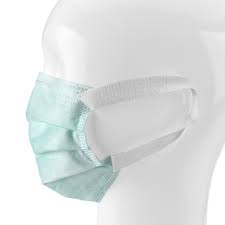
During this process, which also involved some online reading, I stumbled upon an article trying to make a case against wearing masks in times of Covid through the arguments of faith and philosophy. I have heard and overheard many arguments for or against masks over the past year, but never had I seen such a bold attempt, and I was moved to address it here. Life calls out to life, and I feel urged to speak in defense of it, inasmuch as I am keenly aware that not wearing masks (among many other precautions) directly increases the spread of this deadly virus.
The article, when read according to the light of the Catholic faith and not someone’s political agenda, actually helps those who strive to be good Christians to understand a few important things, in spite of its flawed conclusions. There are a few key points I wish to quote and go over, not for argumentation but merely for the sake of reflection.
(0) “There is not a consensus among doctors and scientists, at the end of 2020, about the infectious nature of [Covid-19] or the efficacy of wearing masks.”
 In other words, there is debate about how helpful it is, due to the question of how exactly does the virus work. However, there is no debate as to the fact that masks help. It is a basic tenet of the Faith that people should clearly do what they can to help others, even when it is burdensome to themselves. The crown of thorns was much more burdensome to wear.
(1) “It is wholly un-Christian to consider any other human person first as a threat to oneself. Man is called to love his neighbor and to be in communion with him.”
When we encounter our brothers and sisters, we should not consider them a danger to us. Our attitude should be one of love and communion.
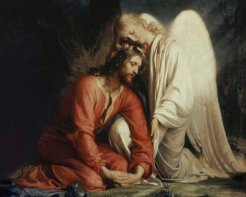
Furthermore, we are not called to be apprehensive when we see another human being – unless there is an overt threat to our safety. We are not considering the person to be a threat – the threat is there, invisible, and it is the threat that we single out as a danger, not the person. This is not unlike an early Christian who may have felt fear when seeing an approaching Roman soldier – not so much in his person but in the potential threat of persecution and death. And do not reply that “perfect charity casteth out fear“, for the Good Lord himself “began to fear and to be heavy” at the prospect of His Passion, so much so that he sweat blood, yet He remained firm in the Father’s will, teaching us that it is natural to fear danger, and there is supernatural merit in facing it with God’s help.
(2) “Charity is any action we do for God or do for others for the sake of God. If we do not act for the sake of God, the action, while good, is not charity. Is charity actually the reason why many wear masks?”
When encountering our brothers and sisters, a loving attitude of communion is reflected when we think that perhaps I may be a carrier unbeknownst to all – even me – and wearing a face mask lowers the risk that my coughing or sneezing or even just talking would expose my neighbor to a potentially deadly disease. My wearing a mask says to my neighbor ” I love you, therefore I am doing something to care for you“. It is both a physical and a spiritual act of charity – physical inasmuch as it aims to protect my neighbor’s health, spiritual inasmuch as I am acting out of love of God and neighbor. I am certainly grateful when a surgeon wears gloves, so let us be grateful when we see each other wearing a face mask.
(3) “Masks indirectly promote thinking of others in terms of oneself. ‘You are not wearing a mask; you are a danger to me. You are making me feel uncomfortable by failing to wear a mask.’”

Yet a good Christian does indeed focus on himself rather than others, inasmuch as he is called to a personal obedience of God’s will. I must not focus on whether the other is not wearing a mask, but on whether I am. For it is my duty to help, nay, even to lay down my very life for my neighbor. Let us not forget that just yesterday we commemorated St. Stephen, whose last words were to the Father regarding his unjust oppressors, who were killing him: “Lord, lay not this sin to their charge!” In spite of the “discomfort” that they made him feel, the Protomartyr acted towards them in faith and love.
Does our neighbor’s failure to act on wearing the mask make us feel uncomfortable? I would say that all manners of sin (should) make us feel uncomfortable, whether the sin is an objective reality or a mere subjective understanding of our mind. We see this very clearly in the many occasions when men are scandalized by the actions of the Lord or the Apostles, whom they thought were contravening the Law, and never does the Lord or the Apostles rebuke them, but always do they instruct them to an objective and orthodox understanding of things. Sin is only that which offends the Divine Will, not the will of men. When I see my neighbor failing to wear a mask, and I am stirred to discomfort in what appears to be sin (considering that this act of omission exposes others to potential dangers and also scandalously manifests one’s potential lack of care and concern for neighbor) I must first and foremost be reminded of the Lord who once said: “Do not judge! Thou hypocrite, first cast out the beam out of thine own eye; and then shalt thou see clearly”… My attitude must also be devoid of all pride: just because I happen to be wearing a mask while others fail to do so (or advocate against it), I must not imitate the proud man who says “O God, I give thee thanks that I am not as the rest of men”, but rather I must obey the Divine Precept that commands us, “when you shall have done all these things that are commanded you, say: We are unprofitable servants; we have done that which we ought to do.”
(4) “Physical health is neither the primary nor the sole determinant of a man’s actions. There are more important realities than bodily health, especially spiritual health.”
Yet it is written, “The light of thy body is thy eye”, and also, “know you not, that your members are the temple of the Holy Ghost, who is in you, whom you have from God; and you are not your own?”. The preservation of physical health is part of the Lord’s Holy Will, as he said, “Love your neighbor as you love yourself”. It is not above the spiritual health, it is wholly part of spiritual health.
Hence, Christ on the Sabbath allowed His Apostles to contravene the law and pick grains, for they hungered, and the Divine Teacher manifested that in the eyes of God, such an act was fully lawful, as it was already manifested in the days of King David.
The Incarnate Word once rebuked Satan’s temptation by declaring that “Not in bread alone doth man live, but in every word that proceedeth from the mouth of God.” Yet after He Himself having spoken to the people, He said to the Apostles, “I have compassion on the multitudes, because they continue with me now three days, and have not what to eat, and I will not send them away fasting, lest they faint in the way.” And lo, He went and performed the astounding sign that is the multiplication of the loaves and the fishes.
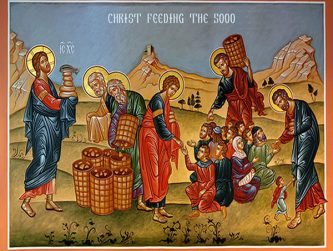
Let us not forget other equally wholesome examples such as the Passover Meal, the provision of Manna in the desert, the splitting of the rock to provide water, and many other ways in which God’s Divine Providence has time and again tended to the care of our physical health.
Therefore, a man’s duty to preserve physical health becomes wholly aligned with the Lord’s will when done out of love of God and neighbor and out of reverence for deeper, invisible spiritual realities inherent to man being both flesh and spirit by the Divine Will.
If you are not fully convinced of this argument, consider that consuming wine at a wedding is not a health nor a nutritional necessity, yet the good Lord deigns to provide wine at Cana in a miraculous way, thus meeting a much simpler need – yet we know that there was a profound spiritual significance to His action.
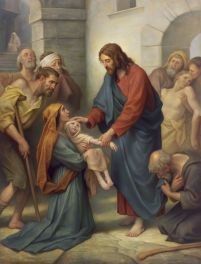
Let us also remember that we do not need to see, hear, or walk in order to go to Heaven – yet, time and again the Lord has mercifully healed such merely physical needs, and the Blessed Virgin herself deigned – and still deigns – to intercede for the healing of many at the miraculous spring of Lourdes.
Holy Church herself was gifted by Christ with a Sacrament specifically intended to heal the physical health: “Is any one of you sick? He should call the elders of the church to pray over him and anoint him with oil in the name of the Lord. And the prayer offered in faith will make the sick person well”. Clearly, there is a deep relationship between physical and spiritual health. “For which is easier to say, ‘Your sins are forgiven you,’ or ‘Arise and walk’?”
(5) “When one looks at the body, to the exclusion of the face, one encounters an object, a thing, rather than a person. Objects are meant to be used; that is, to be used as a means to an end. Persons are primarily subjects to be known and loved.”
We must always encounter and commune with our brothers and sisters in the way God intended us to: as our brothers, human beings with a body and

a soul. Different cultures and standards lead to wearing more – or less – articles of clothing, and it has been one of the sharpest thorns of modern secular culture to promote objectification by means of the removal of clothing, whereby most contradictorily to the original tenet, it is the lack of coverage and not its presence, which leads to objectification. When we encounter a fellow human being, whether he or she wears a mask or not, whether he or she wears something that makes us feel uncomfortable or not, we always approach them with the same love that Christ modeled for us. Why, I have no doubt that on his first encounters with the Touareg – their face fully covered by the tagelmust and their voice absent or altogether incomprehensible – Blessed Charles de Foucauld still managed to commune with them in the love of Christ, so much so that he became known to them as “the Christian Marabout” (“holy man”).
(6) “Man communicates most profoundly with his face—with words, looks, facial expressions. [The mask] muffles the human voice; it hides the human smile; it obscures the deeply human facial expressions which are integral to forming human friendships.”
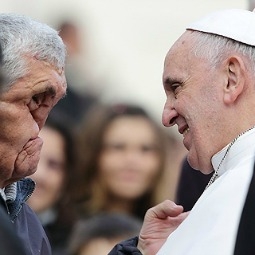
The Holy Father with Mr. Oreste Tornani
Yet the Seraphic Doctor recounts in his Vita Maior [p.1 c.1] that one day St. Francis met a leper and “felt sick at the sight of him”. Given this sharp description and the knowledge most of us have of the terrible progression of Hansen’s disease, it is fairly possible that the leper no longer had what we commonly describe as a face, or at least was unable to produce facial expressions beyond terrible distress. Yet Bonaventure recalls that Saint Francis “remembered his resolve to be perfect and the need to overcome himself first”, and proceeded to show brotherly love to the sick man.
This story, as do many others – I am reminded of the entire life of St. Damien of Molokai – show that the burden is on us to perceive, understand, and treat our neighbor with love, rather than blaming them – or their lack of facial expressions or voice – for “obstructing the development of genuine community“, as that article does (perhaps inadvertently).

The Holy Father with Mr. Vinicio Riva.
Let us strive in these difficult times to show ourselves ever more empathetic and comprehensive towards one another when we do not have the luxury of being able to expose our face without risk to our health – an experience quite common in places of extreme heat or cold, or in general in the field of healthcare.
In conclusion, let us cast aside – if only for a moment – all manner of ecclesial or secular politicking, and be reminded that it is but a small act of love to wear a face mask and keep a 6 ft distance from our neighbors during times of pandemic. It is on us to embrace these measures out of love of God and neighbor and to strive to show even more love and care than under usual circumstances to our brothers and sisters who – no doubt about it – live in a world that is making of fear one of its primary movers.
Please forgive any imprecisions in my writing – these are merely my thoughts – and please pray for the end of this health crisis through the special intercession of St. Joseph most obedient, terror of demons, patron of the Church, mirror of patience. By the will of the Holy Father, we are now in his year, so let us reach out to him, now more than ever!
Br. Bernardo D’Carmine, a sinner.
 St. Joseph, Pray For Us

 Sabían que pasarían largos días de pie, mas no sabían que deberían asistirmás de diez pacientes. Había temor limitado de llevarse a casa un virus que podría tomar la vida de un ser querido. Al seguir enfermándose enfermeros/as, doctores, tecnicos, y otros profesionales de la salud, el trabajo se volvió aún más pesado. En vez de turnos de 12 horas, hay muchos que han tenido que poner turnos de 18 horas. Sin embargo, estas personas tienen esposo/a, hijos, padres, hasta mascotas, esperando por sus cuidados. Cuando un ser querido es un paciente en el hospital, un residente de un asilo de ancianos en cierre de emergencia, un enfermero/a, médico, o técnico, uno no siempre puede tener una noche de descanso, debido al estar constantemente preocupado. Además, la pérdida de ingresos de muchos trabajadores les ha obligado a estrechar sus recursos más allá de lo posible. Al estar negocios en cierre de emergencia, hay personas reales en sus casas, pagando boletas y comprando alimentos, sin tener la menor idea de cuando podrán regresar a su trabajo, y traer nuevamente un sueldo a la casa. Personas que trabajaron duro toda su vida para abrir una pequeña tienda ahora están pagando boletas sin tener ingresos.

 3.
3. Franciscans of Life