God Continues to Call — Despite Our Deafness


On January 21, 2013, the Brother William Vito received the habit of penance as he begins the second half of his novitiate, which is the final stretch before making first profession to live in absolute obedience to the Gospel in the manner that St. Francis lived it, always remaining in God’s love and in the service of the voiceless.  We also received a new postulant, Raciel Borrego.

Image

Br. William Vito, Br. Jay and Postulant Raciel Borrego

Image

On a sadder note . . .

God gives us rights from the moment of conception

God gives us rights from the moment of conception

A Day of Shame for America

January 22, 2013 is the 40th anniversary of legalized abortion in the United States.

A nation that cannot provide for a woman’s welfare without denying the right to live to her unborn child has abdicated its most sacred duty: the protection of the voiceless.

Published in: on January 22, 2013 at 10:16 AM  Leave a Comment  
Tags: , ,

Did Pope Paul VI Miss the Mark on Birth Control?


Image

Faith enlightens human knowledge

Let’s look at this as the Church looks at it. Faith enlightens facts, not the other way around. The question is whether our faith is placed in the right place.

The answer is simple. If we place our faith in Jesus, then it’s in the right place. Jesus revealed himself as the Second Person of the Trinity. Therefore, he is truly God.

Image

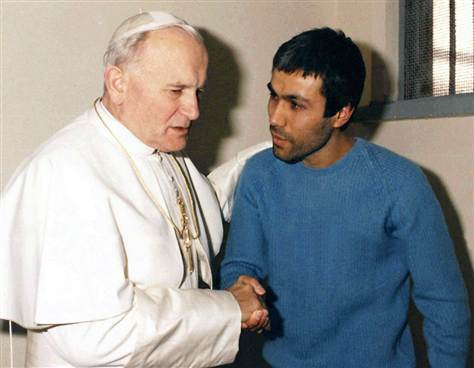
Blessed John Paul II

God, made man, promised that the Church would never teach error. God does not lie, nor does God revoke his promises. Therefore, we can safely believe that the Church cannot teach error in matters of morality or dogma.

Jesus also said that he was building his Church on the faith of Peter. Peter was a simple fisherman, not a god. Yet, it is on his faith that the Church is built. Is it possible for God to build his Church on quicksand? No, absolutely not. God’s desire is that we be saved, not that we be swallowed up. Therefore, the logical conclusion is that although Peter is a sinful man, very simple in his knowledge, and a novice in matters of leadership, Jesus must provide him with the help that he needs to support the Church.

Jesus tells Peter, “The gates of hell shall not prevail against you.” There it is, the promise of the grace to help Peter do what Jesus is about to tell him.

Jesus follows this by telling Peter, “Feed my sheep and strengthen your brothers.” If Peter is to feed Christ’s sheep and strengthen his brothers, he must have what he needs to do so. Christ would not set him up for an impossible task, nor set up the rest of the Church with a pope who would be unable to teach Truth.

The future of the Church is guaranteed. Peter now has the grace of the Jesus promises that he will send the Holy Spirit and he fulfills that promise on Pentecost.

The future of the Church is guaranteed. Peter now has the grace of the Holy Spirit to strengthen and feed his brothers with the Truth and only the Truth.

Finally, Jesus leaves us with a message in a roundabout kind of way. He says to Peter, “I give you the keys to the Kingdom. Whatever you bind on earth shall be bound in heaven. Whatever you loose on earth, shall be loosed in heaven.” He gives Peter the complete authority to bind us or to release us and promises Peter and those who are paying attention that he will back up whatever Peter says. Jesus does not place any contingencies here except one. Peter must be speaking about what God has revealed, which is dogma and moral law.

Christ’s gift to the pope does not stop with Peter. This would make no sense. Christ knew that the Church would survive until the end of time. To give St. Peter all of this divine assistance and authority to teach and to bind, but make it impossible to pass it on to his successor would be nihilistic. In other words, once Peter was dead, the Church would have been without God’s protection and without the guidance of the Holy Spirit, because it expired when Peter died. That makes no sense.

The early Christians elected Peter’s successor with full confidence that what was given to Peter would transfer to his successor. To make this more credible, here is a very important fact. John the Apostle and St. Luke were alive at the time of the election of the second pope. They were alive after Peter’s death. Had the early Christians been wrong in their belief that everything that Christ had given to Peter and said to Peter could be handed down to the second generation, they would have said so. They did not. In fact, we have it from St. Polycarp, who studied under St. John the Apostle, that John was perfectly comfortable with the succession and the transmission of power and authority.

This is very important, because it was John who was present when Christ said these things to St. Peter. It is John who wrote them down. John knew exactly what Christ said and exactly what Christ meant. He knew that the power to bind and unbind, the gift of infallibility in faith and morals, and the ability to teach truth without any error was not a gift for Peter alone, but for anyone who occupied Peter’s chair. He understood the nuance in Christ’s words.

Yes, when we say that this is Truth, it is a fact. The fact comes to us from the apostles evangelists who were alive to see Peter’s succession. Therefore, when Pope Paul VI, finally invokes the authority of Peter to say that artificial birth control is intrinsically evil, this is the absolute Truth and the only Truth. His authority to say this without making a mistake is based on all of the above facts.

Faith is not just a matter of what one person believes and another person believes. That’s relativism. Faith is about believing the Truth. There can only be one Truth. If two people have incompatible beliefs, then one or both are wrong. Truth does not contradict itself. ABC cannot be intrinsically evil for person A and acceptable for person B.
If Peter’s authority and his gift to speak only the truth on these matters has been transmitted through 2,000 years, the what Pope Paul VI said is Truth, because it is protected by the promises and commands that Christ gave to St. Peter. Again, it would make no sense for Christ to promise Peter infallibility and complete authority over the Christian faithful, but not intend for it to be handed on to Peter’s successor, since Peter was executed 34 years after Christ’s ascension. Jesus knew this was going to happen. Jesus would not have given the Church such protection for 34 years and then leave us to figure it out on our own from that point forward.

Image

Pope Paul VI

Published in: on December 16, 2012 at 2:12 PM  Comments (2)  

Children Deserve a Christ-Centered World


As I read here and there about this week’s tragedy I can’t help wonder what’s happening to us.  Schools were places where Jesus and childchildren were bored, not afraid for their lives.  I’m also thinking about the right to life and thinking that it really is more encompassing than we think.

We often think of the right to life when we think of the unborn, the terminally ill and elderly who are threatened with euthanasia or assisted suicide, and those on death roll.  There is more to it than that.  Every human being who has been created has a right to be born and a right to live free of fear.  Life has six dimensions, all created by God.

First:  there is biology.  We’re animals and like every animal we’re conceived and throughout the course of our lives we evolve biologically from zygotes to senior citizens.  ImageDuring that process, our bodies change and adapt to new situations.

Second: there is the soul.  Unlike other animals that have a material soul that is finite, we have an immortal soul.  Once God calls it into existence it will never die.  It will remain with our bodies while we travel through life in this world and eventually be liberated from the body at the moment of biological death.  It will spend eternity in heaven or hell, depending on the choices that we make during our lives.

Third: we have a mind.  We are self-aware.  This is important.  Because the justification that many people use for abortion is the fetus is not self-aware.  However, the real question is this.  Is there any human being on this planet who knows himself?  Aren’t we all in the process of knowing more about ourselves with each experience?  What really is self-awareness?  Is it something that you achieve and move on or is it a dynamic process that lasts an entire life?  I would hate to think that God made us so boring and so limited that we can become fully self-aware by age 25.  Now, if I follow the norm, I have to live with myself until age 80.  OK, that’s only 55 years away.  For the next 55 years, I will become no more aware of myself, who I am, my purpose in life, my place in the universe and my destiny, because I have reached self-awareness.  That doesn’t sound right.  It’s a recipe for suicide; because we run the risk of becoming so bored with ourselves that the only way to get away from ourselves is suicide.  I don’t think God had this in mind.  Therefore, self-awareness begins in tiny steps in the womb and continues in steps to the tomb.

Fourth:  believe it or not, we have all some degree of intelligence.  OK, some of us have a hard time proving that we’re intelligent, but we are.  Human intelligence is not divorced from God.  I remember being in college studying for an exam in math history, yes there is such a thing as the history of math.  Since I was a math major, I had to take it.  But I digress, I was preparing for an exam.  It dawned on me that there is nothing in math that man created.  The Chinese, Arabs, Romans, Greeks, Mayans, Aztecs, Egyptians and every great civilization has made some contribution to mathematics, but no one has created mathematics.  Every mathematician has discovered a law that works.  We call them formulae, theorems, postulates, and functions.  Well, let’s look at this.  If there is a law that consistently works, did it come into existence randomly?  How is it that something that randomly appears on the horizon of human intelligence functions so predictably?  Does it change from being random to predictable?  In other words, are those things that are consistent such as a2 + b2 = c2 random expressions of order?  It seems that order is predictable.  Predictability has intent behind it.  If there is intent, there must be an intelligence behind these laws, an intelligence that is the Law-Giver itself.  In reality, human intelligence has two qualities.  First, it is capable of discovering, understanding and using the laws given to us by the Law-Giver.  Second, it is the living proof that there is a Law-Giver, since we have not created a single law of math or science.  Yet, we can understand them, use them, but we can’t control them.  They are static.  2 + 2 will always equal 4.

Fifth: are relationships.  We’re social animals.  Ethologists would say pack animals.  This is true.  Even a hermit needs human contact.  The Carthusians are a community of hermits.  Each brother lives in a cottage with a walled garden.  They work, pray, study, eat and sleep in their little cottages.  However, it’s interesting to note that the Carthusians all wear the Imagesame habit, follow the same schedule, and say the same prayers at the same time.  Even though they eat alone, they eat the same foods.  While they may be physically alone, they are socially connected to a pack.  Relationships take many forms, some healthy and some very dysfunctional.  God has revealed himself as a communion of relationship:  Father, Son and Holy Spirit.  He models for us how to live in relationship with others as one.  It is we who do not use our intelligence and our mind to pay attention and learn.  Then we wonder why we have conflict, terrorism and violence as we have seen this week.

Sixth and last:  we seek to transcend.  Even the most primitive cultures, no matter how disconnected they may be from monotheism believes that there is more to life than what is here and now.  We live in a beautiful world of expectation.  It’s a good expectation.  We expect to be called to the net life at any moment.  The question is, if it happens as suddenly and as violently as was the case this past week at the school, are we ready?

We want to see God.  We want to move beyond the complications of this world and find peace.  We want to love and be loved without contingencies.  All of this is possible, if we order our lives appropriately.  God does not choose for us how we order our lives, we choose this for ourselves.  Instead of ordering our lives toward that which lies ahead, we have disordered our lives.  Instead of seeking the transcendent God, we get stuck in pain, anger, resentment, fear and selfishness of the present moment.  These feelings release Imagethe destructive power of sin.  Sin seeks the opposite of transcendence.  Sin seeks to separate us from that which is ongoing and noble and it locks us in a present, which can be very threatening, dysfunctional, hateful and eventually violent.  It is a present without God.

I look at what happened this past week and I believe that the further we get away from God, the deeper that we go into this present without him and as a consequence, we’re going to see greater acts of violence.  The solution is simple.  We have to place God back in the center of our personal lives, families, communities and our nation.

As we prepare to commemorate God’s entrance into human history in Bethlehem 2000 years ago, let us not forget that the child in the manger was a victim child.  He was born with a price on his head.  It’s a price that we put there when we choose to leave God out of our lives or even part of our lives.  Let us look at the child in the manger, pick him up and make him the center of our journey through life.  Our children deserve to live in a world where God is present.  Let us allow Christ to come to our children.

Published in: on December 16, 2012 at 1:36 AM  Leave a Comment  

Project Joseph Workshop


IMG_2388In mid-November, we had a workshop to train lay volunteers to work with Project Joseph.  It was the first time that the brothers delivered the talks.  Normally, I deliver all the talks.  They were outstanding.  I was very proud of their knowledge of theology, spirituality, the life issues and pastoral care.  These guys are in the early stages of formation and doing a million other things.  Remember, we get no money from anywhere.  St. Francis said that the brothers had to work for a living.  Our brothers hold jobs, support the ministry, themselves and loved ones.  They divide their time between community, work, ministry, prayer, family and friends, and more prayer.  The workshop went well.  Our next step is to place the new volunteers and have them shadow us for a few weeks until they get the hang of it.

Published in: on December 12, 2012 at 9:08 PM  Leave a Comment  

Let us remember . . .Let us pray


This week, our nation remembers the most tragic decision made in this country, the legalization of abortion.  It is a time of prayer and action for those who have a moral conscience.  Let us examine two moral issues and fallacies here.

During the Civil War, our government emancipated the slaves.  It ruled that human beings are not property.  However, today, we speak about the infant in his mother’s womb as her property.  If he were not the mother’s property, would she have the right to destroy him?  Do we have a right to destroy what we do not own and what is not attacking us?  The argument that it’s not a person does not fly for one simple reason, no one can prove that he’s not.  There are those who say that the pro-life population cannot prove that the infant in the mother’s womb is a person.  The pro-life person is not attempting to destroy the child in the womb.  He or she is choosing on the side of life.  If left to proceed naturally, a person will emerge from the womb.  Those who doubt that the child is a person, are acting on an assumption, not a fact.   Their actions destroy life.  The choice to allow a pregnancy to take it’s natural course does not need to prove anything, because such a choice is not interfering with the natural course of events.

There is another moral issue here.  Every human being has two parents.  However, current law in  the United States and other countries that have legal abortion do not acknowledge fatherhood until the mother decides to keep her child.   This raises an important question of justice.  Is fatherhood determined by nature or by the determination of the mother?  According to current legislation, a man becomes the father of his pre-born daughter when her mother acknowledges that she has a daughter.  In other words, fatherhood has become contingent on the will of the mother.  Even the legal system cannot protect a man’s right to act as a father.  A man has no right to stop the destruction of his daughter in the womb.  Fatherhood is a natural right, not a civil right.  When civil law takes away the rights of fatherhood and makes them subordinate to the will of the pregnant mother, it violates that man’s dignity.  Such a violation is a sin against justice.  There is a strange parallel between this and slavery.  The rights of the slaves were contingent on the will of their masters.  Today, the rights of fathers are contingent on the will of the mother.

Every child has the right to have a father and a mother. Every man has the right to be his child’s father from the moment of conception.  This is the way that nature designed it.  Nature designed it this way, because in his eternal wisdom, God built these laws into nature.  Observe that we do not question the paternity of any other species except that of man, because it is expedient.  If we acknowledge that the child in the womb has a father, then we will have to protect that father’s right to protect his daughter from abortion.  We negotiate with language in order to create laws that deny a man’s fatherhood.  If the child does not have a father, he is subject to the unilateral decisions made by the mother.

Allow me to conclude with a story that happened in our Archdiocese.  I am not violating any confidences.  It has been shared across our diocese.  A few years ago, a young mother called one of our Respect Life Centers.  She was distraught.  She had two children.  The doctor has just told her that her pre-born daughter had Down Syndrome and that she should “terminate the pregnancy.”  The Director of Respect Life invited her to come to the center nearest to her home.  When she arrived at the center, the volunteer who had waited for her received her with a hug.  They prayed and talked for a very long time.  The Center promised the mother to walk with her and to provide emotional, spiritual and material assistance as long as necessary.  The father was invited to participate in the dialogue.  Together, they decided to keep their daughter.

Nine months later, the daughter was born.  Effectively, she had Down Syndrome.  She also became the person who would bring great joy, love and unity to that family.  The parents asked God for one favor, to bless their daughter and grant them the grace to do whatever they needed to do.  God has never let them down.

Every life that comes into existence is a reflection of the love and life of God himself.  No one life has less value than another.  God knows every human being from all eternity.  Each person who is conceived, regardless of the circumstances under which he or she is conceived, has a place in God’s plan for our salvation.  As we proceed through this week, let us pray for those who will be marching in defense of human life.  Let us also pray for those who do not yet understand the sacredness of human life and the true meaning of justice.

Published in: on January 23, 2011 at 1:57 AM  Leave a Comment  

Where are the Catholic pro-life men?


As we look out at the world of men (males) who struggle with paternity, we often wonder why or what is happening in society.  We should wonder is why not?  Why are we surprised, when there is such a shortage of good Catholic men to guide their brothers?  Therefore, why should some men not be lost in the culture of death and at a complete loss as they face the daunting task of parenting?

This is not to say that those who have walked themselves into situations where they face unexpected fatherhood bare no responsibility for their actions and for their choices before or after.  It is easy to point the finger and wag our tongues at so many men who do not step up to the plate and become good Christian fathers who embody the very presence of the Fatherhood of God.  Yet, other men, who claim to have found the loving Fatherhood of God and claim to live in the Spirit of the Father, do not reach out and share the Gospel with their brothers.

It is very easy to condemn a culture of death and to sentence those facing life-threatening choices such as abortion and contraception from the comfort of our homes.   Such a person is like the judge who sits in judgment on his bench and condemns the guilty man for his delinquencies; but when his day in court is over, he retires to his quiet and serene suburban home.  On the way home, he deliberately bypasses the riotous and noisy neighborhoods where the delinquents that eventually will find their way into his courtroom are being bred and formed.  Such a judge may feel that he is doing something for society by passing judgment.  The truth of the matter is that while he has time that is not on the bench, he does nothing for the community that passes through his courts on a daily basis.  In other words, he does nothing to put himself out of a job.

The same is true about Catholic men who sit in judgment of their brothers who are considering abortion or even worse, who have participated in an abortion by providing the dastardly service, taking the life of an unborn child or pushing the mothers of the children whom they conceived to submit to such a horrid crime.  We go to pregnancy centers, prolife workshops, provide education to men who are struggling with the challenges of poverty, addictions, violence, displacement and a lack of sexual integrity.  It is a challenge to bring these men into the centers, the churches, and the community of believers.  Evangelization and service to them can seem an insurmountable task, because there are not enough workers in the vineyard.  In other words, there is a critical shortage of Catholic men who serve their brothers and evangelize them.

The prolife movement has become feminized, as if abortion, euthanasia, the destruction of human embryos, the unscrupulous use of the death penalty and the killing of infants who were not killed by abortifacients were a women’s issue.  Middle-age women and teens are at the forefront of the prolife movement, especially among Catholics.  Catholic men attend workshops and lectures and then go home.  However, one third of the people affected by crimes against human life, ultimately against God, are men.  Another third are women and the last third are the unborn children.

We need to challenge men to step up to the plate and be good fathers.  We need to evangelize young men instead of handing them condoms.  It is our duty to bring all men back to Jesus.  However, we need men to evangelize their brothers.  These can be married men or single.  They can be secular or consecrated religious.  Teams of consecrated celibate men and married men are the ideal missionary team.  Together, we can present the big picture of what men can be.

If you’re male and are reading this, ask yourself if God is calling you to serve your brothers in the prolife ministry by walking the journey with them.  Don’t worry about not having anything to contribute or not knowing what to do.  Those of us who are in the ministry will walk with you and together we can walk with our brothers.  Just bring the gift of your masculinity before the Lord and put it at the service of your brothers.

Where are the prolife men?

For more information contact Brother Jay here .

Published in: on November 19, 2010 at 9:17 AM  Comments (1)  

Loyal Subjects of the King and Faithful Sons and Daughters of God


We have a moral duty to be children of the Church.  At this time, when our nation goes to the polls to vote, we must remind ourselves that we are citizens of the Church and a nation.  As citizens of the Church, we must guide our nation to fulfill the destiny that God has given to every nation, to ensure the welfare of its people.  We must first secure every human being’s right to life, then all of the other rights that flow from that.

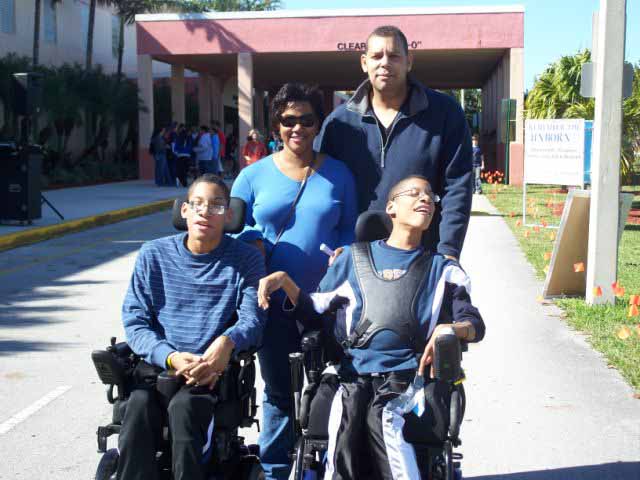
Several years ago, I found myself teaching a group of high school students who live with autism and learning disabilities.  We were discussing human rights.  A 16-year old boy raised his hand and said, “If you don’t secure the right to life, why waste time discussing the other rights?”  It causes one  to wonder who has learning disabilities.

The unborn, sick, elderly, disabled and the embryo in a Petri dish are all sons and daughters of God.  They have come into existence through the Word of God, not man’s will.  Man supplies the mechanics; only God can give life. 

As Brothers of Life, it is our mission to remind Catholics of our martyrs, who gave their lives for their faith.  Along with them, we have a rich tradition of holy men and women who suffered a bloodless martyrdom, living with inconveniences and sometimes suffering and hardship, as a natural part of living a virtuous life.  Sometimes, the Gospel of Life requires sacrifice.  Very often, true love hurts.

The enemy deceives us into believing that we must make certain sacrifices in order to have safer neighborhood, better schools, more jobs and the other things that we want for our families.  However, on the great moral ladder, the highest good remains the dignity of life. 

The bible is our best guide.  Look at how it is organized.  The first book of the bible is the Book of the Beginning, not by coincidence.  God wrote about the origin and the sacredness of life  into the hearts and consciences of the biblical writers.    They could not compose the sacred texts and ignore the one great truth; all life comes from and through the Word of God and all was created for Him.  As St. Francis so clearly wrote in his Canticle of the Creatures, all life reflects something of the Glory of God. 

Today, some men and women seek political posts at the expense of life.  This is an immoral use of the democratic process.  The true and noble purpose of democracy is to protect the inalienable rights of man, not to gain a vote at the expense of man.  Man’s first inalienable right is the right to be born.  His second inalienable right is inscribed on the other side of the same coin, the right to die at a time and in a manner of God’s choosing.  God chooses when we are to be born and when we are to die according to his plan for our salvation.  Man has no right to interfere with God’s plan for his salvation.

We are not an evolutionary accident.  We are the product of the mind of God.  In His mind there is a precise moment in history that is conducive to our salvation.  He brings us into existence and gives us the right number of years of life to work out our salvation according to His plan. 

The highest form of worship is to love, respect and protect what God creates.  The highest form of service is to make proper use of what he gives us.  To use science and law in a manner that is contrary to his plan is a grave sin, because it is an irresponsible use of God-given talent and freedom.  We must ask ourselves whether it is moral to place men and women in office who will use knowledge and freedom to offer legal protection to the murder of innocent people.

We have been given freedom for a purpose.  Contrary to popular opinion, God did not give us freedom to choose right or wrong.  God gave us freedom so that we might choose what is right and thereby be truly deserving of his grace and heaven.  God made is with the same attributes as his Son.  Jesus freely chose to do the Will of his Father.  He embodies everything that a man should be and should do.  He chooses to die, rather than allow us to perish.  We, who are created in the image and likeness of the Son, have the power to make the same choice.  We can live with suffering and challenges, rather than allow others to perish.

We may have to vote for a candidate that does not deliver the material things that we want or need, but who supports and protects the highest good of all, the right to be born and the right to live as long as God wishes us to live.  For many of us, this may be a form of bloodless martyrdom.  Like St. Thomas More, we must be loyal subjects of the king and faithful sons and daughters of the Church, even if it means martyrdom.

Published in: on November 1, 2010 at 6:37 PM  Leave a Comment  

Are they really disposable?


 The issue of the poor and other marginalized people in society transcends political affiliation and social strata.

We live in a world where human beings are objectified – they’re treated as objects. If a certain person or group of persons does not produce or benefit society in any significant way, they are marginalized by society and looked at as somebody not really worthy of any human kindness or charity.

For instance, being made aware of a couple’s pregnancy, the couple may deliberate between themselves and see the child (or tissue mass as others may refer to this emerging life) as a hindrance to plans they’ve already made for themselves.

Maybe the child will be viewed as a financial burden which would rob them of certain other things they are working for in their lives. Maybe he/she will be viewed as a hindrance to their careers and professional aspirations. After all, it will be years before such a creature will be able to make itself “useful”. So the child is aborted and the problem is “solved.”

The aged and dying relative who has been relegated to a hospital bed and shows no signs of improvement ought to be “released” from their condition since the chance of their recovery is small. Besides, it will save a lot of money in medical costs, which can be put to more useful (or selfish) purposes.

The poor who live under overpasses and in back alleys who can make no real contribution to society are viewed oftentimes and undue burdens on society. They can’t contribute anything, so they deserve nothing in return. It all boils down to perceived worth of a human being and their dignity.

The Catholic Church has always held that life is sacred from conception to natural death. All human life! A human’s worth is not determined by what they offer, but by who they are – A living human being created by God and for God and in His Image!

But our society is too practical for all of this. It can simplify everything down to an ugly and devilish ideal of cost effectiveness. A human is only worth what it can give to me or to something that may benefit me down the road.

We don’t see Christ in the poor anymore – we see just another burden on society. This isn’t a political issue, it’s a natural effect of a depraved society steeped in commercialism and meism (“me” being the center of all that is and all that matters).

Written by:  Br. Pieter (Candidate)

Published in: on September 4, 2010 at 5:15 AM  Leave a Comment  

The Assumption of Mary and the Culture of Life


Many may wonder what the importance of the Assumption of Mary may be.   Some people actually deny it.  Others think that they know. The truth of the Assumption is best understood in light of the Culture of Life.  Christ came to bring life that we may have it to the fullest.  He states this unequivocally and abashedly in the Gospel.   He also promises that he who believes in him will not perish.  So why doubt the assumption of Mary?  Christ keeps his promise.  He brings life and brings it to the fullest.

The fullness of life is found when the mind, body and soul are oriented toward Christ and absorbed into his mystery.  This is the promise that God makes to us through his Son.  To prove that his words are not empty Christ always provides signs.  Remember what he says, “So that you may know that the Son of Man has the power to forgive sins, I say take up your bed and walk.”   The miracle affirms Christ’s power and majesty over life and death.  It affirms his power over sin and corruption.

In the Old Testament, the Law is given to Moses.  “You shall not kill.”  God cannot be clearer.  Life is sacred, in every stage and in all of its dimensions.  Therefore, it is his desire that man treasure human life as he does.  It is God’s wish to save us from death, not only spiritual death, but also physical death.  “Let him who has no sin throw the first stone. Now go and sin no more.”

The Assumption of Mary is the most pro-life sign from God himself.  It speaks more about Christ than it does about Mary.  Those who look at it as if to say that Mary is being elevated to the status of a goddess are missing the point.  Mary is elevated to  that which is hers by right of her creation.  She is a daughter of the Father, saved in heart, mind, body and soul through the life, death and resurrection of Christ.  God offers us Mary as proof that he keeps his promises.

God never forgets his promises.  He constantly gives us signs to remind us that he has not forgotten us.  The Assumption is such a sign.  The woman who cooperated perfectly with the will of the Father, Son and Holy Spirit is the first to be granted the fullness of eternal life, in body and soul.

Look at the Assumption of Mary as sign of God’s great love for human life.  It is comprehensible that the Father would restore the physical life of the Son on Easter Sunday; after all, that’s his son.  Here, he takes another human being and restores that person to life in body and soul.  He makes a statement about the dignity and sacredness of human life.  It is his will that human life not suffer the effects of evil. 

Mary, who is has done everything according to the will of the Father is the first creature, but not the last, to enter the gates of heaven with body and soul.  Why?  Because it is God’s will that the Culture of Death shall never prevail.  He delivers to us a sign that the Gospel of Life shall triumph.  Mary is the sign, given to us by Christ.  Through Mary’s assumption, Christ makes a statement about him and the sacredness of human life.  It is his wish to see life protected from evil.  It is his will that every human being shall be protected from sin.  It is his plan to restore physical and spiritual life to all men.  Therefore, he does what is in his power to do.  He protects human life from the corruption of sin.  Mary’s assumption is the sign that Christ will keep his promise.  The Assumption of Mary is a sign of the sacredness of life and Christ’s invitation to join him in the protection of human life.

Published in: on August 15, 2010 at 2:43 AM  Leave a Comment  

When can we stop supporting the dying?


Many people misunderstand the difference between relieving suffering, accelerating death and extraordinary means of preserving life.  Let’s try to get this right.  If the person is Catholic, the answer is straightforward.  In Evangelium Vitae, Pope John Paul II, invokes the authority of Peter and declares that it is always wrong to euthanize or abort a human being.  Any Catholic who questions or challenges the authority of Peter to declare that something is always morally wrong places himself in a very dangerous position.  It begs the question, how can one be Catholic, but ignore what Peter has authoritatively condemned as evil?  This raises the discussion to a whole other level.  The question is no longer about the subject of euthanasia, but about fidelity to the Church.  Tonight, during compline, we sang “To Jesus Christ, Our Sovereign King.”  If we apply Lex Orandi, Lex Credendi, (the law of prayer is the law of faith), then the answer is simple.  There is a verse in that hymn (prayer), “To you and to your Church great King, we pledge our heart’s oblation.”  I cannot pledge oblation to Christ and not to the Church.  Christ and the Church are inseparable.  What Peter binds, remains bound by Christ himself until Peter unbinds it.

Catholic law does not bind Non-Catholics.  This is a teaching of the Catholic Church.  There are many reasons why they are not bound, but that’s a topic for another thread.  However, natural law binds every created thing and being. Natural law commands that we do everything in our power to minimize and even eliminate human suffering.  However, natural law also says that suffering is part of the definition of being alive.  All living beings suffer, even plants.  Suffering takes on different expressions for different life forms.  However, there is no life form that does not suffer.  Why not?  Because suffering is built into the fabric of life.  It is one of the many threads that hold life together. 

Those who say that we are accelerating a person’s death to protect them from suffering are also protecting themselves.  As human beings, we suffer when our loved ones suffer.  The measure is not very altruistic.  The issue is not whether we should or should not try to minimize suffering.  The question on the table is whether we have the right to accelerate death.  To take away life support that does no harm to the patient accelerates the patient’s death. 

Human beings have two kinds of rights:  civil rights and human rights.  Under civil rights, the state has the duty to provide every person with the protection necessary to live until natural death.  I have a right to expect the state to protect my right to live.  When the state legislates that there are circumstances in which my death can be accelerated, even though I am not a threat to society, the state has overstepped its authority.  The State exists to protect the citizen.  When a democratic society, such as the USA, allows the State to pass legislation authorizing euthanasia, abortion and capital punishment, we are authorizing death by our vote.  That is contrary to what the State should be doing and the citizens are voting contrary to the concept of democracy.  No one ever said that democracy meant to do whatever one wishes to do.  In fact, that kind of thinking is nihilistic.  There have to be restraints in every civilized society.

Human beings also have human rights or natural rights.  These are written into our very nature.  Because we are human, we have the right to live as human beings, not as rocks.  Human beings often have to suffer, because it’s unavoidable.  To live with unavoidable suffering is part of being human.  To accelerate death to avoid suffering is an attempt to do away with a part of our humanity.  This raises a major ethical question.  Where do we stop?  What sufferings do we tolerate and what sufferings justify terminating a life or accelerating a death?  Parents suffer because of the poor choices that their children make.  The unemployed person suffers.  The wife whose husband cheats on her suffers.  The child who is struck by a bus and has to live in a wheelchair suffers.  People with chronic pain suffer.  We would have to make a list of what suffering is permissible and what suffering is not.  When a person crosses over into suffering that we arbitrarily decide is not permissible, do we allow them to take their lives or accelerate his death?

The issue is not whether a person should die a natural death.  The issue is this.  It is natural for a person to have: food, water, oxygen, antibiotics, pain killers, love, companionship, and whatever else makes him comfortable while waiting for death.    To take these away, when they are not contraindicated, knowingly and deliberately accelerates death.

Notice that I use the word “contraindicated.”  Contraindicated is any form of care that will hurt the patient or that will cause the patient unnecessary stress.  There are patients who cannot tolerate water, because it is painful.  In that case, water is contraindicated.  We should not cause pain unless there is a reasonable belief that it will heal.  It’s like giving you a vaccine.  Injections hurt and the flu shot often makes people very sick during the first 48 hours.  To give water to such a patient is cruel.  It is natural to withdraw the water.  Why?  Because it is natural to minimize the discomfort.  Your intention is not to accelerate death.

There are times, when the intention may not be to accelerate death.  There are times when the caregivers believe that certain supports are unnecessary, because the person is going to die, regardless.  In those cases, one has to examine reality.  We are all going to die.  However, we don’t stop eating and drinking today, because death is going to catch-up with us.  If more than one medical expert, independently, determines that the person will die within hours, regardless of what we do, there is no moral obligation to intervene.  We can allow death to arrive naturally.  In that case, we are not accelerating death.  It’s going to happen in a few hours.

If there is no immediate danger of death or we are unable to say how long before death arrives, then we have another ethical quandary.  We cannot accelerate it.  Therefore, we must continue to provide life support, even though the person has a terminal condition.  Terminal is not the same as imminent.  I live with three terminal illnesses.  Unless the brothers’ driving kills me first, one of these conditions or the complications will kill me.  There are days, such as this week, when the pain has been so severe that I have missed morning mass and morning prayers.  I have to take medications that knock me out and don’t let me get up on time.  I still get up and go to my pregnancy centers and I still go to the parishes and preach on the Gospel of Life.  The pain is excruciating.  Nevertheless, I have a moral obligation to live for the sake of the vulnerable.  I’m a social being.  God created us as such.  Therefore, I have a moral obligation to stay alive as long as I can, to fulfill my obligations to others.  I have an obligation to be here for my brothers, primarily.  I made vows to this community.  I am a widowed parent and I have a secondary obligation to remain alive for my children.  I have siblings and I have a moral obligation to remain in their lives.  Life is not about me.  Those who advocate that life be about the individual are advocating something that is contrary to natural law.  Human beings are not islands. 

Whether one is a Catholic or an atheist, the rules are the same; because Catholic moral teaching is based on four legs and one of them is natural law.  We must live and die as human beings live and die.  We cannot redefine humanity or natural law, because we have no jurisdiction over natural law.  We must work with natural law.  When natural law allows us to find means to alleviate suffering without terminating life, then we have a duty to use what is available to us. Natural law does not say that human beings terminate their lives or accelerate their deaths.  Human beings made that up.   It is in natural law that any living being fight for his life until death wins out.  If we accept euthanasia, abortion, assisted suicide, then why not accept the extinction of the human species or any other species?  We fight to save endangered animals of the lower species, but we easily give up on an endangered human being in the name of relief from suffering.

Published in: on August 14, 2010 at 5:23 AM  Leave a Comment