Words Can Lose Their Meaning


We all know the story of the boy who cried “Wolf!” Eventually the word became meaningless and the wolf consumed him. The same thing seems to be happening with the words “scandal” and “Modernism” among some Catholics. Suddenly, everything is a scandal and anything that is not right is Modernism. What’s unfortunate and we have to beware is that most of the people who use the term “Modernism” have never read a history book on Modernism. They don’t know the full scope of what it means and what is not included under Modernism. But they sound very intelligent. It’s like the kid in school who can use big words. Everyone thinks he’s very smart. The truth is that he doesn’t know what these words mean either.

Is there ever such a thing as scandal? Of course there is. Is there such a thing as Modernism? Yes there is. There is also such a thing as McCarthyism. Very often those who scream “Scandal!” are the ones who cause the scandal. They attract attention to things that most people would not otherwise notice and they inflate the issue with such passion and rhetoric that people become horrified without sufficient reason. If others are scandalized, we can thank the people who make huge and very public those incidents that most people know nothing about and don’t need to know.

Whenever you hear “scandal” or “Modernism” verify before you buy into it. Ask yourself some intelligent questions.

1. Would this be a scandal if the person had not spread it around?

2. Is it a true scandal or is it just something that someone does not like?

3. At what point does the term “scandal” lose objectivity and becomes a very subjective judgment?

4. When something is called Modernism or someone is called a Modernist, does the subject fit under the definition of Modernism or Modernist?

5. Do I really understand what Modernism and Modernist means?

6. If I don’t understand, why am I getting my education from a blog or a an online forum?

There are distance universities that offer online courses, but blogs and forums are not cyber classrooms. Read with caution.  Remember, excessive use of an important term or word can render it useless when it’s overused.

Published in: on May 27, 2014 at 10:52 PM  Leave a Comment  
Tags: , ,

Our Hearts Will Not Rest


augustineI’ve been reading The Restless Flame by Louis de Wohl, a novel about St. Augustine of Hippo.  WOW!  It could well be the story of my own journey.  I strongly recommend it to anyone.  Yes, it’s a novel, but it’s historically very accurate.  De Whol sticks very closely to the real life story of Augustine.  The best part of the book is that he captures Augustine’s search for meaning.  This is the part that for me is autobiographical.  The events in my life may have been different, but the struggle and the questions were the same.

We are all familiar with Augustine’s later work as a priest, bishop and theologian.  He tells us quite a bit about his journey toward conversion in Confessions.  But Wohl gives a voice to Augustine’s anguished search for meaning and ultimately for God.  You can hear it.

Why is a Franciscan of Life pushing this book?  I’m not exactly pushing a novel as much as I am pushing a reality.  For many of us, Augustine’s journey is not a foreign experience.  Many of us have struggled trying to find what we believed to be evasive truth.  We go from one thing to another in life, always believing that we will find happiness and the fulfillment of every desire.  This can be a maddening search.  We jump from relationship to relationship, from job to job, from one city to another, from parish to parish and often from one religious tradition to the next.  Each one promises to be the landing pad for which we search.  This was also Augustine’s journey.

What is equally compelling about this work is that it presents to us an Augustine who is very human and a good man at the deepest level of his being.  We tend to look on Augustine’s life before he became a Christian as one of dissipation and promiscuity.  It’s too easy to condemn a man whom one does not understand.  It’s too easy to sit on the chair of moral judgment and look down upon a person without knowing the struggles and deep anguish of the human soul.  It’s also too easy to condemn a man’s journey, because we can’t see Grace gradually reeling him in, like a fish who struggles to get off the hook and back into the water; but God’s love is more powerful than the fish.  At the end of the day, the fish will relax and yield to Christ the Eternal Fisherman.

The story of Augustine’s conversion is a story of hope for those of us who have not yet arrived, for those of us who struggle with sin, questions, failures, human weakness, and moments of darkness dispersed among the moments of light.  Augustine’s story should be a source of hope for those of us whose hearts are restless and who will not rest until they rest in God.  Augustine’s story is about the power of God’s love and a man’s refusal to give up his search for Truth.

Love will never give up on us while we live.  His grace will fight to conquer our hearts and minds, our bodies and souls.  If we lose it’s because we have given up the search for Truth.  We have settled for less than perfect love. God’s love for us and our determination to find absolute and living Truth is all we need to arrive at union with the Divine.  Love and the search for Truth is painful.  But, when the time is right, we will reach the summit of the mount and our lives will be transfigured by Him who is Truth itself.

St Augustine and St Monica, pray for us.

Unity In Diversity


It seems that the Holy Spirit has plans for us.  I’m never sure what they are; so I just go along.  Not long ago I said that God never ceases to surprise us.  I was certainly surprised this week.

What’s fraternity without a birthday?

We normally have our community meeting, formation and fraternity night on Mondays.  It’s a long evening that begins with Vespers followed by learning sacred music, then a lesson in theology.  After our theology lesson we usually engage in some learning activity about Franciscan life, usually in the form of a game.  This helps us stay awake and engaged with each other.  Boy are our brothers competitive.  There is always a snack to share and a lot of  poking and roasting.  Of course, there is housekeeping stuff that every group has.  Our community meeting is open to any man, married or single, who is curious about Franciscans of Life.

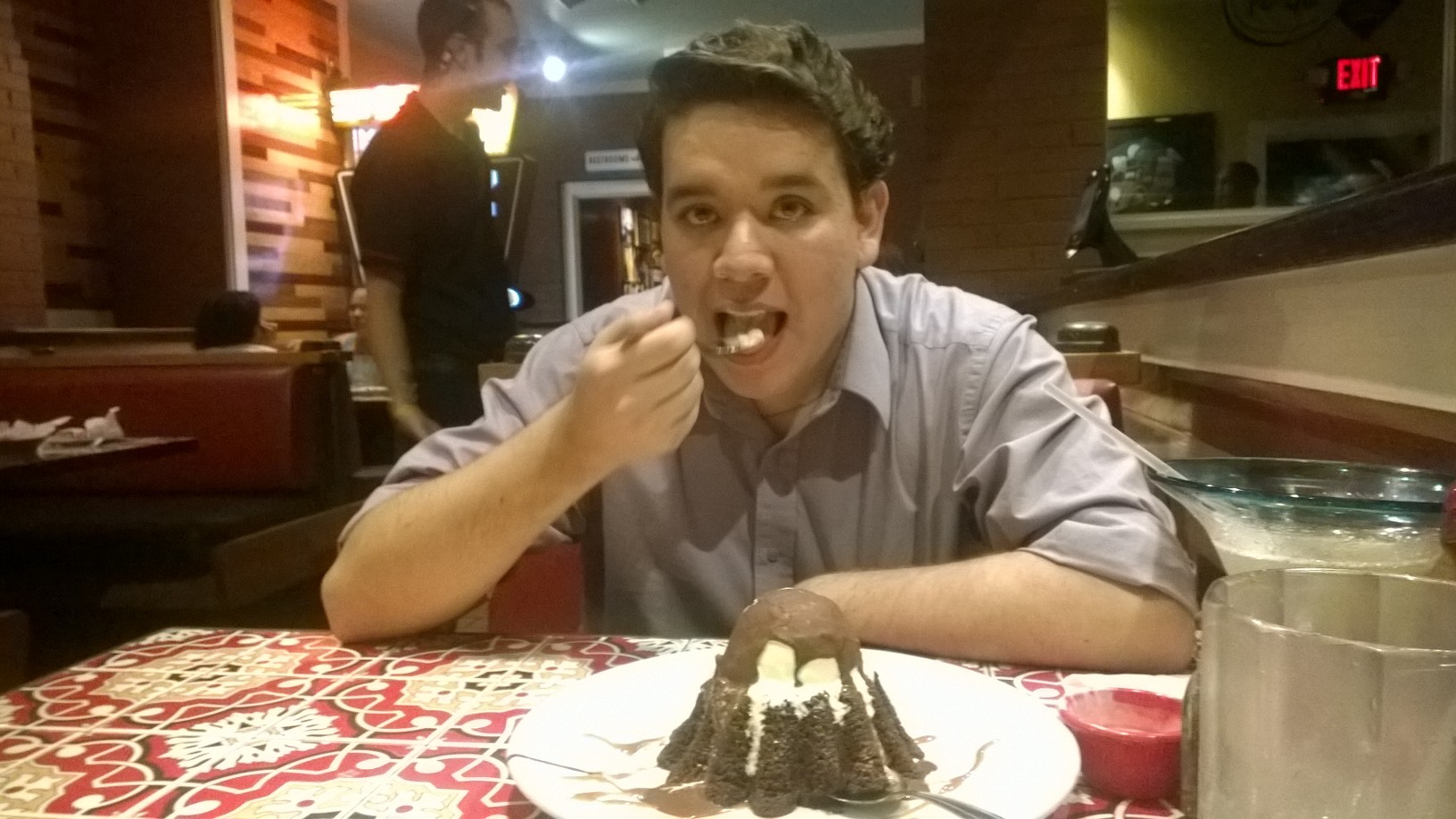
Postulant, Jose, enjoys his birthday cake and ice cream

Postulant, Jose, enjoys his birthday cake and ice cream

This past week we had another inquirer, which brought the number of inquirers up to three.  However, one of the inquirer’s approached me to talk about joining our community.  Not only that, but I received a beautiful letter from a young man who is in high school and is quite curious about us.  I’m looking forward to meeting him probably this  coming week.  The age range of our men, between inquirers and professed is from age 15 to 67.  That makes our average age 39-years old.  This is younger than most religious communities, secular orders, dioceses or secular institutes.  The great thing is to see these men interact very comfortably despite the difference in ages.

Jerry and Eduardo are received as postulants

Not only has the Holy Spirit sent us men from a wide range of ages, but also from different cultures and language groups.  We are Virginian, Bostonian, Floridian, Jamaican, Mexican, Peruvian, Colombian, Ethiopian, and Cuban.  We are single men who are consecrated to a life of celibacy, single men called to the married life, but are not yet married and married men who are fathers.  In a tiny community there is unity in diversity.  I  believe that we’re a microcosm of the Church.

Any man interested in spending an evening with this interesting little group of men, is always welcome on any Monday night, beginning at 7:30 PM.  Simply contact me via telephone or email.

We never know God’s plans for us until we take a risk with love.


“Daddy, tell me more about the Trinity”


trinityThis article is a response to a request from my princess who asked me to write about the Trinity for her.  She remembered that I had taught her and her brother about the Most Holy Trinity and asked that I write about it for her.

I’m very proud that my daughter is meditating on the Trinity. Before proceeding, I’d like to explain that that I do have a daughter and a son.  Some may find it strange that a consecrated brother has children, but it’s not that strange at all.  It’s just not that common.

Let’s see . . . St. Augustine had a son.  Elizabeth Ann Seton had five children.  Louise de Marillac also had a son.  Jane Frances de Chantal was the mother of four.  St. Maximilian Kolbe’s mother became a Franciscan sister.  There have been widowed men who are fathers and have consecrated their lives to the service of the Church, but widowers are a smaller number than widows.  I’m not sure what that says about men and women.  Do women outlive men because they need to remain here to do more penance or do men die before women because they don’t have the stamina to deal with life’s challenges?  I guess we’ll find out in heaven.  But I’m very happy to be among these great men and women who have been parents and consecrated sons and daughters of God and the Church.  Having said all of this, let’s get back to the Trinity.

Writing about the Trinity can be a task as daunting as rewriting the Summa Theologica.  An old legend tells us of St. Augustine who pondered the mystery of the Trinity.  While doing so he encountered a child on a beach who was trying to pour the ocean into a hole that he had dug in the sand.    When Augustine told that child that it was impossible to pour the entire ocean into a small hole in the sand, the child told him that it was far easier to do that tan to fully comprehend the Trinity.

Anything that we can say about the Most Holy Trinity is based on what God has chosen to reveal to us about Him.  There is much more to come, but we won’t see it until eternity.  All I can do here,  Princess, is to “paint a picture of the Trinity” with very broad strokes.  I may have to do this in parts so as not to make it too long and boring. Let’s begin with what the Trinity is not.

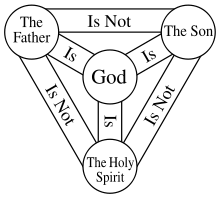
When we speak about the Father, Son and Holy Spirit, we’re not speaking about part of God.  God does not have parts, because he’s not created.  Only created things have parts.  Nor is God some existential composite.  We cannot speak about parts of God. When speaking of the Trinity, we’re not speaking about parts of God.  We’re speaking about persons in God. We must make a distinction between person and people.  People are human and created.  Personhood describes the nature of a being.  Peoplehood describes the being as part of a collective.  God is not part of a collective as are human beings.  Therefore, we are both persons and people.  God is three persons, not three people; because there is no collective.

St. Thomas Aquinas tells us that God is simple. It is also important to understand that God is fully actualized.  There is nothing missing in him.  There cannot be an absence of love in God.  However, love is oriented toward the other.   It is not self-centered.  Love exists in communion with the other (the beloved).

In God there is otherness in oneness.  This otherness is three persons: Father, Son and Holy Spirit, one God.  In these three persons, there is perfect love.  There has to be love.  If there were not love in God; IT would be something else, but not God. Where there is love, there is also communion.  Communion only exists when there is otherness.

This otherness in God has revealed itself to us as three persons who are one God:  Father, Son and Holy Spirit. They do not share a common divinity.  Each person is fully divine, fully God and to see one is to see the other.  Remember that we said that God is simple.  Where you share something, you’re dividing it.  It ceases to be simple and becomes multiple.  It also loses something.

Analogies don’t always work perfectly, but they help.  If I have a pizza and I slice it, I no longer have a pizza.  I have pizza.  There is a difference between having pizza and A pizza.  The former are parts of the latter.  But do you see how complicated this became when we started dividing and sharing?  Throw away any notion that Father, Son and Holy Spirit, divide and share divinity, godliness, power, authority or whatever.  Each is the same, but each is a distinct person.  It’s incredible how fascinating God is in his simplicity and his eternal communion of love.

“According to Aristotle, a good is something desired. Now is there anything more desirable than God—He is the greatest good,” (Taylor Marshall, 2014).  Imagine if God had to go beyond himself to love and be loved, to find community and experience family.  Would he then be the greatest good?  No, because he would have an unmet desire.  He would be missing something in himself, something that he has to go find outside of himself.  What kind of God is that?  The opposite thought would be to believe that God does not wish to love, does not wish community and family.  Would this be the perfect God?  No.  Community, family and love are natural to God.  Hence, when we are created in God’s image and likeness, guess what?  We are created for community, family and love.  There is more that can be said about the creation of man, but that’s another essay.

Catholic dogma tells us, “The mystery of the Most Holy Trinity is the central mystery of Christian faith and life.  It is the mystery of God in himself,” (Catechism of the Catholic Church, No. 234).

Let’s start wrapping up by saying that this mystery is uniquely Christian in that God has revealed it to the world through Jesus Christ and no one else. God tells us about himself in this mystery.  He tells us that he is one, that he exists in a community of love and that he is beyond anything that we can imagine.  He invites us to engage with him as Father, Son and Holy Spirit and to come to know him in his fullness when we get to heaven.

Let us remember what he said to the Apostles.  “Go therefore and make disciples of all the nations, baptizing them in the name of the Father and the Son and the Holy Spirit,” (Mt 28:19).  Observe, the he commissions the Apostles to baptize in “the name” not “the names”.  Father, Son and Holy Spirit are one and three.  On another day “Jesus said to him, “Have I been so long with you, and yet you have not come to know Me, Philip? He who has seen Me has seen the Father; how can you say, ‘Show us the Father’?”(Jn 14:9).  If you have seen Christ, you have seen the Father.  It is the Holy Spirit who opens the eyes of faith to find the Father through Christ the Son.

My Princess

My Princess

Princess, if you have found Christ, then you have found the Father, because she who sees him sees the one who sent him.  This vision of faith is given to you by the Holy Spirit.

Stay tuned Princess . . . more to come on the Trinity.

Daddy 🙂


Published in: on May 4, 2014 at 10:10 PM  Leave a Comment  
Tags: , ,

God Continues to Call — Despite Our Deafness


On January 21, 2013, the Brother William Vito received the habit of penance as he begins the second half of his novitiate, which is the final stretch before making first profession to live in absolute obedience to the Gospel in the manner that St. Francis lived it, always remaining in God’s love and in the service of the voiceless.  We also received a new postulant, Raciel Borrego.

Image

Br. William Vito, Br. Jay and Postulant Raciel Borrego

Image

On a sadder note . . .

God gives us rights from the moment of conception

God gives us rights from the moment of conception

A Day of Shame for America

January 22, 2013 is the 40th anniversary of legalized abortion in the United States.

A nation that cannot provide for a woman’s welfare without denying the right to live to her unborn child has abdicated its most sacred duty: the protection of the voiceless.

Published in: on January 22, 2013 at 10:16 AM  Leave a Comment  
Tags: , ,

AN OPEN LETTER TO THE BROTHERS


Image

Superior General

My dearest brothers and sons:

I write this letter to you via our blog in an effort to communicate with you and to share with the world something about our life as Franciscans.  As we sat through the readings of this past Sunday, we heard Isaiah proclaim that there would be a voice in the desert preparing the way of the Lord.

St. Luke tells us that this is John, the son of Zechariah and Elizabeth and that he was born to barren parents.  His conception is humanly impossible.  It is only possible through divine intervention.  Therefore, John belongs totally to God.

ImageWhat about us?  Are we not called to this way of life by divine intervention just as John was called?  Do we not belong totally to God?  Do we live, work, pray, play and think as one who belongs totally to God or as one who still belongs to the world?

I was very sad today when I spoke about providing housing for a homeless family, even if we have to place them under the same roof with us or our loved ones and one of you immediately brought up the typical human concerns.  “What if . . . ?  We don’t know much about them.”

homeless mother

There it was, right before my eyes, the same hesitation that we see in Zechariah when the angel announces the birth of John.  I was hoping to see the confidence and courage of John the Baptist who never questioned what he had to do.  In the end, it cost him his life; but he was born as one who belongs to God and died the same way.  Jesus called him the greatest man who ever lived.

Image

St. Thomas More

I’m reminded of one of our great Secular Franciscans, St. Thomas More, who did not hesitate to belong to God and to live, speak and act as one who belongs to God.  There is  a wonderful quote in the biography of St. Thomas More in which he says that even his wife and his beloved children cannot come before God and His commandment to love Him above all things and our neighbor as ourselves.  Thomas puts his money where his mouth is.  When his wife and children visit the Tower of London to beg him to reconsider his position and to give in to Henry VIII’s wishes, Thomas won’t budge.  His wife reminds Thomas that if he does not sign the oath, not only will he be executed, but she and their children will be left homeless and penniless.  The crown will confiscate all of Thomas’ properties and assets.  However, Thomas would not turn his back on God’s command to love Him above all things and neighbor as himself.  As we know, Thomas was executed and his family was left homeless and penniless as a result of Thomas heroic Christian virtue.  We have two lives here, John the Baptist and Thomas More, two men in different times and different circumstances with the courage to follow God and become martyrs rather than be practical as the world is practical.

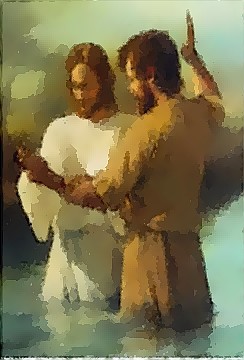
At the baptism in the Jordan, John points to Christ.  But he does not refer to him by name.  Interestingly enough, he uses the language of sacrifice.  “Behold the Lamb of God,” (Jn 1:29).  In the same event, the heavens open up and the Father reveals to Israel that the Covenant has been fulfilled and that a new covenant is about to begin.  “This is my beloved Son” (Mt 3:17).  The same message is repeated at the Transfiguration.  “This is my beloved Son . . . listen to Him,” (Mt. 17:5).  We are told that Jesus of Nazareth, who up to now had appeared to be the son of an anonymous carpenter from an anonymous town, for Nazareth is only mentioned once in the Old Testament, is actually the Son of God who is to be sacrificed like a lamb being led to its slaughter.Image

So I put to you this simple question, Brothers.  Are you willing to be more courageous in order to belong totally to God?  I do not mean foolish. I mean foolish as our Holy Father Francis spoke of himself, as a fool for Christ.  You were created to belong to God.  This was not your choice.  It was God’s choice.  However, the only way that we can belong to God is to follow the lamb that will be slaughtered.  John the Baptist knew this.  Thomas More knew this.  Francis of Assisi knew this.  All of them were willing to live and die for God before anything and anyone else.

You may be thinking that perhaps that Franciscan vocation is not for you, because it is a demanding one.  In truth, the Franciscan vocation is probably the easiest way of life in Catholic tradition.  The Franciscan vocation is to be a good Catholic.  How does the rule begin?  “The rule of the brothers of penance is to live the Gospel of Our Lord Jesus Christ?”  Isn’t that the vocation of every baptized person?  Isn’t that what we heard in the Gospel on the Feast of the Baptism of Jesus?  The divine vocation is to be a son of the Father.  The first-born Son of the Father gave his life, even though it meant leaving his widowed mother alone and in poverty in this world.  A Catholic must be willing to be a sacrificial lamb, if God asks it of us.

Image

Let our walking be our preaching.

I was equally concerned when I heard a postulant ask a novice what kind of reaction he received from people who saw the novice in the habit.  This kind of question concerns me, because the habit is not just a uniform.  It’s a flag that announces to all that Christ is present.  The brother in the habit does the exact same thing that John did at the Jordan.  John called attention to himself in order to divert it to Christ.

Our concern should not be what others think or how they react to the habit.  Our concern should be whether our actions and our words divert people’s attention from us to God.  When you walk into a store in a habit, do you behave and speak in a manner that says, “I belong to God and so do you?”  Or do you try to make yourself as anonymous as possible?  A Christian who does not call attention to Christ is a poor Christian.  This rule is not just for Franciscans.  Christianity is not meant to be lived in the shadows.  At the same time, the Christian should not absorb the attention.  He must divert it to Christ at every possible opportunity by how he deals with others and by the way that he lives trusting that he belongs to God, as did John the Baptist and the rest of the martyrs.

My brothers, never forget that God has called you to this life so that you may give witness to the world that we belong to God.  Witness often needs martyrs.

Be joyful, courageous, and never forget that God does not keep a record of our achievements, only of our fidelity.  Be faithful and take baby steps.couples for christ

Br. Jay, FFV

Superior General

Our mother and our friend . . . thoughts for the new year


ImageWhere does one begin to talk about Mary, Mother of God?  In my mind, there is nothing and no one that can compare to her.  She’s all that I have ever wanted and more.  She’s my mother, my friend and my hope.  I understand that Jesus is our hope.  However, how do we get to Jesus?  How did Jesus come to us?  Who will intercede for us before the throne of God at our final judgment?  Whose prayers will ring the loudest across the heavens begging God’s mercy for us?  Who will ask her Son not to look upon our sins, but to have compassion on our ignorance?  Who will gather the saints of heaven around the throne of Christ to pray for our souls?

At the wedding in Cana, Mary goes before Jesus and says, “They have no more wine.”  Jesus responded, “What does this have to do with me?  My time has not yet come.”  In modern language one would say, “Their poor planning does not mean an emergency for me?

If we believe in the saying, “Silence is consent,” then we can assume that Mary agreed, because she does not debate the point with Jesus.  However, despite the fact that there may have been poor planning on the part of the hosts, Mary knows that her concerns are her son’s concerns and that once she expresses compassion for an unfortunate person Jesus will not let it go without acting on it.  Inspired with this knowledge, she tells the servants, “Do whatever he tells you.”  So they did.  They brought the jugs of water, just as Jesus asked them to do.

I can’t help thinking about this.  All these servants did was to bring some jugs of water to Jesus, no great accomplishment.  Yet, Jesus turns the water into wine and saves the host the embarrassment of not having more wine.  It is this combination of doing what Jesus tells them and Mary’s intervention that saves the day, obedience and prayer.

ImageWithout her intervention there would have been no wine.  Without the wine, there would have been a scandal.  It was scandalous for a host not to have more food and drink than his guest could consume.

No one knows what God has in mind until it happens.  One thing is certain.  From all eternity, God knew that this moment would come.  The Second Person of the Most Holy Trinity knew that it would be his mother who would set his public life into motion.  Did God plan it this way?  I doubt it.  God does not manipulate human freedom.  The poor planning was just that, poor planning.  Mary’s intervention was of her own initiative, not a divine manipulation.  Jesus’ assent to his mother’s concern was also freely given.

When everything else failed, the Mother of God was their last hope.  It was not Jesus’ time.  He had no plans to begin his public ministry at this wedding; even though he knew that this was how it was going to begin.  And so it has been for me throughout my entire life.  My poor planning, my self-indulgence, my ignorance, arrogance and at times laziness has often led me into situations similar to that of the wedding hosts, apparent dead ends and anxiety.  Yet, when I remember the scriptures there are several verses that always come to mind, one of them is, “Do whatever he tells you.”

I struggle with temptation and sin.  I’m not going to say how much more or how much less than others, because I don’t know and it’s not that important.  The fact is that for me the struggle often seems insurmountable.  When I’m about to give up and just stop trying to climb up the mountain, I remember her words, her face and her heart.

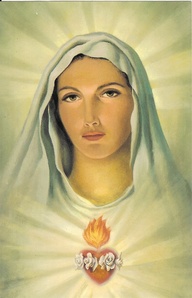
Hers must be the most beautiful face in the universe.  I have musings of this tender mother, whose face shines so gloriously that it’s blinding to the naked eye.  Yet, she makes it possible for us to gaze on her with the confidence of nursing children looking at their mother’s breast, knowing that she will feed them.  I often imagine her glorious beauty coming through the light with a pleasant look of concern and compassion.

In the same image, I can see her heart; an immaculate heart filled with love . . . a heart where there is no room for resentment and rejection.  Stop and think about this for a moment.  Where is a mother’s heart?  It’s directly over her womb.  It’s the one sound that every child hears and recognizes as his mother’s.  ImageDuring those 40 weeks in the womb, it is the beating of the mother’s heart that puts the child to sleep, that sets the rhythm of the days and nights for the child, and after the child’s birth, it is through the beating heart that the child first identifies his mother.  Remember, he has never seen her face, but he knows her heart.

The Incarnate Son of God, through whom we were created and for whom we were created also knows his mother’s heart.   Her prayers, her desire for our salvation, her love for us and her maternal assistance are well known to him.  For this New Year, I pray that we may all make greater effort to live as closely as possible to the Mother of God, whose heart will guide our steps to do what her son asks of us. At the end of our life, her heart will open itself to her Son as it did at Cana.  Just like at Cana, he will again be unable to resist the love that he sees in his mother’s heart and he will have compassion on us who have appealed to her for assistance.

 A New Chapter . . . 2013

You know, in the world of Kindle, Nook, iPads and Internet, the typical book is becoming an artifact.  It’s a pity, because a book is a very powerful icon of human life.  I was thinking about this during mass.  OK, you got me.  I was wool gathering during mass.  Actually, the sermon triggered it.  It was one of the best sermons I’ve heard all year.  My compliments to Father Nestor of the Archdiocese of Miami for an inspirational homily on the meaning of New Year’s Day.

As Father was speaking about the need to take inventory of how we have lived our faith and the opportunity to plan for a better year, I suddenly thought of a book.  I could see this small, traditional red hard cover book in my mind.  It reminded me of life, yours and mine.  Our lives are like a book.  That’s why I regret that in the not too distant future, the traditional book will become an artifact, because it’s a wonderful icon, as I have already said above.

ImageA book has a visible beginning and end.  It has perceptible chapters.  One ends and the other begins.  So too do our earthly lives.  They begin at conception and end at death.  Each year is a chapter.  One ends and one begins.

The attempt of a good writer is to keep the story moving, to inspire the reader to go on to the next chapter.  To do so, the writer works hard to keep our attention focused.  He has a thread that runs through the book, often referred to as a plot.  There is always a protagonist and an antagonist, not necessarily human, but there are conflicting forces.  It’s tension that keeps the reader’s interest.  It’s funny, because we live in a society where we’re all dying of heart conditions, but we thrive on tension . . . go figure.

New Year’s Eve or New Year’s Day is not just another year out and a new one in.  It’s a point of transition in our history.  It’s also an opportunity to tighten up the plot to give pleasure to the reader.  To do so, we have to look back at the chapter that is closing and carefully lay out the next chapter.  Like any good piece of literature, there are adjustments made along the way for the unexpected.  But like a good writer, we should never begin a new year without a plan.  Such an action is reckless.  It’s a sin against the God who created time for our benefit, not his.  God does not live in time and space.  Our lives must be a book that is pleasing to God.  Each chapter or year should represent an attempt to outshine the previous one.  Otherwise, we’re wasting the gift of time.

Here are some questions to help us examine our previous chapter and plan the next one.  I’m sure that there are more.  If you want to share them, please post them.  I’ll make sure that they are seen.

  1. Did I make proper use of the sacraments this past year?
  2. How much time did I give to prayer?
  3. Did I forgive and ask for forgiveness?
  4. What about the things that I own and the money that I make?  Did I use it wisely?
  5. Did I make proper distinctions between what my family and I need and what my family and I want?
  6. Were my business dealings honest and were my business decisions just and fair to those who are weaker than I am?Image
  7. Did I cave to pressure rather than stand up for the voiceless?
  8. What about the Church, am I faithful to her teachings or is being Catholic just a family tradition?
  9. If I’m a parent, did I take seriously my responsibility for my children’s souls or did I give them passes on mass and religious education?
  10. Let’s go back to material things.  How much of an effort did I make to teach my children that all created things are not for them and that everything that God gives us is for the benefit of others as well as our own or did I fulfill their every desire reinforcing their sense of entitlement?
  11. Do I manage my relationships out of love or out of guilt?
  12. Are my relationships based on charity and concern for the other and the satisfaction of the other person’s company or are they purely utilitarian?
  13. Do I knowingly let others use me and my gifts for their selfish purpose?
  14. Have I stood up to challenge immorality in our society, in my family, in my workplace or did I cave because, “I have a family to think about?”  Since when does family take precedence over truth?
  15. Am I aware of the four last things:  death, judgment, heaven and hell?  What would God say about my book, if I died tonight?

If this last chapter has not been as good as we would like it to be, God is still giving us time to begin a better chapter.  Let us make good use of the precious gift of time.

Information night on the Franciscans of Life and

Project Joseph — January 7, 2013 — 7:30 PM to 9:30 PM

Image

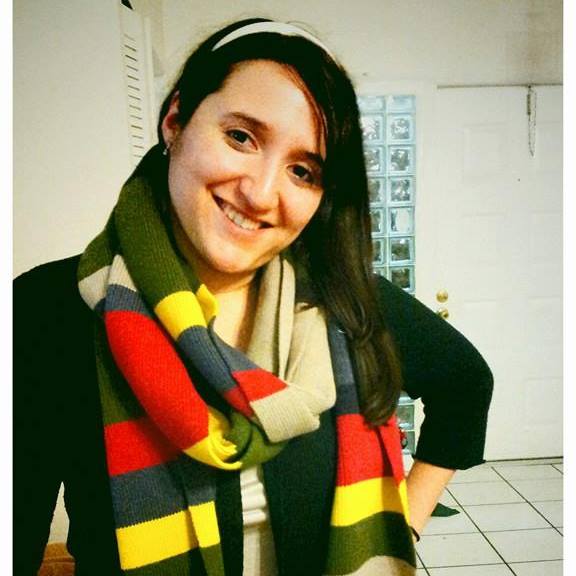
Proud dad and daughter
(Published with permission)

St. Maximilian Kolbe Education Center

701 N. Hiatus Road, Room 206

Pembroke Pines, FL 33026

For driving directions call

954 – 432 – 0206

DO NOT call Br. Jay.  He gets lost going to the kitchen.

However, for more information contact us .

Image

The Franciscan Brothers of Life wish you and your family a happy and grace-filled New Year — Br. Jay, FFV

Published in: on December 31, 2012 at 11:01 PM  Comments (1)  
Tags: , , ,

I’m Back . . .


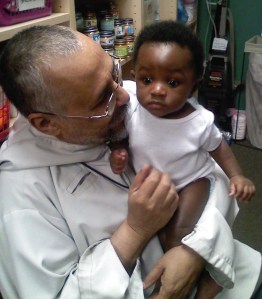
br jay and baby

Baby is not too sure about this

as I promised.  It’s been a very busy year.  Let’s see, . . . where to start counting the Lord’s blessings.

ImageLet’s begin with ministry.  Our Project Joseph, which for those who don’t know is our ministry to fathers in crisis pregnancies is growing.  This past year we moved to a new location in Miami and BOOM!  We suddenly had to start two groups to serve the needs of the dads.  Now we have five groups going in four centers.  This year, we reached 50 Project Joseph Babies.  Who are the Project Joseph Babies?  These are the babies born to dads in our program.  They’re all beautiful, healthy and happy kids.  We’re very glad to have them and very thankful to Our Lady of Guadalupe who protected in the womb.  We are very proud of their parents too.  For some of our parents, having a child is very frightening.  These are hard times in which we live.  Let’s thank Our Lady for protecting the unborn and send up a cheer for the parents who trusted.  I’m always reminded of Elizabeth’s words to Mary, “Blessed is she who trusted . . . “  It’s interesting, because Elizabeth is speaking to an expectant mother.

Published in: on December 12, 2012 at 7:38 PM  Comments (1)  

Where are the Catholic pro-life men?


As we look out at the world of men (males) who struggle with paternity, we often wonder why or what is happening in society.  We should wonder is why not?  Why are we surprised, when there is such a shortage of good Catholic men to guide their brothers?  Therefore, why should some men not be lost in the culture of death and at a complete loss as they face the daunting task of parenting?

This is not to say that those who have walked themselves into situations where they face unexpected fatherhood bare no responsibility for their actions and for their choices before or after.  It is easy to point the finger and wag our tongues at so many men who do not step up to the plate and become good Christian fathers who embody the very presence of the Fatherhood of God.  Yet, other men, who claim to have found the loving Fatherhood of God and claim to live in the Spirit of the Father, do not reach out and share the Gospel with their brothers.

It is very easy to condemn a culture of death and to sentence those facing life-threatening choices such as abortion and contraception from the comfort of our homes.   Such a person is like the judge who sits in judgment on his bench and condemns the guilty man for his delinquencies; but when his day in court is over, he retires to his quiet and serene suburban home.  On the way home, he deliberately bypasses the riotous and noisy neighborhoods where the delinquents that eventually will find their way into his courtroom are being bred and formed.  Such a judge may feel that he is doing something for society by passing judgment.  The truth of the matter is that while he has time that is not on the bench, he does nothing for the community that passes through his courts on a daily basis.  In other words, he does nothing to put himself out of a job.

The same is true about Catholic men who sit in judgment of their brothers who are considering abortion or even worse, who have participated in an abortion by providing the dastardly service, taking the life of an unborn child or pushing the mothers of the children whom they conceived to submit to such a horrid crime.  We go to pregnancy centers, prolife workshops, provide education to men who are struggling with the challenges of poverty, addictions, violence, displacement and a lack of sexual integrity.  It is a challenge to bring these men into the centers, the churches, and the community of believers.  Evangelization and service to them can seem an insurmountable task, because there are not enough workers in the vineyard.  In other words, there is a critical shortage of Catholic men who serve their brothers and evangelize them.

The prolife movement has become feminized, as if abortion, euthanasia, the destruction of human embryos, the unscrupulous use of the death penalty and the killing of infants who were not killed by abortifacients were a women’s issue.  Middle-age women and teens are at the forefront of the prolife movement, especially among Catholics.  Catholic men attend workshops and lectures and then go home.  However, one third of the people affected by crimes against human life, ultimately against God, are men.  Another third are women and the last third are the unborn children.

We need to challenge men to step up to the plate and be good fathers.  We need to evangelize young men instead of handing them condoms.  It is our duty to bring all men back to Jesus.  However, we need men to evangelize their brothers.  These can be married men or single.  They can be secular or consecrated religious.  Teams of consecrated celibate men and married men are the ideal missionary team.  Together, we can present the big picture of what men can be.

If you’re male and are reading this, ask yourself if God is calling you to serve your brothers in the prolife ministry by walking the journey with them.  Don’t worry about not having anything to contribute or not knowing what to do.  Those of us who are in the ministry will walk with you and together we can walk with our brothers.  Just bring the gift of your masculinity before the Lord and put it at the service of your brothers.

Where are the prolife men?

For more information contact Brother Jay here .

Published in: on November 19, 2010 at 9:17 AM  Comments (1)  

Jesus Wants to Go to the Poor


It’s been a slow day for this old brother.  There is a head bug going around and we have become good friends.  The problem is that when you get one of these colds, you can’t go to the pregnancy centers, because you don’t want to spread it to the parents and children, especially the moms that are expecting.  God forbid that they get sick.  It’s not only cruel, because pregnant women can take very few medications, but they often lack medical insurance.  The largest sector of people are immigrants who are struggling to make it.   Because of the restrictions on Medicaid and Food Stamps, they need our help.

We desperately need funds and people to open a house for pregnant women who live in abusive situations.  They have no place to go.  The existing community resources are over extended.  More homes are needed, esepcially a home where pregnant mothers can go with their children.  Many homes and shelters have limits on the ages of the children that they can bring with them.

A few weeks ago I received a call from a woman.  She was pregnant and had a 12-year old.  She had to get away from an difficult situation.  No shelter in the metropolitan area would take her, because she had a 12-year old.  They don’t take mothers with pre-teens.  Br. Peter and I found ourselves trying to find a place for Jesus.  He was homeless, just like he was when Mary and Joseph arrived in Bethlehem 2000 years ago.  After six hours of calling, begging and praying, a home became available.  St. Joseph, the protector of families came through for us.

The unemployment rate is on the rise.  This really concerns me.  I want to do something about it, but without more brothers and volunteers, we are very limited.  I want to give these people something of Jesus and sometimes, I don’t know where to begin.  So . . . as the song from the Sound of Music says, “Let’s go to the very beginning.  A very good place to start.”  Do you remember that song?  It’s the one where Maria teaches the children to sin the Do Re Mi.

We always go to the beginning.  We sit and we listen and try to help them find services.  We provide clothing, food, counseling and education.  We now have a father’s program that is increasing, thanks to the intercessory prayers of St. Joseph.  We have put our men’s services in his hands.  Since we have done so, the number of men coming to our classes has quadrupled.  There are couples who were living together that have now married and are forming families.  Some couples have separated, realizing that sex and having children is not the best foundation for a marriage.  At the same time, they have committed to working together for the good of their children.  A married couple that seemed to be on the verge of divorce is now enjoying days walking through the park, visiting the local mall and spending time talking.  These are all signs of St. Joseph working overtime.

I want to invite you to come visit us and spend some time with our families.  They are truly wonderful.  We do not have a big friary and probably never will have one.  We live very simply, according to the spirit of St. Francis who wanted his brothers to live the monastic experience of prayer, obedience and brotherhood among God’s people as itinerant preachers and brothers to all.   Therefore, we own nothing, not even a house.  We cannot offer the comforts of a traditional monastery or priory.   However, like the early Franciscans, we offer you a home with brothers who care about each other, the Church and the poor.  We take Jesus to them and find him among them.

Obedience to the Church, the Rule, and the superior, the Eucharist, common prayer and individual prayer is the foundation of the work.  Without this, the work ceases to be Jesus’ work.  It becomes social work.  Think about it and let us know.  I look forward to hearing from you.

Fraternally,

Brother Jay

Published in: on October 10, 2010 at 12:53 AM  Leave a Comment