Franciscans of Life Journey Back to their Marian-Franciscan Roots to Build on Tradition


This being the month of Mary, our weekly formation/meeting has been focusing on Mary.  We’ve been learning some Marian hymns that have been part of Franciscan tradition for centuries.  One of these older and more famous hymns is “Ultima In Mortis Hora”.  You can find it on YouTube.  The best rendition that I’ve found is sun by Franciscan Brother Benedict from the Custody of the Holy Land.  Check it out.

The Ultima, as it’s commonly known by Franciscans has an unknown origin.  But it tells us something very important about the Franciscan family.  From our very early days, before the Franciscan family grew and began to diversify into many branches of the first, second and third order, as well as other independent Franciscan congregations and societies, May’s role as the mother of the Church and the Franciscan family was well establish.  Franciscans counter on her to accompany us our last day on earth and to beg her son for peaceful and grace filled death.

Check out some of these quotes from early Franciscans, including Francis of Assisi himself.

Hail, holy Lady, most holy Queen, Mother of God, Mary who art ever Virgin, chosen from Heaven by the most Holy Father, whom He has consecrated with the most holy beloved Son and the Ghostly Paraclete, in whom was and is all the fulness of grace and all good. Hail thou His palace!
Hail thou His tabernacle!
Hail thou His house!
Hail thou His garment!
Hail thou His handmaid!
Hail thou His Mother and all ye holy virtues which by the grace and illumination of the Holy Ghost thou infusest in the heart of the faithful, that from infidels ye mayest make them faithful to God.

The Franciscans of Life have a very special attachment to the Gospel of John, because it was St. Francis’ favorite Gospel.  One of my favorite passages in this mystical gospel is Jn 2:5.

His mother said to the servants, “Do whatever he tells you.

Mary is the Queen Mother who intercedes before the King on behalf of his people and who speaks to his people with the authority of a quee.  She does not suggest that they do whatever he tells them.  She does not request or encourage them.  She COMMANDS them.  Grounded in revealed truth, the Franciscans of Life, venerate Mary and pay close attention to her as the Queen Mother of the King who is the redeemer of the human race, the second person of the Trinity, the Word of God who has become incarnate, the Risen Lord who left behind an empty tomb.  This is is his Queen Mother.

No matter how Protestants and other denominations cut it, there is not denying that she is truly the Queen mother,  not simply the mother of a King.  This is a woman who intercedes for her people and commands her people to do whatever her son tells them.

I want to close this blog entry with a few statements from some of our more illustrious Franciscans throughout history.

St. Anthony of Padua

vision-of-st-anthony-of-padua-1662.jpg!BlogNow the Lord has established a refuge of mercy, Mary, even for those who deliberately commit evil. Mary provides shelter and strength for the sinner.”

St. Bonaventure: StBonaventure

Men do not fear a powerful hostile army as the powers of hell fear the name and protection of Mary.

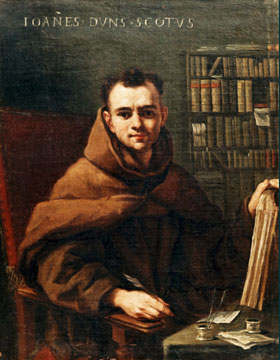
Bl. John Duns Scotus

SDuns_Scotus1he becomes the embodiment of all perfection in creation, freed from sin and from its effects through the saving power of Jesus Christ, the universal Mediator between God and humankind.  It was fitting that God would choose a Mother for His Son, who would be totally free from any stain of original and actual sin, in order to become a channel of grace to us all. 

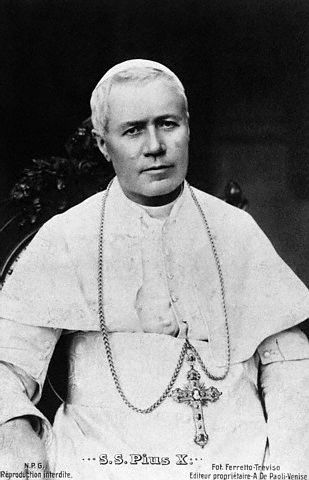
St. Pius X (Secular Franciscan)Saint Pius X

If we trust as we should in Mary, we shall recognize in her, the Virgin Most Powerful ‘who with virginal foot did crush the head of the serpent’.

St. Maximilian KolbePROTESTANTS:  Pay attention!

St. Max

Never be afraid of loving the Blessed Virgin too much. You can never love her more than Jesus did.


pio and marySt. Padre Pio

Always stay close to this Heavenly Mother, because she is the sea to be crossed to reach the shores of Eternal Splendour.”

So there is is folks.  Eight-hundred years of Marian-Franciscan history.

In our effort to return to Tradition, the Franciscans of Life are recovering our Marian roots in song, prayer, cultus and most of all imitation of the Immaculate Mother of God and Queen of the Franciscan family.

Come and see . . .


Published in: on May 21, 2014 at 12:11 PM  Leave a Comment  

Unity In Diversity


It seems that the Holy Spirit has plans for us.  I’m never sure what they are; so I just go along.  Not long ago I said that God never ceases to surprise us.  I was certainly surprised this week.

What’s fraternity without a birthday?

We normally have our community meeting, formation and fraternity night on Mondays.  It’s a long evening that begins with Vespers followed by learning sacred music, then a lesson in theology.  After our theology lesson we usually engage in some learning activity about Franciscan life, usually in the form of a game.  This helps us stay awake and engaged with each other.  Boy are our brothers competitive.  There is always a snack to share and a lot of  poking and roasting.  Of course, there is housekeeping stuff that every group has.  Our community meeting is open to any man, married or single, who is curious about Franciscans of Life.

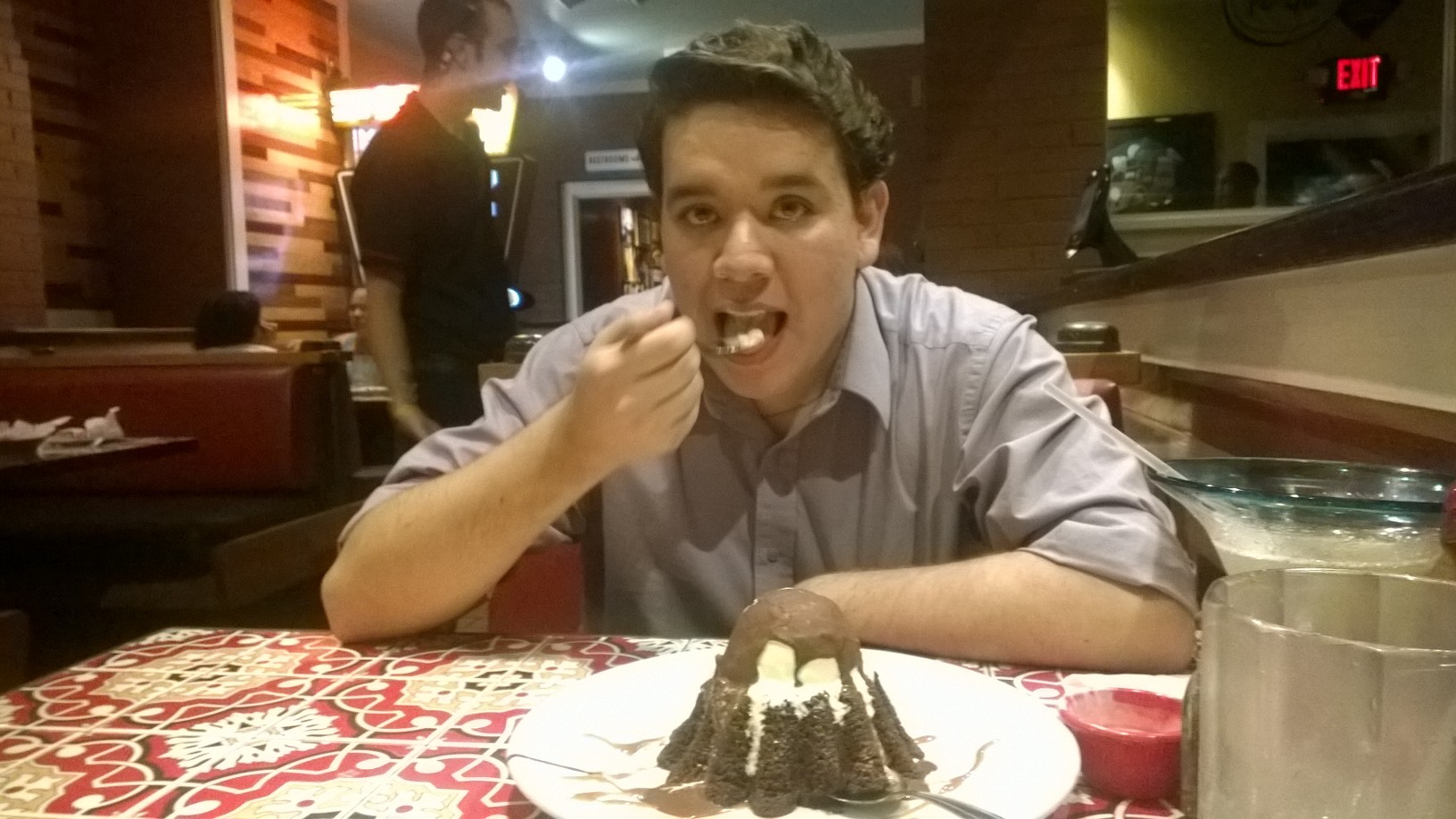
Postulant, Jose, enjoys his birthday cake and ice cream

Postulant, Jose, enjoys his birthday cake and ice cream

This past week we had another inquirer, which brought the number of inquirers up to three.  However, one of the inquirer’s approached me to talk about joining our community.  Not only that, but I received a beautiful letter from a young man who is in high school and is quite curious about us.  I’m looking forward to meeting him probably this  coming week.  The age range of our men, between inquirers and professed is from age 15 to 67.  That makes our average age 39-years old.  This is younger than most religious communities, secular orders, dioceses or secular institutes.  The great thing is to see these men interact very comfortably despite the difference in ages.

Jerry and Eduardo are received as postulants

Not only has the Holy Spirit sent us men from a wide range of ages, but also from different cultures and language groups.  We are Virginian, Bostonian, Floridian, Jamaican, Mexican, Peruvian, Colombian, Ethiopian, and Cuban.  We are single men who are consecrated to a life of celibacy, single men called to the married life, but are not yet married and married men who are fathers.  In a tiny community there is unity in diversity.  I  believe that we’re a microcosm of the Church.

Any man interested in spending an evening with this interesting little group of men, is always welcome on any Monday night, beginning at 7:30 PM.  Simply contact me via telephone or email.

We never know God’s plans for us until we take a risk with love.


“Daddy, tell me more about the Trinity”


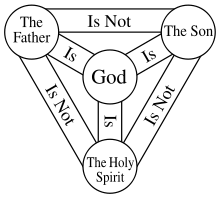
trinityThis article is a response to a request from my princess who asked me to write about the Trinity for her.  She remembered that I had taught her and her brother about the Most Holy Trinity and asked that I write about it for her.

I’m very proud that my daughter is meditating on the Trinity. Before proceeding, I’d like to explain that that I do have a daughter and a son.  Some may find it strange that a consecrated brother has children, but it’s not that strange at all.  It’s just not that common.

Let’s see . . . St. Augustine had a son.  Elizabeth Ann Seton had five children.  Louise de Marillac also had a son.  Jane Frances de Chantal was the mother of four.  St. Maximilian Kolbe’s mother became a Franciscan sister.  There have been widowed men who are fathers and have consecrated their lives to the service of the Church, but widowers are a smaller number than widows.  I’m not sure what that says about men and women.  Do women outlive men because they need to remain here to do more penance or do men die before women because they don’t have the stamina to deal with life’s challenges?  I guess we’ll find out in heaven.  But I’m very happy to be among these great men and women who have been parents and consecrated sons and daughters of God and the Church.  Having said all of this, let’s get back to the Trinity.

Writing about the Trinity can be a task as daunting as rewriting the Summa Theologica.  An old legend tells us of St. Augustine who pondered the mystery of the Trinity.  While doing so he encountered a child on a beach who was trying to pour the ocean into a hole that he had dug in the sand.    When Augustine told that child that it was impossible to pour the entire ocean into a small hole in the sand, the child told him that it was far easier to do that tan to fully comprehend the Trinity.

Anything that we can say about the Most Holy Trinity is based on what God has chosen to reveal to us about Him.  There is much more to come, but we won’t see it until eternity.  All I can do here,  Princess, is to “paint a picture of the Trinity” with very broad strokes.  I may have to do this in parts so as not to make it too long and boring. Let’s begin with what the Trinity is not.

When we speak about the Father, Son and Holy Spirit, we’re not speaking about part of God.  God does not have parts, because he’s not created.  Only created things have parts.  Nor is God some existential composite.  We cannot speak about parts of God. When speaking of the Trinity, we’re not speaking about parts of God.  We’re speaking about persons in God. We must make a distinction between person and people.  People are human and created.  Personhood describes the nature of a being.  Peoplehood describes the being as part of a collective.  God is not part of a collective as are human beings.  Therefore, we are both persons and people.  God is three persons, not three people; because there is no collective.

St. Thomas Aquinas tells us that God is simple. It is also important to understand that God is fully actualized.  There is nothing missing in him.  There cannot be an absence of love in God.  However, love is oriented toward the other.   It is not self-centered.  Love exists in communion with the other (the beloved).

In God there is otherness in oneness.  This otherness is three persons: Father, Son and Holy Spirit, one God.  In these three persons, there is perfect love.  There has to be love.  If there were not love in God; IT would be something else, but not God. Where there is love, there is also communion.  Communion only exists when there is otherness.

This otherness in God has revealed itself to us as three persons who are one God:  Father, Son and Holy Spirit. They do not share a common divinity.  Each person is fully divine, fully God and to see one is to see the other.  Remember that we said that God is simple.  Where you share something, you’re dividing it.  It ceases to be simple and becomes multiple.  It also loses something.

Analogies don’t always work perfectly, but they help.  If I have a pizza and I slice it, I no longer have a pizza.  I have pizza.  There is a difference between having pizza and A pizza.  The former are parts of the latter.  But do you see how complicated this became when we started dividing and sharing?  Throw away any notion that Father, Son and Holy Spirit, divide and share divinity, godliness, power, authority or whatever.  Each is the same, but each is a distinct person.  It’s incredible how fascinating God is in his simplicity and his eternal communion of love.

“According to Aristotle, a good is something desired. Now is there anything more desirable than God—He is the greatest good,” (Taylor Marshall, 2014).  Imagine if God had to go beyond himself to love and be loved, to find community and experience family.  Would he then be the greatest good?  No, because he would have an unmet desire.  He would be missing something in himself, something that he has to go find outside of himself.  What kind of God is that?  The opposite thought would be to believe that God does not wish to love, does not wish community and family.  Would this be the perfect God?  No.  Community, family and love are natural to God.  Hence, when we are created in God’s image and likeness, guess what?  We are created for community, family and love.  There is more that can be said about the creation of man, but that’s another essay.

Catholic dogma tells us, “The mystery of the Most Holy Trinity is the central mystery of Christian faith and life.  It is the mystery of God in himself,” (Catechism of the Catholic Church, No. 234).

Let’s start wrapping up by saying that this mystery is uniquely Christian in that God has revealed it to the world through Jesus Christ and no one else. God tells us about himself in this mystery.  He tells us that he is one, that he exists in a community of love and that he is beyond anything that we can imagine.  He invites us to engage with him as Father, Son and Holy Spirit and to come to know him in his fullness when we get to heaven.

Let us remember what he said to the Apostles.  “Go therefore and make disciples of all the nations, baptizing them in the name of the Father and the Son and the Holy Spirit,” (Mt 28:19).  Observe, the he commissions the Apostles to baptize in “the name” not “the names”.  Father, Son and Holy Spirit are one and three.  On another day “Jesus said to him, “Have I been so long with you, and yet you have not come to know Me, Philip? He who has seen Me has seen the Father; how can you say, ‘Show us the Father’?”(Jn 14:9).  If you have seen Christ, you have seen the Father.  It is the Holy Spirit who opens the eyes of faith to find the Father through Christ the Son.

My Princess

My Princess

Princess, if you have found Christ, then you have found the Father, because she who sees him sees the one who sent him.  This vision of faith is given to you by the Holy Spirit.

Stay tuned Princess . . . more to come on the Trinity.

Daddy 🙂


Published in: on May 4, 2014 at 10:10 PM  Leave a Comment  
Tags: , ,

New Brothers Join the Franciscans of LIfe At a Historic Time in the History of the Church


This is a very special morning.  We have just received two new brothers into our community at a very special moment in the history of the Church.  Never before in the history of the Church have we seen two pontiffs canonized in one ritual.  In addition to that, their entrance into postulancy comes during the Easter Season, when the Church celebrates the glorified Christ who conquered death and restored us to life.  Let’s not forget that this week we celebrate Mercy Sunday, which was decreed by St. John Paul II.  

As I said in my homily during the Liturgy of the Hours, St. John Paul did not pull Evangelium Vitae (Gospel of Life) out of his sleeve.  On the contrary, throughout the Gospels we see Christ healing the sick, protecting the innocent, crying for Lazarus and restoring him to life.  We hear Christ offering himself up as “life giving water” and “bread of life”.  Christ offers himself up as the Gospel of Life, as Evangelium Vitae.  He promised that all who believed him would have life in this world and the next. 

Our Holy Father St. Francis heard these words and took them to heart.  He embraced the Trinity with every fiber of his being and he became the great brother of all that is alive.  Brother was not just an ecclesial title for Brother Francis of Assisi.  Brother described what he was in relation to all created things, be they water, animals or people.  Francis realized that we are sons of the one Father.  We flow from the same source of life; therefore, we share one inherent dignity, the dignity of the sons of God, of whom Christ is the firstborn.

These new brothers have been called to discern the voice of God, to listen to his will for their lives.  God does not call us to do anything in particular.  He calls us to be what he created us to be, brothers to all men, from the richest to the poorest, the healthiest to the terminally ill, the neighbor to the foreigner, the preborn child to the elderly.  God calls us to hear his voice, to learn how to follow suit, in line with men like St. Francis of Assisi, St. Maximilian Maria Kolbe, St. John XXIII and St. John Paul II and women like St. Giana Molla, Bl. Teresa of Calcutta and St. Edith Stine.  This is quite a crowd.  Each of these men and women spent his and her life in service to the voiceless.  In his or her own way, each laid down his or her life as a testimony to the sanctity of human life.  These new Franciscans of Life have been called to walk along with these men and women, to be brothers to all men and to do whatever is needed to make known to the world that life is a sacred gift to be protected and to be venerated.  When we venerate life, we render unto God an act of worship and thanksgiving.  To celebrate the Easter Season while ignoring the sanctity of life is meaningless.  What is Easter if it’s not about life?

These new brothers have requested that we admit them to our fraternity druing Easter, the day after Mercy Sunday in which Christ promises eternal life to anyone who begs for his mercy, one day after the Church has solemnly and infallibly defined and declared that John Paul II, who was the pope of the family and the pope of life is a saint.  We have welcomed them one day after the canonization of St. John XXIII, a bishop who was responsible for saving the lives of thousands of Jews during the Holocaust and who rescued a ship with 500 Jewish children whom no one wanted.    These men are walking in the footsteps of greatness.  It is an indicator that God has great plans for them, for all of us. 

Now begins the work of formation.  During the next few months, they will engage in a deeper study of our Holy Father St. Francis.  The study of Evangelium Vitae will become paramount.  We will try to lead them through a prayerful examination of our Catholic faith.  Prior to moving on to novitiate, we must make certain that their faith is grounded in the solemn truths of the Church, free of distortion.  It is important that they become familiar with Francis of Assisi, our teacher.

More importantly, now begins the period of silence.  This must be a period during which they make time to listen to God.  Not a day should go by when they do not invite the Lord to speak for his servant is listening, because he who is the Lord of Life has the words of eternal life.  But we must ask the God of Life to open our ears that we may hear.

During this time of postulancy the new brother does not take his eyes off the voiceless of this world.  Christ spoke to Francis through a leper.  He will speak to each of us through the voiceless as well.  When we run into a person who is voiceless, we do not pass without stopping.  God is trying to speak to us.  We listen with patience and love.  We must never pass by a voiceless person without smiling.  A smile is an invitation to the other person.  It invites the other person to engage with us.  To be true brothers of life, we must invite all men to engage with life.  This is not something that we do with simple words, but with the power of a smile and an act of reverence for human dignity.

I invite the new brothers and all of our friends to look to those men and women that I mentioned above.  Learn from them how to bring the Gospel of Life to all people.  Become their students and their friends.  

We welcome these new brothers to our fraternity.  May the God of Mercy fill them with peace and with joy.   


Published in: on May 2, 2014 at 1:33 AM  Leave a Comment  

God never ceases to amaze


OK . . . so April 30th was my last CCD class.  I teach Old Testament Christology to grade five.  I put up a web with all of the names that we have covered in the OT:  Adam, Noah, Abraham, Isaac, Jacob, Moses and David, also the covenants, the books of the Torah and the Decalogue.  In the center, I placed the name of Jesus.  Flowing out of the name of Jesus we have the word, LOGOS.  Then an arrow away from “essential” and toward “personal”.

Now I ask the kids to explain what we learned this year.  Each student contributes a piece.  The OT foreshadows Jesus.  Every event and person in the OT points to the LOGOS.  But the LOGOS or WORD is personal, because he is a real person.  Jesus is not a word.  The WORD is not essential.  Jesus is the second person in the Godhead.  Then they proceed to explain what each of the main characters, events, books and the law of the Decalogue tells us who Jesus is.  They conclude that all was created through the LOGOS, for the LOGOS and that the LOGOS existed before dinosaurs and other creatures.  You have to remember that these are 11-year old kids.  Dinosaurs are important to them.

So I ask them, “If you had to say, in one sentence, what the OT is about, what would you say?”  The kids all jump in and each adds a piece.  “The OT tells us that Jesus is the fulfillment of every covenant that God made with Israel.”

Then I ask the kids, “How do the OT writers tell us this?”  They put their heads together again.  “The OT writers show us how everything foreshadows the new covenant.”

“And was the old covenant ever revoked?”  The kids respond, “No. God never goes back on his promises.  He fulfills them.  The Old Covenant was never canceled.  To cancel and to fulfill is not the same thing.”

By this point the Director of Religious Education is practically standing on her chair cheering the kids.  They did this entire course using just the bible and my notes from the seminary.  I don’t like the book.  It may as well have been written by Disney.  It has all of the fantastic stories of the OT with none of the Christology.  She tells them that they are ready to move on to the next level which is a course on the Gospels.  I don’t teach that course.  The kids are all excited.

Here is the grabber.  We’re cleaning up.  I’m sitting down, because I just came out of the hospital after suffering a TIA.  I wanted to get out to teach this last class.  It’s important, because it wraps up the entire course.  I’m not really paying much attention to what’s happening behind me.  Suddenly, someone comes up behind me, hugs me and whispers in my ear, “Brother, I love you, because now I understand.”

I turned to look.  It was a little boy, age 11.  He has been the quietest kid in the class.  I never would have expected any sign of affection from him, not because he’s a bad kid, but because I thought him to be reserved.  When I realized who it was I asked him, “What did you say?”  He repeated himself.  I, like an old lady, started to cry.  If I died tonight, I would feel that I have done at least one worthwhile thing in this life.  God is truly a God of mercy and awe.

Published in: on May 2, 2014 at 1:21 AM  Leave a Comment  

What’s a brother? Do we really need them?


Very often I’m asked, “What is a brother?”  Most Catholics don’t have a clue, because most Catholics have not been well educated on the religious life.   Most of our parishes and schools are staffed by diocesan priests (secular priests) and religious sisters.  Neither received a good formation on the religious life.  Both were trained to think in a rather narrow paradigm.  Men become priests and women become nuns, who are not really nuns, but sisters.  A nun is a cloistered woman religious.  Even there, most priests and sisters were not well formed on the different vocations.  How could they pass this knowledge on to the lay faithful?

I have a several good friends who are diocesan priests.  I cringe when they try to explain what a brother is.  They often explain us in terms of what we’re not.  They’ll say something like, “Brothers don’t say mass or hear confessions.”  Imagine a creature from another planet that does not speak our language and asks, “What’s a father?”  You answer, “Fathers don’t bear young?”  That bit of information was as useful as a GPA that doesn’t speak your language.

Then there are those who try to explain what a brother is by describing what brothers do.  That’s not quite helpful either.  You’ll often hear people say, “Brothers teach, nurse, do social work, cook, and open doors, run schools, serve priests, are monks, are friars, run soup kitchens, and so forth.” All of those enterprises can be done by anyone.  One need not be a consecrated religious to do these good works.  The difference is how the brother does these things, not that he does them.  A brother comes to every task with the same worldview as Christ and the Church.  His vision and mission are defined by the charism of his religious community.  A Franciscan brother and a De La Salle brother can both teach and do so very differently.  While they see their students as Christ sees them, there ends the similarity.  The Franciscan brother approaches his students guided by the vision of St. Francis and the De La Salle brother is guided by the vision of St. John Baptist de La Salle.  The same applies to every ministry.  A lay secretary and a brother secretary do the same work, but bring very different approaches to the task and do the same task for different reasons.

Vatican II and Canon Law define brothers in a decisive way.  A brother is one called to the state of religious life . . .  a state for the profession and perfection of the evangelical counsels (obedience, poverty and chastity), which is complete in itself (Decree Perfectae Caritatis, n. 10).  Commitment to the priestly ministry is not required by the consecration which is proper to the religious state, and therefore even without priestly ordination a religious may live his consecration to the FULL.

In other words, it is a different call that Christ’s makes to a man to live only for him by consecrating his life to him through the vows of chastity, poverty and obedience.  He lives out this consecration through a life of prayer, penance, fraternity, work, silence, solitude, in imitation of Our Lady who always pointed all men to Jesus. Everything he does points to Christ who is the firstborn among many brothers. A brother is like John the Baptist who proclaims, “Behold him . . .

In looking at the historical development of consecrated life in the Church, a significant fact is clear: the members of the first religious communities were called “brothers” without distinction.  The most famous of them is St. Benedict.  The great majority of them did not receive priestly ordination. A priest could join these communities but could not claim privileges because of Holy Orders. When priests were needed, one of the “brothers” was ordained in order to meet the community’s sacramental needs.

The ideal of a consecrated life without the priesthood lives on in St. Francis of Assisi, who did not feel personally called to the priestly ministry. Francis can be considered an example of the holiness of religious life. His witness demonstrates the perfection that can be reached by this way of life.

This fall the Church will begin the Year of Consecrated Life.  She has asked that religious, bishops and the different dicastries in the Vatican put together information on the consecrated life, especially on brothers.   The Church acknowledges the decreased number of vocations to the brotherhood.   St. John Paul II said “a new effort must be made to foster these important and noble vocations so they may thrive anew: a fresh effort to promote vocations, with a new commitment to prayer. The possibility of a consecrated life (without ordination) must also be presented as a way of true religious perfection in both the old and new male institutes.”

Cardinal Timothy Dolan once said, “The brotherhood is the forgotten vocation.  Brothers are those men whom most of us have disregarded as unimportant, because we do not understand that the consecrated life is essential to the Church’s Catholic identity.”

Published in: on May 2, 2014 at 1:17 AM  Leave a Comment  
Tags: , ,

God Continues to Call — Despite Our Deafness


On January 21, 2013, the Brother William Vito received the habit of penance as he begins the second half of his novitiate, which is the final stretch before making first profession to live in absolute obedience to the Gospel in the manner that St. Francis lived it, always remaining in God’s love and in the service of the voiceless.  We also received a new postulant, Raciel Borrego.

Image

Br. William Vito, Br. Jay and Postulant Raciel Borrego

Image

On a sadder note . . .

God gives us rights from the moment of conception

God gives us rights from the moment of conception

A Day of Shame for America

January 22, 2013 is the 40th anniversary of legalized abortion in the United States.

A nation that cannot provide for a woman’s welfare without denying the right to live to her unborn child has abdicated its most sacred duty: the protection of the voiceless.

Published in: on January 22, 2013 at 10:16 AM  Leave a Comment  
Tags: , ,

AN OPEN LETTER TO THE BROTHERS


Image

Superior General

My dearest brothers and sons:

I write this letter to you via our blog in an effort to communicate with you and to share with the world something about our life as Franciscans.  As we sat through the readings of this past Sunday, we heard Isaiah proclaim that there would be a voice in the desert preparing the way of the Lord.

St. Luke tells us that this is John, the son of Zechariah and Elizabeth and that he was born to barren parents.  His conception is humanly impossible.  It is only possible through divine intervention.  Therefore, John belongs totally to God.

ImageWhat about us?  Are we not called to this way of life by divine intervention just as John was called?  Do we not belong totally to God?  Do we live, work, pray, play and think as one who belongs totally to God or as one who still belongs to the world?

I was very sad today when I spoke about providing housing for a homeless family, even if we have to place them under the same roof with us or our loved ones and one of you immediately brought up the typical human concerns.  “What if . . . ?  We don’t know much about them.”

homeless mother

There it was, right before my eyes, the same hesitation that we see in Zechariah when the angel announces the birth of John.  I was hoping to see the confidence and courage of John the Baptist who never questioned what he had to do.  In the end, it cost him his life; but he was born as one who belongs to God and died the same way.  Jesus called him the greatest man who ever lived.

Image

St. Thomas More

I’m reminded of one of our great Secular Franciscans, St. Thomas More, who did not hesitate to belong to God and to live, speak and act as one who belongs to God.  There is  a wonderful quote in the biography of St. Thomas More in which he says that even his wife and his beloved children cannot come before God and His commandment to love Him above all things and our neighbor as ourselves.  Thomas puts his money where his mouth is.  When his wife and children visit the Tower of London to beg him to reconsider his position and to give in to Henry VIII’s wishes, Thomas won’t budge.  His wife reminds Thomas that if he does not sign the oath, not only will he be executed, but she and their children will be left homeless and penniless.  The crown will confiscate all of Thomas’ properties and assets.  However, Thomas would not turn his back on God’s command to love Him above all things and neighbor as himself.  As we know, Thomas was executed and his family was left homeless and penniless as a result of Thomas heroic Christian virtue.  We have two lives here, John the Baptist and Thomas More, two men in different times and different circumstances with the courage to follow God and become martyrs rather than be practical as the world is practical.

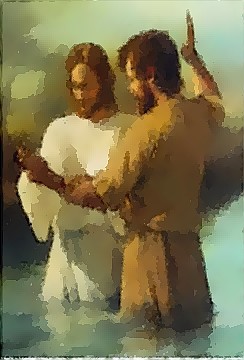
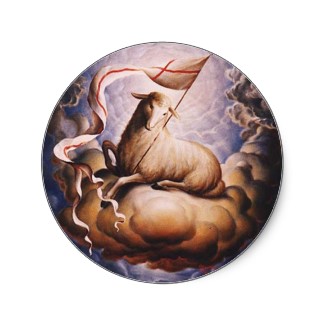
At the baptism in the Jordan, John points to Christ.  But he does not refer to him by name.  Interestingly enough, he uses the language of sacrifice.  “Behold the Lamb of God,” (Jn 1:29).  In the same event, the heavens open up and the Father reveals to Israel that the Covenant has been fulfilled and that a new covenant is about to begin.  “This is my beloved Son” (Mt 3:17).  The same message is repeated at the Transfiguration.  “This is my beloved Son . . . listen to Him,” (Mt. 17:5).  We are told that Jesus of Nazareth, who up to now had appeared to be the son of an anonymous carpenter from an anonymous town, for Nazareth is only mentioned once in the Old Testament, is actually the Son of God who is to be sacrificed like a lamb being led to its slaughter.Image

So I put to you this simple question, Brothers.  Are you willing to be more courageous in order to belong totally to God?  I do not mean foolish. I mean foolish as our Holy Father Francis spoke of himself, as a fool for Christ.  You were created to belong to God.  This was not your choice.  It was God’s choice.  However, the only way that we can belong to God is to follow the lamb that will be slaughtered.  John the Baptist knew this.  Thomas More knew this.  Francis of Assisi knew this.  All of them were willing to live and die for God before anything and anyone else.

You may be thinking that perhaps that Franciscan vocation is not for you, because it is a demanding one.  In truth, the Franciscan vocation is probably the easiest way of life in Catholic tradition.  The Franciscan vocation is to be a good Catholic.  How does the rule begin?  “The rule of the brothers of penance is to live the Gospel of Our Lord Jesus Christ?”  Isn’t that the vocation of every baptized person?  Isn’t that what we heard in the Gospel on the Feast of the Baptism of Jesus?  The divine vocation is to be a son of the Father.  The first-born Son of the Father gave his life, even though it meant leaving his widowed mother alone and in poverty in this world.  A Catholic must be willing to be a sacrificial lamb, if God asks it of us.

Image

Let our walking be our preaching.

I was equally concerned when I heard a postulant ask a novice what kind of reaction he received from people who saw the novice in the habit.  This kind of question concerns me, because the habit is not just a uniform.  It’s a flag that announces to all that Christ is present.  The brother in the habit does the exact same thing that John did at the Jordan.  John called attention to himself in order to divert it to Christ.

Our concern should not be what others think or how they react to the habit.  Our concern should be whether our actions and our words divert people’s attention from us to God.  When you walk into a store in a habit, do you behave and speak in a manner that says, “I belong to God and so do you?”  Or do you try to make yourself as anonymous as possible?  A Christian who does not call attention to Christ is a poor Christian.  This rule is not just for Franciscans.  Christianity is not meant to be lived in the shadows.  At the same time, the Christian should not absorb the attention.  He must divert it to Christ at every possible opportunity by how he deals with others and by the way that he lives trusting that he belongs to God, as did John the Baptist and the rest of the martyrs.

My brothers, never forget that God has called you to this life so that you may give witness to the world that we belong to God.  Witness often needs martyrs.

Be joyful, courageous, and never forget that God does not keep a record of our achievements, only of our fidelity.  Be faithful and take baby steps.couples for christ

Br. Jay, FFV

Superior General

Our Holy Father’s Message of Peace


Image

January 01, 2013
Vatican City

We may ask ourselves: what is the basis, the origin, the root of peace? How can we experience that peace within ourselves, in spite of problems, darkness and anxieties? The reply is given to us by the readings of today’s liturgy. The biblical texts, especially the one just read from the Gospel of Luke, ask us to contemplate the interior peace of Mary, the Mother of Jesus. During the days in which ‘she gave birth to her first-born son’, many unexpected things occurred: not only the birth of the Son but, even before, the tiring journey from Nazareth to Bethlehem, not finding room at the inn, the search for a chance place to stay for the night; then the song of the angels and the unexpected visit of the shepherds. In all this, however, Mary remains even tempered, she does not get agitated, she is not overcome by events greater than herself; in silence she considers what happens, keeping it in her mind and heart, and pondering it calmly and serenely. This is the interior peace which we ought to have amid the sometimes tumultuous and confusing events of history, events whose meaning we often do not grasp and which disconcert us.

… Here, dear brothers and sisters, is the foundation of our peace: the certainty of contemplating in Jesus Christ the splendour of the face of God the Father, of being sons and daughters in the Son, and thus of having, on life’s journey, the same security that a child feels in the arms of a loving and all-powerful Father. The splendour of the face of God, shining upon us and granting us peace, is the manifestation of his fatherhood: the Lord turns his face to us, he reveals himself as our Father and grants us peace. Here is the principle of that profound peace – ‘peace with God’ – which is firmly linked to faith and grace, as Saint Paul tells the Christians of Rome. Nothing can take this peace from believers, not even the difficulties and sufferings of life. Indeed, sufferings, trials and darkness do not undermine but build up our hope, a hope which does not deceive because ‘God’s love has been poured into our hearts through the Holy Spirit which has been given to us’.

May the Virgin Mary, whom today we venerate with the title of Mother of God, help us to contemplate the face of Jesus, the Prince of Peace. May she sustain us and accompany us in this New Year: and may she obtain for us and for the whole world the gift of peace. Amen!”

Our mother and our friend . . . thoughts for the new year


ImageWhere does one begin to talk about Mary, Mother of God?  In my mind, there is nothing and no one that can compare to her.  She’s all that I have ever wanted and more.  She’s my mother, my friend and my hope.  I understand that Jesus is our hope.  However, how do we get to Jesus?  How did Jesus come to us?  Who will intercede for us before the throne of God at our final judgment?  Whose prayers will ring the loudest across the heavens begging God’s mercy for us?  Who will ask her Son not to look upon our sins, but to have compassion on our ignorance?  Who will gather the saints of heaven around the throne of Christ to pray for our souls?

At the wedding in Cana, Mary goes before Jesus and says, “They have no more wine.”  Jesus responded, “What does this have to do with me?  My time has not yet come.”  In modern language one would say, “Their poor planning does not mean an emergency for me?

If we believe in the saying, “Silence is consent,” then we can assume that Mary agreed, because she does not debate the point with Jesus.  However, despite the fact that there may have been poor planning on the part of the hosts, Mary knows that her concerns are her son’s concerns and that once she expresses compassion for an unfortunate person Jesus will not let it go without acting on it.  Inspired with this knowledge, she tells the servants, “Do whatever he tells you.”  So they did.  They brought the jugs of water, just as Jesus asked them to do.

I can’t help thinking about this.  All these servants did was to bring some jugs of water to Jesus, no great accomplishment.  Yet, Jesus turns the water into wine and saves the host the embarrassment of not having more wine.  It is this combination of doing what Jesus tells them and Mary’s intervention that saves the day, obedience and prayer.

ImageWithout her intervention there would have been no wine.  Without the wine, there would have been a scandal.  It was scandalous for a host not to have more food and drink than his guest could consume.

No one knows what God has in mind until it happens.  One thing is certain.  From all eternity, God knew that this moment would come.  The Second Person of the Most Holy Trinity knew that it would be his mother who would set his public life into motion.  Did God plan it this way?  I doubt it.  God does not manipulate human freedom.  The poor planning was just that, poor planning.  Mary’s intervention was of her own initiative, not a divine manipulation.  Jesus’ assent to his mother’s concern was also freely given.

When everything else failed, the Mother of God was their last hope.  It was not Jesus’ time.  He had no plans to begin his public ministry at this wedding; even though he knew that this was how it was going to begin.  And so it has been for me throughout my entire life.  My poor planning, my self-indulgence, my ignorance, arrogance and at times laziness has often led me into situations similar to that of the wedding hosts, apparent dead ends and anxiety.  Yet, when I remember the scriptures there are several verses that always come to mind, one of them is, “Do whatever he tells you.”

I struggle with temptation and sin.  I’m not going to say how much more or how much less than others, because I don’t know and it’s not that important.  The fact is that for me the struggle often seems insurmountable.  When I’m about to give up and just stop trying to climb up the mountain, I remember her words, her face and her heart.

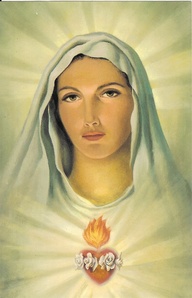
Hers must be the most beautiful face in the universe.  I have musings of this tender mother, whose face shines so gloriously that it’s blinding to the naked eye.  Yet, she makes it possible for us to gaze on her with the confidence of nursing children looking at their mother’s breast, knowing that she will feed them.  I often imagine her glorious beauty coming through the light with a pleasant look of concern and compassion.

In the same image, I can see her heart; an immaculate heart filled with love . . . a heart where there is no room for resentment and rejection.  Stop and think about this for a moment.  Where is a mother’s heart?  It’s directly over her womb.  It’s the one sound that every child hears and recognizes as his mother’s.  ImageDuring those 40 weeks in the womb, it is the beating of the mother’s heart that puts the child to sleep, that sets the rhythm of the days and nights for the child, and after the child’s birth, it is through the beating heart that the child first identifies his mother.  Remember, he has never seen her face, but he knows her heart.

The Incarnate Son of God, through whom we were created and for whom we were created also knows his mother’s heart.   Her prayers, her desire for our salvation, her love for us and her maternal assistance are well known to him.  For this New Year, I pray that we may all make greater effort to live as closely as possible to the Mother of God, whose heart will guide our steps to do what her son asks of us. At the end of our life, her heart will open itself to her Son as it did at Cana.  Just like at Cana, he will again be unable to resist the love that he sees in his mother’s heart and he will have compassion on us who have appealed to her for assistance.

 A New Chapter . . . 2013

You know, in the world of Kindle, Nook, iPads and Internet, the typical book is becoming an artifact.  It’s a pity, because a book is a very powerful icon of human life.  I was thinking about this during mass.  OK, you got me.  I was wool gathering during mass.  Actually, the sermon triggered it.  It was one of the best sermons I’ve heard all year.  My compliments to Father Nestor of the Archdiocese of Miami for an inspirational homily on the meaning of New Year’s Day.

As Father was speaking about the need to take inventory of how we have lived our faith and the opportunity to plan for a better year, I suddenly thought of a book.  I could see this small, traditional red hard cover book in my mind.  It reminded me of life, yours and mine.  Our lives are like a book.  That’s why I regret that in the not too distant future, the traditional book will become an artifact, because it’s a wonderful icon, as I have already said above.

ImageA book has a visible beginning and end.  It has perceptible chapters.  One ends and the other begins.  So too do our earthly lives.  They begin at conception and end at death.  Each year is a chapter.  One ends and one begins.

The attempt of a good writer is to keep the story moving, to inspire the reader to go on to the next chapter.  To do so, the writer works hard to keep our attention focused.  He has a thread that runs through the book, often referred to as a plot.  There is always a protagonist and an antagonist, not necessarily human, but there are conflicting forces.  It’s tension that keeps the reader’s interest.  It’s funny, because we live in a society where we’re all dying of heart conditions, but we thrive on tension . . . go figure.

New Year’s Eve or New Year’s Day is not just another year out and a new one in.  It’s a point of transition in our history.  It’s also an opportunity to tighten up the plot to give pleasure to the reader.  To do so, we have to look back at the chapter that is closing and carefully lay out the next chapter.  Like any good piece of literature, there are adjustments made along the way for the unexpected.  But like a good writer, we should never begin a new year without a plan.  Such an action is reckless.  It’s a sin against the God who created time for our benefit, not his.  God does not live in time and space.  Our lives must be a book that is pleasing to God.  Each chapter or year should represent an attempt to outshine the previous one.  Otherwise, we’re wasting the gift of time.

Here are some questions to help us examine our previous chapter and plan the next one.  I’m sure that there are more.  If you want to share them, please post them.  I’ll make sure that they are seen.

  1. Did I make proper use of the sacraments this past year?
  2. How much time did I give to prayer?
  3. Did I forgive and ask for forgiveness?
  4. What about the things that I own and the money that I make?  Did I use it wisely?
  5. Did I make proper distinctions between what my family and I need and what my family and I want?
  6. Were my business dealings honest and were my business decisions just and fair to those who are weaker than I am?Image
  7. Did I cave to pressure rather than stand up for the voiceless?
  8. What about the Church, am I faithful to her teachings or is being Catholic just a family tradition?
  9. If I’m a parent, did I take seriously my responsibility for my children’s souls or did I give them passes on mass and religious education?
  10. Let’s go back to material things.  How much of an effort did I make to teach my children that all created things are not for them and that everything that God gives us is for the benefit of others as well as our own or did I fulfill their every desire reinforcing their sense of entitlement?
  11. Do I manage my relationships out of love or out of guilt?
  12. Are my relationships based on charity and concern for the other and the satisfaction of the other person’s company or are they purely utilitarian?
  13. Do I knowingly let others use me and my gifts for their selfish purpose?
  14. Have I stood up to challenge immorality in our society, in my family, in my workplace or did I cave because, “I have a family to think about?”  Since when does family take precedence over truth?
  15. Am I aware of the four last things:  death, judgment, heaven and hell?  What would God say about my book, if I died tonight?

If this last chapter has not been as good as we would like it to be, God is still giving us time to begin a better chapter.  Let us make good use of the precious gift of time.

Information night on the Franciscans of Life and

Project Joseph — January 7, 2013 — 7:30 PM to 9:30 PM

Image

Proud dad and daughter
(Published with permission)

St. Maximilian Kolbe Education Center

701 N. Hiatus Road, Room 206

Pembroke Pines, FL 33026

For driving directions call

954 – 432 – 0206

DO NOT call Br. Jay.  He gets lost going to the kitchen.

However, for more information contact us .

Image

The Franciscan Brothers of Life wish you and your family a happy and grace-filled New Year — Br. Jay, FFV

Published in: on December 31, 2012 at 11:01 PM  Comments (1)  
Tags: , , ,