REMEMBER THAT UNTO DUST YOU SHALL RETURN


Today we are seeing people dying in the hundred thousand from COVID-19.  Just as we are celebrating that vaccines are created by several pharmaceutical companies, along come variations and mutations of the original virus. There are still areas in the United States and countries with fewer resources where the vaccine has not reached and there is no set date for its arrival.

In the United States millions of people are living in arctic conditions, thousands without electricity.  No electricity means no heating.  Already, people have died from complications caused by frigid temperatures.  People are leaving their homes to shelter in facilities that have electricity, such as enclosed stadiums.  Let us not forget the thousands of people who are stranded in airports because the weather has caused more than 3,000 flight cancellations and hundreds of delays.  Driving home is not always possible.  The safest place to protect oneself and one’s family is the airport.

Around the world, people die from hunger, violence, wars, and natural disasters.  The point is that we are probably more aware of death today than we were twenty years ago.  Death is knocking at doors that are too close to home for comfort.

Ash Wednesday, being the first day of Lent in the Christian world, calls us to forty days of reflection and sacrifice.  The number 40 is not random.  We remember Noah in the ark for 40 days, Jewish slaves fleeing Egypt through the desert for 40 years. Christ retreated into the desert for 40 days. Finally, the risen Lord remained 40 days with His apostles before His Ascension.  Forty were periods of suffering, atonement, penance, and the journey to glory.

With the number of deaths around us, the Church invites us to remember that Christ carried the cross up Mount Calvary.  On the pinnacle of Mount Calvary, He died and redeemed all of humanity.  Redemption is not to be mistaken with forgiveness.  Redemption is a moment in time that makes forgiveness possible for all who are willing to carry the cross.

For some people, the cross may be living through COVID-19 patiently, trusting that God will do what is best for our salvation.  It is a time of suffering and an opportunity to place our trust in God.

The Arctic conditions that millions of people are experiencing, perhaps without electricity to heat their homes, can be offered as a cross that, if carried with faith in God and charity toward our neighbor, can be the best Lenten sacrifice.  If one does not suffer from COVID-19 or Arctic weather, we can remember to make a daily sacrifice for the benefit of those who are suffering and remember them in our daily prayer.

Lent is a time for conversion, change.  We carry our crosses with patience and trust that God knows what is best for us.  In times of crisis, we reach out to our neighbor to offer our help or to ask for help.  Sometimes, asking for help is more difficult than helping.

Why do we take up our cross during these 40 days?  At the end of his life, Christ died for all men.  Three days later he rose from the dead no more to die. “He who wishes to be my disciple, let him take up his cross and follow me.”  Christ does not invite us to carry our cross for the sake of imitation.  He invites us to carry our cross so that we may never forget that we are not omnipotent and will leave this world on a given day and time.  Those who have carried their cross with the same love as Christ, will also rise to eternal life in Paradise.

“Was crucified, died, and was buried…On the third day, He rose again. “

The Case for the Mask – on God’s Care for our Health


The Christmas season is upon us, and I find myself with a few days of “vacation” allowing me to reflect on a number of issues I ordinarily entrust entirely to the Divine Providence. Br. Jay always teaches us, “do not get upset at things you cannot control, focus on preserving interior peace at all times”. Yet these days I have meditated upon some such matters – matters “great, too difficult for me”, if only to remind myself that I am not – and should not – be in control.

During this process, which also involved some online reading, I stumbled upon an article trying to make a case against wearing masks in times of Covid through the arguments of faith and philosophy. I have heard and overheard many arguments for or against masks over the past year, but never had I seen such a bold attempt, and I was moved to address it here. Life calls out to life, and I feel urged to speak in defense of it, inasmuch as I am keenly aware that not wearing masks (among many other precautions) directly increases the spread of this deadly virus.

The article, when read according to the light of the Catholic faith and not someone’s political agenda, actually helps those who strive to be good Christians to understand a few important things, in spite of its flawed conclusions. There are a few key points I wish to quote and go over, not for argumentation but merely for the sake of reflection.


(0) “There is not a consensus among doctors and scientists, at the end of 2020, about the infectious nature of [Covid-19] or the efficacy of wearing masks.”

In other words, there is debate about how helpful it is, due to the question of how exactly does the virus work. However, there is no debate as to the fact that masks help. It is a basic tenet of the Faith that people should clearly do what they can to help others, even when it is burdensome to themselves. The crown of thorns was much more burdensome to wear.


(1) “It is wholly un-Christian to consider any other human person first as a threat to oneself. Man is called to love his neighbor and to be in communion with him.”

When we encounter our brothers and sisters, we should not consider them a danger to us. Our attitude should be one of love and communion.
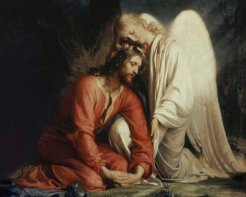
Furthermore, we are not called to be apprehensive when we see another human being – unless there is an overt threat to our safety. We are not considering the person to be a threat – the threat is there, invisible, and it is the threat that we single out as a danger, not the person. This is not unlike an early Christian who may have felt fear when seeing an approaching Roman soldier – not so much in his person but in the potential threat of persecution and death. And do not reply that “perfect charity casteth out fear“, for the Good Lord himself “began to fear and to be heavy” at the prospect of His Passion, so much so that he sweat blood, yet He remained firm in the Father’s will, teaching us that it is natural to fear danger, and there is supernatural merit in facing it with God’s help.


(2) “Charity is any action we do for God or do for others for the sake of God. If we do not act for the sake of God, the action, while good, is not charity. Is charity actually the reason why many wear masks?

When encountering our brothers and sisters, a loving attitude of communion is reflected when we think that perhaps I may be a carrier unbeknownst to all – even me – and wearing a face mask lowers the risk that my coughing or sneezing or even just talking would expose my neighbor to a potentially deadly disease. My wearing a mask says to my neighbor ” I love you, therefore I am doing something to care for you“. It is both a physical and a spiritual act of charity – physical inasmuch as it aims to protect my neighbor’s health, spiritual inasmuch as I am acting out of love of God and neighbor. I am certainly grateful when a surgeon wears gloves, so let us be grateful when we see each other wearing a face mask.


(3) “Masks indirectly promote thinking of others in terms of oneself. ‘You are not wearing a mask; you are a danger to me. You are making me feel uncomfortable by failing to wear a mask.’

Yet a good Christian does indeed focus on himself rather than others, inasmuch as he is called to a personal obedience of God’s will. I must not focus on whether the other is not wearing a mask, but on whether I am. For it is my duty to help, nay, even to lay down my very life for my neighbor. Let us not forget that just yesterday we commemorated St. Stephen, whose last words were to the Father regarding his unjust oppressors, who were killing him: “Lord, lay not this sin to their charge!” In spite of the “discomfort” that they made him feel, the Protomartyr acted towards them in faith and love.

Does our neighbor’s failure to act on wearing the mask make us feel uncomfortable? I would say that all manners of sin (should) make us feel uncomfortable, whether the sin is an objective reality or a mere subjective understanding of our mind. We see this very clearly in the many occasions when men are scandalized by the actions of the Lord or the Apostles, whom they thought were contravening the Law, and never does the Lord or the Apostles rebuke them, but always do they instruct them to an objective and orthodox understanding of things. Sin is only that which offends the Divine Will, not the will of men. When I see my neighbor failing to wear a mask, and I am stirred to discomfort in what appears to be sin (considering that this act of omission exposes others to potential dangers and also scandalously manifests one’s potential lack of care and concern for neighbor) I must first and foremost be reminded of the Lord who once said: “Do not judge! Thou hypocrite, first cast out the beam out of thine own eye; and then shalt thou see clearly”… My attitude must also be devoid of all pride: just because I happen to be wearing a mask while others fail to do so (or advocate against it), I must not imitate the proud man who says “O God, I give thee thanks that I am not as the rest of men”, but rather I must obey the Divine Precept that commands us, “when you shall have done all these things that are commanded you, say: We are unprofitable servants; we have done that which we ought to do.”


(4) “Physical health is neither the primary nor the sole determinant of a man’s actions. There are more important realities than bodily health, especially spiritual health.”

Yet it is written, “The light of thy body is thy eye”, and also, “know you not, that your members are the temple of the Holy Ghost, who is in you, whom you have from God; and you are not your own?”. The preservation of physical health is part of the Lord’s Holy Will, as he said, “Love your neighbor as you love yourself”. It is not above the spiritual health, it is wholly part of spiritual health.

Hence, Christ on the Sabbath allowed His Apostles to contravene the law and pick grains, for they hungered, and the Divine Teacher manifested that in the eyes of God, such an act was fully lawful, as it was already manifested in the days of King David.

The Incarnate Word once rebuked Satan’s temptation by declaring that “Not in bread alone doth man live, but in every word that proceedeth from the mouth of God.” Yet after He Himself having spoken to the people, He said to the Apostles, “I have compassion on the multitudes, because they continue with me now three days, and have not what to eat, and I will not send them away fasting, lest they faint in the way.” And lo, He went and performed the astounding sign that is the multiplication of the loaves and the fishes.
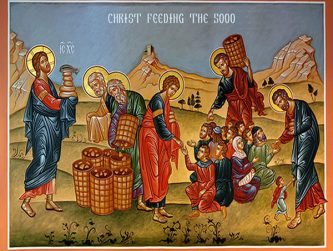
Let us not forget other equally wholesome examples such as the Passover Meal, the provision of Manna in the desert, the splitting of the rock to provide water, and many other ways in which God’s Divine Providence has time and again tended to the care of our physical health.

Therefore, a man’s duty to preserve physical health becomes wholly aligned with the Lord’s will when done out of love of God and neighbor and out of reverence for deeper, invisible spiritual realities inherent to man being both flesh and spirit by the Divine Will.

If you are not fully convinced of this argument, consider that consuming wine at a wedding is not a health nor a nutritional necessity, yet the good Lord deigns to provide wine at Cana in a miraculous way, thus meeting a much simpler need – yet we know that there was a profound spiritual significance to His action.
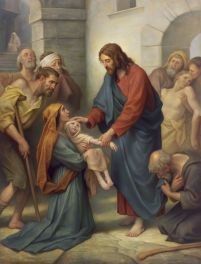
Let us also remember that we do not need to see, hear, or walk in order to go to Heaven – yet, time and again the Lord has mercifully healed such merely physical needs, and the Blessed Virgin herself deigned – and still deigns – to intercede for the healing of many at the miraculous spring of Lourdes.

Holy Church herself was gifted by Christ with a Sacrament specifically intended to heal the physical health: “Is any one of you sick? He should call the elders of the church to pray over him and anoint him with oil in the name of the Lord. And the prayer offered in faith will make the sick person well”. Clearly, there is a deep relationship between physical and spiritual health. “For which is easier to say, ‘Your sins are forgiven you,’ or ‘Arise and walk’?”


(5) “When one looks at the body, to the exclusion of the face, one encounters an object, a thing, rather than a person. Objects are meant to be used; that is, to be used as a means to an end. Persons are primarily subjects to be known and loved.”

We must always encounter and commune with our brothers and sisters in the way God intended us to: as our brothers, human beings with a body and

a soul. Different cultures and standards lead to wearing more – or less – articles of clothing, and it has been one of the sharpest thorns of modern secular culture to promote objectification by means of the removal of clothing, whereby most contradictorily to the original tenet, it is the lack of coverage and not its presence, which leads to objectification. When we encounter a fellow human being, whether he or she wears a mask or not, whether he or she wears something that makes us feel uncomfortable or not, we always approach them with the same love that Christ modeled for us. Why, I have no doubt that on his first encounters with the Touareg – their face fully covered by the tagelmust and their voice absent or altogether incomprehensible – Blessed Charles de Foucauld still managed to commune with them in the love of Christ, so much so that he became known to them as “the Christian Marabout” (“holy man”).


(6) “Man communicates most profoundly with his face—with words, looks, facial expressions. [The mask] muffles the human voice; it hides the human smile; it obscures the deeply human facial expressions which are integral to forming human friendships.”
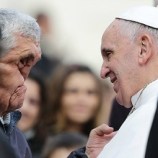
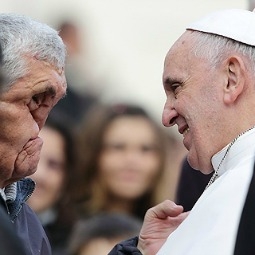
The Holy Father with Mr. Oreste Tornani

Yet the Seraphic Doctor recounts in his Vita Maior [p.1 c.1] that one day St. Francis met a leper and “felt sick at the sight of him”. Given this sharp description and the knowledge most of us have of the terrible progression of Hansen’s disease, it is fairly possible that the leper no longer had what we commonly describe as a face, or at least was unable to produce facial expressions beyond terrible distress. Yet Bonaventure recalls that Saint Francis “remembered his resolve to be perfect and the need to overcome himself first”, and proceeded to show brotherly love to the sick man.

This story, as do many others – I am reminded of the entire life of St. Damien of Molokai – show that the burden is on us to perceive, understand, and treat our neighbor with love, rather than blaming them – or their lack of facial expressions or voice – for “obstructing the development of genuine community“, as that article does (perhaps inadvertently).
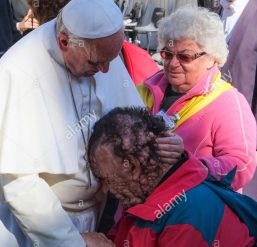
The Holy Father with Mr. Vinicio Riva.

Let us strive in these difficult times to show ourselves ever more empathetic and comprehensive towards one another when we do not have the luxury of being able to expose our face without risk to our health – an experience quite common in places of extreme heat or cold, or in general in the field of healthcare.


In conclusion, let us cast aside – if only for a moment – all manner of ecclesial or secular politicking, and be reminded that it is but a small act of love to wear a face mask and keep a 6 ft distance from our neighbors during times of pandemic. It is on us to embrace these measures out of love of God and neighbor and to strive to show even more love and care than under usual circumstances to our brothers and sisters who – no doubt about it – live in a world that is making of fear one of its primary movers.

Please forgive any imprecisions in my writing – these are merely my thoughts – and please pray for the end of this health crisis through the special intercession of St. Joseph most obedient, terror of demons, patron of the Church,  mirror of patience. By the will of the Holy Father, we are now in his year, so let us reach out to him, now more than ever!

Br. Bernardo D’Carmine, a sinner.

St. Joseph, Pray For Us


Light In The Darkness


My mother always said, “Darkness can never conquer light.”  Looking at the world today things look dark if we don’t seek out the light.

Covid-19 has done more than making some people sick and kill others.  It has thrown families into crisis.  Some mourn a loved one.  Others wonder about an elderly relative in a nursing home where visitors are not allowed.  Spouses spend hours sitting, praying, and wondering if their partner is ever coming off the ventilator.  Patients struggle to breathe.  Their bodies ache.  They have lost all sense of taste and even of smell.  The endless coughing does not allow them a peaceful night’s sleep.

We must also consider how this virus has impacted the lives of healthcare professionals. They do not lose their humanity.  Many have loved ones, including spouses, parents, children.  Upon entering nursing school or medical school, they never dreamed that their lives would be on the line.  Those things happened to people in the armed forces, not to healthcare professionals.  

Long days on your feet were to be expected, but caring for more than ten patients was not a common occurrence among nurses.  There was little fear of taking home a virus that could literally kill one of your children or elderly loved ones. As the number of nurses, doctors, medical technicians, and others contracted the virus, the workload became heavier.  Instead of 12-hour shifts, some people were putting in 18-hour shifts.  Yet, these people have spouses, children, parents, and even pets at home, waiting for them.   

When your loved one is a patient in a hospital, a resident in a lockdown nursing home, a nurse, physician, or technicians, one doesn’t always enjoy a good night’s rest, wondering, worrying.

Also, the loss of income to many workers has stretched their resources beyond their means.  When businesses are locked down, real people are home paying bills and buying groceries, with no idea when they will go back to work and bring home a paycheck.   People who have worked hard all their lives to open a small retail store are now paying bills with no income.

Then there is also violence, looting, and confrontations on our streets.  This has been one of the most active hurricane seasons in decades.  Wildfires have left thousands of people homeless.  Terrorism and military posturing have not taken vacations.

People wonder: “where is God in all of this?  If God is so loving and merciful, why are so many people suffering?  Does prayer really produce results?”  Some are angry at God.  They feel abandoned.

Given the picture of the world today, it is very natural to question one’s faith.  God does not get angry because we doubt, or because we are angry at Him.

We find answers to our questions of faith when we reflect on the lives of men and women of faith such as: Saint Maximilian Maria Kolbe who died in a concentration camp to save the life a family man; Saint Teresa of Calcutta who left home at the age of 18 to become a missionary in one of the poorest countries in the world. 

Then there are spouses and parents such as Saint Gianna Beretta Molla who chose to give her life rather than abort her preborn child.  She delivered this child and died shortly after. 

Speaking of people with strong faith, I can never forget what the Blessed Mother said to Saint Bernadette Soubirous of Lourdes, as she lay, dying of very painful bone disease, at the age of 35: 

I cannot promise you happiness in this life, only in the next.

Christ never promised us that life in this world was going to be painless.  As we enter the Christmas Season, we must meditate on the fact that the Son of God was born with a price on His head.  Herod was looking to kill the little boy.  His parents had to flee with Him into Egypt.  Despite the threat of infanticide and later execution on a cross, God chose to be born into a world that offered Him no exemption from suffering and loss.

God chose to be born into a world filled with suffering and loss of many kinds.  He navigated through this world always remembering that nothing is impossible for the Father.  Let us never forget that God brought light into the world at a stable in Bethlehem and later at the resurrection from the dead. 

Christmas is a commemoration of the time when God broke into the darkness of humanity to bring the light of faith, hope and charity.  It is also a time of anticipation.  Christ promised that He would return to judge the living and the dead.  He will return to shed light on our sins and our acts of love.

Christ said the greatest act of love man can do is to lay down his life for his neighbor.

The chaos, fear, conflicts, and confusion that we’re experiencing can be moments of light if we reach out to those who suffer.  We don’t have to give them anything. The shepherds who went to the manger to see the divine infant didn’t come bearing gifts.  They were poor themselves.  But they brought the greatest gift of all: support, love, and companionship to a young family in trouble.

New World, Old Problems


32,941 Global Conflict Photos and Premium High Res Pictures - Getty Images

Few people will deny that we are living during a critical time in human history. Americans are facing a presidential election. Europeans are approaching the final act separating the United Kingdom from the European Union, with many important questions that need a response very soon. Military conflicts in the Middle East, Asia and Eastern Europe erupt when one least expects it. Moreover, the world community is under attack by COVID-19

The question “How can Christians face these situations always keeping Christ at the center?”

St. Patrick's Cathedral - The Skyscraper Center
The secular world overwhelms and overtakes the faithful…finding God becomes harder…

There is no easy answer to this question. The most important reason why there is not a Christ-like response to these situations is that Christ has been pushed to the sidelines, even by people who profess to be Christian.

Everyone wants a solution to these problems, but no one wants help. We want to redeem the world ourselves on our terms, a task that is humanly impossible. We lack the knowledge, unity, resources, and a shared worldview.

The challenge to leadership is not new to humanity. From the time that man has walked the earth, he has challenged leadership. As time moved forward the challenges often took sinister executions. Just look at the Romans. They poisoned their parents, siblings, and children for the sole purpose of power.

Fast forward to the Middle Ages. The rise of the mercantile class posed a threat to the control and power exercised by the nobility. And we move forward to the American Revolution, the French Revolution, and the power struggles in Asia.

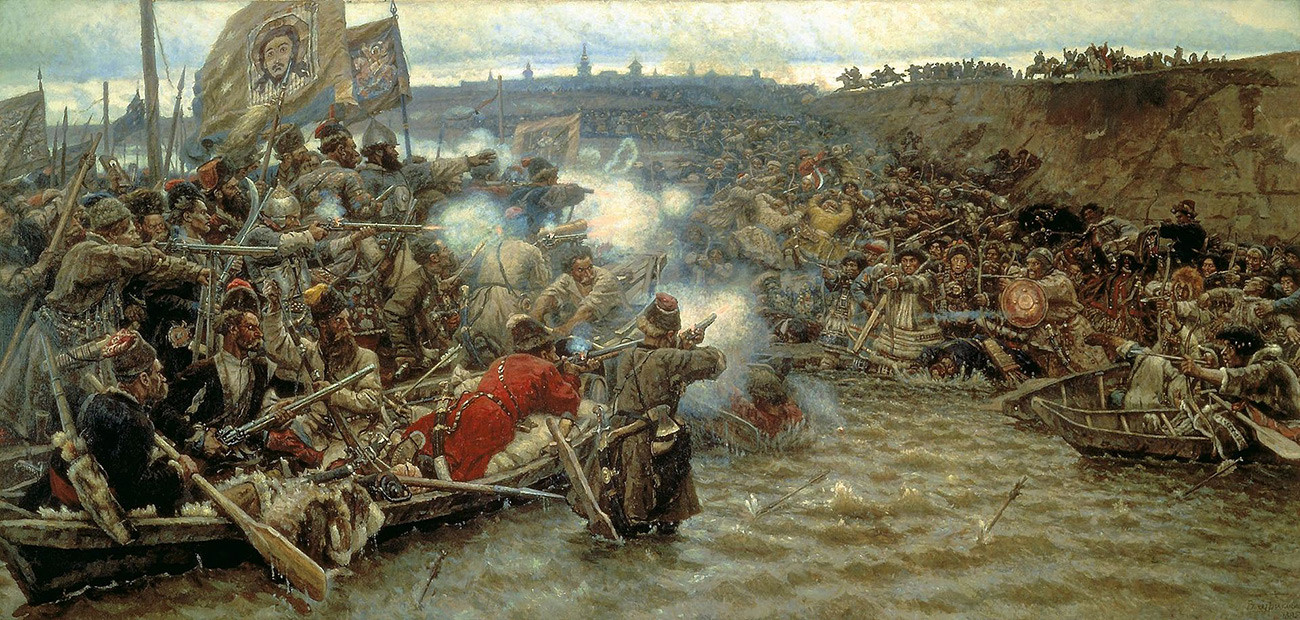
15 most famous and terrifying Russian military paintings - Russia Beyond

Conflict for power is not new to humanity. It only seems catastrophic because we are in the middle of the conflict. In 500 years, there will probably be other forms of seeking power, rather than elections.

In the past, few societies allowed themselves to be guided by the Gospel when searching for leaders and rulers. Today, it seems that Christ has become an abstract about which we think about in church, but we leave him and his teachings behind when we walk out the door.

No country is going to thrive unless it has a government that is guided by absolute moral norms, attention to the voice of Christ, and the desire of citizens to look at the needs of the whole, not just a few.

Elections have been simplified. Today they are about embracing one ideology over another, be it in Europe, Asia, South America, or the United States.

Democracy Depends on Digital Security - Nextgov

We cast our votes for the person who speaks the best, who represents my interests, at the expense of others, and who in the end has no direct influence in my life with my family, community, and place of employment.

The influence of government is always remote, especially in nations that are too populous to be governed by one person. Even a dictatorship cannot exist without a support system. What citizens live with or without are those legislations that trickle down to them through a complex system of government.

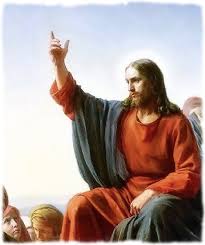
Jesus Makes Perfect (part 12) - Kenneth Cope
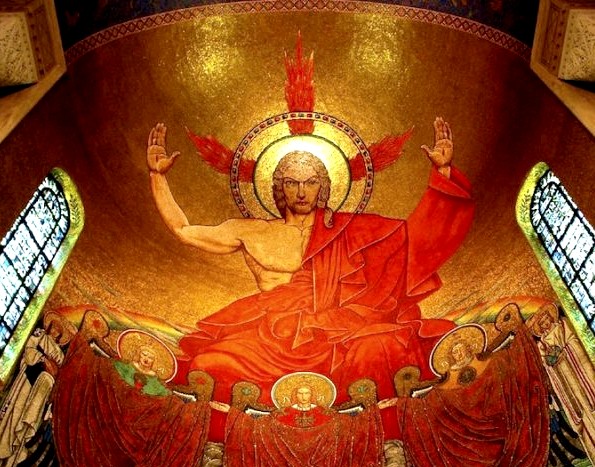
Seek the things above…”

If Christians want to see real and lasting social reform, it is incumbent upon every individual to search his or her conscience and individual understanding of the proposals on the table.

As true Christians, we must always choose the greater good. Very often that is going to benefit more people besides me or instead of me.

The Gospel of Matthew says it very clearly, “As long as you did it for one of these, the least of my brethren, you did it for me.” If we choose the greater good, the least of our brethren will benefit, in this life or in the next.

To know the Greater Good, we must know Jesus Christ and his values, his worldview, his commandments, and his moral example. Left to our own devices, we will be unable to identify the Greater Good.

Not all human beings think alike, and each sees that which benefits them as the greater good. We need a single point of reference. That point is Jesus Christ, not the hundreds of politicians peddling their wares.

When we vote, we must focus on that which is the greater good for the greatest amount of people, born or in the womb.

Beware of Interior Demons


When will it be enough?  To protest injustice is the obligation of all just men and women.  There is a moment when protest can lose its sense of reason.  We become irrational and do things that we would not normally condone. 

Examples of this demise in reason become obvious when those who begin a protest for a just cause raise it a few notches where they are destroying private property of people who need said property to support their families. 

When people are injured, even killed, a protest ceases to be a protest and turns into chaos.  Often, innocent children are the victims, as are those who have no guns and panic to find shelter. 

Taking a life does not restore the life of a victim.  When protest evolves into destruction, we must understand that we have crossed a moral threshold that should never be crossed. Killing in defense of the self, family and other innocent people is a proportionate response to a threat.  However, killing out of anger and destroying private property is uncontrolled rage.   

Rage does not see the difference between righteous anger and violence.  The Apostle St. Paul warned us about this almost 2,000 years ago:

Be angry but do not sin; do not let the sun go down on your anger, and do not make room for the devil” (Ephesians 4:26-27) 

Anger such as that fails to think first, before acting.  We allow ourselves to lose control.  We lose our ability to distinguish between right and wrong, good and evil, anger and rage.  We lose a piece of our humanity: the ability to discriminate between right and wrong and to choose that which is right.  The Apostle St. Peter warned us about this more than 2,000 years ago:

“Beware that you are not carried away with the error of the lawless and lose your own stability” (2 Peter 3:17b)

Put away from you all bitterness and wrath and anger and wrangling and slander, together with all malice,” (1 Peter 4:31) 

Our expression of anger must always be justified by absolute moral rules that dictate what is right and guide us away from what is wrong.  Let us be careful not to become the demon we are trying to slay.   

God’s Justice and Mercy Are Within Our Reach


At the end of the Roman Empire, Romans blamed Christians for the fall of the Roman State.  Saint Augustine’s response was true then and is still true today.  The pagan gods did not save Rome because they were nothing more than statues and myths.  If Roman and Greek literature were to be believed, the gods loved themselves, not each other…and much less humanity.

But Augustine also taught a great truth: our God is merciful and just.  The difficulties that men experience are the product of Original Sin.  It is just that man should make reparation for the sins of our first parents and our own that followed.  However, God’s merciful arm is longer than His arm of justice.  While He allows Mankind to experience suffering, He is also present to save us from tragedy, if it’s good for our salvation and that of others.  He gives us an opportunity to offer our sufferings in reparation for our sins.  It is not God’s wish that any of us be lost.  Those souls who lose Heaven do so because they did not take advantage of the opportunity to reconcile with Christ by offering up their sufferings.

But God does not only allow suffering consequently for sin.  Suffering is also a great opportunity for us to engage in the corporal works of mercy.

  “Then the King will say to those on his right, ‘Come, you who are blessed by my Father; take your inheritance, the kingdom prepared for you since the creation of the world.  For I was hungry and you gave me something to eat, I was thirsty and you gave me something to drink, I was a stranger and you invited me in, I needed clothes and you clothed me, I was sick and you looked after me, I was in prison and you came to visit me.’ (Matt 25:34-36).

‘Truly I tell you, whatever you did for one of these, the least of my brothers, you did it for me…as long as you did not do it for one of these least ones, you did not do for me.’ (Matt: 25:40,45).


Today it seems as if the world is falling apart.  There are wildfires, floods, hurricanes, blizzards, melting ice caps, crime, wars, and now a virus that could kill us without warning.  In justice. God allows these things as a consequence for our sins:  greed, bigotry, lying, pride, pornography, sex for recreation not for love, adultery, child abuse, neglect of the older members of society, wanting for more than we need, while others do not have satisfaction for their basic necessities, and there is much more that we can add to this list; but I believe that this gives us something to think about.

Saint Francis of Assisi became one of the best known and beloved saints because of his poverty.  But poverty was detachment from anything and everyone that led him away from God, including his father.  Francis fell in love with the Crucified Christ.  He wanted to share in Christ’s sufferings for two reasons.

First: he felt remorse for his sinfulness.  He could see how his sins contributed to the suffering of Christ on the cross.  His entire life was dedicated to making reparation by doing simple things such as fasting and abstinence – and extraordinary things, such as throwing himself naked into snow and later thorny bush when he felt tempted to sin against purity.

          Second: Francis saw Christ crucified in those who suffered leprosy, poverty, injustice, hunger, abuse of any kind.  When one of these sinful events took place within his reach, he protected the suffering, corrected the offender, and counseled those who were on the wrong path.

Francis never saw natural or human disasters as something to be wished for, or to be cursed.  He certainly did not wish for the atrocities committed against Christians in the Holy Land.  He set out to convert the sultan and offer his life in martyrdom.  He was unsuccessful in both.  The sultan grew to respect him and admire him, but Francis did not convert him, nor did the sultan execute Francis for being a Christian intruder.  He admired his courage and his faith – even though he believed that Francis was in error.  But the sultan learned a great lesson in love.  Francis arrived with a few friars, not with a company of Crusaders.  He was there to speak the truth, not for revenge or hatred of Islam.  He pointed out the errors of Islam to the sultan and his court, without intimidation and without argumentation.

         Leprosy was out of control during the Middle Ages, as COVID-19 is today.  St. Francis referred to the lepers as his “Christian brothers”.  He did whatever he could to make them more comfortable and to remind them that they were human, therefore part of humanity and worthy of love.  Francis exposed himself to leprosy, in part because he didn’t know any other way to care for the lepers than to bathe and feed them.  But he also remembered what Scripture said, “[Jesus Christ] laid down his life for us. And likewise we ought to lay down our lives for our brothers.” (1John 3:16).

There are many ways of offering one’s life for one’s brother.  We don’t have to walk into a minefield to do so.  Every cross that we must bear can be offered for those who suffer as much as – or more than – we do.  In doing so, with faith and without complaining, we earn grace toward our salvation and that of others.

Tragedy can be an experience of God’s justice and an opportunity to ask for His mercy, which He wants to give more than we desire it.

Advent: time to Remember and Prepare


Most of us enter the Advent season looking forward to the Christmas holiday.  We’re planning meals, making guest list, shopping for gifts or planning to travel.  As we spiral into Christmas, we sail through Advent without taking note of its true meaning.

From our Jewish roots in the Old Testament God invites us to remember.  He supplies the flood and Noah’s ark with the rainbow as a remembrance of His promise never to destroy the earth by water again.

When men tried to reach for Heaven building a tower, God brought it down with His mighty power.  The failure of the tower of Babel reminds us that man cannot reach God by human means, only by the means that God has given us through the Patriarchs:  Abraham, Isaac, Jacob, Noah, Moses.   He speaks to us through the prophets, especially Isaiah, Jeremiah, and Ezequiel.  Each contact with man was a reminder of who is God and who is man.  Then there were the kings, beginning with Saul, David, Solomon, and others.  Through each new era, using different human beings, God continues to remind us that only He is God and we are His people.

Faithful Jews carefully remembered and protected the memory of these events.  When Gabriel appears to Zechariah, he struck him mute to remind him of God’s power and free will.  Whereas when he appears to the Virgin Mary to announce the conception and birth of the Son of God, he does not need to remind Mary of all the signs that God had given in the past to remind us that He was God.  Mary knew exactly what Gabriel was talking about.  She was a faithful daughter of Israel who remembered the Lord’s great signs in the past and the prophecies that promised a redeemer.  She does not ask Gabriel for proof. She raises only one question, “How is this to be, since I do not know man?”

The encounter between Mary and Gabriel is the beginning of the first Advent in history.  God goes beyond communicating His expectations and plans for humanity.  Through Mary, he throws Israel into the future, into things to come that the prophets and patriarchs had foretold.    God doesn’t deny humanity knowledge of His power and providence: “Nothing is impossible for God.”

Instead of giving Mary more laws and more guidance, He announces His break into human history.  The Incarnation is a historical event that reminds us of God’s great love for humanity, especially Israel.  The Incarnation is also the singular event that sets in motion anticipation for Him who is to come.  To believe that God can and is going to break into human history, we must remember the past.The memories of what God communicated in the past explain the reason for the birth of Christ. This was a period of reflection and anticipation of what was coming.  It was the words spoken through God’s chosen instruments and events in the past that clarified who was to come and why He was coming.  From the moment of the Incarnation to the day of Christ’s birth, those who remembered God’s operation the past understood that God’s activity did not end with the last prophet.  On the contrary, God’s activity was about to be personalized.

The Second Person of the Holy Trinity was coming to redeem us from sin and save us from our indifference, lust for power and pleasure, our search for comfort in worldly things while forgetting that which comes beyond our life on earth. He planned to enter the world to redeem humanity from its sin, to save us from ourselves. God’s plan for redemption was not going to be influenced by the sins, beliefs, and practices of Israel.  Man could do nothing to prevent the Creator of human history to enter human history.

Advent did not end with the birth of Christ.  Nor did it end with His Passion and Resurrection.  Jesus left us with much to remember, the Beatitudes, the corporal works of mercy, moral teachings, and most importantly, Himself present in the consecrated host that we receive and that we adore.

He promised to return.  But this time, not to redeem humanity.  He has already done this.  He promised to return to judge the living and the dead.  Those who remembered everything that God has revealed through human history and lived accordingly, will be saved.  Those who choose not to remember cannot possibly prepare for the advent of Christ as judge.

Most of us are comfortable with ourselves, because we never examine our thoughts, actions, and beliefs using the everything that God has revealed and promised.  We fail to live according to God’s plan.  Like the builders of the Tower of Babel, we dream and work on our achievements, not knowing if they’ll ever become reality.  The only reality of which we can be sure is that Christ does not lie.  He promised to come as a judge and king, he will not digress from this plan.

We can continue to ignore what God has told us to remember, ignore what Christ did, ignore what the Apostles handed down to us, and live our lives according to our plan not knowing if our plan conforms to God’s plan.

Or, we can choose to examine our plans, thoughts, desires, and actions against the background of Revelation, and to turn away from everything that distances us from God, everything that condemns us to eternal damnation.

Advent is a time to reflect on what God has taught and done for us to prepare for His second coming.

CONSCIENCE IS NOT A TECTONIC PLATE


We are facing recent proposals to extend access to abortion until the time of birth for any reason.  In the mind of some legislators, if a child is born alive after an abortion attempt, it is justifiable to allow the infant to die.  That is, not to provide and lifesaving medical assistance.

There are some Catholic legislators and politicians who support unrestricted abortion.  When asked about their Catholic faith, the response is usually to claim that the Catholic Church respects the primacy of conscience and in their conscience, they are not committing a sin.  They lean on the documents of Vatican II to justify this position. Others claim that their faith is separate from their politics, because their faith is personal and their political position on abortion is dictated by their constituents.  The worse part of this is that many voters hear or read statements from these politicians and they assume that the politician knows what he or she is talking about.  Nothing can be further from the truth.

In the first place, the primacy of conscience as is exposed in the documents of Vatican II must be understood in a manner consistent with Catholic tradition.  That is, with that which the Church has always believed about conscience.

Neither Vatican II nor any other authority has said that each person has the right to determine what is right and wrong.  The very thought of such is a recipe for anarchy.

The primacy of conscience means that no one has the authority to impose on an individual any action or an ideology that is inconsistent with a well-formed conscience.  A well-formed conscience is one that subscribes to that which the Gospel and the Church have proclaimed as right and wrong.

A Catholic whose conscience is contrary to what the Church has always believed and taught on the right to be born is either acting with an uneducated conscience that does not know the tenets of his or her faith or with a “convenient” conscience that allows him or her to be elected to public service.  This begs the question, is such a person honest?  Do I want someone whose moral convictions are shaped by his or her constituents?  Constituents change.  They subscribe to one thing today and another tomorrow.  Many choose that which is convenient to them and others aren’t aware of the rightness and wrongness of their choice.

Any politician guided by such a fluid set of values is one who has no respect for absolute values.  He or she believes that right and wrong depend on the individual, not on an absolute natural or moral law.  A person who steals should not be condemned for his actions, because his conscience justifies stealing or because he doesn’t know that stealing is immoral.

An individual who alleges to be Catholic but supports and believes that ideas and actions contrary to their faith are morally acceptable in the public square, such a person is unfaithful to the faith that he claims is an important part of his life.  He or she is dishonest.  Such a person lives as a dual human being.  He’s holds one thing to be absolute in his home.  In the political arena right and wrong is not determined by absolute truth, but by the popular mindset.  Rather than standing on firm ground he or she stands on a floating tectonic plate.

Image result for tectonic plates

When right and wrong are determined by modality, the term “absolute” becomes obsolete.  Nothing is right or wrong.  Everything is relative.

Faithful Catholics must form their conscience according to what the Catholic faith has always believed, regardless of what many Catholics do or say.  Catholic truth is Gospel truth.  Gospel truth is not determined by the ideas and actions of men, not even those who are clergy or religious.   Because Father N supports abortion does not mean that he is right.  Father N is stepping outside of what the Church has always believed and has become a magisterium unto himself.  He is an unfaithful priest.  Receive the sacraments from him, but do not follow his teaching if they are contrary to the faith of the Church.

Politicians have the same obligation as any other Catholic to be faithful to the Catholic Church’s long held beliefs.  One cannot allege to be a person of faith and be unfaithful.  This does not mean that a Catholic politician is imposing his Catholic beliefs concerning abortion or any other moral issue on the people he represents.  It means that he represents his constituency with integrity, not a mind that believes one thing today and another tomorrow.  Such a person is not trustworthy, because he or she does not stand on solid ground.  Rather he or she stands on tectonic plates that move randomly.


Published in: on September 26, 2019 at 9:59 PM  Comments (1)  

HUMAN RIGHTS ARE NATURAL RIGHTS


Contemporary society is reaching deeper and deeper into the barrel of darkness, sentencing many more to death than did Hitler, Lenin, Stalin, and Castro.  Euthanasia has been identified as a human right.  While everyone has the right to die, no one has the right to take a life, except in self-defense from a dangerous aggressor.  The moral prohibition against taking a life applies to suicide and assisted suicide as well.  While we own our lives, we don’t own life.  Man did not create his life.  It is gift that only God can take away according to His eternal plan.

Today’s man has assumed the authority to euthanize anyone whose quality of life does not meet our standards.  Of course, such standards are not absolute.  They a different from one social group to another.  These include children with Down Syndrome, people with mental health problems, the elderly and the terminally ill.  Unfortunately, those who make such decisions use subjective judgement.  The fact that the judgement is subject and not absolute invalidates the authority and the right to take a life, no matter how distressing the person’s state.

Alongside the tragedy of euthanasia is the increase liberalization of abortion.  Some groups have determined that abortion on demand, from conception to the time of labor is a human right.  But what about the rights of the human being in the mother’s womb?  According to the law, the person in the womb has no rights.  Some go as far as saying that a child born alive after a failed abortion has no right to medical care and may be left on the side to die.

We have moved from the idea that the embryo in the womb is “glob” of cells to the extent that we approve of infanticide, because the person has no constitutional right.

Behind the defense of abortion, euthanasia, assisted suicide and infanticide is not the best interest of humanity.  Those who attack restrictions on these heinous acts against human life have their personal goals in mind, not the best interest of the subject or the community.  Politicians will support anything that is currently fashionable, with no reflection on the morality of that for which they vote.  Women opt for abortion because the birth of a child complicates their life.  But they do not stop to remember that pregnancy is the result of a specific behavior.  We prefer to eliminate that which is the natural end and result of the sexual act, but we have no interest in exercising self-restraint and discipline.

The fallacy is that life goes back to normal after the death of the other.  Nothing is further from the truth.  Memories, guilt, remorse, psychological problems, and a sense of loss are the natural result of death on demand.

The hopes and beliefs of those who promote the killing of another human being are not grounded in absolute truths.  Were they grounded in such truths, the result for the person who remains alive would be inner peace.  Inner peace is the natural result of actions grounded in absolute truth, such as the inviolable dignity of human life.

The taking of another person’s life or that of a preborn child can be compared to the desire for wealth.  The individual believes that he will achieve happiness and peace when he reaches a certain standard of life.  What we see is that those whose goal in life is wealth and comfort are never satisfied.  They always need something else.  To believe that taking a life by abortion or euthanasia is will bring peace and satisfaction to the survivors is just as false.  Our lives are not happier, better, or healthier.  We continue to struggle with our human condition.

God who is the Absolute Good has built the desire for the good into the essence of every human being.  This desire makes it possible to find Him who is the Good.

Everything else that we believe is absolutely good for us, usually is not good enough to satisfy and lead us to a place of peace and happiness.  Terminating another person’s life is designed to rid the survivors of a burden.  Such is not an act of love.  It is a self-serving act.  We can delude ourselves into believing that we’re thinking of the good of the subject.  The truth of the matter is that the good of each individual is best served when humanity looks for and applies solutions that enhance life and guarantee the right to be born and to die naturally.

Love has nothing to do with the termination of life.  The termination of life is a violation of natural law.  Life is given to us through nature.  We do not create it.  The right to be born and the right to live until our life on earth is fulfilled is guaranteed to us by nature and violated by man.  Human rights stem from natural rights.

We must take an honest look at our choices, actions, and failure to act and as ourselves if these were true selfless love.If we’re honest with ourselves, we’ll be quite surprised by our logical conclusion.

Published in: on August 6, 2019 at 10:06 PM  Leave a Comment  

THE FIRST LINK OF TOTALITARIANISM


I’ve read three disturbing articles this week.

IImage result for tyrannical staten the first article, leaders in Congress are promoting legislation that would make legal all abortions until the end of the pregnancy.  Who or what gives the the State absolute power over life and death?  It is man who has created the State, not the other way around.  The State exists at the service of humanity.  To grant the State absolute authority over life and death is the beginning of fascism.  Hitler, Lenin, Mao, Castro, and others have claimed absolute authority over their fellow citizens.  What was the outcome?  Death of millions of people, genocide, poverty, isolation, Communism, war, and the destruction of infrastructures that support human live and activity.

In the same breadth, certain legislators believe that a child born alive after an abortion attempt, need not be provided medical care or protection under the law.  In other words, the child is left to die (or helped to die!) which adds up to infanticide.

Another very well-known story is that of Vincent Lambert.

After a car accident he was in what is called “minimally conscious state”: not in coma and not connected to any machine, he was found responsive to a voluntary breathing test, as well as perceiving pain, emotions, and awareness of environment. Also he could not swallow correctly, therefore an artificial way to provide him with food was required to prevent starvation. In 2013, health care workers notice behavioral manifestations to Vincent’s toilet care, which they interpret as an “opposition” to said toilet care. The opinion of the medical team was a bit extreme: they resolved, solely on the basis of this impression, that Vincent “refused to live”! Factoring in a discriminatory opinion about his current severe state of disability, they decided to decrease hydration and stop feeding, essentially sentencing to a slow death.

Mr. Lambert died Thursday, July 12.  After being sedated into unconsciousness, he survived for nine days without food and water.  According to doctors and lawyers, he was in a vegetative state.  The term “vegetative state” has yet to have a conclusive definition.  One thing we know in this case.  This man breathed, had a pulse and to the best of our knowledge, his vital organs were functioning.    Vegetables do not breath, nor do they have a pulse.

Once upon a time we believed that the role of healthcare was to cure and to give comfort to the suffering.  Human beings were never compared to vegetables no matter how disabled they might be.  Killing was never included in any philosophy of healthcare.

Not only does the denial of food and water accelerate the patient’s death, it also imposes a very heavy and painful experience on family members and loved ones for whom this person has a significant place in their hearts and lives.   It usually divides families and leaves profound scars.

This I know from personal experience, when my sister was denied food and water because she was dying.  The provision of food and water was considered extraordinary, as if food and water were not a human right given to us by the Creator.  Man does not create the laws that provide food and water.  Those laws are beyond our control.  Yet, many people believe that man has the authority to manipulate that which he has not created and does not own.  Nature, and nature’s God, provide food and water.

The third disconcerting article that I read is the story of a couple who became pregnant.  Sonograms revealed that the mother was carrying seven babies.  Like any human being in such a situation, the couple was in shock and worried.  The birth of twins, even triplets, though not frequent, is rarely a risk to the life of the parents or the children.  However, the birth of seven children puts parents in a position where they must cooperate as a couple to plan for the care and welfare of these seven human beings and their own.  They must work together to help the pregnancy progress.

The attending physician suggested to the shocked couple, selective reduction.  Selective reduction is an engineered Image result for multiple fetuses in the wombphrase to disguise random abortion.  The parent is given the opportunity to decide how many of the children in the mother’s womb must live and die.

Let’s examine the first problem. In selective abortion, what guarantee is there that the physician will extract the child the parents choose to terminate?  Do physicians have enough knowledge to distinguish the value of child A from child B to extract one of them?  Does such a distinction actually exist when the child is still in the womb? The answer to both questions is NO.  Medicine is not, and has never been, an absolute science: it is based on trial and error, and ever developing understanding of the human mind, body, and life.  Knowledge that we have yet to master.

Fortunately, the parents were not to be persuaded by the physician’s suggestion.  They chose to proceed with the pregnancy and let God decide the outcome.  Today those four men and three women are 20-years old and contributing to the world in which they live in a variety of ways.

Lastly, I would like to share my experience with my maternal family.  My grandmother had 17 live births.  One of these were twins, totaling to 18 children.  Three died at different points in childhood and 15 survived.  I often ask myself if my grandparents had opted to abort one or more of their children, would I be here.  Would my mother have survived?

Each of my uncles and aunts occupies a singular place in the heart of our family.   Those 15 adults gave my grandparents 65 grandchildren, 40 great grandchildren and several great-great grandchildren.  All have been well educated and no one has ever been arrested.

As we get older, members of my family have died.  The first to die was my mother.  I will always be grateful to my grandparents for my mother.  She was the perfect mother for her children.  She was intelligent, competent, disciplined, humorous, faithful, honest and above all, woman of great faith.  My siblings and I were the beneficiaries of these gifts.

Every time one of my aunts or uncles dies, I feel a great sense of loss.  Each of them was unique.  None of them could replace the other and I miss all of them, because I grew up close to them, protected by their love and generosity.

I’m 66-years old, the father of two and grandfather of one, Yet, neither of my children nor my granddaughter can fill the empty spot left by one of my deceased uncles and aunts.  Just as no one can occupy the place of my children and granddaughter.

The very idea of watching one of my loved ones die by of dehydration and starvation makes me nauseous, because I saw them do this to my sister.  We her brothers suffered a great sense of impotence against a legal system that protects euthanasia disguised as medical care.

I will never forget my last conversation with my sister.  While she was hospitalized, she called me, and she was crying.  I asked her what was wrong.  Her last words to me were, “I don’t want to die.” But the law was not on her side.  She became unconscious, with moments where she recognized family members and she rejoiced when her favorite niece flew in to visit her and to say goodbye.  “Look who’s here,” she said with a wide smile on her face.  This happened many years ago.  To this day, my family cannot forget watching her die and feeling helpless.

Abortion, euthanasia, assisted suicide, infanticide, war, hunger, and thirst are not natural.  If humanity understood that there is such a thing as absolute right and wrong, some of these evils would not exist.

We have absolutely abolished the concept of absolute truth, right and wrong.  We believe that we’re right in saying that truth, good and evil are relative.

When one man or woman is denied the right to be born or the right to die naturally, the first link in the chain of totalitarianism has been forged.

Image result for chain link

Published in: on July 14, 2019 at 9:50 PM  Leave a Comment