We are facing recent proposals to extend access to abortion until the time of birth for any reason. In the mind of some legislators, if a child is born alive after an abortion attempt, it is justifiable to allow the infant to die. That is, not to provide and lifesaving medical assistance.
There are some Catholic legislators and politicians who support unrestricted abortion. When asked about their Catholic faith, the response is usually to claim that the Catholic Church respects the primacy of conscience and in their conscience, they are not committing a sin. They lean on the documents of Vatican II to justify this position. Others claim that their faith is separate from their politics, because their faith is personal and their political position on abortion is dictated by their constituents. The worse part of this is that many voters hear or read statements from these politicians and they assume that the politician knows what he or she is talking about. Nothing can be further from the truth.
In the first place, the primacy of conscience as is exposed in the documents of Vatican II must be understood in a manner consistent with Catholic tradition. That is, with that which the Church has always believed about conscience.
Neither Vatican II nor any other authority has said that each person has the right to determine what is right and wrong. The very thought of such is a recipe for anarchy.
The primacy of conscience means that no one has the authority to impose on an individual any action or an ideology that is inconsistent with a well-formed conscience. A well-formed conscience is one that subscribes to that which the Gospel and the Church have proclaimed as right and wrong.
A Catholic whose conscience is contrary to what the Church has always believed and taught on the right to be born is either acting with an uneducated conscience that does not know the tenets of his or her faith or with a “convenient” conscience that allows him or her to be elected to public service. This begs the question, is such a person honest? Do I want someone whose moral convictions are shaped by his or her constituents? Constituents change. They subscribe to one thing today and another tomorrow. Many choose that which is convenient to them and others aren’t aware of the rightness and wrongness of their choice.
Any politician guided by such a fluid set of values is one who has no respect for absolute values. He or she believes that right and wrong depend on the individual, not on an absolute natural or moral law. A person who steals should not be condemned for his actions, because his conscience justifies stealing or because he doesn’t know that stealing is immoral.
An individual who alleges to be Catholic but supports and believes that ideas and actions contrary to their faith are morally acceptable in the public square, such a person is unfaithful to the faith that he claims is an important part of his life. He or she is dishonest. Such a person lives as a dual human being. He’s holds one thing to be absolute in his home. In the political arena right and wrong is not determined by absolute truth, but by the popular mindset. Rather than standing on firm ground he or she stands on a floating tectonic plate.

When right and wrong are determined by modality, the term “absolute” becomes obsolete. Nothing is right or wrong. Everything is relative.
Faithful Catholics must form their conscience according to what the Catholic faith has always believed, regardless of what many Catholics do or say. Catholic truth is Gospel truth. Gospel truth is not determined by the ideas and actions of men, not even those who are clergy or religious. Because Father N supports abortion does not mean that he is right. Father N is stepping outside of what the Church has always believed and has become a magisterium unto himself. He is an unfaithful priest. Receive the sacraments from him, but do not follow his teaching if they are contrary to the faith of the Church.
Politicians have the same obligation as any other Catholic to be faithful to the Catholic Church’s long held beliefs. One cannot allege to be a person of faith and be unfaithful. This does not mean that a Catholic politician is imposing his Catholic beliefs concerning abortion or any other moral issue on the people he represents. It means that he represents his constituency with integrity, not a mind that believes one thing today and another tomorrow. Such a person is not trustworthy, because he or she does not stand on solid ground. Rather he or she stands on tectonic plates that move randomly.


 Contemporary society is reaching deeper and deeper into the barrel of darkness, sentencing many more to death than did Hitler, Lenin, Stalin, and Castro. Euthanasia has been identified as a human right. While everyone has the right to die, no one has the right to take a life, except in self-defense from a dangerous aggressor. The moral prohibition against taking a life applies to suicide and assisted suicide as well. While we own our lives, we don’t own life. Man did not create his life. It is gift that only God can take away according to His eternal plan.
 Behind the defense of abortion, euthanasia, assisted suicide and infanticide is not the best interest of humanity. Those who attack restrictions on these heinous acts against human life have their personal goals in mind, not the best interest of the subject or the community. Politicians will support anything that is currently fashionable, with no reflection on the morality of that for which they vote. Women opt for abortion because the birth of a child complicates their life. But they do not stop to remember that pregnancy is the result of a specific behavior. We prefer to eliminate that which is the natural end and result of the sexual act, but we have no interest in exercising self-restraint and discipline.
 applies solutions that enhance life and guarantee the right to be born and to die naturally.
 n the first article, leaders in Congress are promoting legislation that would make legal all abortions until the end of the pregnancy. Who or what gives the the State absolute power over life and death? It is man who has created the State, not the other way around. The State exists at the service of humanity. To grant the State absolute authority over life and death is the beginning of fascism. Hitler, Lenin, Mao, Castro, and others have claimed absolute authority over their fellow citizens. What was the outcome? Death of millions of people, genocide, poverty, isolation, Communism, war, and the destruction of infrastructures that support human live and activity.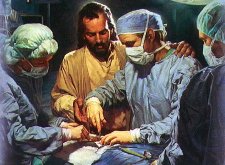
 phrase to disguise random abortion. The parent is given the opportunity to decide how many of the children in the mother’s womb must live and die.







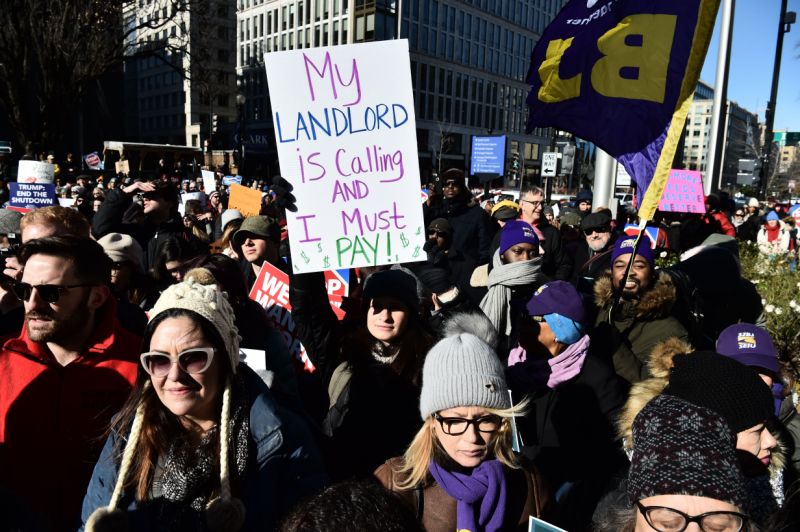






 Our country is going through a big political conflict that has serious moral concerns. Eight hundred thousand government employees have been affected by the government shutdown. We must remember that most of these 800,000 people are the main source of income for many families. If we add immediate family members to the 800,000 workers, we’re talking about over one million people without a paycheck.
 3.
3. Franciscans of Life