Parents and God: friends or foes?


This week, I’ve had the privilege of working with many parents and their children.  When you work in the field of evangelization, you get to meet many families.  I consider it pretty special.  I always walk away feeling that I have exchanged gifts.  It can be an individual member of a family or an entire family who gives me a gift and to whom I give a gift.

For the sake of privacy and because it would be silly to give so many details, I’m going to combine all of my families into three groups.

GROUP I:

I received a letter from someone whom I do not know.  I have never met this person or any member of her family.  It was a lovely letter.

Brother JR, I just wanted to thank you – you were so instrumental in our family’s conversion five years ago. I spent many long hours reading your articles, which were always gentle and full of the beauty of the faith. For that, for helping us know the beauty of the Catholic Church, I am forever grateful.

God bless you, and please know you’re in my prayers.

This letter moved me a great deal.  The Holy Spirit can use anything and anyone to save.  The key is to be aware of that one is an instrument, not the solution to a problem and certainly not God.  Messages like this help us.

My articles are not written with children in mind.  They’re written for adults.  This means that an adult in the family read the articles and shared it with spouse and children.  This is a parent who has found a means to evangelize the family, a means that works for that family.  This is the duty of parents, to bring their families to the faith.

GROUP II:

The other case is also a letter representative of how other parents think.  I have the honor of helping some men and women discern their vocation.  I like to think of it as walking alongside them.  At the end of the day, God does the calling and they respond.  I’m just there to make sure that the person is paying attention.

In vocation discernment, I not only walk with the inquirer, but I often walk with the parents, if they allow it.

During the walk, I have received many positive and holy reactions from parents, especially those parents who have given God a hearing.  I call it a hearing, because they have sought me out or invited me to their home so as to understand what it is that God is asking of them and their sons.  I’m not God and I’m not the son.  I’m the middleman.  I get the opportunity to have some wonderful conversations with parents about consecrated life, marriage, Holy Orders, and parenting.   I received a letter from a parent that really speaks for the several parents with whom I’ve spoken and edited it for privacy and brevity.

Dear Br. Jay,

God’s greatest gifts to a couple are their children.  It is with great joy and love for God that we support our son’s aspiration to become a religious brother or any other vocation he chooses.  Our son . . . and our family are blessed to have you in our lives.  May our God of love and peace keep you healthy to continue to serve Him.

With much love and admiration,

I had to share this message, because I’ve heard this from other parents.  They understand that their children are a gift.  They understand that giving their son or daughter license to respond to God’s plan for his or her life is an act of love for God and the child.  They understand that having a guide is a blessing that God gives to the family, to the son or daughter and to the guide.  We’re all blessed that God has called us to cooperate with Him in His plan for the salvation of this soul.  They have understood the most important part of all.  God has a plan for every human being who is conceived.

“Before I formed you in the womb I knew you, and before you were born I consecrated you; I appointed you a prophet to the nations.”  Jer 1:5

One’s vocation in life has already been written in God’s heart before one ever existed.  All one has to do is follow what God puts before you in the present moment.  He takes care of the rest.

GROUP III:

I also have had experience with a third group of families who struggle with the idea of a vocation to the priesthood and to the consecrated life.  The reasons for their struggles can be many.  I believe that the bottom line is that they are worried about their children’s happiness.  But here is where faith should enter the picture.

One’s happiness is not dependent on the parent.  A man’s happiness is dependent on the choices he makes.  If he chooses to cooperate with God’s plan for his life, he will be happy.  If he chooses some other plan (no matter how noble), he may as well sign his own death sentence.  There is no happiness outside of God’s plan for you.

In these families, parents want to take charge and direct the son or daughter in whatever direction they believes is best for the adult child.  There can be validity to this.  If my son or daughter were dating someone with a criminal background and were talking marriage, I have a duty to warn my child.  At the end of the day, it is my child who consents to the marriage or not.  It is not I who consent.  My duty before God and child is to guide.  Guidance is not the same as control, manipulation, placing temptations before our children to get them to change their minds (See Thomas Aquinas), nor is it the same as commanding, threatening or using guilt.

The Catechism of the Catholic Church tells us that children living at home have to submit to their parents, meaning to their rules, because it’s the parents’ home.  They do not have to submit to that which is not beneficial to their soul.

As they grow up, children should continue to respect their parents. They should anticipate their wishes, willingly seek their advice, and accept their just admonitions. Obedience toward parents ceases with the emancipation of the children; not so respect, which is always owed to them. This respect has its roots in the fear of God, one of the gifts of the Holy Spirit. (Catechism of the Catholic Church, 2217).

Our faith also tells us that

“Parents must regard their children as children of God and respect them as human persons. Showing themselves obedient to the will of the Father in heaven, they educate their children to fulfill God’s law,(Catechism of the Catholic Church, 2222)

And finally, our faith tells us,

“Parents should respect and encourage their children’s vocations. They should remember and teach that the first calling of the Christian is to follow Jesus (Catechism of the Catholic Church, 2253).

Occasionally, the adult child is up against a parent that seems to have forgotten this.  If I could send a message to parents it would be very simple.

Man was created to cooperate with God, not compete with Him.  To compete with God is to place oneself and one’s child on a slippery slope.  Don’t do it.  You may regret it.  You never know the long-term damage that you may do to your child’s soul.

Some important points to remember.

First, for the parent, competing with God is contrary to the vocation of parenting.  It raises the question, where is God in this picture?

Therefore, life must be treated with the greatest reverence.  Creating obstacles that interfere with the development of a person’s life according to God’s plan runs the risk of violating the sanctity of that person’s life.

I encourage all parents on this slope to step back.  We don’t have to agree with our children’s choices of a vocation.  Our daughter can bring home the last man on earth whom we would pick for her husband; but if there is no moral impediment and he makes her happy, I have to trust that God loves me and loves my child.

Second, for the child, one may never yield to the will of another, when that will is in conflict with God’s plan.  

This includes other people as well, not just parents.  It’s not a license to rebel against parents and follow others down the wrong path.

God makes His plans pretty clear through people, prayer, scripture, sacraments, and events in our lives.  Love of parents is binding until death; but love of God is the first and greatest commandment and it does not end at death.  We are called to love God for eternity.

We too must trust that even if our vocational choice causes our parents some grief, God loves our parents more than we do.  He will give them what they need.  We can never give our parents what God can give them.  We need to move on and give to God what He asks and take what He gives.  Sometimes, the grief is part of God’s plan.  There is such a thing as redemptive suffering.

Father Mitch Pacwa tells the story of how his father swore that he would never speak to him again and would disown him if he joined the Jesuits.  Mother Angelica told the story of how she had to run away from home to join the Poor Clares, because her mother would not hear of it.  I know that Mother Angelica’s mother eventually softened and actually entered the community.  I don’t know if Mr. Pacwa ever made peace with his son.  These two people are examples of a man and a woman who would not stand on the slippery slope with their parents, no matter how much they loved them.  Regardless of how much or how little they understood God’s plan for their lives, they knew that they had to follow the lead that God was giving them.  God would unwrap the rest with time.

If you keep another person company on a slippery slope, because it will make them happy, you may want to ask yourself the question that Christ asked St. Francis.  “Is it better to serve the Master or the servant?”

We must love and assist our parents in every way we can.  But we must always serve the Master first.  When we do, He will give us the means to honor our father and mother.  Was Mary abandoned by Christ?  Yet Christ said,

“Here are my mother and my brothers!  For whoever does the will of my Father in heaven is my brother and sister and mother.” (Matt 12:49-50)

God is both merciful and just.  He will have mercy on those who live according to His plan.  Beware of God’s justice.  It is not God who punishes.  God’s justice is an act of love.  He allows us to live and die with the consequences of our choices.

Jesus said, “Amen, I say to you, there is no one who has given up house or brothers or sisters or mother or father or children or lands for my sake and for the sake of the gospel 30 who will not receive a hundred times more now in this present age: houses and brothers and sisters and mothers and children and lands, with persecutions, and eternal life in the age to come. (Mark 10:29-30)

God created families, parents and children.  When he did so, he had a plan for each member of the family.  None of us can presume to love our parents, spouses, or children more than God loves them.  All of us must see our families as a gift that is part a plan in the mind of God.  We have to allow God to unfold that plan little by little.  As He unfolds it, He also gives us the resources to love each family member even more than we do  now.  In the meantime, we follow the lead that he places before us.  If parents and children make an honest mistake, God will help us find our way.

St. John XXIII said, “Follow the signs of the times.”


What’s the IQ required to enter heaven?


The great feast of All Saints is just around the corner. I use to think that All Saints was a catch all day that the Church created to cover herself in case those non-canonized saints got upset.  I don’t know at what point in time it dawned on me that the Feast of All Saints is really not about the saints themselves, but about the universal call to sanctity.Francis and lepers

There are only 365 days in a calendar year.  There is no way that we can venerate every canonized saint in one year’s time, much less learn very much about all of them.  But then again, it about more than veneration.  It’s about imitation.  Over the centuries thousands of men and women have lived lives of heroic virtue.  They have gone over and beyond what is usual and customary in the spiritual life.  We’re talking about the practice of charity, prayer, penance, humility, docility to the Holy Spirit, desire for God, detachment from the things of this world, service to voiceless, forgiveness, purity and many other virtues that I can’t list here, because we just don’t have the luxury to do so.  But you get the picture.

Last Monday, I was leading the discussion at our weekly formation class.   I mentioned that St. Thomas Aquinas grappled with the Immaculate Conception.  One of our brothers had a knee-jerk reaction.  “How could a saint grapple with a dogma?  Especially Aquinas?”

It’s impoHow-The-Human-Nervous-System-Worksrtant to remember that the saints grapple with the same questions about human existence, the meaning of life and the nature of God as the rest of us.  For some of them, these become lifelong areas of study and reflection, such as Aquinas and Bonaventure.  Others don’t even know the question, much less the answer and they’re not particularly interested.  They know God is very real and that their vocation is to reach out to Him through the practice of virtue, someone like Mother Teresa.

In fact, the Feast of All Saints should help us to see the simplicity of God and God’s love for us.  Among the saints we find geniuses and fools, very charismaticMother Teresa people and others who were more distant, some very blunt and some very diplomatic, some clowns and others who were almost too intense.  It was how they used the few or the many gifts that they had to practice perfect charity that got them to heaven.  Genius is not a prerequisite for heaven.  If that were the case, Peter would never have become Prince of the Apostles and would still be sitting on some dock on the Sea of Galilee.

As much as some people want to admire St. Paul for being a no-nonsense preacher and teacher, I’m not so sure that he was as harsh as people paint him out to be.  He may have been a straight shooter.  We see this in his exchange with Peter, but he was also a respectful marksman.  During his entire discourse he refers to Peter as Cephas (Rock).  He never fails to acknowledge Simon’s office in the College of the Apostles.  This is not so typical of one who is allegedly a tough guy.  The tough guy as we understand it is the one who is in your face.  That certainly was not Paul.  He was frank, but he sincerely loved Peter and respected him.  What we see in the story is an event about love, not rebellion.  Love is the highest of the virtues.  Paul love Peter, love the Gentiles and loved the universal Church.  He sets out to protect what he loves by pointing to what he sees as wrong.  But he does so with great respect.

The febaby dohast of all Saints calls us to remember that we have been created for love, nothing more is needed.  You can convert a wise man into a saint and you may never convert a saint into a wise man.  But that’s OK.  The vocation to sanctity is a call to the perfection of love.  That’s what we celebrate November 1.  The God who created us out of love, calls us to share in His love for all eternity.  We can begin today.  You don’t need a high IQ to love.

Published in: on October 29, 2014 at 12:39 AM  Leave a Comment  

I’m over here . . .


Archbishop Thomas Wenski celebrates Mass for Nascent LifeThere are many things about my life, apostolate and role in my community that I love.  But I believe the one thing that I love the most is the many interesting questions that people ask me, not to mention the fact that the people are equally interesting.

In discussing life’s choices with people, I often hear the word “hurt”.  Many conscientious people are fearful of hurting others by their choices, especially their parents and siblings.  This is laudable.  We must always avoid intentionally doing something that will harm another person, be it a parent or a stranger. However, we must be very careful here.

There are two key words there, “intentional” and “harm”.  When harm is intentional, a person knows that this particular evil choice will do harm to another person and he goes forward with it.  This does not mean that good choices never cause pain.  They often do.  But the choice remains good.  One has a moral duty to choose the good and avoid evil.  When there are two goods to be chosen, one has a moral duty to choose the higher good, if there is freedom to do so.

Let’s apply this to vocation.  A vocation is a call from God to man.  God calls man to one of several states in life:  marriage, holy orders, or some form of consecrated life.  These are all good, because they are all from God and lead back to God.  However, they don’t lead  everyone back to God.  If someone forces himself into a marriage to please another person, it is very difficult to find a path to God in a marriage where one is responding to the wishes of another and not to a call from God.

The same holds true the other way around.  One may walk away from a call from God to please another person, because we don’t want to cause pain.  Let’s assume that all things point to the consecrated life or to Holy Orders.  One’s heart is already there.  Along come a parent or sibling, and one holds back from responding to God’s call so as not to cause this other person pain.  What has one done?

In effect, one has inverted the order of love.  The Commandment is very clear.  “Love God above all things and your neighbor as yourself.”  In choosing to avoid the higher good so as not to hurt the other person, we have placed that person above God and brought God down to our level.  We have no problems sacrificing neither ourselves, nor God in this case.  We just don’t want to sacrifice the other.  We have assigned the highest place to the neighbor and the second place to God alongside ourselves. 

No human being has the right to claim God’s place in our hearts and in our choices.  Nor do we have the right to assign God’s place to another, no matter how much we love that person.  There are some things that God wants us to do for others and some things that He reserves for Himself as the Lord and Giver of life.

Let’s remember, when discerning God’s will for our lives, the answer is always in the order of love.  The first place belongs to God.  We respond by doing that which pleases God first and neighbor second. It always pleases God that we make every attempt to serve and please our  neighbor, but never at His expense.  To do so would be a sin against justice.  God does have rights.  Therefore, he has first claim on our lives, whether we’re speaking about parents and children, husbands and wives, or brothers and sisters.  None of these have rights that trump God’s right to our love and surrender.  If anyone of them claim what is rightfully God’s, it is rightful to resist.

We may never do anyone intentional harm.  Intentional harm is an avoidable act that will hurt the other person .  Following God’s will is never to be avoided.  How do we know when we’re following God’s will?

First, there is knowledge.  We know that something is good and pleasing to God.  Our faith enlightens our knowledge.

Second, there is peace.  Even though we know that some tears will be shed, we know that we can place the situation in God’s hands and that in His eternal time, He will comfort those who mourn and reward the generous.

Third, we know that those who truly love us will not grieve forever.  As they realize that we are happy and that we are where we belong, they will be happy.

You cannot love another person and not be happy when he’s happy.  That’s not love.  It’s selfishness.  To cave into selfishness is to cave to sin.  Be it our selfishness or the selfishness of another, selfishness has no place in true love.  True love gives even if it hurts.  Look at St. Francis, St. Clare, St. Thomas Aquinas, St. Gianna Molla, St. Elizabeth Ann Seton, Our Lady . . . were they wrong to love God more than they loved their family and friends?

This praiseworthy fidelity, while not seeking any other approval than that of the Lord, “also becomes a living memorial of Jesus’ way of living and acting as the Incarnate Word in relation to the Father and in relation to the brethren” (St. John Paul II).

Not the Liturgical Police


I attended mass this Sunday at my favorite parish.  The homilist is one of my favorite priests.  His message is always very good and very orthodox.  So why am I writing this blog entrance? Two important things happened.  I’ll begin with the least positive and conclude with the more positive event.

Father tends to repeat himself a great deal during his homilies, which makes them very long.  Something has not set well with me about these long homilies and I think I figured out what it is.  They unbalance the liturgy.

One of the major concerns when in the liturgical renewal was to give a more prominent place to the Word of God.  The idea of a Liturgy of the Word with three readings and a psalm was born.  But the theology of the mass was not supposed to change.  The mass is still the unbloody sacrifice of Calvary.  The sacrifice must still occupy pride and place during the mass.

However, when your homily is three times longer than the Eucharistic Prayer, when you have the laity reading aloud from their bibles during the homily, the preacher is everywhere but at the pulpit and the style of the homily resembles a Protestant revival more than a Catholic homily, with people calling out, clapping, cheering and more, then there is a problem.  The problem is that the sacrifice is virtually ignored.  People attend the mass because they love Father N’s homilies.  But Fathehr N’s homilies are an event unto themselves that make the Liturgy of the Eucharist pale by comparison.

Another problem enters the picture when Father N repeatedly makes certain comments.  Every preacher has a pet phrase, slogan or idiomatic expression that he will throw in there with some frequency.  We have to make room for the human element.  A preacher is a human being who comes with his culture, his persona and his style.  We can’t and shouldn’t expect them all to be cut out of the same bolt of cloth.  Even identical twins have different personalities, why should all preachers have the same personality?

Having said this, it is important that the preacher beware when his homilies are attracting more attention to him than to God.  This is important, because it’s very easy to upstage God, if the preacher is not careful.  People can see the preacher, but they can’t see God.  Expressions such as:

Never say no to Father.

I’m a priest.

I’ve been a priest for X number of years.

I’m a priest and he’s only a deacon.

When I walk down the street . . . .

Don’t let any priest tell you differently and if he does, send him to me.

Such expressions can be dangerous.  They become more dangerous when the preacher does not realize that they are calling too much attention to him, making it the Liturgy of HIS word instead of the Liturgy of the Word.

Some people would say that this is a weakness of the revised order of the mass and that going back to the Tridentine form would resolve all of this.  This is not true.  These issues have nothing to do with the form.  They are about preachers failing to execute the Liturgy of the Word as Pope Paul VI intended it to be when he revised the missal.

Preachers must also be sensitive to the possibility of using the congregation instead of proclaiming the Word of God to the faithful.  If the congregation is hanging on to your every word, clapping, calling out during your homily, and cheering you on and if this is usual for your homilies, there is a danger here.  The preacher is risking using the congregation to feed his ego.

The sad part here is that these are good priests and deacons.  They don’t have any intention of doing harm, violating the rubrics, attracting attention, or turning the church into a revival tent.  Their intention is to preach a message to the people of God.    When the preacher hijacks his own homily, it’s a sad day.  This can easily happen when Father or Deacon plan their homilies around the message they want to deliver and include themselves too much in the homily.  They fail to factor in how to use that message to help people move from the table of the Word to the altar of sacrifice.

Human beings need help transitioning from one event to another.  We also need to start looking at the mass as the prayer of the Church, not Father X’s mass that we never miss. “Because Father is a great preacher,” or this is the mass that one tries to avoid, “Because it’s Father X’s mass and I don’t like it.  If that’s the only mass left, then I won’t go to any mass this Sunday.”  These are not viable and acceptable reactions to a mass.   However, these are real dangers when people make it Father X’s mass and Father X encourages it with his behavior and his language.  For months I’ve been uncomfortable with this situation, thinking to myself that something bothered me when Father N celebrates the mass.

I did say that two things happened and that the second was very positive for me.  I was angry when I arrived at home.  I left the mass angry.  Suddenly, one of our new aspirants tells me that he plans on visiting with me next week.  I respond that I hope that I’m in a better mood and proceed to tell him how angry I was at this priest.   He reminded me that I had taught him to focus on the parts of the mass, not this person or the next one.  We don’t go to to mass to police the liturgy.

The fact is that I did teach him this.  You never know for whom you work.   I have been teaching all of our men in formation that they attend holy mass to worship God, not to pay attention to what others are saying or doing.  “Just turn them off your impatience and your pride.”

Hearing these things from the aspirant helped me to realize that I was playing liturgical police rather than praying the liturgy.  In his own mild way, Brother put me back in my place using my words.   It’s good to have brothers to humble you whenever you need to be knocked down a peg or two.


Published in: on October 13, 2014 at 1:57 AM  Leave a Comment  

Obedience is deadly


I’ve been thinking, what can I say or write in preparation for the Solemnity of St. Francis of Assisi (October 4th) that would speak to others and would come from my heart rather than san franciscomy head.  Then it occurred to me to share the Lord has taught us through St. Francis.  Every teaching has been a blessing.

I have to say that the most visible blessing that God has given to the world is the Franciscan family.  I don’t think that anyone really knows how many sons and daughters St. Francis has. If I were to compare Francis to a biblical personality, it would be Abraham, the father of many.   I think the first quality of St. Francis that I respond to is fatherhood.

This is interesting, because Francis always identified himself as our little brother.  But this little brother has commanded the attention of millions of men and women around the world, not all of them Catholic.  He has certainly had the obedience of thousands of men and women during the last 800 years.  What makes Francis such a special man and a father figure is not that he was authoritarian or controlling.  What makes him a special figure and a father is that he was respectable.  Francis is credible.  Credible people are respectable.  He set out to live his life according to the Gospel.  To everyone who came to him, he offered the Gospel.  He did not impose himself on anyone.  On the contrary, he was the father who guided his sons and daughters into the future.

Parents normally point to careers, education, potential spouses, hobbies, social activities and many other things that they believe will enhance the lives of their children.  Francis is no different.  He points to Christ and his Blessed Mother.  He points to the Church.  He points to prayer, penance, poverty, family, service  and to the Cross.

I have often thought that Francis is like the man who has an elderly parent who may no longer be physically attractive, but he knows his parent and he knows the beauty inside.  This man makes sure that his children are exposed to this grandparent, who has warts and wrinkles, is old and appears to walk a little out of step with the rest of the world.  He exemplifies filial love and love that goes beyond the faults, to the heart of the other.

This is Francis relationship with the Church and his sons and daughters.  In some respects, the Church can be WP_20140819_001that grandparent that is no longer physically attractive and at times can be cranky.  Just like Grandma’, she is beautiful inside and has much wisdom to pass on to us, if we open ourselves to receive it.  Francis loves the Church, warts and all.  He takes his sons and daughters into the heart of the Church, through example more than words.  He teaches us to look beyond the surface and see the glory of the Church.
I can’t speak about Francis without speaking about family.  As I said above, Francis identifies himself as everyone’s little brother.  He was right to do so.  You see, in a large family the youngest is usually singled out.  Sometimes his older siblings will bully him and at other times they will spoil him.  This certainly was the relationship that Francis had with the first generation of brothers.

Everything was not sugar and roses as some people want to make it appear.  There were
brothers who worshipped the ground upon which Francis walkedBrother & Tasha.  There were also brothers who fought his vision of the Gospel Life tooth and nail, to the point of being mean.  But like all good little brothers, Francis loved them just the same.  Little brothers can often become the most forgiving persons.  Francis was the brother who always forgave.

Even when his brothers were wrong, Francis maintained the clarity of mind necessary to separate between the person and the deed.  I wouldn’t say that he hated the sin and loved the sinner.  Francis went beyond this.  He did not judge anyone to be a sinner.  It would be contrary to his way of thinking to look at someone and say that he or she is a sinner whom I must love, even when he has committed a sin that I must hate.  What we see in Francis’ writings and his actions is honesty.  He recognized sinful deeds and he pointed them out when necessary.

His admonitions are full of sinful deeds that he notices among his brothers and sisters.  poor man walking in integrityThat’s why he wrote the admonitions.  Why admonish those who need no admonishing?  However, when one reads through the admonitions, his letters, his rules and his testament, he does not refer to a single person as a sinner, other than himself.  He leaves that to God.  In other words, St. Francis is a person who can teach us what belongs to God, what belongs to the Church, to the superior and to the individual.  He does not cross those boundaries.
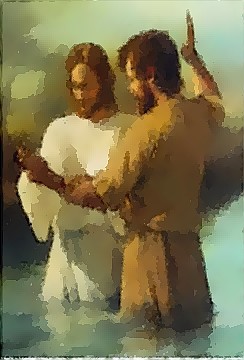
Today, we have too many people who want to make the world right by dictating to others, including correcting the Church.  There is such a thing as fraternal correction, which Francis used quite often.  But let’s look at his style.  Look at the admonitions.  He speaks about faults that are to be avoided and how they are to be rectified if they are committed.  He is a brother, not a policeman.  He didn’t even police his own brothers.

A brother corrects while being very careful not to cross the line and assume authority that he does not have.  A brother who is faithful to the Gospel corrects without making a judgment about the state of the other person’s soul.

I want to draw attention to an aspect of him that is rarely addressed, obedience.  Francis’ poverty is well known.  But very little is said about Francis’ obedience and what he taught the brothers concerning obedience.

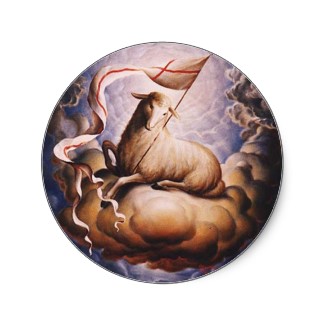
Francis knew that Christ is the firstborn among many brothers and sisters.  He knew JohnBaptist-athat John the Baptist is the voice who points out the Lamb of God.  Each of these men had a
mission assigned to him by the Father.  In both cases, the mission ended up terribly, if we measure it by human standards.  Both were executed.

As tragic, as cruel and as unjust as both of these executions were, they could not be any other way, because to change the conclusion would be to thwart God’s plan for our redemption.   Our loss of paradise is the product of disobedience.  Recovery can only happen through obedience.  Obedience goes beyond compliance.  Obedience is charity.  Obedience is poverty.  Obedience is the greatest expression of union between the soul of man and the mind of God.

Therefore, Francis demanded that his sons and daughters obey.  Above all, we are to obey God.  We know when God speaks to us, because the Church confirms it for us.  We can’t jump a rung on the hierarchical ladder.  We seek to know the will of God in order to fulfill it.  It is the Church who tells us if we’re on the right track.  We can’t simply say that the will of God is X and the entire college of bishops is wrong and I’m right.  It doesn’t work that way and Francis knew it.  He reminds us in his Testament that the rule was of divine inspiration, not human influence.  He quickly adds that he knows this because the Lord Pope confirmed it for him.

Obedience can be deadly.  John lost his head.  Jesus was crucified.  We already mentioned Fr. Miguel Pro, SJ Martyrthis.  Francis reminds us that we cannot be obedient without dying.  This death is not symbolic, metaphoric or allegory.  It’s very real.  We die to ourselves and to many things
around us.

Francis taught us there is only one question that we need to ask.  “Is this a sin?”  If I’m being commanded to sin, I have a duty to disobey.  However, if I’m being commanded to do something that is not a sin, even if I believe it is not the best decision made by legitimate authority, I am bound to obey.  God is pleased by obedience more than by the thing that we do or not do.lamb of god

Jesus said “Truly, I say to you, among those born of women there has risen no one greater than John the Baptist; yet he who is least in the kingdom of heaven is greater than he”  (Matt 11:11)

John would obey, even though it would cost him his life.  Jesus knew that his life would take the same turn.  At some point, his obedience to the Father would cost him his life.

From a human perspective, these deaths were scandalous, because they were foolish.  There was no just reason for these men to be executed.  But from a divine perspective, these deaths were the greatest acts of love that the world has ever seen.  When one obeys the Beloved, even unto death, there is no greater love, regardless how foolish the command.  One is freely giving.  No one is taking.

“No one takes it from me, but I lay it down of my own accord. I have power to lay it down, and I have power to take it again; this charge I have received from my Father,” (John 10:18)

Francis teaches us what he learned from Christ, “obedience, even unto death,” without murmuring and without second thoughts, obedience given, rather than compliance demanded.WP_20140825_081

Today, there is much talk about the Church and her prudential judgments.  Many excuse themselves from obedience, because the Church, the bishop, the superior or the boss is less than prudent or the command is not infallible. They’re looking in the wrong direction. Francis taught us to look out for sin.  If there is no sin, we turn our complete attention and gaze to what is asked of us and we respond with love for God and for the authority that God places over us.

Despite everything that Francis said and wrote about Lady Poverty, he begins his most important piece of writing with the words, “The Rule . . . is to observe the Holy Gospel in obedience.”

Christ is the Master and Francis is his hired teacher sent to us, through the Church, by the Holy Spirit.  He teaches us that obedience is an absolute requirement in order to be like Christ, even when obedience is deadly (in the eyes of the world).

franciscans of life

Holy Father St. Francis . . .Pray for us.

Why do I do this?


I’m trying very hard not to engage in heavy philosophy and theology these days.  I’m tired, my health is poor, my brothers need my attention, it’s “Franciscan Season,” then I have to rest for the Advent Season.  But every once in a while someone says something or publishes bang-head-heresomething that stirs my juices and I can’t turn my brain off.  I keep asking the brothers to elect a new superior.  If someone else were the superior, he could order me to stop thinking about A, B, and C and I would have to make an effort to focus on something else.  But that’s not the way it works these days.

I read an article, which you can read, if you have time.  The link is at the bottom of the page. I refuted the writer’s comments and placed them on Facebook.  In a nutshell, the writer interpreted something that the Holy Father said about Mary as making her part of the Godhead and more important than Jesus.  If you read the article, the Pope never said such a thing.  After my refutation, a poster from Facebook chimed in

To me this is like arguing about which version of Little Red Riding Hood is correct.

I responded like this.  I’m just going to give you snippets of my response.

When we come to the person of Jesus Christ, we have to face the question about a real person who exists in real history, but has two natures, one divine and one human and he proved it to those who knew him. He died on a Friday and walked out of a tomb on a Sunday. Dying is very human. Walking out of a tomb after three days is not normal for human beings to do.

I gave a few other examples such as Jesus walking through walls and asking for food, before moving on to this other point.

VISITATIONNow we have the union of two natures in one man. The divine nature is that of the second person of the Trinity and the human nature is that of Jesus of Nazareth. But the second person of the Trinity, who happens to be pre-existent, is also the infant who was born of Mary and who could not be born, had there not been a mother to carry him for nine months and give birth to him.

Yes, I know that God could have taken on human nature using any means he wished.  But he’s God and I’m not.  Who am I to tell God how to enter the world?

Another post shows up and said  “Not buying any of it.”  That’s fine, because Truth is not for sale.

As Franciscans, we present it, but we don’t try to sell it, shove it down anyone’s throat, or seduce anyone into acceptance.  The Truth is of God and God does not need help to distribute grace. Faith is a gift of grace.  God just asks us to deliver the message.  He does the rest.

021001-N-3228G-008However, I did state that I would give my life for this, meaning that I am willing to die rather than deny that the Second Person of the Trinity broke into human history by taking on human nature from Mary of Nazareth.  I’m not about to argue with him why he didn’t use some other way.  That’s like arguing about technique with the lifeguard who’s trying to save your from drowning.

Of course it finally came out.  The famous question.

Explaining a fairy tale, is just explaining a fairy tale. Where is logic and science?

It seems that some people have elevated science to be the “Source of All Truth”, an assumption that even many non-believers reject.

In a certain sense, modern man is more naive than the ancient Chinese, Romans, Greeks, Aztecs, Incas, Mayans, Brahmans and other great thinkers.  The ancient thinkers never believed that one discipline had all the answers.  Truth is distributed among science, art, nature, human behavior and development, the environment, math, and other disciplines.  Theology studies Truth in order to understand that to which our faith has already given assent.   In plain English, science can only answer some questions, the answers to other questions are to be found in other domains out of the reach of science.

Can science create beauty or something that is beautiful?  Beauty exists before the beautiful.  Science did not create beauty.  It created something beautiful using technology.  Case in point, science does not have all the answers, so why even ask this question?  I explained that science can only deal with that which is contained by space, time or both.

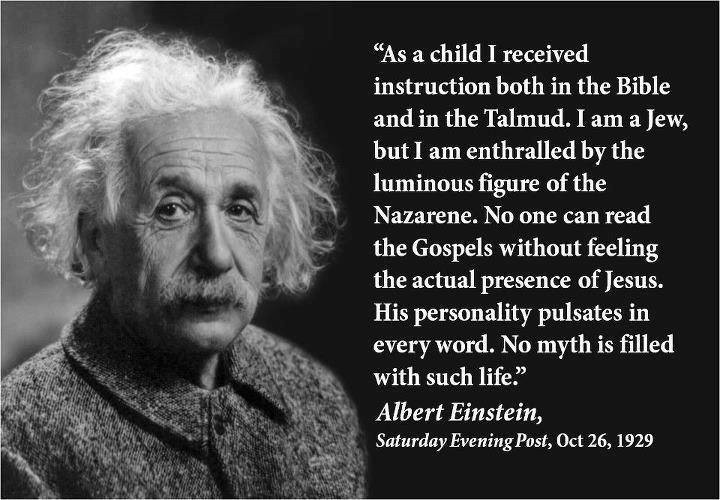
einstein and jesus

Einstein also taught us that space and time are relative to each other and to that which occupies it.  If science could show us all truth, then truth would be limited to space and time.  In which case, there would be no absolute truth, because science is not absolute.  We’d exist in a world of relativism where nothing can be trusted, because nothing is guaranteed.

If there is no absolute truth, then there is no such thing as absolute love, friendship, fidelity, honesty, patience, kindness, compassion, purity, detachment and many other things.  If we contain these things in space and time, they would be relative, not constant.  You couldn’t trust that your feelings for a loved one are the same today as they were when you went to bed last night.  Einstein’s theory of relativity helps us understand the relationship between space and time.  To use a modern word, they’re synced.

I think that Truth has to be bigger than the bubble in which we live.  Einstein would agree.  He once said,

The most beautiful and most profound experience is the sensation of the mystical. It is the sower of all true science. He to whom this emotion is a stranger, who can no longer wonder and stand rapt in awe, is as good as dead. To know that what is impenetrable to us really exists, manifesting itself as the highest wisdom and the most radiant beauty which our dull faculties can comprehend only in their primitive forms.
( Albert Einstein – The Merging of Spirit and Science)

Fr. Miguel Pro, SJ Martyr

Miguel Pro, SJ Gave his life for Christ the King

After explaining why I would give my life for this, I asked my FB friend, “If you were put with your back against the wall and told to believe a falsehood or shot for denying what you believe to be false, which would you choose?”

The response was rather interesting.  “What a ridiculous choice. I would pretend to buy it and walk away, wondering at the stupidity of my captor.”

To which I was forced to respond, “There is the difference between you and I. I would never forfeit my life for a lie, but I would for the truth.”  Our preoccupation with empirical truth has actually deteriorated our ethical character.

So she hit me with, “Your perception of the truth is not necessarily the truth. You have submitted yourself to ideological brainwashing.”

 Here is the weakness in that thinking.  You’re assuming a great deal about the other person.  She’s assuming that I’m naive, ignorant, weak-minded and that she has no need to walk in my shoes, because she has her stuff and mine all figured out.  We can never make such assumptions.  St. Francis never assumed that he understood the other person.  He allowed the other person to open himself up to him and he in turn reciprocated by opening himself to the other.  He took the risk of loving, believing what he could not see and trusting.

I want to do the same.  I want to take the risk of sharing my faith.  I came to the faith on a risk.  I trusted a man named Francis of Assisi.  I believed that he would teach me about Jesus and he did.

For a few years, I lapsed in the faith and underwent a second conversion.  This time I trusted my eyes.  I had completed my studies in neurology and psychology and I’ went through a conversion experience that began in my mind.

As I studied studied neurology and human development. I came to the realization that the How-The-Human-Nervous-System-Works
human brain and its concomitant behaviors are too complex, too ordered, too consistent and at the same time outside of our ability to contain in time and space, which makes them consistently fluid and unpredictable, because we can’t create human experience.  We have to wait for it to happen in order to attempt to understand it.  We can’t create human passions.  We have to wait for them and then analyze them.

For anything that precise to exist free of human control and capable of transcending space and time, while obeying natural law, there must be a Law Giver more intelligent and capable of much more than what I give him credit for.

Why do I do this?  Why do I engage in discussions with fallen away Christians? Because I’m a Franciscan of Life.  God sends us into the world to continue the work of Christ who is the firstborn of many brothers.

What did Christ say was his work, Icame that they may have life, and have it abundantly,” (John 10:10)  The Franciscan of Life is the instrument of Life calling out to life.

imagesCA84KBW0


The article that triggered the dialogue.

http://www.inquisitr.com/1477428/pope-francis-about-to-decree-virgin-mary-to-be-more-important-than-jesus-christ/

God’s policies and Church teaching


I just saw the article linked at the bottom and thought I would comment on it. Once again, journalists are speaking out of their field of expertise and the general public is following along like sheep. A journalist is not a theologian. His or her role in society is to report news, not to rewrite Revelation and much less to distort it.

Reproductive rights and reproductive healthcare for men and women only includes artificial contraception and abortion in the mind of those who want to resolve a health issue the easy way out, without understanding what’s at stake here.

The Church has no authority to change revealed truth. The Old Testament condemns the spilling of the male seed in order to avoid

Pope Paul explained God's policy on birth control.  He did not invent it.

Pope Paul explained God’s policy on birth control. He did not invent it.

conception. The Church Fathers sustained this as Divine Revelation, therefore part of the Deposit of Faith.

The Church’s teaching on artificial birth control is not a matter of policy that the Church has the authority to change. This policy is God’s policy, not the Church’s policy. The Church can only teach God’s policy and remind us of it every few years, in case we forget. No man has the authority to overrule God.

The same is true on abortion. Natural law teaches us that the killing of an innocent human being, even an innocent animal, who is not a direct threat to our safety, is immoral. Why do we have campaigns to save the whales, save the dolphins or save some other endangered species? We have them because these are life forms that are not a threat to human safety and they are not a necessary food source. Therefore, there is no reason to attack them and take their lives. The preborn child is not a threat to human safety either, nor is he a source of nourishment. One has to use one’s imagination and stretch it exponentially in order to say that a preborn child is a threat to his mother.

A pregnancy may trigger some complex and even dangerous health issues, but this is not the same as a conscious attack coming from an adversary. The preborn child is not an adversary. This danger stems from nature following laws that God built into it when he created the natural world.VISITATION To insist that one terminate the life of the preborn child is an unjust act and an unethical interference with the laws of nature, which man did not create. God did. It’s unethical because there are natural laws that allow us to avoid high risk pregnancies. They require some sacrifice on the part of the parties involved.

If we defend the natural right to life of non-human animals, why do we challenge the right to live of the human animal? Just as there are natural ways of avoiding the risk of being eaten by an alligator, there are natural ways to avoid pregnancy. In both scenarios, the living organism is not attacked and destroyed, nor is any human being who follows the the natural means to avoid a potentially dangerous situation threatened by an innocent life form.

These are laws that God built into nature. The Church can only teach them. She has no authority to change them. They are not the Church’s policies. They are God’s policies. It is God’s policy that innocent life, human or other, cannot be destroyed. Man has a moral duty to protect all life forms, especially human life, from conception to natural death. Man has no right to extrapolate a specific group, in this case women who are of childbearing age, and create exceptions to the natural law to protect women’s lives by killing preborn women. Natural law, as God created it, demands that the lives of all women be protected and natural law does not place the woman of childbearing age at the top of the female hierarchy, granting her a greater right to life than the woman in her mother’s womb.

Therefore, the Church cannot say anything different about abortion until such time as God changes the laws that he implanted in nature. The mission of the Church is not to make policies for God. The mission of the Church is to teach us God’s policies and to explain them as clearly as possible for each generation. If we have a problem with God’s policies, then we need to take the matter up with Him, not with the right and wrongpope. From the time of God’s first self-disclosure to the Jews, Christians and Muslims, He made it perfectly clear, “Though shall not kill.” In context, this means that one may never take a life unless that specific person threatens our safety and we have no other option to kill or be killed. As long as their is another way to protect our lives, we are bound by the law. “Thou shall not kill.”

The Catholic Church does not make policies for God, she only explains them.

http://www.theguardian.com/global-development/poverty-matters/2014/aug/27/pope-francis-womens-lives-catholic-church?commentpage=1

Published in: on September 3, 2014 at 10:58 AM  Leave a Comment  

Cast into the deep . . .


Christ said to Peter,

“Put out into the deep and let down your nets for a APOSTLES FISHINGcatch,” (Lk 5:4)

and when Peter did they had to call for help, because the nets were bursting with the weight of the fish.

When most of us think of Maximilian Kolbe we think of a holy Polish Franciscan friar who took the place of a man condemned to die at Auschwitz and whom the Catholic Church canonized as a martyr. But this is too simplistic a view. His journey to Auschwitz began when he was nine-years old. Speaking through his Immaculate Mother, Christ invited nine-year old Raymond Kolbe to “cast [himself] into the deep.” When the Immaculate appeared to the young boy she showed him two MAX AND MARYcrowns, one white and one red and told him to choose one. Raymond asked what they represented. She told him that the white was for purity and the red for martyrdom. Raymond chose both.

If we fast forward, Raymond eventually enters the Order of Friars Minor Conventual (Conventual Franciscan Friars) and becomes Friar Maximilian Maria. The friars did not use last names in those days. This is a later development when secularism invades religious life.

Maximilian Kolbe began his trek to martyrdom at age nine, accompanied by Mary. It is not coincidence that he achieves martyrdom on the eve of her Assumption into heaven. The relationship between Maximilian and Mary was much deeper than the Sea of Galilee. Together, they would catch many souls.

St. John Paul II, preaching at St. Maximilian’s canonization said, “In the mystery of the Immaculate Conception there revealed itself john paul and marybefore the eyes of [Maximilian’s] soul the marvelous and supernatural world of God’s grace offered to man.” Does not Peter say, “Depart from me Lord, for I am a sinful man”(Lk 5:8)? God never misses an opportunity to reveal his grace and to offer it to man.

To focus on Maximilian’s death and ignore his lifelong journey to Auschwitz, is to miss the movement of God through human history. Throughout his life, Maximilian would have much to teach us about intimacy with God through the Immaculate. We often wonder what exactly happened to John the Baptist while in Elizabeth’s womb when Mary arrived at their home. VISITATION Elizabeth said, “For behold, when the voice of your greeting came to my ears, the babe in my womb leaped for joy,” (Lk 1:44). In presenting the relationship between the soul and Mary Maximilian wrote,

“Mary will enkindle hearts with the love of her Maternal Heart and inflame them with the fire of the charity that burns in the Divine Heart of Jesus.”

He also reminds us that without Mary, our battle against the forces of hell is a lost cause.

“The conflict with Hell cannot be maintained by man alone. The Immaculate has from God the promise of victory over Satan.”

To try to become saints and conquer sin by our own efforts, without the aid of the Mother of the Lord, is a futile cause. Many non-Catholics and non-Orthodox will argue that they know members of their community who have never had a devotion to Mary and have lived very holy lives. This may be true. But that is not to say that Mary is our-lady-crushes-serpent-2absent. Mary does not need our permission or even our friendship to intervene between our soul and hell. This was planned by God from the beginning of time. “I will put enmity between you and the woman, and between your seed and her seed; she shall bruise your head,” (Gn 3:15). We cannot handcuff Mary, because we cannot handcuff God, nor can we alter his plans for our redemption.

Mary is not divine. She is only human. She is not part of the Trinity. Yet, being the mother of the Second Person of the Blessed Trinity, she is inseparable from the Trinity, because the persons in the Trinity are inseparable from each other. She is daughter, spouse and mother.

Christ’s passion, death and resurrection involve the three divine persons of the Trinity and the human person who surrendered her Son to be executed for our redemption, in fulfillment of the Father’s plan. She is the first to cooperate fully with the Holy Spirit for the redemption of mankind. If we want to experience how much the Trinity loves us, we must draw close to Mary.

“The only human person who was as closely united to the Holy Trinity as is absolutely possible, and therefore, the highest reflectionMARY AND TRINITY of the love of the Holy Trinity; the most perfect human, living, visible, audible human being is the Blessed Virgin Mary,” (St. Maximilian Kolbe).

When he surrendered himself to the Mother of God, Maximilian sealed his fate. One cannot surrender to the Mother of God and expect to be spared her Son’s cross. At the same time, without the mother, the cross would not have happened and we would be lost. “His death makes Maximilian particularly like Christ — the Model of all Martyrs – who gives his own life on the Cross for his brethren,” (St. John Paul II)

Through Mary, Christ invited Maximilian to cast his life into the deep. Maximilian accepted the invitation with great joy and peace, because he believed that one should

ST MAX AUSCHWITZ

“Place [himself] in Mary’s hand. She will provide for everything you need for soul and body. Therefore, [one can] be at peace with unlimited confidence in her,” (St. Maximilian Kolbe).

Our intimacy with Christ is proportionate to our intimacy with the Immaculate. Maximilian a modern model of this great truth in Christian Spirituality. However, this intimacy is not without risks. It requires that we cast ourselves, not our nets, into the deep — trusting that she will not allow us to drown in sin and hell.

Saint Maximilian Maria Pray for us

Saint Maximilian Maria
Pray for us

The fact that Friar Maximilian died on the eve of the Assumption is no coincidence. There are no coincidences where the Immaculate is involved.

Published in: on August 11, 2014 at 12:33 AM  Comments (4)  

Is There Faith Without History?


As I look through the internet, newspapers, blogs and forums, I see what people think Catholicism is and what they think the Church has said. Many have no clue what it really is and what the Church has actually said, because they can’t see or speak about the Church in historical and cultural context. In their mind, the separation between the Church and secularism is defined as a chasm between the Church and human history.

Many of self-proclaimed remnant Christians and Catholics blame the world’s demoralization on Vatican II and post Vatican II popes. World War II, the rise of the USA and USSR to super powers, and the empowerment of the young had nothing to do with contraception, abortion, promiscuity, schizophrenic political ideologies, “the death of God theory” and many more moral evils.

About 800 years ago, St. Bonaventure taught us that history is tangibly real and has to be approached with theological reflection and practical action. There is an inseparable connection between salvation history and Revelation. God discloses himself within human history, because

St. Bonaventure

St. Bonaventure

he’s speaking to human beings. However, the battle between good and evil also takes place within human history involving all of society, not just Catholics or any single religious tradition. Sin and salvation both involve everything that affects man, not just his religious practices. Sin and salvation influence history. History influences man’s understanding of the former and the latter and man’s choices. Influence is not the same a choice. Man’s freedom to choose is not the same as influence.

John Henry Newman demonstrated why Bonaventure was right in his great work Development of Doctrine. One cannot separate the Church from human history. Without that historical perspective Catholicism is nothing but a bunch of rituals, isms, and rules of deportment. Salvation history speaks through human history, it is both abstract Truth and lived experience. We receive truth from its source, which is God himself. He has spoken through prophets, scriptures, Sacred NEWMANTradition and the Magisterium. But we do not limit God’s self disclosure to those few words that we read in the Bible or on another piece of writing. On the contrary, throughout history we live through a series of experiences that lead us to conclusions about those words, conclusions that build on the one that came before it, that may compliment it, or that may use more modern language.

These conclusions do not contradict previous conclusions. However, new conclusions often pose a problem, because the more we think about a point, the more complex the system becomes. Nonetheless, it’s the same system. One could say that the present helps us explain Truth that was revealed from the beginning. At the same time, today’s explanations are not a concrete as the original words appeared to be.

We cannot separate history from God, nor the present from the past. We must look at the present and ask ourselves what does it tell us about what was handed down to us by the prophets and apostles. We must ask ourselves, what is it adding to what we already understand about sin and salvation.

All public revelation is complete; but we are still working on understanding. We need a hermeneutic of continuity. The present without the past makes no sense and the past without the present blocks the development of our understanding. For example, had not the early Church thought about what Christ had said that he and the Father were one, we would not have arrived at the hypostatic union. The hypostatic union was not understood until the fourth and fifth century. It was an explanation of what had been revealed by Christ himself. The conclusion was based on what Christ had revealed about himself and what the Church had experienced in her encounter with Christ. Both took place in time, not outside of time.

We cannot yank the Church out of time in order to stop her from moving forward. We cannot reverse the clock and you cannot push her forward in time with complete disregard for her past. The human element of the Church is an historical element. What the Church is and believes has to be looked at in light of what has been revealed by prophets, Christ and apostles. Our experiences throughout history help us draw conclusions about salvation history and Revelation.

Published in: on August 3, 2014 at 10:54 PM  Leave a Comment  

“And you . . . who do you say I am?”


I don’t think this needs any explanation.

Thanks to Bernardo who produced, directed and was kind enough to allow the Franciscans of Life the honor of sharing this excellent meditation with our friends.

Published in: on July 3, 2014 at 11:39 AM  Leave a Comment  
Tags: