The subject of the family is central to any discussion of the Gospel and society. God has always chosen to reveal Himself through the family. He created Adam and Eve as parents to the human family. He called Abram and Sarai to become mother and father of many nations. He brought Moses out of his biological family, grafting him to a royal Egyptian family so as to bring His Israelite family out of slavery. He raised the royal family of David from which he would take human nature in the Holy Family at Bethlehem. His told Mary “Do not be afraid. Go and tell my brothers to go to Galilee,” (Mt. 28:10). Throughout salvation history, God has spoken to the world through family life and from within the family.
The Franciscans of Life, though we are a very small and young family, are not less or more Catholic than our other Catholic brothers and sisters. Christ calls us to live the Gospel in the manner that St. Francis of Assisi lived it. Building on the experience of St. Francis, we believe that Christ also calls us to remind the world that the Gospel is a gospel of life.
To proclaim the Gospel of Life, one must proclaim the Gospel of the Family. It is in the family where Life calls out to life (Vita ad vitam vocat). If we follow the Gospel, we must accept that human life begins within the context of family. Every human being has a dignity that protects his right to be conceived, nurtured and born into a family. He has a right to protection, formation, and to receive care from a family. At the end of life, he has the right to die naturally in the arms of his family.
From within the natural family, God calls men and women to form new and younger families, as well as families of brothers and sisters who consecrate their lives to live  according to the Gospel. Such a consecration can take different expressions, from monastic, religious order, society of apostolic life, secular institute, diocesan hermits to consecrated virgins. To the degree that these associations reproduce the relationship between Christ and his apostles, whom he calls “my brothers”, these are real families. They foreshadow family life in the Kingdom of God beginning with the Trinitarian family.
These thoughts help us who are trying to follow the extraordinary synod on the family with great interest. Our Catholic identity comes from feeling with the Church. We’re not talking about feeling emotional. We’re talking about loving God and man with the Church. To do so, we must know what the Church is thinking.
Here is where we must draw an important line. We, brothers, remind ourselves that a synod is a listening session for the Holy Father and from that session will come ideas that the Holy Father will consider for the ordinary synod in October 2015. The Holy Father will exercise his authority once he has all of the information on hand.
Because the synod has no authority, it all rests with the pope. The brothers are not alarmed by some of the statements that the media alleges that some bishops have made, nor are we alarmed by those that we know some bishops have made. The Church cannot change revealed truth.
As stated above, to proclaim the Gospel of Life one must proclaim the Gospel of the Family. However, it is not we who decide what the Gospel says or does not say. It’s the teaching  magisterium of the pope that teaches us what the Gospel says. It’s important to listen carefully to what the bishops are telling the pope about family; because when all of this discussion is over and done with, the pope will probably issue a post synod exhortation that will carry the weight of the Church’s teaching authority. Listening carefully requires that we withhold reacting to what is being said until the pope speaks.
We don’t have to agree with every idea that the bishops put on the table. The pope invited them to be honest and candid. When you have that kind of openness, you’re going to have to put up with a degree of chaos and nonsense as well. We cannot have open dialogue without crisis. There is no such thing. An open dialogue invites all parties to re-examine what we believe and give respectful thought to what we have never thought about before. This includes those of us who are not in Vatican City right now. Not only should synod participants be listening attentively, every Catholic must listen attentively and resist the temptation to judge, condemn, and bash anyone who says something that sounds wrong to us.
There are always some challenges. These are what lead to crisis or struggle. The speaker may be wrong. The person may be quoted incorrectly. The statement may be sloppy so that it does not accurately reflect what the person is really thinking. The idea may need to be expressed using tighter language so that it avoids ambiguity.
The Franciscans of Life are listening, assessing what makes sense and what sounds outrageous. Regarding that which sounds outrageous, we are not pointing fingers at any bishop or cardinal. We are not labeling anyone a Modernist, conservative, liberal or traditionalist. We are not sounding the alarm of apostasy among the bishops. On the contrary, if it sounds outrageous to our ears, we try to understand why it sounds outrageous to us. The statement may truly be outrageous or we may be hearing it incorrectly.
In the meantime, the Franciscans of Life continue to pray for the pope, the synod fathers, the family and the world. We continue to hold on to what the Church has traditionally taught us  about the family; but we are open to the fact that there are always new experiences that help us better understand what God is saying to us about Himself and our salvation. These experiences should not be ignored. Very often, new experiences contribute to our understanding of doctrine. They don’t change the doctrine, but they can enhance our comprehension.
We invite other Catholics to listen attentively. Be faithful to what the Church has always taught and be honest and humble enough to admit when we realize that we can still be taught more. No one ever reaches a ceiling of understanding of God and his divine plan for the human family. Let us avoid characterizations, name calling, judging people, and self-righteousness. Let us embrace the truth that the Church has taught using whatever experience can help us better understand the truth.
At the end of the day, we’re looking for the truth that God has revealed to us about the family. We want to understand whatever there is out there to be understood, not just pieces here and there. If we ignore those whom we consider to be on the opposite side of the house, how would we know that we truly understand what God is revealing to us? To understand we must listen, ask questions, separate the reasonable from the unreasonable, truth from falsehood, and Gospel from fashion. Only then will we be on the right path toward achieving our ultimate goal, to know God, serve God and love Him with all of our heart, mind, body and soul, here and in eternity.
Let us listen attentively, not aggressively.


 all player will tell you that the best defense is a good offense. Translated into Gospel terms, human life must be protected from the culture of indifference which is a culture of death. The best way to protect man and preserve him for the Kingdom is to push back against the economy of sin. Sin can no longer be allowed to be the currency that rules our lives as individuals, families or nations. When sin governs our lives, man despairs and the message of Christ is smothered by the cries of angst . . . . Man looking for gods, rather than Go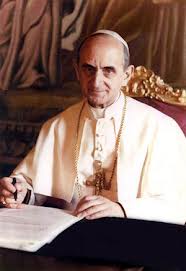
 lieve that this is a good month to do something together that is open to other members of the Catholic and pro-life community. The Franciscans of Life encourage everyone who reads our blog to organize an activity for this special month on life and the family. It can be something as simple as an evening rosary between several families, a night of praise and worship, a penitential service in atonement for those who destroy instead of build the human family. You may want to organize a meal with several couples to celebrate traditional marriage and family. The demon that afflicts human life and weakens the fabric of the family will only be evicted from our lives with prayer and fasting. A family or community day of fasting and abstinence is always
 good option.
 mission that held
 “Behold, I am with you and will keep you wherever you go, and will bring you back to this land; for I will not leave you until I have done that of which I have spoken to you” (Gen 28:15).

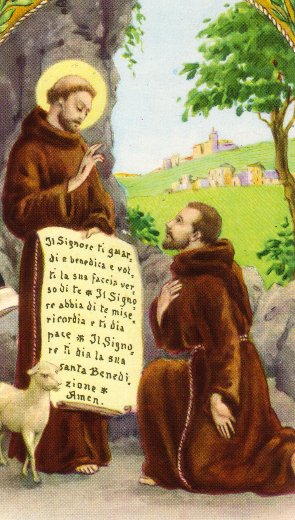
 that grandparent that is no longer physically attractive and at times can be cranky. Just like Grandma’, she is beautiful inside and has much wisdom to pass on to us, if we open ourselves to receive it. Francis loves the Church, warts and all. He takes his sons and daughters into the heart of the Church, through example more than words. He teaches us to look beyond the surface and see the glory of the Church.
 . There were also brothers who fought his vision of the Gospel Life tooth and nail, to the point of being mean. But like all good little brothers, Francis loved them just the same. Little brothers can often become the most forgiving persons. Francis was the brother who always forgave.
 That’s why he wrote the admonitions. Why admonish those who need no admonishing? However, when one reads through the admonitions, his letters, his rules and his testament, he does not refer to a single person as a sinner, other than himself. He leaves that to God. In other words, St. Francis is a person who can teach us what belongs to God, what belongs to the Church, to the superior and to the individual. He does not cross those boundaries.




 3.
3. Franciscans of Life