Disagreement ≠ Aggression


The Holy Mass in the Extraordinary Form, Gregorian chant, the Holy Rosary, Benediction and Adoration, and many other devotions has been part of our Catholic tradition for centuries.  They should be allowed to live, encouraged and be made available when possible.  These are part of our Catholic patrimony, just as is the Mass of St. John Chrysostom, the Ambrosian Rite, the Maronite Rite and the Ordinary Form of the mass.   At some point in history, all of these were in their embryonic state.  As time passed, the traditions became more ingrained in the Catholic community and the rites and customs became more polished.  In other words, none of the older forms and rites was born as we know them today.  Truth and mystery don’t change, but structure and order do.  It is foolhardy to believe that the Ordinary Form of the Mass, the change in styles in how the papacy operates and the birth of newer devotions should be perfect and without need for adjustment here and there.

Imagine what would have happened if Pope St. Pius V had decided to throw out the different rites and forms of the mass of his time.  But he didn’t choose to do that.  On the contrary, he chose to take what was the best of the tradition, polish that which could be polished and jettison that which did not reflect the faith of the Church and the true nature of God.  All of this took time and painstaking labor.  Rumor has it that while St.  Pius V was in the process of consolidating the Tridentine form of the mass that we often refer to as the TLM or the Extraordinary Form (EF), he was not popular with everyone.  He faced some resistance.  Very often, those who resisted him sinned not because they disagreed with the reforms and ideas of St. Pius.  Their sin was worse.  It was the sin of detraction.  They didn’t simply disagree with Pope Pius; they tried to make him look like a fool.

Unfortunately the are elements in the Traditionalist Movement that don’t simply disagree with the Holy Father’s style, his projects, his manner of proceeding or even his way of life.  There are elements in the Movement that have taken it upon themselves to destroy a good man’s reputation.  If one reads some of the Traditionalist sites, one find sentences such as these.

On the Pope’s meeting with the Patriarch of Moscow

“Pope Francis needed the Moscow Patriarch to force him to say some obvious things”

 “An Orthodox Patriarch was needed to make the Church speak up on the family, Christian roots, abortion, and the persecution of Christians…, to make us Catholics say that leaves are green or that two plus two makes four.”

Reaction to the commissioning of the the Missionaries of Mercy by Pope Francis

“Missionaries of Mercy….Another Round of Stupidity from His Humbleness”

“The Missionaries of Mercy, Coming Soon to a Theater Near You”

 “Pope Francis is setting in motion an action which will result in a predictable reaction and he is using his masterful knowledge of psychology to manipulate poor simple minds who are convinced that the Pope is doing the world a favor.”

 On the Holy Father’s vision for the Church and his “ulterior” motives

“For Pope Bergoglio, the papacy is a vehicle for achieving what he dreams, what he wants, what he prefers, as opposed to what has been handed down to him for safekeeping. He intends to leave his personal stamp on the Church in a manner he hopes will be irreversible,”

On the Holy Father’s dignity

 “Then, under a cloud of mystery and bafflement, came Jorge Cardinal Mario Bergoglio . . . and this is what we saw: Francis on [the] logia”

 “It was a man dressed as a simple bishop, whose first words were a thudding banality: “Brothers and sisters, good evening!” A bishop dressed in white, waving to the crowd and telling them, strangely, that he had been elected “Bishop of Rome” for “the evangelization of this beautiful city,” for which he pointedly requested “the prayer of the people for their Bishop.” He was denuded of the traditional symbols of papal authority, later donning the papal stole only long enough to bestow the Apostolic Benediction, promptly removing it once the words were uttered. Even his dull metal pectoral cross was the same one he had worn in Buenos Aires.”

 “Bergoglio is such a loose cannon he’s careered right through the deck and smashed through the hull. A (bleep) from a (bleepin’) country.”

 “But Francis does not think like a Catholic. . . . his pronouncements appear so dated as to be almost deranged”


This not the way that a virtuous man disagrees with another man; the key to healthy disagreement is respect for the dignity and position of the other person.  These comments not only show a lack of respect for the Vicar of Christ, but they incite anger and even hatred.  These are not statements of disagreement.  These statements sound like deliberate attempts to disparage the reputation of none other than the Vicar of Jesus Christ.

One can place the points of disagreement on the table and proceed to present one’s objections to each point, without bringing down the person.  Our holy father St. Francis never allowed the brothers to speak against authority.  But he did allow them to disagree with anything they felt was dangerous to the soul.  He set the example for Christian debate.

I feel sad having to warn our brothers and our friends to be careful of the evil mindset that very often invades extremes, be they extreme liberalism or extreme conservatism.  There is nothing wrong with the traditional elements of our faith.  There is nothing wrong in preserving and making use of the richness of these elements, because they move thee soul closer to God.

Beware of the poisonous talk and accusations that often hide underneath the shroud of righteousness.  Do not be sucked in to such way of thinking, be it from the right or from the left.  Poison is poison, no matter what flavor it comes in.  Anything that detracts from the dignity of another person, calls into question his integrity without proof, and does damage to the reputation of one who is doing good for so many is evil.  Unfortunately, those who are posting these and similar comments all over the Internet do not realize that they are cooperating with evil, rather than defending the holy, which is what they really want to do.

There is nothing to prohibit the Franciscans of Life from participating in activities and services within the Traditionalist community.  These things are part of our Catholic heritage and they serve as channels of grace.  Franciscans of Life are never to participate in detraction of any kind and anyone, especially the Vicar of Jesus Christ, nor are they to associate with those who engage in such evil behavior.  They may disagree and engage in intellectual debates about points of disagreement, always speaking of and treating the person with the opposing point of view as a son or daughter of God and our brother whom we are sent to serve, not to judge.


Atonement or chocolate?


Lent is about to begin and many of us are thinking about what we want to give up. Here is the irony of it all. Some people give up chocolate. In fact, chocolate is the most common Lenten sacrifice, followed by dessert.
chocolate2

Let’s take this in baby steps. The whole idea of Lent is that it is a time of atonement. Now let’s get this straight. We sin against purity, honesty, loyalty, charity, faith, justice, detachment and many other things and virtues. Then we try to atone for all of this by giving up Hershey’s Kisses or ice-cream and apple pie? Sometimes we have to ask ourselves whether our Lenten sacrifices are somewhat presumptuous. We hope to atone for a multitude of sins with a few candy bars and some dessert; if we remember, we abstain from meat on Fridays during Lent.

mercydoors

“My merit is God’s mercy.” -St. Bernard

Fortunately for us, God’s mercy far exceeds our foolishness. We often forget that Lent is a time of penance. Penance means atonement and conversion of manners.

We can never atone for our sins on our own. For this reason Lent culminates in Passion week, when Christ enters Jerusalem to be executed for our sins. Only the perfect man can offer the perfect act of atonement.

Our Lenten sacrifices must be offered with the ultimate sacrifice that Christ offered. During Lent we must be able to answer several questions with honesty.

1. Whether I am giving up chocolate or something else that I like, am I aware that I must also give up a specific sin? The external sacrifice is only a reminder of what we have to change. It does little good to give up a goody that we like while continuing to fall into the same sin.

2. If I add extra prayer or an extra mass to my weekly schedule do I take the time to meditate on the sin that I am trying to atone? Or do I offer the mass and prayers without much thought to what I have to change? The purpose of the extra mass and prayers is to bring us closer to God and draw us farther away from sin.

3. Finally, do I remember that Lent is to the Church what novitiate is to religious formation? During Lent I take a closer look at what needs improvement in my life and I work toward a conversion of manners. That is, a change in how I live my life with God and neighbor.

One cannot enter Lent with heart and soul without acknowledging one’s sins and the Passion of Christ, which restored to man the necessary graces to change and become like Adam before the Fall. If we ignore sin and the fact that we are sinners, Lent becomes just another tradition that leads nowhere. If we recognize sin, the Cross, and our need for a conversion of manners, Lent becomes a season of extraordinary grace.

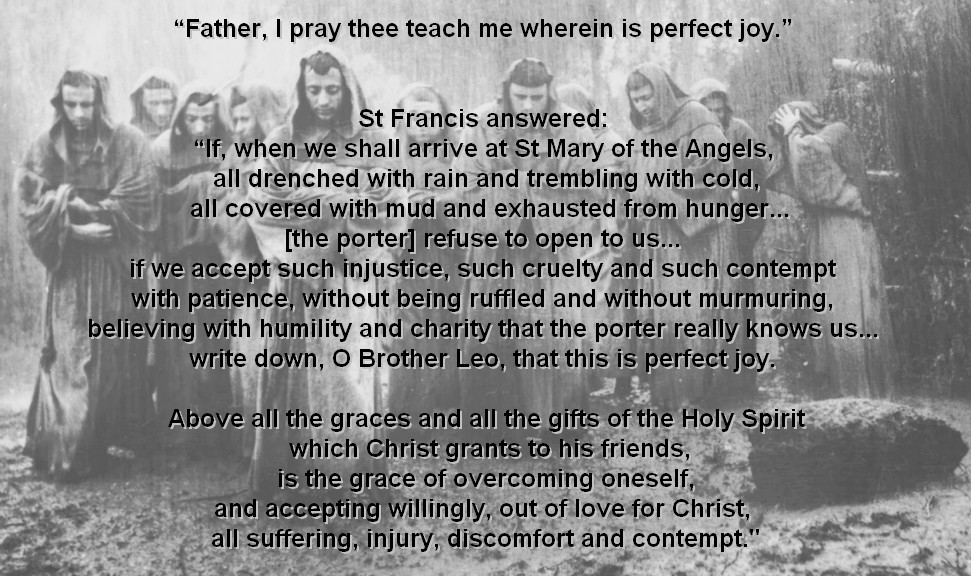
perfect_joy

The Perfect Joy of Saint Francis

Let God do the driving


As everyone who follows us on our blog or on Facebook knows, we were in desperate need of a car.  Our car was totaled on December 26.  A few days after the accident, I remembered something that St. Francis said in his Testament.

Let those who know not [how to work] learn, not through desire to receive the price of labor but for the sake of example and to repel idleness. And when the price of labor is not given to us, let us have recourse to the table of the Lord, begging alms from door to door.

I know that we do not bring in enough money to purchase a car, not even a used one.  Other than a few hundred dollars from the insurance company, we had nothing.

However, God will never be outdone in generosity and in pity for us.  I remembered this passage from the Testament and decided to beg for help.

In less than 24 hours after posting our cry for help, we received three offers to help us.  The first was from an old friend who said, “I have a car that I want to give to you.”   Imagine our joy when we heard this good news.  But there is more . . .

An hour later, a dealer who supports our work for the Gospel of Life called me.  “Brother, I can help you.”

The next morning we received an email from another generous person.  “Pick the car you want.  I’ll pay for it.”

All of this is leading somewhere, so please stay with me.  The Franciscans of Life have just finished a three month process during which we reviewed our constitutions and did some editing for greater clarification.  The chapter on poverty required the greatest amount of attention.  For greater clarity we inserted an article into the chapter on poverty.

The brothers shall own only one car per house.  They may not own a new car, nor an old car that is commonly used by the wealthy.  They are to acquire used cars, either through their effort or the generosity of others.  Let these vehicles be such that they conform to what the working man or woman in the lower economic sectors would drive.  Let them not use said vehicles for recreation.  They are tools for service to the voiceless.

We now had an interesting situation.  We had a vendor who was willing to give us a very generous deal on a used car.  There was a benefactor who wanted to purchase a car of our choosing and there was the father of a family who was offering his car as a gift.

We, the brothers, discussed what to do and which offer to accept.  It was finally decided that the superior should decide.  I hate it when the brothers do that.  😦  Guess who has to decide?  😀

The question on the table was, “What would be the most natural for a poor man?”

This was easy.  People don’t usually call the poor and offer to purchase a vehicle of their choice for them.  That offer was now off the table; although we are very grateful.  The poor don’t get telephone calls from dealers offering them a bargain on a car, simply because they’re poor.  I wish this would happen more often.  Unfortunately, it does not happen often enough.  That offer was off the table as well.

This left one offer on the table.  The older family car that was offered to us free of charge.  I remembered that the first car I ever owned was a hand-me-down from my sister.  I was broke.  The only thing that I could afford was that old car.

The end of the story is that we have a car and it’s beautiful.  It’s a 2004 Dodge Grand Caravan with 156,000 miles and a few dents and scratches on the outside, but it’s perfect under the hood.

Here are the pictures.

There are several other dimensions to this story.

First:  The brother who was involved in the accident in one of our novices who is about to make vows this week.  The car was totaled; but Brother walked away without a scratch, not even a headache.  Not only was he not hurt, he was smiling when he arrived home.  His first words to me were, “I feel very peaceful.”  If this is not a sign of a man whom God has called to himself, I don’t know what is.

Second dimension:  During our review of the Constitutions, we asked The Immaculate to point us in the right direction.  “Are we doing the Will of God?  Is this way of life and this work what God wants from us?”  The Lord protected our novice from physical harm and blessed him with great peace and joy, despite the hardship.  Interior peace is the best sign that one is in compliance with God’s Will.

Finally, the third dimension to this story, without the car, our student brothers cannot travel to the university.  We cannot continue our work in hospice, pregnancy centers, university campus, religious education and among the immigrant poor.  We live in an area where public transportation is very poor.  It would take two hours to get to the university using public transit, when it takes 25 minutes by car.  A brother would spend four hours on the road to go to a class.  This is time that has to be stolen from prayer, community, and apostolate.

Not only did God’s providence come through for us through the generosity of others; but he confirmed us in our vocation.  God does not provide transportation to go where he does not want us to do so.

The last thing for today, we need to do some body work on the car.  We have $1,300.00.  We need about another $500.00.  If you can spare $1.00, it would help.  If you know someone who does body work in the Fort Lauderdale area and can hook us up with a good price, that would be very helpful.

While we’re on the subject of money.  We want to thank everyone who donates to Franciscans of Life.  Every month, we manage to reach the necessary dollar amount to pay our rent and utilities for that month.  Isn’t that awesome.  🙂

“Come to Bethlehem and see / Christ Whose birth the angels sing!”


WP_20151220_001

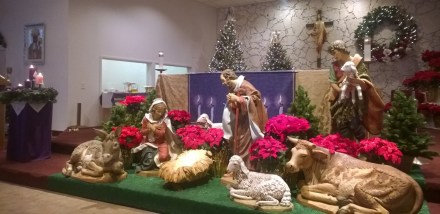
Nativity scene at St. Maximilian Kolbe Catholic Church

The Franciscans of Life wish to extend to you our most sincere hope for a peaceful and joyous Christmas!

Christmas is a very special time in the life of mankind, because it sets into motion the fulfillment of the Covenants that the Lord had made with Israel at different times before pre-Christian history.

Th12313767_1724552867778905_4437807418574257125_ne Incarnation and the Virgin Birth set into motion the journey to Calvary and our redemption.

Our holy father St. Francis was sensitive to the connection between Christmas and the Pasch of the Christ. He sets up the first creche, not because Christmas is the center of our Faith, but it is the first step in the final chapter of the Covenant, which was fulfilled during the Easter triduum.

As we enter the Christmas season let us remember that Christmas is not an end. Rather, it is the beginning of the journey to Good Friday and Easter.

Let us begin. Up to now we have done nothing.

– St. Francis

The Franciscans of Life will remember your intentions at Midnight mass. If you have a special intention, you can email it to us, and your communique will remain strictly confidential: email

Have a grace filled Christmas!

Nativity scene at our mother house

The Brothers

Moral Reasoning Through the Complexity of Homosexuality


This is a very complex issue. It’s not as simple as people on both sides of the aisle want to make it. There are some basic principles that do help us understand what is right and wrong. Many people are not educated in these principles.

First: God reveals himself. He discloses himself to man through Sacred Scripture, also through sacred tradition, the baseball_throwingMagisterium of the Church, natural law, and logic.

We can’t just throw a bible verse at something and pretend we have it all figured out. All of these pieces must work together. They are all good, because they all come from the same divine origin.

Second: Faith enlightens reason. We must reason through these questions and let our faith inform us whether or not our reasoning is consistent with what God has revealed about his nature and the nature of man.

Third: People have to distinguish between the action and the person. They are not the same. When a five-year old kills his little brother with his father’s gun during a game of “cops and comicrobbers,” the action is contrary to the commandment, “Thou shall not kill.” However, the five-year old is not a murderer, because he neither intended to actually kill his sibling, nor is he knowledgeable of the commandment. The action remains evil; but the child is not culpable. We can condemn behaviors, but we have to be very careful not to judge people. That would be playing God.

Fourth: Juangel_appears_to_st_josephdging another person involves walking through his or her mind and conscience. One’s thoughts on any issue and one’s moral conscience are part of what is known as the “internal forum”. This is an area of human existence that no human being may trespass or attempt to read without an invitation from the individual who is the lawful guardian of his mind and conscience. We can explain why a certain action or behavior is wrong, but we may not pass judgment on the individual’s moral reasoning unless that person invites us to examine it with him, thus inviting us into the internal forum.


Fifth: There is a big difference between homosexual acts and homosexuality. A person with same sex attraction does not wake up one morning and decide to be gay. As he develops and goes through different life experiences, he becomes aware of his feelings in this area. On the other hand, people freely choose to engage in sexual behavior with a person of the same sex. Choosing to be attracted to the same sex is very rare. That which man does not choose can be neither a sin nor a virtue.

Pope_Francis_on_accompanying

Sixth: Homosexual acts, like heterosexual acts, are freely chosen by the parties involved (except in cases of violent force). The person(s) must use reason to determine whether an act is right or wrong. If the person is a man or woman of faith, that faith should confirm the correctness of his conclusion or point to its moral error.

right and wrongSeventh: Acting on faith and basing our actions on what God has disclosed to us about him, about us and about the relationship between the divine and the human is not the same as playing God. It is using that which makes us in the image and likeness of God to make right choices, that being knowledge of right and wrong.
Eighth: Standing in judgment of an action does not constitute godliness. It’s part of human reason and part of living in society. On the other hand, standing in judgment of the person involved in the action that we reject, IS playing God. No one has the right to judge the conscience of another human being, unless the other person opens up his heart and shares what is on his conscience.

[How to Help]

MEN AND WOMEN, LOVE AND SEX, GOD AND FREEDOM


I read a page on Facebook, of all places, that actually drew my attention to something wrong and something good.  I thought I’d share my thoughts on the subject.  The subject is pornography.

The page on Facebook correctly said that porn kills love.  It becomes an addiction that can destroy human relationships.  This is true.  To this must be added what this “new drug” does to our spiritual life.

cross_window_brick_wallAnything that becomes an obsession, porn, gambling, drinking or other disordered forms of pleasure and “recreation,” will create a wall between God and us.  It is not God who builds the wall.  On the contrary – God wants nothing more than to save us.  He has spent eternity tearing down the walls that man builds to keep Him out.

We believe that God made us in His image and likeness.  However, the porn industry tells us that we are created to take pleasure from each other.  Nowhere in the industry do we find the word, love.  Sex is completely divorced from love.  It is for pleasure and for profit.

Because we are made in the image and likeness of God, we are made to love.  God brought us into existence, not because he needs us, but because he loves us.  Out of love, he gives us knowledge, free will, the capacity to love, the ability to transcend from our world into eternity, and an immortal soul.  These are attributes that God shares with us.  Hence we are truly created in His image and likeness.

upset_coupleWhen someone caves in to porn or any other addictive and disturbing behavior, he or she starts down the path of slavery, because this becomes an obsession.  Gradually, our brain’s hardwiring is altered to the point that we no longer make a free choice regarding love, sex and interpersonal relationships.  We are driven by a hunger for something else; in this case it’s porn.

Here is the problem.  When man becomes driven by his obsessions, this drive erodes his free will to the point that the obsession becomes an addiction and that gift of free will that God gave us is forgotten.  We no longer choose to love.  On the contrary, in the case of this type of addiction, one is trapped in mythological love.  Myth is not real.  Therefore, what we see on the screen is not real love, but fantasy.  Since it is not real, it never fully satisfies our need to give and receive love.  When one’s need is not satisfied, one tends to seek a higher dosage and more frequent dosage of whatever drug one believes will “fix us”, hence the term, “a fix”.

Not all is lost.  On the contrary, there is hope and salvation from our addictions and disordered sexual drives.  The most powerful medicines are found in the sacraments.  Eucharist and confession are not magical solutions to life’s problems.  God is not a magician.  Eucharist and confession are acts of love.  Christ shares his life with us.  He restores us to health because he loves us.

Having said this, God builds on nature.  He does not change it.  There are some things that we have to do and that we can do to overcome our addictions and sexual obsessions.  We begin by examining how we view men and women.  A heterosexual male may see women as subordinate to men and see other men as antagonists.  021001-N-3228G-008He has to compete with other males or he has to refrain from seeing the good and the beautiful in other males, because it’s not the “manly” thing to do.  He has to prove to women that he is powerful. None of this is helpful thinking.

We must recover God’s vision of men and women.  We must remind ourselves tbride & groomhat men and women are our brothers and sisters.  They are equally beautiful and equally worth our attention and love.  Both sexes have much to offer through friendship, marriage, camaraderie, collegiality and other healthy relationships.
This must be followed by concrete action.  One must decide to change one’s behavior.  One of the best programs for people with addictions is the 12-Step program.  It works one day at a time.  Just as no one gets addicted to porn in 30 seconds or less, no one gets off it in 30 seconds or less either.  It’s a daily task.  The good thing is that God does not ask us to live more than one day at a time.  For all we know, today may be our last day on earth.  We must plan for today and as Jesus said, “Do not worry about tomorrow.”  When tomorrow becomes today, we plan for that day.  Each day, we plan to live that day free of our addiction.

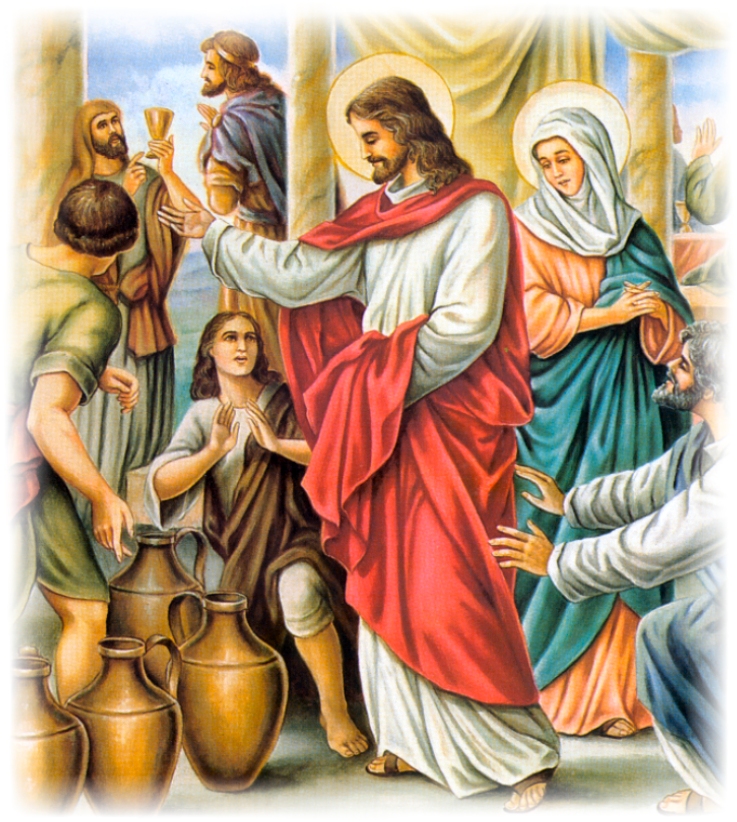
We must not forget the importance and the power of prayer.  Contrary to what some may believe, prayers are answered.  We may not always like the answer, but we receive an answer nonetheless.  The most powerful advocate and mentor in our struggle to live free of addictions and obsessions is the Immaculate.  She can stand as a barrier between us and that which can hurt us.  She soothes bruises that are often the product of our behavior.  Mary is the mother who reminds us that if we “do whatever he tells you” everything will be alright.

prayer_Our_Lady

I’d like to add the importance of community.  One need not join a community such as the Franciscans of Life to experience the common life.  But every man and woman must engage in relationships with other men and women.  These relationships must be productive; meaning that the relationship does well for the other person and for us.  We have to take the risk of friendship, real love, and openness to others.

It is true that human relationships are risky, because we can get hurt.  However, the hurt that we may experience in a human relationship is much easier to overcome than an addiction.  This hurt is the product of love.  We hurt because we first loved.  Had we not loved, we would not hurt.  Addiction is not the product of love, nor does it lead to love.  It’s not even self-serving.

When we remember that Christ is the firstborn of many brothers and sisters, we begin to heal as we view men and women through the eyes of Christ . . . as family, not prepackaged satisfaction.

B. Jay

Cana_joy

[How to Help]

St. Pius X – our “Brother Giuseppe”


We are celebrating today the feast of a Franciscan saint, Pope Pius X. Born Giuseppe Sarto, he entered seminary at 15, was ordained at 23 and became pastor of Salzano (province of Venice) at age 32, where he remained for the following eight years.

Young_St_Pius_X

It is during his residence in Salzano where he became a professed member of the “Ordo Franciscanum Saecularis”. Originally known as the Brothers and Sisters of Penance, this was the third order founded by St. Francis after that of the Friars Minor (the Franciscans) and of the Poor Ladies (the Poor Clares). It welcomed those who wished to follow the life of the Gospel but could not join the “regular” orders – this included married men and women, diocesan clergy, and also those who were single but discerning the call to marriage.

“Brother Giuseppe” was known for his kindness to the poor. He restored the Church of Salzano, enlarged the hospital, and was known during his years as bishop of Mantua to give copies of texts of dogmatic and moral theology to poor seminarians.

Upon election as bishop of Rome, with the name of Pius X, he followed his spiritual father St. Francis in promoting devotion to the Holy Eucharist, even when this meant breaking with long-established customs in the Latin Church.

He encouraged the faithful to receive Holy Communion daily in a time in which frequent communion was far from being the customary practice. He also dispensed the sick from the pre-communion fast, which at the time was due from midnight of the previous day. Furthermore, he strongly promoted giving First Communion to children as soon as they manifested sufficient discretion, lowering the “age of reason” from 12 to 7 years old. Finally, he urged the frequent reception of the Sacrament of Reconciliation in order to worthily receive Holy Communion.

Intending to “restore everything in Christ”, he began a series of extensive reforms of the liturgy.

SMaria_degli_angeli_Porziuncula

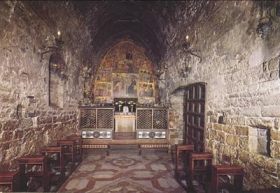
The Porziuncula, a simple church where the first Franciscans praised and glorified God

The first step he took in this direction was to affirm the primacy of Gregorian chant in the Latin churches, but not for the reasons that some today wish to attribute it… He did so because it represented a much simpler musical style than the theatrical style that was predominant at the time, namely Classical and Baroque compositions. His intent was all-encompassing: by restoring the chanting by the people, he wished to restore the active participation of the faithful in the liturgy. In this he would be echoed by his successor to the Chair of Peter, who insisted that chant had to be restored to the use of the people since “it is very necessary that the faithful attend the sacred ceremonies not as if they were outsiders or mute onlookers“.

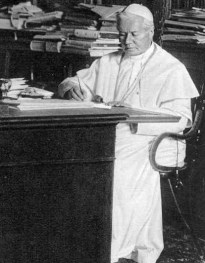
Insisting in the importance of the participation of the lay faithful in the life of the Church, St. Pius mandated that catechism classes be established in every parish in the world, and redacted a Catechism known for its “simplicity of exposition and depth of content”, which found its worthy successor in the Catechism of the Catholic Church, not StPiusXatDeskaimed to the use of the clergy but to the entire People of God.
His most encompassing reforms were of the Code of Canon Law and of the Divine Office. The former received a universal structure. The latter was a major revision: he abolished and forbade the Breviary established by St. Pius V, promulgating a revision that rearranged the psalms, dividing them when too long, and significantly reducing the individual Hours. The changes also made necessary a reform of the Roman Missal, which was completed in the 1920 typical edition by his successor to the Apostolic See. This was the fourth revision of the so-called “Tridentine Mass” since the day that St. Pius V established it as the norm for most diocesan clergy of the Latin Rite.

During his pontificate, St Pius X was very close to the people in times of natural disasters – we recall the earthquake of Calabria and the eruption of Mount Vesuvio – and showed his paternal care towards the Secular Franciscan Order by asking the Franciscan friars to take spiritual care of them (see the Latin document here). The Franciscan spirit which permeated his life and pontificate could be summarized by his words concerning the Catholic attitude towards the Holy Father:

“How must the Pope be loved? Not in word, nor in tongue, but in deed, and in truth. When a person is loved, one tries to adhere in everything to his thoughts, to execute his will, to interpret his desires. When we love the Pope, we make no arguments around what he disposes or demands, or about how far obedience must go, and in what things one must obey; we do not say that he has not spoken clearly enough…we do not place his orders in doubt…we do not limit the scope in which he can and should exercise his authority; we do not set above the authority of the Pope that of other people no matter how learned who dissent from the Pope, who may be learned but are not holy, because he who is holy cannot dissent from the Pope.

This is the cry of a hurting heart, that with deep bitterness I express, not for your sake, beloved brothers, but with you in order to deplore the conduct of many priests, who not only dare to debate and criticize the wishes of the Pope, but are not ashamed to reach impudent and shameless disobedience, with much scandal for the good and with so much ruin of souls. (Discorso 18-XI-1912)”

In this he echoes the words of the Seraphic Father who writes:

“Brother Francis, and whoever may be at the head of this religion, promises obedience and reverence to our Lord Pope Innocent and to his successors. And the other brothers shall be bound to obey Brother Francis and his successors. […] Let all the brothers be Catholics, and live and speak in a Catholic manner. Let none of the brothers preach contrary to the form and institution of the holy Roman Church. (Rule)

The Lord gave me and still gives me such faith in priests who live according to the manner of the holy Roman Church because of their order, that if they were to persecute me, I would still have recourse to them. And if I possessed as much wisdom as Solomon had and I came upon pitiful priests of this world, I would not preach contrary to their will in the parishes in which they live. And I desire to fear, love, and honor them and all others as my masters. And I do not wish to consider sin in them because I discern the Son of God in them and they are my masters.”  (Testament)

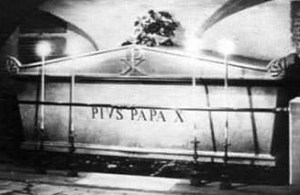
St Pius was known to have said: “I was born poor, I lived poor, and I wish to die poor.” Falling ill on the feast of the Assumption, also weighed down by the distress of the First World War that he had tried so difficultly to prevent, he expressively prohibited the embalming of his remains and was buried in a simple, unadorned tomb in the crypt of St Peter’s Basilica.

tomb_Pius_X

To him the Lord entrusted the Church at a very difficult time – when the world was transitioning into the Great Wars that would forever change its face and usher a new era for civilization in terms of destruction and reconstruction. We are all indebted to him for the courage and simplicity with which he embraced the task of laying the foundations for a comprehensive renewal of the Church.

For those who wish to read some of his writings, you may visit the page dedicated to him on the website of the Holy See, here.


“Never Forget to Love”


St. Maximilian, Pray for us.

St. Maximilian,
Pray for us.

On Friday, 14 August, the Church celebrates the feast of Saint Maximilian Maria Kolbe.  Many know that Saint Maximilian Kolbe was a Conventual Franciscan friar who gave his life, in a concentration camp, to save the life of a young man who was a husband and father.  More here

Maximillian, along with the Immaculate and Saint John Paul II, is patron of the Franciscans of Life.  Maximilian also founded the Knights of the Immaculate, movement to promote devotion to the Mother of God, devotion that allows her to point to Christ as she did at Cana.  This he did after he consecrated his life to the Immaculate.    The Church has named Maximilian the Patron Saint of those who work for the Gospel of Life.

In honor of Saint Maximilian, the Franciscans of Life will gather for a festive supper and solemn vespers on the evening of August 14th.  There will be food, music, pictures, games and a great deal of fraternal spirit.  Please keep the Franciscans of Life in your prayers this day.

Man is called to a fullness of life which far exceeds the dimensions of his earthly existence, because it consists in sharing the very life of God. The loftiness of this supernatural vocation reveals the greatness and the inestimable value of human life . . .” (Evangelium Vitae).

“To be held as precious”


Today the Latin Church celebrates the solemnity of Corpus Christi to commemorate the institution of the Eucharist.

JPII W EUCHARIST

Although the Seraphic Father never experienced this feast, he and his brothers certainly had a special devotion to the Holy Eucharist during his lifetime. In fact, St. Francis focused his first Admonition on the Holy Eucharist, professing that

the Sacrament of the Body of Christ which is sanctified by the word of the Lord upon the altar by the hands of the priest in the form of bread and wine […] is really the most holy Body and Blood of our Lord Jesus Christ.

St. Francis emphasized that the Holy Eucharist shows the Lord’s great humility and simplicity, the same that He showed in the Incarnation:

Behold daily He humbles Himself as when from His “royal throne” He came into the womb of the Virgin; daily He Himself comes to us with like humility; daily He descends from the bosom of His Father upon the altar in the hands of the priest.

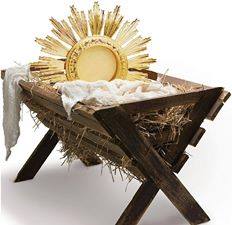
eucharist in creche

The awe inspired by the great love of the Word made Flesh, united to the awareness that in this world we can see nothing corporally of Christ except the Holy Eucharist (Testament) moves us to revere the Real Presence and, by association to show respect for “the chalices, corporals, ornaments of the altar, and all that pertain to the Sacrifice“. These, Francis reminds, us, must be held as precious (Letter to all the Custodes).

In the Latin Church, such reverence was expressed in ways that were typically European, according to the circumstances. Customary gestures arose, some of which acquired meaning, and others to which meaning began to be attributed.

The latter revealed a weakness: the meaning of reverence appeared from the outside in. One had to ask “Why?” in order to be told “it is a sign of reverence“.

Other customary gestures, however, allowed the action to speak for itself. Consider for instance the elevation after the consecration, a late medieval introduction intended to show the consecrated host to the people. When St. Elizabeth Ann Seton, prior to her conversion from Anglicanism, witnessed this for the first time, she was well aware of what was being done (since it existed in the Anglican rite), but the awe that accompanied it was what she perceived, an awe sparked by the Catholic belief in the Real Presence. This, and not the gesture per se, would eventually lead her to the Eucharist. Reverence, then, can be experienced or defined.

St_Seton

The Church, rather than rigidly defining reverence, mediates its experience by pointing to the value of that which is sacred. This she does in a twofold manner: expressing dismay when that which is sacred is treated carelessly, and showing forth the different degrees of reverence due to the sacred.

As an example of the former, the Church states that “sacred objects, which are designated for divine worship by dedication or blessing…are not to be employed for profane or inappropriate use” (CIC 1171), and that they be made of materials “truly noble in the common estimation within a given region, [being] reprobated…any practice of using…common vessels…or which are mere containers” (RS 117).

As an example of showing the different degrees of reverence that are due, consider the chalice. The minor clerics handled the empty chalice. The subdeacon handed the filled chalice to the deacon before consecration. The priest handled the consecrated chalice.

When for practical reasons laymen replaced the ministry of the minor orders and subdiaconate, the lay ministers handled the empty chalice, the deacon poured wine into the chalice and handed it to the priest, and the priest consecrated.

When order is restored, confusion disappears and once more reverence becomes visible.

If, however, we do not let reverence speak for itself, but rather focus on rigidly defining it, we risk embracing two imperfect mindsets.

In the first of these, we may apply gestures that express reverence in situations that do not call for it, which leads to an over-generalization or over-use of such gestures, so that eventually they lose their reverent meaning and become “common”.

An example of this is the practice of genuflection. In the Latin Church, genuflection became a common sign of reverence towards the Blessed Sacrament. Eventually, genuflections became common throughout the liturgy even when the Blessed Sacrament is neither present on the altar, nor reserved in the Tabernacle. This begs the question: “Why genuflect?” To which the answer comes: “As a sign of reverence“. This led to confusion, as the distinction between reverence due to the Blessed Sacrament and respect due to a sacred object (namely, the altar) became unclear. This of course can lead to such gestures being eventually discarded because they are no longer associated with the original context and thus  perceived as superfluous repetition.

The second of these mindsets, one may begin to perceive the absence of certain gestures as a “lack of reverence”, or the presence of certain gestures as a “need”, given our sinfulness or even “uncleanliness”.

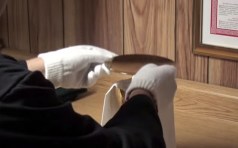
Consider, for instance, the usage of gloves by altar servers. When the law of the Latin Church reserved, so to speak, the handling of the sacred vessels to the minor clerics, this came neither from divine revelation nor because of an intrinsic spiritual meaning. Certainly it was not the Church’s mindset that the laity was “unworthy because unholy”. It was done for very practical reasons. Furthermore, laymen and religious often functioned as sacristan. At times they handled the vessels with a piece of cloth, because it was fairly easy to transfer grease and dirt from their hands to the vessels.

gloves

Yet by the 19th Century we read that if the sacristan is a layman rather than a minor cleric, “it is at least becoming that a veil be used in handling the chalice and the paten” (Collectio Rerum Liturgicarum). Statements such as these were understood in the negative, as implying that the gesture of a lay man or woman handling the chalice with bare hands is a lack of reverence, because the laity are somewhat “unclean”, hence the need to “restrict” them outside of the sacristy and to grant clerics alone the “privilege”of handling the sacred vessels. This, of course, confuses the way the Church intended to bring order and distorts the meaning of reverence. Even the previous Code of Canon Law stated that the sacred vessels could be handled by either the clerics or those who had their custody, including laity and religious (CIC/1917 1306), where the word “laity” made no distinction between male and female .

St-Therese-sacristan-2

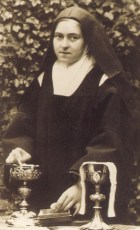
St. Therese of Lisieux as sacristan

As for the honor due to the clergy, the Seraphic Father reminds us that it is “on account of their office and administration of the most holy Body and Blood of our Lord Jesus Christ, which they sacrifice on the altar and receive and administer to others” (Letter to all the Faithful). That is to say: we honor them because they are the ministers of the Eucharist; they are not the ministers of the Eucharist because of their holiness.

In brief: this mindset, which focuses on our sinfulness alone, fails to acknowledge the Incarnation. Yet, it can still be found today, even when minor orders are no longer present in the Latin Church (with a few exceptions) and their functions are performed by the laity.

To avoid the two slippery slopes that we have described, we should bear in mind that the Church does not rigidly define reverence, but rather orders roles and gestures according to the need. Again, when order is restored, confusion disappears and once more reverence becomes visible.

Consequently, the focus shifts from our sinfulness and unworthiness to the Incarnation. At that moment, the Word becomes Flesh and the Second Person of the Holy Trinity assumes our nature, breaking into human history and beginning the journey towards our redemption.

True reverence has its roots in the Incarnation and naturally returns to it. We reverence Our Lord Jesus Christ when we acknowledge Him as true God and true man, hence becoming aware of who He is, our very brother, and of who we are in relationship to Him, children of the Most High.

St_Francis_embrace


Br. Bernardo di Carmine

[How to Help]

Life calls out to life


logoHello my friends:

After a month in the hospital, I’m finally home.  My old pastor said that I had used up another of my nine lives.  He’s known me since I was a teen.  Now he’s retired and living nearby.

Some people would say that I’m “confined” to a wheelchair.  I don’t know if that’s the term that I would use.  I am certainly in a wheelchair.  I can no longer feel my legs.  However, there is an inner joy that comes with this.  I eucharist in crecheremember being at the hospital and receiving the sacraments of Penance, Eucharist and Anointing of the sick.  Anointing of the sick is a sacrament that many of us know about, but we rarely speak about it.  Not too many people report anything extraordinary after receiving it.

The day that I was anointed, I felt that it was my last day on earth.  I was sure that by the next morning I would be pushing daisies.  That night, I went to sleep as usual, still in the hospital.  After a few hours of sleep I awoke.  Without thinking I grabbed a sock and put it on.  I suddenly realized that I was putting on a sock and enjoying the challenge.  When your legs no longer work as they did before, you have to plan how to put on your socks, pants, shoes and so forth.  Activities that the brain would plan, coordinate and execute in nanoseconds now become projects that you have to figure out and plan before you begin. “If I put this there and pull my leg that way, then I can slide this over here,” and so forth.  In my line of work we call this motor planning.  You literally plan every movement before you engage.  We all do it, but we don’t pay much attention to the brain.  The brain does it so quickly that we don’t notice.

BOOKS ON HEAD

I’ve found out that all of the things I did before were not just random actions.  There are physical laws that the body must follow or you can get hurt.  The more I analyze and problems solve, the happier I feel.  I’m finally finding out the beauty and harmony that God created when he created man.  We function like a miracle.  We can dance and hold a conversation at the same time or get dressed and plan tomorrow’s dinner.

I am more convinced than ever before that there is a God.  This well-orchestrated body of ours cannot be a random accident. The fact that we can compensate when we lose a function, means that someone created laws that allow the physical world to function either on high speed using the brain body alone or on a slower speed using the brain, body and adaptive devices.  Because these things work each and every time, they can be considered laws.

However, I have discovered that where there is a law, there is also a law giver.  Whenever I have to face a new challenge these days, I begin to dying womananalyze the laws of physics and body movements.  This way I can execute whatever it is with a certain degree of confidence and order.  This knowledge that there is a law giver brings me a great sense of peace and gratitude.

It also brings me a little shame, because I have taken so many little things for granted.  I used to think that putting on a pair of shoes was not a big deal.  Now I know what the brain has to do in fractions of a second just to meet our demands.  This understanding increases my awe in the presence of God.

Archbishop Thomas Wenski celebrates Mass for Nascent Life

I don’t know how much of my legs I’m going to recover.  But I do know one thing.  Nothing is an accident. Everything is part of a divine plan.  The more I see myself as part of this plan, the happier and more peaceful I feel, even though my body seems twice my age.  LOL

I need to get back to rest.  Please keep me in your prayers and let us not forget to pray for those who take God’s gifts for granted,  as if they were random accidents.  Nothing is random.  Everything is a sign of life calling out to life.

VISITATION