Under what authority . . . ?


right and wrongI will never forget what a 10th grade student taught me a long time ago.  I was teaching social studies in a high school.  Mind you, I’m not a sociologist or social scientist.  Our social studies teacher was on maternity leave and I was elected to cover for her.  That being said, the lesson was on the United Nations’ declaration on human rights.  As we were going through the highlights of the document, Chris asked me a very serious question.

“Why doesn’t this say that everyone has the right to be born?  If you don’t have the right to be born, the other rights are useless.” 

I have never forgotten that question or that lesson.

Today, thousands of people prepare to march for life in many cities in the country, the largest march being in Washington, DC, despite the horrible weather.  Why are these people willing to suffer freezing temperatures, numb fingers and toes and 12 inches of snow and ice?  The answer is simple.  They believe in the right to be born.

It is true that many attend the march for life in protest of abortion.  However, there is more to this issue.  We must put abortion in context.  The medical community refers to abortion as the “termination of pregnancy.”  It’s actually a very accurate statement.  Many people prefer to call it murder, holocaust, eugenics, and many other terms.  None of these are wrong.

Nonetheless, the principle behind abortion is flawed, not only because the procedure takes the life of a vulnerable human being.  It is flawed because the right to terminate a pregnancy presumes that society can deny any human being the right to be born.  Birth is not possible, if you terminate a pregnancy.

This puts us on a very slippery slope.  If human beings can lose the right to be born, what is there to say that we can’t lose the right to remain alive?  Why are we crying over the extermination of Syrians, other groups in Eastern Europe, the Middle East and Africa?

Why doesn’t it follow that a society with the authority to withdraw someone’s right to be born can deny the right to stay alive after the fact?

The answer has to do with vision.  We can see the carnage in the Middle East, Africa and parts of Eastern Europe.  We don’t see the carnage behind the doors of an abortion mill.

When I was a graduate student, I learned about a concept called “object permanence.”  A young child believes that an object exists only when he can see it.  When mom says that the toy flew away and hides it behind her back, the toy ceases to exist.  In simple English, the permanence of an object depends on the subject’s ability to see it.  If one can’t see it, it does not exist.  It’s a more primitive version of “out of sight, out of mind”.  Except that this primitive version is normal in human development.  As the person matures, the brain’s functions become more robust and object permanence is no longer dependent on perception, but on knowledge.  “The thing exists, because I know it exists even when I don’t perceive it with my senses.”

For many people, a crime against human life exists only when the human being is perceptible.  When you don’t see the human being, the crime ceases to be.   Therefore we do two things in contemporary society.

First, we look at the fetus and we fail to see a human being who is a real person.  We only see tissue and cells, because that’s what we want to see.

Second, we look at a fetus who is over 30 weeks old and we see what “looks like” a baby.  It only looks like a baby.  It’s not a baby, because we fail to see the baby.

To understand abortion in context, we must keep in mind that human beings often fail to see what they don’t want to see.  It’s called selective blindness.  They convince others that the thing they cannot see does not really exist.  The baby that we cannot see is not really there.  It’s just a “fetus” or tissue.  When I was growing up, they called this “turning a blind eye.”  Today, some people call it “reality”.

ISIS is murderous, because it kills people whom we can see.  We cannot deny their existence, as much as we would like to ignore them.  We have to call such barbaric acts what they are, the murder of innocent people.  In our distorted way of thinking, abortion is not murderous, because no one visible to us is being killed.  At the end of the day, what are we saying about choice and abortion?

It looks like we’re telling ourselves and our neighbors that man decides who has the right to live.  Such a decision depends on the individual’s perception.  If he does not see a human being, terminating a pregnancy is not murder.

The problem with this concept, besides the attack on innocent life, is that every individual can see whatever he or she wants to see and be blind to whatever he or she does not want to see.  The right to be born becomes subjective, no longer an absolute.  The right to be born is determined by the subject who has the power to terminate a vulnerable life. . . the power to see only what he wants to see.

This begs the question.  “Under what authority can man grant or deny another human being the right to be born?”

We must ask ourselves this question as we remember Roe vs Wade in 2016.

Brother Jay Rivera, FFV

Published in: on January 21, 2016 at 7:33 PM  Leave a Comment  

A Tradition of Hopelessness?


I’ve been reading certain blogs and newspapers online by Catholics who believe that the Church has lost her Catholic identity and her traditional roots.  I must admit that the reading is very depressing; but not because of the alleged crisis in the Church.  This is not to deny that there is a crisis of faith in the world, which affects people of all faith traditions.  We can address that in a later post in this blog.  For the time being, allow me to speak about the blogs and periodicals that are being posted online by Catholics.

When I was growing up, I was taught that in a democratic society, disagreement is a sign of health.  When disagreement triggers dialog, the possibility for growth is endless.  Along with such sage advice, my mother also taught me that disagreement must never rise to the level of disrespect for a person or his office.  Crude, disrespectful, dismissive or condescending behavior is simply arrogance.  Arrogance, like any other evil, has no rights.  Therefore, the arrogant person forfeits his right to a dialog with civilized and intelligent human beings.

What we have is certain Catholic journals and blogs publishing articles and posts that disagree with much of what Pope Francis does and say.  There is nothing wrong with that, as long as the Church is open for dialog, which she is on certain points.  However, they take the liberty to apply such terms as Modernist, apostate, heretic, Marxist, sacrilege, indifferentism, syncretism, and more to the Vicar of Christ.

Everyone knows that there has never been such a person as the perfect pontiff.  From the first day of its existence, the pontificate has been plagued by human weakness.  Yet, it has survived.  It has survived, because Grace has never been absent in the Church, especially in the Petrine Ministry.  The first pope denied his master three times.  He behaved with certain prejudices toward Jews and Gentiles, causing Paul to “lose it.”

However, when Paul lost it, he challenged Peter’s behavior and position.  But he also addressed him by his proper title, Cephas or Rock.  Paul did not cease to insist that Simon was the Rock upon which Christ built his Church.  Paul was smart enough to see the weakness in Peter’s behavior when it came to the conversion of Gentiles and smart enough to remember that despite it all, Peter was the Vicar of Christ, not him.  So . . . he took his argument to Peter and to the Council of Jerusalem.  But not once did he stick disparaging labels on Peter.

Some “Traditional Catholics” invoke Irenaeus as their model or Catherine of Siena.  Both of these people held on to the faith during times of crisis in the Church and the world.  Both were honest enough to speak their mind to the pope and point to the errors in the pope’s thinking.  Maybe, the reason why Irenaeus and Catherine share the label “saint” in front of their names, is not because they challenged and questioned, but because they loved and respected.  They acknowledged that whatever they saw as mistakes didn’t change the fact that the pope was the legitimate successor of Peter who was the Prince of the Apostles and the Vicar of Jesus Christ.  They spoke up without mocking, insulting, and labeling the pope or encouraging others to do so.  They communicated their protest with dignity, charity and humility.  I often find this lacking when writers in blogs and periodicals apply hurtful labels to the person of the pope and to his ministry.

Surely, we can learn from Catherine, Irenaeus and many other great men and women in Catholic history, how to speak about those things that are difficult and disturbing without arrogance, rudeness, and hopelessness.


Published in: on January 19, 2016 at 10:14 PM  Leave a Comment  

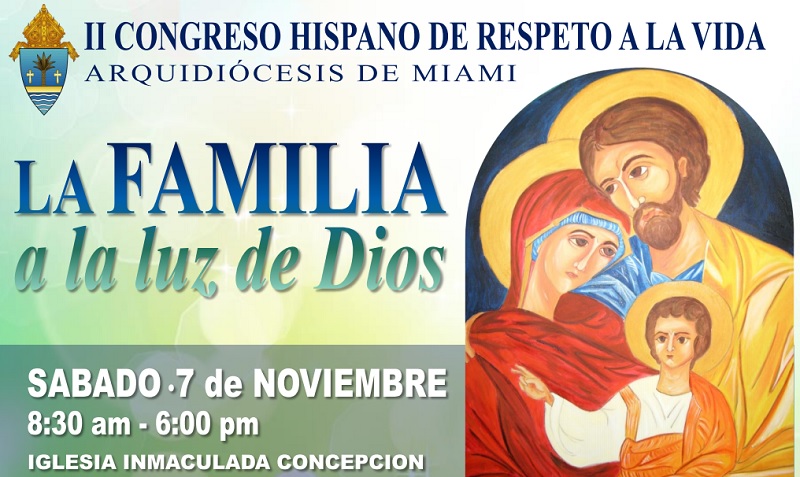
First time in Miami: Respect Life Hispanic Conference


flyer

On Saturday, November 7, the Franciscans of Life attended the Second Statewide Respect Life Hispanic Conference. This is the first Hispanic pro-life conference to take place in the Archdiocese of Miami. The location – Immaculate Conception Catholic Church – was no coincidence: Hialeah is the city with the highest number of abortions in the State of Florida, and the Catholic pro-life efforts in its territory are still limited.

Featuring an impressive panel of speakers, the Conference covered topics such as: “Christian Matrimony: God’s master plan”, “The truth on abortion”, “Recovery after abortion”, “The ethical care of human life from conception to natural death”, “Moral medical methods for the treatment of infertility”, “Spiritual and practical support for couples suffering infertility”, and “Plan of action for the family”.

Hispanic_Conference_talkOne of the talks was titled: “Project Joseph – for fathers”. This was the first time that we presented in Spanish the work carried out in Project Joseph – a joint effort between the Franciscans of Life and Respect Life Ministry Archdiocese of Miami to serve fathers in unexpected pregnancies.

The talk was delivered by our Father Superior, Br. Jay, who founded the program 6 years ago and currently directs it. He was accompanied by Br. Bernardo, Project Joseph mentor at the North Dade Pregnancy Help Center.

The talk – which we will feature in an upcoming article – began by describing how Project Joseph is relevant to the Ibero-American culture, in which too often women, and particularly mothers, are treated as if they were servants or nannies, rather than with the respect they deserve. This leads to the development of dysfunctional environments. As a consequence, there are many situations in which few rights are recognized to the women but many burdens are imposed on her if she becomes a mother, while the father on the other hand retains many rights and few responsibilities. On this note, the origin of Project Joseph were described.

(c) Ana Rodriguez-Soto | FC

(c) Ana Rodriguez-Soto | FC

“Don’t let me catch you talking badly about my Project Joseph dads!”, admonished Br. Jay. “These men are good people. Project Joseph offers them the opportunity to mature and grow as men and as fathers.”  Over 200 fathers have participated and become mature men, responsible and prepared to face the challenges of life.

Br. Jay mentioned that the success of the Project is due to the intercession of St. Joseph, patron of all fathers. His role in the Holy Family, described in a few examples, shows why it is so important to help these men walk in the footsteps of St. Joseph.  The Franciscan charism is also behind the success of Project Joseph, a charism that originates in the Seraphic Father and finds worthy example in the martyr St. Maximilian Kolbe, patron of the pro-life movement.

It was a beautiful, well organized, well attended event. We were glad to be there and have a table set aside for us to raise awareness of the work carried out by the FFV.

Hispanic_Conference_tableOur apostolate to the preborn children and their parents has developed significantly through Project Joseph, and we are particularly interested in recruiting Hispanic or bi-lingual mentors, since many of our dads speak Spanish as their primary language. However, we also serve the chronically and terminally ill and their families and caregivers, as well as the immigrant poor – populations that are very much in need of attention as we look to “The Family in light of God”.

The Conference came to a closing with Holy Mass celebrated by H.E. Thomas Wenski, Archbishop of Miami. During his homily, he underscored the important role of St. Joseph in God’s plan for the family. Here is our translation:

“The theme of this conference has been “The family in light of God.” Here, in Mary, Joseph and the child Jesus, that is, in the holy family, we see reflected God’s plan for the family when there is no stain of sin.

May the prayers and example of the Jesus’ parents strengthen today’s parents in their efforts to raise their children according to God’s will. In thefulfillment of His plan of salvation for mankind, God did not need the participation of Joseph to create the child Jesus. Nevertheless, God decided that the help of Joseph was indeed necessary in raising the holy child. Joseph, as chaste spouse of the Virgin Mary, played an indispensable role in the life of Jesus as his foster father. He was not an absent or indifferent father. In fact, to him was entrusted the safety and well-being of Mary and of Jesus. We see this in the episode of the flight to Egypt. We perceive this in the narration of the child lost and found in the temple of Jerusalem. We can deduce that Joseph played a crucial role in the life of Jesus before he began his public life by the fact that his fellow citizens knew him as “the son of the carpenter”.

God wanted the best for his Son, and thus made it possible for Mary to marry Joseph, for only matrimony ensures the commitment between the parents and for the children. The children are raised better when the effort is carried out by a father and a mother. Thus was then and thus is now: every child needs a father, every child deserves a father – a father like Joseph. For this reason, the Church proposes the family of Nazareth as a model; and if for some reason our earthly family does not count with the presence of a mother or father, the Church invites us to count on Mary and Joseph. They will not disappoint us.”

The event was featured on the Archdiocesan News. Click here to read the article, which features the Project Joseph talk.

If you wish to see some more pictures, courtesy of Respect Life Ministry Archdiocese of Miami, follow this link 🙂

If you have any questions or comments, feel free to reach out to us! We will be glad to help you explore and discern if the Lord is inviting you to proclaim the Gospel of life with us.

Moral Reasoning Through the Complexity of Homosexuality


This is a very complex issue. It’s not as simple as people on both sides of the aisle want to make it. There are some basic principles that do help us understand what is right and wrong. Many people are not educated in these principles.

First: God reveals himself. He discloses himself to man through Sacred Scripture, also through sacred tradition, the baseball_throwingMagisterium of the Church, natural law, and logic.

We can’t just throw a bible verse at something and pretend we have it all figured out. All of these pieces must work together. They are all good, because they all come from the same divine origin.

Second: Faith enlightens reason. We must reason through these questions and let our faith inform us whether or not our reasoning is consistent with what God has revealed about his nature and the nature of man.

Third: People have to distinguish between the action and the person. They are not the same. When a five-year old kills his little brother with his father’s gun during a game of “cops and comicrobbers,” the action is contrary to the commandment, “Thou shall not kill.” However, the five-year old is not a murderer, because he neither intended to actually kill his sibling, nor is he knowledgeable of the commandment. The action remains evil; but the child is not culpable. We can condemn behaviors, but we have to be very careful not to judge people. That would be playing God.

Fourth: Juangel_appears_to_st_josephdging another person involves walking through his or her mind and conscience. One’s thoughts on any issue and one’s moral conscience are part of what is known as the “internal forum”. This is an area of human existence that no human being may trespass or attempt to read without an invitation from the individual who is the lawful guardian of his mind and conscience. We can explain why a certain action or behavior is wrong, but we may not pass judgment on the individual’s moral reasoning unless that person invites us to examine it with him, thus inviting us into the internal forum.


Fifth: There is a big difference between homosexual acts and homosexuality. A person with same sex attraction does not wake up one morning and decide to be gay. As he develops and goes through different life experiences, he becomes aware of his feelings in this area. On the other hand, people freely choose to engage in sexual behavior with a person of the same sex. Choosing to be attracted to the same sex is very rare. That which man does not choose can be neither a sin nor a virtue.

Pope_Francis_on_accompanying

Sixth: Homosexual acts, like heterosexual acts, are freely chosen by the parties involved (except in cases of violent force). The person(s) must use reason to determine whether an act is right or wrong. If the person is a man or woman of faith, that faith should confirm the correctness of his conclusion or point to its moral error.

right and wrongSeventh: Acting on faith and basing our actions on what God has disclosed to us about him, about us and about the relationship between the divine and the human is not the same as playing God. It is using that which makes us in the image and likeness of God to make right choices, that being knowledge of right and wrong.

Eighth: Standing in judgment of an action does not constitute godliness. It’s part of human reason and part of living in society. On the other hand, standing in judgment of the person involved in the action that we reject, IS playing God. No one has the right to judge the conscience of another human being, unless the other person opens up his heart and shares what is on his conscience.

[How to Help]

MEN AND WOMEN, LOVE AND SEX, GOD AND FREEDOM


I read a page on Facebook, of all places, that actually drew my attention to something wrong and something good.  I thought I’d share my thoughts on the subject.  The subject is pornography.

The page on Facebook correctly said that porn kills love.  It becomes an addiction that can destroy human relationships.  This is true.  To this must be added what this “new drug” does to our spiritual life.

cross_window_brick_wallAnything that becomes an obsession, porn, gambling, drinking or other disordered forms of pleasure and “recreation,” will create a wall between God and us.  It is not God who builds the wall.  On the contrary – God wants nothing more than to save us.  He has spent eternity tearing down the walls that man builds to keep Him out.

We believe that God made us in His image and likeness.  However, the porn industry tells us that we are created to take pleasure from each other.  Nowhere in the industry do we find the word, love.  Sex is completely divorced from love.  It is for pleasure and for profit.

Because we are made in the image and likeness of God, we are made to love.  God brought us into existence, not because he needs us, but because he loves us.  Out of love, he gives us knowledge, free will, the capacity to love, the ability to transcend from our world into eternity, and an immortal soul.  These are attributes that God shares with us.  Hence we are truly created in His image and likeness.

upset_coupleWhen someone caves in to porn or any other addictive and disturbing behavior, he or she starts down the path of slavery, because this becomes an obsession.  Gradually, our brain’s hardwiring is altered to the point that we no longer make a free choice regarding love, sex and interpersonal relationships.  We are driven by a hunger for something else; in this case it’s porn.

Here is the problem.  When man becomes driven by his obsessions, this drive erodes his free will to the point that the obsession becomes an addiction and that gift of free will that God gave us is forgotten.  We no longer choose to love.  On the contrary, in the case of this type of addiction, one is trapped in mythological love.  Myth is not real.  Therefore, what we see on the screen is not real love, but fantasy.  Since it is not real, it never fully satisfies our need to give and receive love.  When one’s need is not satisfied, one tends to seek a higher dosage and more frequent dosage of whatever drug one believes will “fix us”, hence the term, “a fix”.

Not all is lost.  On the contrary, there is hope and salvation from our addictions and disordered sexual drives.  The most powerful medicines are found in the sacraments.  Eucharist and confession are not magical solutions to life’s problems.  God is not a magician.  Eucharist and confession are acts of love.  Christ shares his life with us.  He restores us to health because he loves us.

Having said this, God builds on nature.  He does not change it.  There are some things that we have to do and that we can do to overcome our addictions and sexual obsessions.  We begin by examining how we view men and women.  A heterosexual male may see women as subordinate to men and see other men as antagonists.  021001-N-3228G-008He has to compete with other males or he has to refrain from seeing the good and the beautiful in other males, because it’s not the “manly” thing to do.  He has to prove to women that he is powerful. None of this is helpful thinking.

We must recover God’s vision of men and women.  We must remind ourselves tbride & groomhat men and women are our brothers and sisters.  They are equally beautiful and equally worth our attention and love.  Both sexes have much to offer through friendship, marriage, camaraderie, collegiality and other healthy relationships.
This must be followed by concrete action.  One must decide to change one’s behavior.  One of the best programs for people with addictions is the 12-Step program.  It works one day at a time.  Just as no one gets addicted to porn in 30 seconds or less, no one gets off it in 30 seconds or less either.  It’s a daily task.  The good thing is that God does not ask us to live more than one day at a time.  For all we know, today may be our last day on earth.  We must plan for today and as Jesus said, “Do not worry about tomorrow.”  When tomorrow becomes today, we plan for that day.  Each day, we plan to live that day free of our addiction.

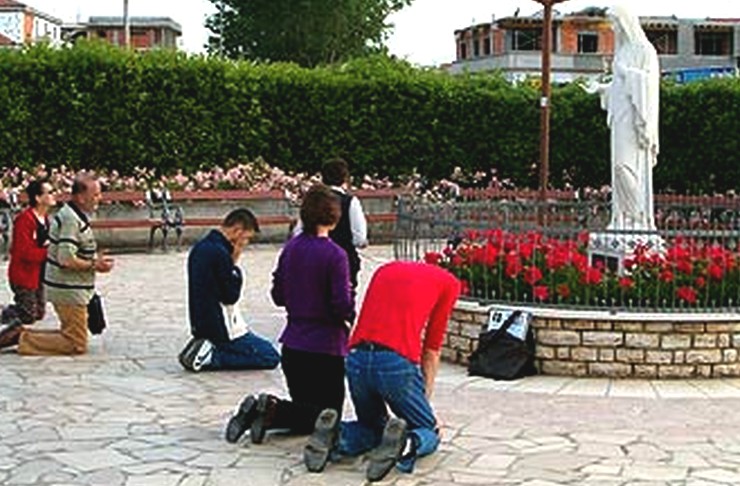
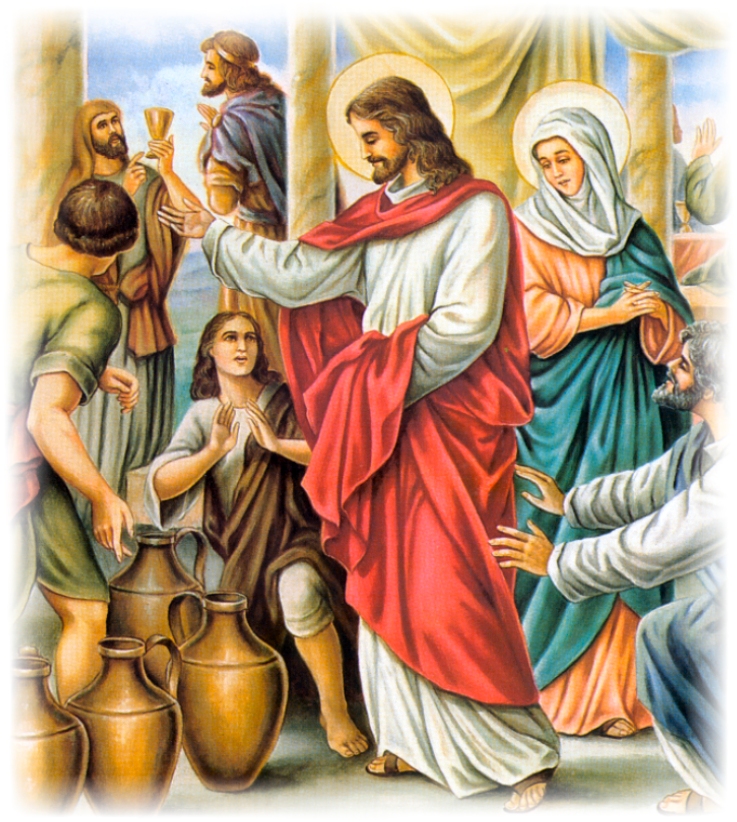
We must not forget the importance and the power of prayer.  Contrary to what some may believe, prayers are answered.  We may not always like the answer, but we receive an answer nonetheless.  The most powerful advocate and mentor in our struggle to live free of addictions and obsessions is the Immaculate.  She can stand as a barrier between us and that which can hurt us.  She soothes bruises that are often the product of our behavior.  Mary is the mother who reminds us that if we “do whatever he tells you” everything will be alright.

prayer_Our_Lady

I’d like to add the importance of community.  One need not join a community such as the Franciscans of Life to experience the common life.  But every man and woman must engage in relationships with other men and women.  These relationships must be productive; meaning that the relationship does well for the other person and for us.  We have to take the risk of friendship, real love, and openness to others.

It is true that human relationships are risky, because we can get hurt.  However, the hurt that we may experience in a human relationship is much easier to overcome than an addiction.  This hurt is the product of love.  We hurt because we first loved.  Had we not loved, we would not hurt.  Addiction is not the product of love, nor does it lead to love.  It’s not even self-serving.

When we remember that Christ is the firstborn of many brothers and sisters, we begin to heal as we view men and women through the eyes of Christ . . . as family, not prepackaged satisfaction.

B. Jay

Cana_joy

[How to Help]

“To be held as precious”


Today the Latin Church celebrates the solemnity of Corpus Christi to commemorate the institution of the Eucharist.

JPII W EUCHARIST

Although the Seraphic Father never experienced this feast, he and his brothers certainly had a special devotion to the Holy Eucharist during his lifetime. In fact, St. Francis focused his first Admonition on the Holy Eucharist, professing that

the Sacrament of the Body of Christ which is sanctified by the word of the Lord upon the altar by the hands of the priest in the form of bread and wine […] is really the most holy Body and Blood of our Lord Jesus Christ.

St. Francis emphasized that the Holy Eucharist shows the Lord’s great humility and simplicity, the same that He showed in the Incarnation:

Behold daily He humbles Himself as when from His “royal throne” He came into the womb of the Virgin; daily He Himself comes to us with like humility; daily He descends from the bosom of His Father upon the altar in the hands of the priest.

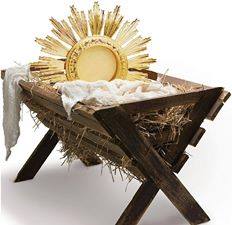
eucharist in creche

The awe inspired by the great love of the Word made Flesh, united to the awareness that in this world we can see nothing corporally of Christ except the Holy Eucharist (Testament) moves us to revere the Real Presence and, by association to show respect for “the chalices, corporals, ornaments of the altar, and all that pertain to the Sacrifice“. These, Francis reminds, us, must be held as precious (Letter to all the Custodes).

In the Latin Church, such reverence was expressed in ways that were typically European, according to the circumstances. Customary gestures arose, some of which acquired meaning, and others to which meaning began to be attributed.

The latter revealed a weakness: the meaning of reverence appeared from the outside in. One had to ask “Why?” in order to be told “it is a sign of reverence“.

Other customary gestures, however, allowed the action to speak for itself. Consider for instance the elevation after the consecration, a late medieval introduction intended to show the consecrated host to the people. When St. Elizabeth Ann Seton, prior to her conversion from Anglicanism, witnessed this for the first time, she was well aware of what was being done (since it existed in the Anglican rite), but the awe that accompanied it was what she perceived, an awe sparked by the Catholic belief in the Real Presence. This, and not the gesture per se, would eventually lead her to the Eucharist. Reverence, then, can be experienced or defined.

St_Seton

The Church, rather than rigidly defining reverence, mediates its experience by pointing to the value of that which is sacred. This she does in a twofold manner: expressing dismay when that which is sacred is treated carelessly, and showing forth the different degrees of reverence due to the sacred.

As an example of the former, the Church states that “sacred objects, which are designated for divine worship by dedication or blessing…are not to be employed for profane or inappropriate use” (CIC 1171), and that they be made of materials “truly noble in the common estimation within a given region, [being] reprobated…any practice of using…common vessels…or which are mere containers” (RS 117).

As an example of showing the different degrees of reverence that are due, consider the chalice. The minor clerics handled the empty chalice. The subdeacon handed the filled chalice to the deacon before consecration. The priest handled the consecrated chalice.

When for practical reasons laymen replaced the ministry of the minor orders and subdiaconate, the lay ministers handled the empty chalice, the deacon poured wine into the chalice and handed it to the priest, and the priest consecrated.

When order is restored, confusion disappears and once more reverence becomes visible.

If, however, we do not let reverence speak for itself, but rather focus on rigidly defining it, we risk embracing two imperfect mindsets.

In the first of these, we may apply gestures that express reverence in situations that do not call for it, which leads to an over-generalization or over-use of such gestures, so that eventually they lose their reverent meaning and become “common”.

An example of this is the practice of genuflection. In the Latin Church, genuflection became a common sign of reverence towards the Blessed Sacrament. Eventually, genuflections became common throughout the liturgy even when the Blessed Sacrament is neither present on the altar, nor reserved in the Tabernacle. This begs the question: “Why genuflect?” To which the answer comes: “As a sign of reverence“. This led to confusion, as the distinction between reverence due to the Blessed Sacrament and respect due to a sacred object (namely, the altar) became unclear. This of course can lead to such gestures being eventually discarded because they are no longer associated with the original context and thus  perceived as superfluous repetition.

The second of these mindsets, one may begin to perceive the absence of certain gestures as a “lack of reverence”, or the presence of certain gestures as a “need”, given our sinfulness or even “uncleanliness”.

Consider, for instance, the usage of gloves by altar servers. When the law of the Latin Church reserved, so to speak, the handling of the sacred vessels to the minor clerics, this came neither from divine revelation nor because of an intrinsic spiritual meaning. Certainly it was not the Church’s mindset that the laity was “unworthy because unholy”. It was done for very practical reasons. Furthermore, laymen and religious often functioned as sacristan. At times they handled the vessels with a piece of cloth, because it was fairly easy to transfer grease and dirt from their hands to the vessels.

gloves

Yet by the 19th Century we read that if the sacristan is a layman rather than a minor cleric, “it is at least becoming that a veil be used in handling the chalice and the paten” (Collectio Rerum Liturgicarum). Statements such as these were understood in the negative, as implying that the gesture of a lay man or woman handling the chalice with bare hands is a lack of reverence, because the laity are somewhat “unclean”, hence the need to “restrict” them outside of the sacristy and to grant clerics alone the “privilege”of handling the sacred vessels. This, of course, confuses the way the Church intended to bring order and distorts the meaning of reverence. Even the previous Code of Canon Law stated that the sacred vessels could be handled by either the clerics or those who had their custody, including laity and religious (CIC/1917 1306), where the word “laity” made no distinction between male and female .

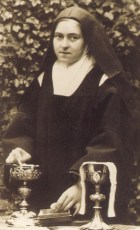
St-Therese-sacristan-2

St. Therese of Lisieux as sacristan

As for the honor due to the clergy, the Seraphic Father reminds us that it is “on account of their office and administration of the most holy Body and Blood of our Lord Jesus Christ, which they sacrifice on the altar and receive and administer to others” (Letter to all the Faithful). That is to say: we honor them because they are the ministers of the Eucharist; they are not the ministers of the Eucharist because of their holiness.

In brief: this mindset, which focuses on our sinfulness alone, fails to acknowledge the Incarnation. Yet, it can still be found today, even when minor orders are no longer present in the Latin Church (with a few exceptions) and their functions are performed by the laity.

To avoid the two slippery slopes that we have described, we should bear in mind that the Church does not rigidly define reverence, but rather orders roles and gestures according to the need. Again, when order is restored, confusion disappears and once more reverence becomes visible.

Consequently, the focus shifts from our sinfulness and unworthiness to the Incarnation. At that moment, the Word becomes Flesh and the Second Person of the Holy Trinity assumes our nature, breaking into human history and beginning the journey towards our redemption.

True reverence has its roots in the Incarnation and naturally returns to it. We reverence Our Lord Jesus Christ when we acknowledge Him as true God and true man, hence becoming aware of who He is, our very brother, and of who we are in relationship to Him, children of the Most High.

St_Francis_embrace


Br. Bernardo di Carmine

[How to Help]

Life calls out to life


logoHello my friends:

After a month in the hospital, I’m finally home.  My old pastor said that I had used up another of my nine lives.  He’s known me since I was a teen.  Now he’s retired and living nearby.

Some people would say that I’m “confined” to a wheelchair.  I don’t know if that’s the term that I would use.  I am certainly in a wheelchair.  I can no longer feel my legs.  However, there is an inner joy that comes with this.  I eucharist in crecheremember being at the hospital and receiving the sacraments of Penance, Eucharist and Anointing of the sick.  Anointing of the sick is a sacrament that many of us know about, but we rarely speak about it.  Not too many people report anything extraordinary after receiving it.

The day that I was anointed, I felt that it was my last day on earth.  I was sure that by the next morning I would be pushing daisies.  That night, I went to sleep as usual, still in the hospital.  After a few hours of sleep I awoke.  Without thinking I grabbed a sock and put it on.  I suddenly realized that I was putting on a sock and enjoying the challenge.  When your legs no longer work as they did before, you have to plan how to put on your socks, pants, shoes and so forth.  Activities that the brain would plan, coordinate and execute in nanoseconds now become projects that you have to figure out and plan before you begin. “If I put this there and pull my leg that way, then I can slide this over here,” and so forth.  In my line of work we call this motor planning.  You literally plan every movement before you engage.  We all do it, but we don’t pay much attention to the brain.  The brain does it so quickly that we don’t notice.

BOOKS ON HEAD

I’ve found out that all of the things I did before were not just random actions.  There are physical laws that the body must follow or you can get hurt.  The more I analyze and problems solve, the happier I feel.  I’m finally finding out the beauty and harmony that God created when he created man.  We function like a miracle.  We can dance and hold a conversation at the same time or get dressed and plan tomorrow’s dinner.

I am more convinced than ever before that there is a God.  This well-orchestrated body of ours cannot be a random accident. The fact that we can compensate when we lose a function, means that someone created laws that allow the physical world to function either on high speed using the brain body alone or on a slower speed using the brain, body and adaptive devices.  Because these things work each and every time, they can be considered laws.

However, I have discovered that where there is a law, there is also a law giver.  Whenever I have to face a new challenge these days, I begin to dying womananalyze the laws of physics and body movements.  This way I can execute whatever it is with a certain degree of confidence and order.  This knowledge that there is a law giver brings me a great sense of peace and gratitude.

It also brings me a little shame, because I have taken so many little things for granted.  I used to think that putting on a pair of shoes was not a big deal.  Now I know what the brain has to do in fractions of a second just to meet our demands.  This understanding increases my awe in the presence of God.

Archbishop Thomas Wenski celebrates Mass for Nascent Life

I don’t know how much of my legs I’m going to recover.  But I do know one thing.  Nothing is an accident. Everything is part of a divine plan.  The more I see myself as part of this plan, the happier and more peaceful I feel, even though my body seems twice my age.  LOL

I need to get back to rest.  Please keep me in your prayers and let us not forget to pray for those who take God’s gifts for granted,  as if they were random accidents.  Nothing is random.  Everything is a sign of life calling out to life.

VISITATION

True and charitable obedience — pleasing to God and neighbor


Pope Francis and Franciscans of the Immaculate

Pope Francis and Franciscans of the Immaculate

It seems that these days everyone wants to gripe and whine about the pope, bishops, and the synod on the family, the Traditional Latin Mass (TLM) or the Mass of Paul VI (Novus Ordo).  Then there are such subjects as abortion, same-sex marriage, contraception, divorce, remarriage and Holy Communion and women’s ordination.

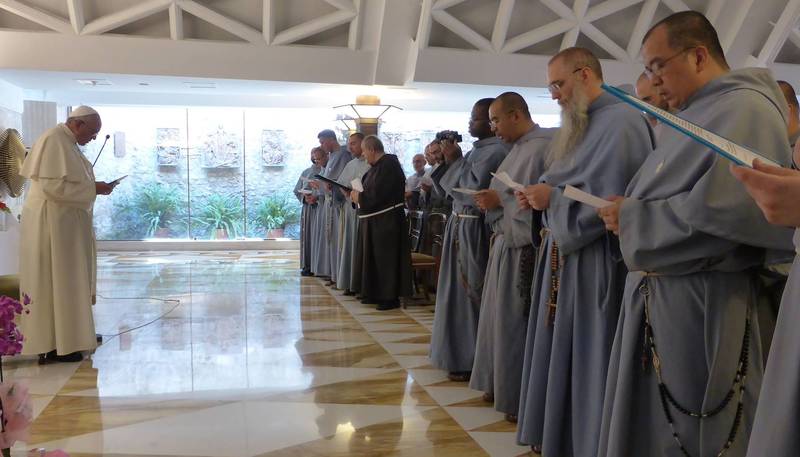
Yesterday, I saw another article claiming that Pope Francis has done great harm to Summorum Pontificum, the document written by Pope Benedict clarifying that the Tridentine form of the mass for the Roman Rite was changed a bit by Pope St. John XXIII, but never abrogated.  The gist of this complaint is that allegedly Pope Francis told the Franciscan Friars of the Immaculate that they may not celebrate the Tridentine Form without asking for specific permission to do so.  To some people, this is a form oppression and a violation of law.

To get past this point, let’s clarify that the Franciscans of the Immaculate were never founded to be a Traditional Latin Mass (TLM) community.  When they were founded, the Mass of Paul VI or Novus Ordo was the ordinary form of the mass for the Latin Church.  Secondly, Summorum Pontificum clearly states that the superior general alone can make rules about who and when the TLM is celebrated in public or in community, but he must make these rules in keeping with the proper laws of his institute.  This means that he must look at the constitutions of his institute and see what they say about the older rite and the newer rite, if they say anything at all.  In most cases the constitutions do not speak to this point, because they were written before this became a hot question.  Therefore, there is nothing in proper law that allows a superior permission to make the Extraordinary Form of the mass (TLM) to become the norm for his community.  The question needs to be put on the table to the community to vote on.  Once the community votes on it, the Holy See must approve the change that is to be made to the constitutions.

Let’s remember that the Franciscans of the Immaculate, like any other religious community owe obedience to the Holy Father.  At the end of the day, the Holy Father is the legitimate superior general of every institute in the Catholic Church, because he alone exercises universal jurisdiction.    Therefore, we cannot accuse the pope of overstepping his boundaries or of abusing power.  If you have the power to do something or to prohibit something and you make use of it, how can it be an abuse?

Some will argue that the pope cannot use his power to do harm.  This is true.  No one can use power to do harm.  Power is given to us for the common good.  There are times when we use power with the intention of doing something good and somewhere in the process something goes wrong and the end result hurts more than it helps.  This was not the intention of the person exercising the power.  This was the result of many random acts that were against the idea in the first place.    In this case, one can say that the end result was that the lay faithful who were benefiting from the TLM celebrated by the priests of the Franciscans of the Immaculate no longer had that benefit.  Obviously, they were hurt by Pope Francis’ decision to stop the TLM among the Franciscans of the Immaculate.  Did the Pope intend to hurt these folks?  I don’t think so.  He intended to put out a fire within the Franciscans of the Immaculate.

This does not mean that the TLM is prohibited or that the Franciscans of the Immaculate are being suppressed.  It means that people who had come to depend on the Franciscans of the Immaculate to provide a TLM mass have to look elsewhere, which is an inconvenience.    In fairness to the Pope and to the friars, this congregation was never founded for the explicit purpose of celebrating the mass in the Extraordinary Form (TLM Form).  The congregation’s mission is to walk the Gospel in the footsteps of St. Maximilian Kolbe and St. Francis of Assisi under the protection and patronage of the Immaculate.

Did something go wrong?  Yes.  I don’t know what went wrong.  I’m not a member of that community.  I can see what’s going wrong outside of the community.  Pope Benedict XVI started an investigation into the Franciscans of the Immaculate, not Pope Francis.  Pope Francis inherited it, but almost everyone blames Pope Francis for it.  Like most popes, Pope Francis is not too enthusiastic about people using the mass for their political battles.  Therefore he restricts the permission to use the Tridentine Form to those who have specific permission to use it.  He never said that it could not be used.  He said that one must ask first.

Whatever Summorum Pontificum says about what priest can celebrate the Extraordinary Form of the mass, we cannot forget that the Motu Proprio does not bind the pope, including the one who wrote it, much less the pope who succeeds him.  He is free to abrogate it, edit it and interpret it.  It is not up to us to tell the pope what he can or cannot do with law.

Boniface VIII in “Constit.” reminds us that the sovereign pontiff is the most fruitful source of . . . law; he can abrogate . . . legislate to the whole Church or part thereof, a country, or a given body of individuals . . . he is not legally obliged to obtain the consent of any other persons and his power is limited only by Divine law.

Another important point here is that this is a situation between a pope and a religious community of Pontifical Right.  Meaning . . . that the pope is the highest ranking superior, above whom there is no appeal and who has absolute authority over the religious community.  He need not speak ex cathedra to be obeyed.  If we look at the writings of St. Francis, he promises obedience to the Bishop of Rome, commands that all the brothers obey him and his canonically elected successors for all time.  In essence, Francis binds everyone to obey the pope, regardless of the matter involved, except sin.  To put it more bluntly, it’s not for any of us, outside of the Franciscans of the Immaculate, to demand to know what happens within the community or to speak as if we had the authority to make a judgment on a situation that does not fall under our jurisdiction.

We must not lose sight of the fact that the good brothers have not asked us for our help, comments, opinions and interventions.  These are well educated men, free to ask for help if they need it, and who have a good understanding of how the legal system in the Church works, should they choose to make use of it.  Instead, it seems that they have chosen to apply one of our Seraphic Father’s admonitions.

The Lord says in the Gospel: he “that doth not renounce all that he possesses cannot be” a “disciple “and “he that will save his life, shall lose it.”  That man leaves all he possesses and loses his body and his soul who abandons himself wholly to obedience in the hands of his superior, and whatever he does and says—provided he himself knows that what he does is good and not contrary to his [the superior’s] will—is true obedience. And if at times a subject sees things which would be better or more useful to his soul than those which the superior commands him, let him sacrifice his will to God, let him strive to fulfil the work enjoined by the superior. This is true and charitable obedience which is pleasing to God and to one’s neighbor.


Upon this “quarry” I will build my Church?


Since the closing of the extraordinary synod there has been a great deal of commentary on the blogosphere about the reception of Holy Communion by Catholics who are divorced and invalidly remarried.  The question is not so much as to whether the first marriage was valid and the second is not or the other way around.  The question on everyone’s mind seems to be whether or not Pope JPII W EUCHARISTFrancis is pushing for a relaxation of the law that currently exists, which says that people who are conscious of grave sin should not receive Holy Communion.  Living with someone as if he or she were your spouse when the person is not, would be one of those occasions when objectively one is culpable a grave sin.

I wouldn’t have written this article, if I thought that this is the only issue on the table.  After all, Pope Francis has not said anything that indicates that he is trying to persuade the bishops to change the law or keep the law.  What we seem to be hearing from the Holy Father is that he wants every voice to be heard.  Sometimes, when one opens the door to every voice one finds discordant voices.  Whether it’s prudent to open the door to every voice is an important question.  However, in the case of the extraordinary synod on the family, it’s a moot question, because the horse has already left the starting gate.

We have seen cardinals, bishops, theologians, religious and laymen speak on the synod and the documents that were published after.  The points that concern most people are whether or not these men and women in invalid marriages should bride & groombe allowed to receive Holy Communion; whether or not same-sex couples have something positive to contribute to the Church; and whether or not we can find any good in situations where people who are not spouses live as if they were.  I certainly can’t claim to have the answers to these questions, because they are above my paygrade.  Even if I thought I had the answer, the Holy See is not really interested in my opinion, because it’s not my place in the Church to speak as an authority of matters of faith and morals.  That authority is reserved for the local bishop.  I can only speak as an authority in my home and in my community with the Franciscans of Life.  Even there, I can only repeat what the Church teaches; I cannot teach anything that is outside of Church teaching as if it were the “official” Catholic position.

Here is precisely where we’re having problems today.  The blogosphere is overpopulated with voices that not only have something to say about these questions, but want to speak and be heard as if they had the BOOKS ON HEADauthority to make pronouncements to the rest of the Church.  When they speak they sound intelligent, because they can use big words, throw around some citations from previous popes, councils and older catechisms and there are times when their arguments have some logic.  To the average layman (not as in non-ordained, but as in newbie to Church politics) these voices can be very impressive and persuasive, to the point that these readers become talking boxes for the bloggers.  You hear them repeat, verbatim, what a blogger has written.  This is an interesting development, because the blogosphere seems to be giving birth to its own oral tradition within the Catholic Church and some people are beginning to take this tradition seriously.
At the risk of sounding like these voices, I have to state that bloggers are just that and no more.  St. Francis of Assisi held that a man is what he is before God, san francisconothing else.  This has been part of Franciscan tradition and culture for 800 years.  Why?  Because it works.  Why does it work?  Because it’s true.

When we read what someone puts out there, be he a cardinal, bishop, religious, concerned Catholic layman we must keep this person in his or her proper context.  He or she is what God sees, not how he presents himself.  When God looks at a cardinal, he sees a bishop who has a specific place in the Church, with a specific assignment, specific role and mission.  He does not see another Peter, because there can only be one Peter.  The Church is built upon the faith of one rock, not an entire quarry.

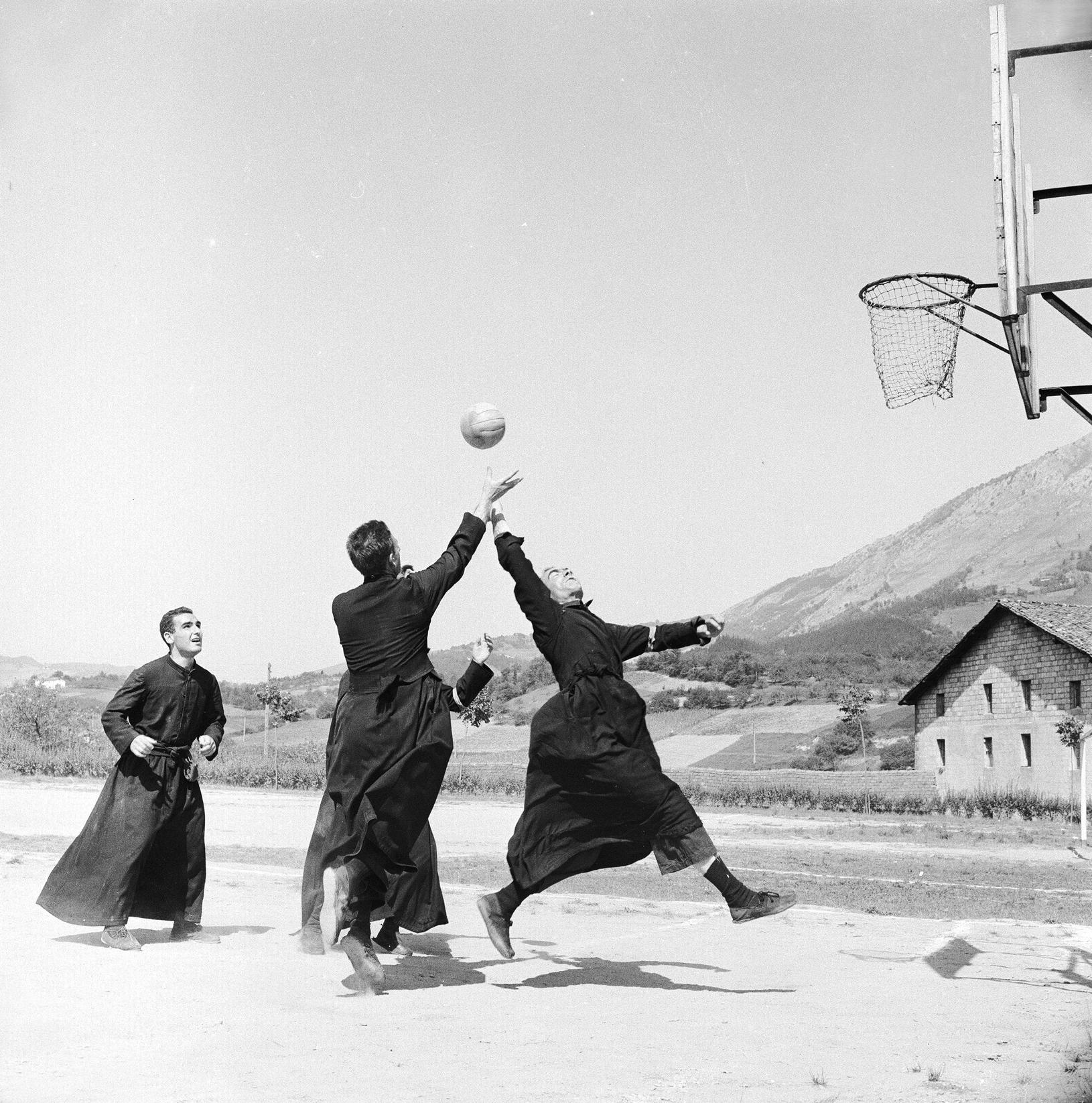
The same applies to lay writers, who are often very impressive.  Nonetheless, they are not Peter.  All of these people are commenting on what Peter has said, failed to say, should say, will never say and that’s fine and dandy.  They are commentators.  We have to take them as such.  I do not take the commentator at clerics playinga Super Bowl show and credit him with the same authority that I credit the referee.  At the end of the day, the person who makes the call whether the ball is in or out of bounds is the ref, not the guy at the microphone.  The guy at the microphone can call the shot anyway he likes it, but his call is not going to determine the outcome of the game.

Listening to and reading what every blogger in town has to say about divorce, remarriage, Holy Communion, same-sex marriage, homosexuality, cohabitation, the family, sex, and many other topics that fall under the umbrella of “family” can be very interesting and very enlightening.  I certainly like knowing what other GOD IS HIDDEN WITHINpeople are thinking.  But I have to remind myself that what I’m reading are the talking points and opinions of others like the sportscaster at the Super Bowl.  These are not the officials who call the shots that shape the outcome of the game.  The only person who can call those shots is Peter.

So far, in this entire discussion on the family, Pope Francis has only said that a synod of bishops has no authority to make or change rules, much less dogma and that the pope calls a synod under his pope franciswatchful eye and under his authority.  Therefore, he and only he can decide what to keep or throw out from what comes from the synod.

Those people who are saying that the Church is going to do A, B, and C, because the synod fathers said something in favor of A, B, and C can be very mistaken.  The Church is going to do whatever Peter decides.  It may be A, B, and C or D, E, and F.

Do not take these bloggers too seriously, nor reporters for that matter or people doing interviews.  Remember St. Francis of Assisi.  A man is what he is before God, nothing else.  None of these men is Peter.  They have strong opinions and are often very rational.  Other times they have very strong opinions and are very illogical.  I don’t pledge my support to the former, because as logical as his opinion may be, he lacks the authority to speak for the Church.  I listen to his opinion and like Mary; I hold these in my heart.  On the flip side, I don’t pledge my allegiance to the latter either, because his opinions are illogical.

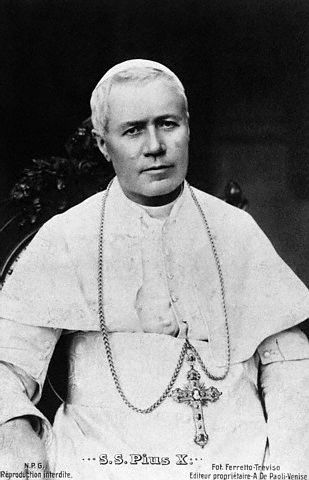
Saint Pius XUntil the Church tells me that what appears illogical to me must be obeyed and held, I have no duty to do so.  The key here is “to me”.  Just because something seems right or wrong to me, does not make it so.  Just because I think I understand what the Church has traditionally said on a specific subject does not mean that I do.

We are very proud of what we think, to the point that we throw our ideas out there as if they were revealed truths and we’re willing to insult, hurt, and ignore others who do not agree with our understanding of the faith, morality or Catholic tradition. Which leads me to ask whether at the end of the day, all of these interviews that people are giving, all of these opinions that people are posting on blogs concerning the Church, the family and the pope, and all of these sound bites are just another temptation to pride and disobedience.

How much of all that is said is about love of God and man and how much is about love of one’s opinion and one’s idea of what “is” means?

Conscience in crisis


This year we remember the landmark decision Roe v. Wade of 1973. For 42 years, the American conscience has grappled with the rightness and wrongness of abortion.

Abortion is a human rights issue. If a human being does not have the right to be born, of what use are the other rights that follow? That’s the first problem.

The right to choose does not mean the right to terminate an innocent life. The problem with “it’s a woman’s right” is that we’re saying that a mother has the right to choose to terminate the life of her pre-born child. Should she have the right to terminate the life of a child after he or she is born?

The case of rape does not hold. The father is obviously a heinous criminal, but not the child. He’s her child as well, not just the male’s child. If a parent feels that keeping such a child would do her harm, there are adoption agencies that help with this. One does not need to kill a child to get him out of one’s life.

18week

Another problem with “a woman’s right to choose” is that it strips the man of his right to be a father. The child of a good father only has a father if the woman decides to keep the child – only then the father comes into the equation. However, we’re saying that a raped woman is carrying a “scumbag’s” child. Let’s run with that for a moment. If it’s a scumbag’s child, the child fathered by the good man also has a dad. If the rapist is a parent, so is the good man. What happened to a parent’s duty to bring his children into the world?

We can’t abdicate duties, because we have the means to eliminate the obligation. Means does not make right. We have the means to blow up our planet too.

It is true that we have a duty to protect and provide for those who have been born, regardless of age, social condition and politics. The duty to protect the voiceless is not rooted in the fact that a person has been born so now we have to provide for him.

Our duty to the voiceless is grounded in our humanity. As human beings we acknowledge that other human beings have the same rights as us. They have the right to be born and the right to succeed in life. The human response is to protect those rights from the moment of conception to natural death. Abortion is not a human response. It is a response of humans. Responses of humans are acts of which a human being is capable, but they are not acts that make us better people.

baby_womb

The bible argument does not hold. The fact that Jesus never uses the term abortion does not mean that he was indifferent to it. Abortions did exist in his time. There were many other forms of evil as well.

The Gospel writers report in concepts. Jesus condemned evil, not specific acts alone. Those specific acts that the evangelists mention in the scriptures are given to the reader as examples of evil, not the only evils in the world.

The Scriptures were written as summaries of the faith of God’s people, not as comprehensive statements. If one wants to know what God revealed to man, one must look at the oral tradition as well as the written tradition. Much of what we know about moral truths was passed down from generation to generation through oral tradition. The biblical writings are synopses. We must read beyond the scriptures to fully understand what the early Jews and Christians understood, and understand it as they understood it.

BABY M-2 (2)

[How to Help]