The Ascension of the Lord


“On the third day He rose again from the dead. He ascended into Heaven, and is seated at the right hand of God the Father almighty. From there, He will come to judge the living and the dead.”

The opening expression at the beginning of the Creed serves as a reminder of an event that happened in real history and as an eschatological sign.

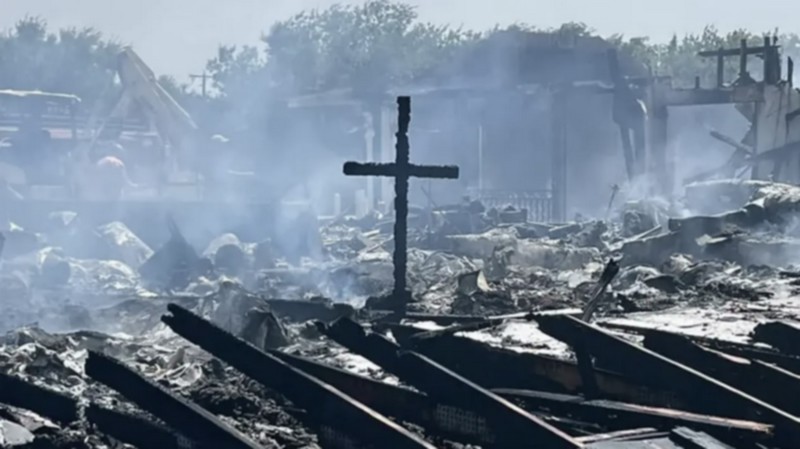
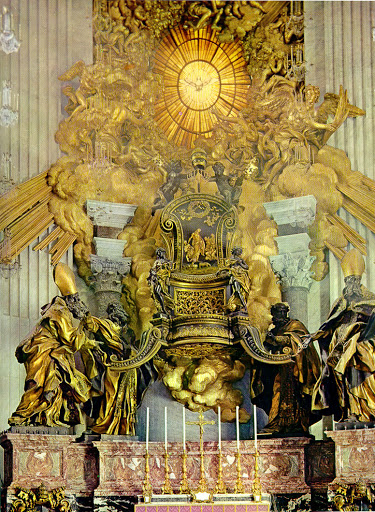
The Ascension of Jesus foreshadows our destiny at the end of time. If we stop and look closely, it’s not limited to Jesus’ divine nature. If that were the case, His body would have been found in the grave. A divine nature does not need a body.

It is Jesus’ humanity and divinity that ascends into Heaven, without blurring and without separating.

Man does not have a divine nature, but he has a body and a soul. Thy rejoin at the end of time and like Jesus, we hope to ascend to Heaven.

Man has one task, if he wants to ascend on the last day. He must keep his body and soul as sinless as possible to be admitted into the gates of Heaven.

He who stains his body and soul with sin, will rise from the dead only to descend into the pit of darkness and hopelessness.

Published in: on May 9, 2024 at 2:14 PM  Leave a Comment  

Navigating through the Dry Desert


Spiritual aridity is as different from spiritual apathy as Rome is from Tokyo. There can be many causes for spiritual aridity, but explaining each cause would turn this into a book of Christian spirituality and psychology, Let’s settle for the existential experience of spiritual aridity.

Existentially, spiritual aridity can best be described as thirst in a sandy desert. Once looks for a connection with God in prayer, the Sacraments, the Church, even the Gospel. At the end, not finding that spring that we once experienced in the spiritual life, we become despondent. We argue that there is no spiritual gain in prayer, the Mass, the Church, or even those around us.

The biggest problem is that we fault all religious activity as falling short and not meeting our spiritual needs. We fail to look into our soul. We are afraid of the darkness we might find there. Our reasoning ability becomes weak.

But God is not found through human reasoning, As complete and perfect, God is far superior to the collective of human wisdom.

God is that body that illuminates the night. The darker the night, the more visible are the stars of space. The stars that shine in the night are the sunlight that light up our day. Do we give up on prayer, the Sacraments, and the Church because of the human weakness that we find there, or the catastrophic mess that we are?

We need to remember that through the centuries, many have seen the weakness that we see…however, some of those people cry out to God to brighten the darkness that they see around them. Some of our most admirable saints have spent years calling out to God, the light of the night and the water in an oasis.

The more the cry out to God, “come be my light,” the stronger we become without realizing it. Grace is not a human feeling. It’s a seed planted in the soul where the Divine Gardener will water it and protect it from death as long as we persevere, “Come be my light”.

We carry on with whatever good the Church, Sacraments, and the Sacred Scriptures will offer. But each time we come into contact with the cold desert night, we call out to Him who can be the light we seek. The search for the light of God, however, requires that we never give up on calling, “Come, be my light”. God has never abandoned one who called out to Him. Those who give up calling out to God will be burned by the light of the Son whom they have given up. Man gives up hoping for the light. The Light for each man will always allow Itself to be seen; but only when God knows that it will do some good for us and through us.

We can never forget that we are the sheep that can’t find the Good Shepherd. But He is always closer to us when the desert looks the darkest or feels the coldest.

May the Immaculata always guide us through the dark desert.

Our Lady of Solitude“, Madrid School, 17th Century

The Immaculate Conception


The Immaculate Conception is an event that happened only once in history. The Immaculate Conception is God’s power to create a person free of original sin. That person is Mary, the mother of Jesus who is the Son of God.

When the Holy Spirit overcame Mary, Jesus’ humanity and divinity were placed in her womb for protection and the necessary space for the divine seed which had been planted – with a human nature alongside the divinity. In her womb, the God-man grew and, at the right time, he was born like any other child, except this child had two natures: human and divine, without blending.

To plant such a divine seed, who was His Son, God first created a woman who never experienced sin, because she had been conceived Immaculate, so that the Messiah that had been promised to Israel would acquire His human nature in a womb that did not know sin.

Mary has the protection of the Holy Spirit. The Holy Spirit was so powerful in Mary that we first became aware of the Third Person of the Most Holy Trinity when Gabriel said the Holy Spirit would act in her, without any human intervention.

It’s through the Virgin conceived without sin that man is first introduced to the most powerful and glorious being: the Triune God.

Rebuild My House


“Saint Francis Praying before the Crucifix at San Damiano,” Giotto, c. 1295, fresco

 
Francis was asked by Jesus to rebuild His house. Francis thought it referred to the chapel of San Damiano.
 
As time passed, after Francis had rebuilt San Damiano, his emptiness and his desire for truth continued to burn in his heart. It was only when his father dragged him to be judged by the Bishop that Francis realized that the house he was meant to renew was within him.
 
Francis stripped himself of his past when he returned to his father his money and everything he was wearing. Only when we strip ourselves of the past and the present do we realize how small and insignificant we are. When we strip ourselves of attachments, prejudices, opinions, material possessions, and past dreams and desires, we become like a vacant lot of land ready for a new building, a new house, a house where God is the master.
 
To realize that God is the master, we must realize our sinfulness. Sins that only God can blot away. No matter if we have been absolved in Confession, our attachment to sin has become part of the soil where God is to build His house. The previous house has been demolished and the surface of the field is clear, but beneath the top soil are the roots of sin, which, if not acknowledged, cannot be dug out like the weeds they are. Being absolved cleanses us of the eternal punishment we deserve, but the attached roots that remain must be acknowledged and God’s help must be begged to weed them out.
 
“Without me you can do nothing. If anyone does not remain in me and I in him, he is like a branch that is thrown away”.
– Jn 15:5
 
This is the most difficult truth that Francis had to face, if he was going to be raised as a living stone in Christ’s Church. It’s the lesson that Francis leaves for his followers. Live aware of the roots of sin in you, also remain aware of Christ’s presence through whom all things are possible.
 

“With men this is impossible, but with God all things are possible.” – Mt 19:26

“The stone the builders rejected has become the cornerstone.” – Ps 118:22


“Nothing is impossible for God” (Lk 1:37). He is more powerful and closer to us than the roots of sin. When we 

see our nakedness, where the only thing left are the roots of sin, God is closer than those roots. Unlike the roots of sin, God is alive.

May the Immaculate always light our empty lot so that we may see our attachments to sin and her living Son always willing to clear the ground and help us build his house.


Franciscans of Life  
Vita ad Vitam Vocat
 
Website        Facebook        Group
 
Click to donate
[tax disclosure]


From Scientists and Politicians God Preserve Us


When scientists began to explore the world around them, they discovered that the Creator had given rules to the natural world: biology, physics, chemistry, earth science…it is contrary to the nature of the Creator to endow us with access to these rules so we may use them to destroy each other.

The question remains: “Why did the Creator intend humanity to explore the laws of nature and use their properties?” The God that called and keeps all things into existence, also ordered them throughout space and time to be observable and accessible to human beings, each at its proper time and place. God did not simply create nuclear physics as he created agriculture: how would nuclear physics enhance the lives of primitive human beings?

It stands to reason that the Creator, who lives outside of time and space, would have every branch of science “alive” in His mind for all eternity. God does not simply wake up one morning, yawn, trapse out of bed, and drag Himself to a kitchen for a cup of coffee before He can begin creating. Since God is alive beyond our space and time, He is continuously creating and informing nature of the laws and properties by which it is governed. He has given humanity the will to explore beyond our bubble, the intellect to comprehend what we find, and the virtues to govern how we use this knowledge.

We can identify an insurmountable amount of knowledge that man has discovered, wherein he abused his freedom, ignored virtue, and used what God has ingrained into nature to feed his obsession with power and wealth. Thus, we find ourselves engaged in wars and conflicts in Europe, Asia, Africa, the Middle East, the Americas, and the Pacific Ocean. Thanks to the irresponsible actions of scientists and politicians, almost everything that we have discovered is analyzed to determine if it can be weaponized for power and wealth. Not so often do scientists apply their discoveries for the good of humanity and world peace.

Take a count of the number of Russians and Ukrainians who have died, lost their families and homes, and financial resources, because two political opponents engage in a deadly military confrontation “for the nation’s good”. Ukrainians and Russians are using war machines that rely on the laws of physics and chemistry!

We should pray for the North Korean and American armed forces who engage daily in “tests” and military tease demonstrations meant to intimidate rather than invite each other to the table of honest fraternal dialogue that seeks the good – especially of those who would be passive victims of political and military conflict that runs the risk of destroying human beings who have no voice in science or politics.

Like our holy father Saint Francis, the Franciscans of Life subscribe to the same practice of virtue: “Most High, all-powerful, all-good Lord, all praise is Yours, all glory, all honor, and all blessings“. Everything has been created by the same God who created humanity. All the laws of the universe are created by the Lawgiver, the triune God – Father, Son, and Holy Spirit. As did our holy father Saint Francis of Assisi, we do not think, we know that every human being is our brother or sister, because we all came into existence by the Will of the Father, were redeemed by the Son, and are guided by the voice of the Holy Spirit (if we care to listen). “And God looked upon all that He had made and, indeed, it was very good” (Genesis 1:31)

We believe that every scientific discovery has existed in the mind of God throughout eternity, and is discovered by us at a time, place, and by people who can use their discovery to enhance and protect humanity and the world.

Whether or not we evolved from a lower lifeform, came into existence because of the “Big Bang”, or were created in six days, should not be the questions on the table right now. The question on the table is: what are the means that God has given us to cooperate with the Divine Will: “I came that all may have life, and have it in abundance”?   


Franciscans of Life  
Vita ad Vitam Vocat
Website        Blog        Facebook Group
 Click to donate [tax disclosure]


Published in: on October 10, 2022 at 8:12 PM  Comments (1)  

The Joy of Heaven has entered Paradise!


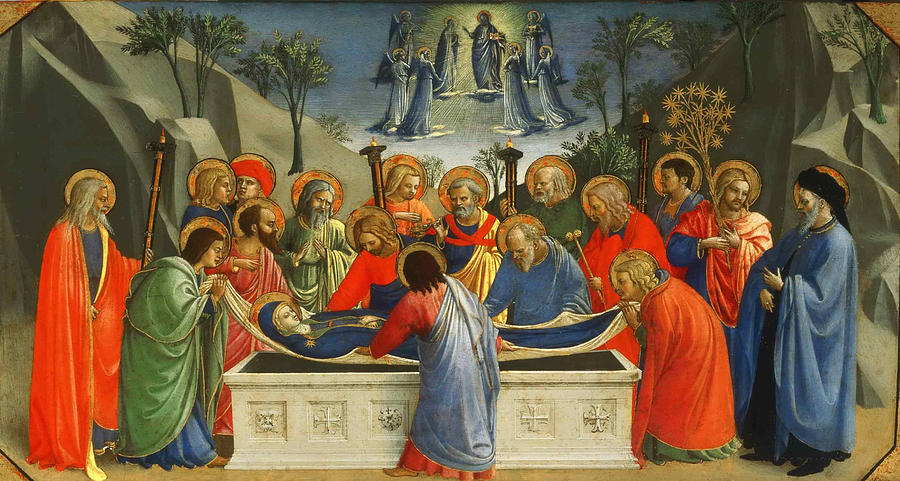
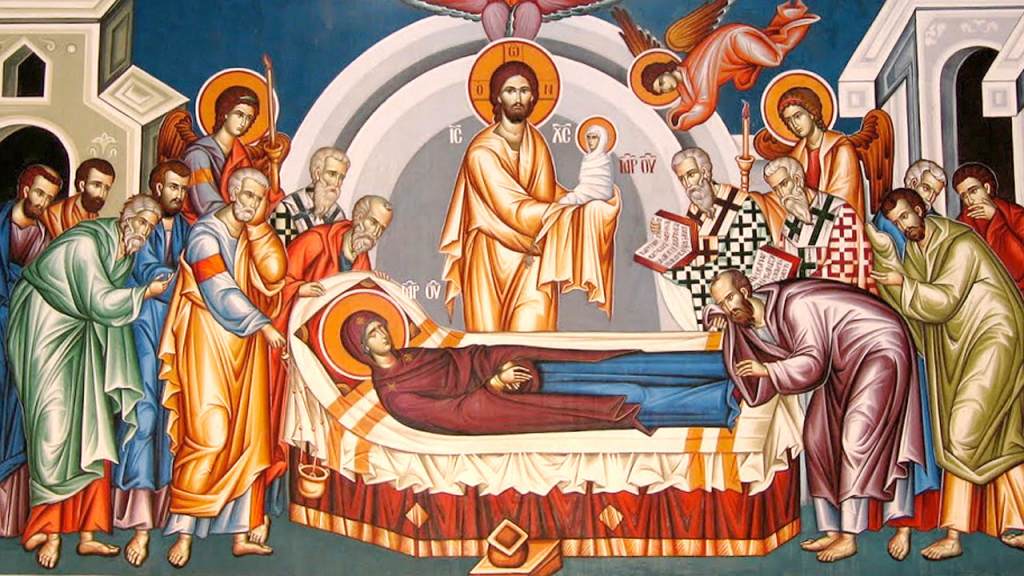
Today we celebrate the glorious Assumption of the Blessed Virgin Mary, Mother of God! Our Eastern brethren refer to this historical event as the Dormition of the Theotokos.

What a solemn moment in the history of humanity and in the economy of salvation! “The Immaculate Mother of God, the ever Virgin Mary, having completed the course of her earthly life, was assumed body and soul into heavenly glory“! (“Munificentissimus Deus“)

Humanity joins angelic choirs in singing with you:

<<O death, where is your victory? O death, where is your sting?>>

1Cor 15:55

This was fitting, for Our Lady alone, “in the first instance of her conception, by a singular privilege and grace granted by Almighty God, in view of the merits of Jesus Christ, the Savior of the human race, was preserved free from all stain of original sin“. (“Ineffabilis Deus”, IT EN)

Of both historical events Our Lady herself gives witness when, appearing to little Bernadette (St. Marie-Bernard), identifies Herself with the words:

<<Que soy era Immaculada Concepciou!>>

[an official source here]

These words, this identity, becomes so near and dear to the heart of that great lover of God and knight of the Immaculate, Saint Maximilian Maria Kolbe, that he would write:

“It is a question of drawing nearer to [the Immaculata] through the will, of letting our wills become one with hers, just as her will is united in a most perfect way with the will of God. Beyond this nothing else is necessary. Let us intensify continuously, every day, every instant, our love for the Immaculata, and let us do our best so that others may love her as we do and even more than we do.”

KW 1212-1213

Indeed, Lord Jesus Christ, we praise and glorify you with the words of St. Ephraem:

“Certainly you alone and your Mother are from every aspect completely beautiful, for there is no blemish in you, my Lord, and no stain in your Mother”.

Hymn. B. Maria 13:5-6 (quoted by Rev. Matthew Mauriello in the Fairfield County Catholic on January 1996, in turn quoted here).

Truly St. Germanus wrote well when he wrote about the Immaculate:

“You are she who, as it is written, appears in beauty, and your virginal body is all holy, all chaste, entirely the dwelling place of God, so that it is henceforth completely exempt from dissolution into dust. Though still human, it is changed into the heavenly life of incorruptibility, truly living and glorious, undamaged and sharing in perfect life”

 In Sanctae Dei Genetricis Dormitionem, Sermo I (quoted in Munificentissimus Deus)

“It was fitting” – writes St. John Damascene – that

“she, who had kept her virginity intact in childbirth, should keep her own body free from all corruption even after death. It was fitting that she, who had carried the Creator as a child at her breast, should dwell in the divine tabernacles. It was fitting that the spouse, whom the Father had taken to himself, should live in the divine mansions. It was fitting that she, who had seen her Son upon the cross and who had thereby received into her heart the sword of sorrow, should look upon him as he sits with the Father. It was fitting that God’s Mother should possess what belongs to her Son, and that she should be honored by every creature as the Mother and as the handmaid of God.”

Encomium in Dormitionem Dei Genetricis Semperque Virginis Mariae, Hom. II, n. 14 (quoted in Munificentissimus Deus)

Holy Mother Church has traditionally ascribed the chant of Psalm 44:11-12,14 to the Holy Mass for the Assumption:

<<Hear, O daughter, and see;
turn your ear; for the King shall desire your beauty.
All glorious is the King’s daughter as she enters;
her raiment is threaded with spun gold. Alleluia, alleluia!>>
“Mary is taken up into Heaven:
the choirs of the angels rejoice! Alleluia!”

Audi, filia, et vide(courtesy of Corpus Christi Watershed)

There also exists a solemn Preface to the Blessed Virgin Mary that was traditionally chanted on this Solemnity, and is still occasionally used (known as “Preface I of the Blessed Virgin Mary” in the current editio typica of the Roman Missal):

It is truly right and just,
our duty and our salvation,
always and everywhere to give you thanks,
Lord, holy Father,
almighty and eternal God,
and to praise, bless, and glorify your name
on [the Assumption] of the Blessed ever-Virgin Mary

For by the overshadowing of the Holy Spirit
she conceived your Only Begotten Son,
and without losing the glory of virginity,
brought forth into the world the eternal Light,
Jesus Christ our Lord.

Through him the Angels praise your majesty,
Dominions adore and Powers tremble before you.
Heaven and the Virtues of heaven
and the blessed Seraphim
worship together with exultation.
May our voices, we pray,
join with theirs in humble praise, as we acclaim:

[Holy, Holy, Holy Lord God of hosts…]

Preface of the Blessed Virgin Mary (chanted in Latin by H.E. Archbishop Alexander Sample at the Basilica of the National Shrine of the Immaculate Conception in 2018 )

Our Eastern brothers have some beautiful prayers and chants “remembering our most holy, pure, blessed, and glorious Lady, the Theotokos and ever virgin Mary” that testify, if not directly at least indirectly, to this “day of joy” on which “mors stupebit et natura” in observing a human being rise in body and soul to the glory of Heaven… For lack of time and space, we shall only quote a couple:

<<It is truly proper to glorify you,
O Theotokos!
The ever blessed, Immaculate,
and the Mother of our God!

More honorable than the Cherubim,
and beyond compare more glorious than the Seraphim!
Who, a virgin, gave birth to God the Word!
You, truly the Theotokos,
we magnify!>>

Axion Estin (performed at St. Basil the Great Catholic Church)

<<Beneath your compassion we take refuge
o Virgin Theotokos!
Despise not our prayers in our need
but deliver us from danger,
for you alone are pure….
for you alone are pure…
for you alone are pure and blessed!>>

Beneath your compassion(performed at St. Basil the Great Catholic Church)

Let us rejoice and fully entrust Holy Mother Church, our souls, and the entirety of creation to the maternal care of the Blessed Virgin Mary, Mother of God and, as St. Maximilian Kolbe reminds, us, “a loving mother [to whom God] entrusted the whole economy of mercy….. He made her so good that she is unable to abandon even the worst of sinners who has recourse to God’s Infinite Heart (KW 1248).

<<Arise, O Lord, into your resting place:

you and the ark, which you have sanctified>>

– Psalm 132

<<My soul proclaims the greatness of the Lord,

my spirit rejoices in God my Savior

for he has looked with favor on his lowly servant!

[A]ll generations will call me blessed:

the Almighty has done great things for me,

and holy is his Name!>>

– the Magnificat

Franciscans of Life

Vita ad Vitam Vocat
Website        Blog        Facebook Group

[tax disclosure]


It Seems Fitting!


We have observed in the span of a few days, some major celebrations, namely the feast of our patron Saint Maximilian Kolbe OFM Conv., confessor and martyr, and the great Solemnity of the Assumption of Our Lady!

The fact that St. Max was martyred on the vigil of the Assumption and his body cremated in the ovens of Auschwitz is no coincidence. He spent his existence at the service of his Queen, striving to earn the two spiritual crowns She had offered him when just a boy – purity and martyrdom – and he once wrote to his brothers:

Would that my ashes might be scattered to the four winds in order to bring Jesus to souls, to bring to them the cause of His Mother and our Mary!

We invite you to read more about St. Max on our blog as well as on St. Max’s Parish website, but in this article we’d like to highlight the glory that is the Assumption (known in some places as the Dormition) of the Blessed Virgin Mary!

Had you attended the 11 AM Mass this morning at St. Max, you’d have heard a wonderful theological sermon on the subject by our good friend and “out of the ordinary” preacher, Dcn. Pierre. You were right – I should have taken notes!

We will however do our best to celebrate the momentous occurrence with a few words.

Fr. Ludwig Ott wrote in his eminent work on Dogmatic Theology, “it seems fitting that Mary’s body, which was by nature mortal, should be, in conformity with that of her Divine Son, subject to the general law of death…” and, on that same note, St. John Damascene wrote:

It was fitting that she, who had kept her virginity intact in childbirth, should keep her own body free from all corruption even after death. It was fitting that she, who had carried the Creator as a child at her breast, should dwell in the divine tabernacles. It was fitting that the spouse, whom the Father had taken to himself, should live in the divine mansions. It was fitting that she, who had seen her Son upon the cross and who had thereby received into her heart the sword of sorrow which she had escaped in the act of giving birth to him, should look upon him as he sits with the Father. It was fitting that God’s Mother should possess what belongs to her Son, and that she should be honored by every creature as the Mother and as the handmaid of God.

“Encomium in Dormitionem Dei Genetricis Semperque Virginis Mariae, Hom. II, n. 14” (as quoted by Ven. Pius XII)

and, in a more “eastern” tone, bishop Theoteknos of Livia wrote:

It was fitting that the most holy body of Mary, God-bearing body, receptacle of God, divinized, incorruptible, illuminated by divine grace and full glory, should be entrusted to the earth for a little while and raised up to heaven in Glory, with her soul pleasing to God.

The Venerable Pius XII, who infallibly defined what the Church always believed on this matter in his Apostolic Constitution “Muneficentissimus Deus” on November 1st, 1950, also wrote in the same document:

Immaculate in her conception, a most perfect virgin in her divine motherhood, the noble associate of the divine Redeemer who has won a complete triumph over sin and its consequences, finally obtained, as the supreme culmination of her privileges, that she should be preserved free from the corruption of the tomb and that, like her own Son, having overcome death, she might be taken up body and soul to the glory of heaven where, as Queen, she sits in splendor at the right hand of her Son, the immortal King of the Ages.

Such is a summary of a doctrine that was already believed and accepted by Christianity from the very beginning! Indeed Ven. Pius XII reminds us:

the liturgy of the Church does not engender the Catholic faith, but rather springs from it, in such a way that the practices of the sacred worship proceed from the faith as the fruit comes from the tree…it follows that the holy Fathers and the great Doctors, in the homilies and sermons they gave the people on this feast day, did not draw their teaching from the feast itself as from a primary source, but rather they spoke of this doctrine as something already known and accepted by Christ’s faithful

It seems fitting. St. Paul makes it clear in his first letter to the Corinthians:

I delivered to you first of all, which I also received: how that Christ died for our sins, according to the scriptures: and that he was buried, and that he rose again the third day, according to the scriptures: and that he was seen by Cephas; and after that by the eleven.

[…] if the dead rise not again, neither is Christ risen again. And if Christ be not risen again, your faith is vain […] But now Christ is risen from the dead, the firstfruits of them that sleep […]

For by a man came death, and by a man the resurrection of the dead. And as in Adam all die, so also in Christ all shall be made alive. But every one in their own order: the firstfruits Christ, then they that are of Christ, who have believed in his coming.

Our Lord Jesus Christ never found more perfect believer in his coming that She who conceived Him in her immaculate womb, so much so that Christ Himself found it fitting to underscore this aspect of the Immaculata’s glory:

A certain woman from the crowd, lifting up her voice, said to him: “Blessed is the womb that bore thee…” But He said: “Rather, blessed are they who hear the word of God, and keep it!”

Luke 11:27-28

This is emphasized in today’s Gospel readings in the words of St. Elizabeth:

How does this happen to me, that the mother of my Lord should come to me? Blessed are you who believed that what was spoken to you by the Lord would be fulfilled!

This blessing, this glory, is in primis of Our Lady, the perfect disciple. In imitation of Christ, she died, was buried, rose again, and she was seen by so many witnesses (we bear in mind in a special way St. Francis, St. Maximilian Kolbe and St. Bernadette…though so many from the very early days of the Church attest to Her visits and support…).

Yet, a most kind mother, and in perfect alignment with the divine economy, she wills us to be her imitators in her belief until that glorious day when we, too, will be reunited to our glorified bodies and rejoice with the angels and the saints, God willing.

What Deacon Pierre stated this morning, St. Ambrose made extremely clear in one of his own homilies:

Elizabeth was filled with the Holy Spirit after con­ceiving a son; Mary was filled before. “You are blessed,” said Elizabeth, “because you have believed.”

You too are blessed because you have heard and be­lieved. The soul of every believer conceives and brings forth the Word of God and recognizes his works. Let Mary’s soul be in each of you to glorify the Lord. Let her spirit be in each of you to rejoice in the Lord. Christ has only one Mother in the flesh, but we all bring forth Christ by faith. Every soul free from contamination of sin and inviolate in its purity can receive the Word of God.

from the Little Office of the B.V.M.

Oh, Immaculata, beloved mother, who in your great sorrow consoled your Lord and Savior on the way to Calvary, rejoice and be glad, for today He in His great joy consoles you on the way to Eternity! Pray for us, your children, your servants! We are all yours, o Mary, this is our fiat to you, o Immaculata, that through your intercession we poor sinners may be made fit instruments to extend the kingdom of Christ!

Image edited by one of our brothers, based on the icon of the IV Station of the Cross at St Maximilian Kolbe Parish

“I want to send you all to Heaven!”


“[A] lovely, subdued melody floated through the forest above the solitary and forsaken little chapel of Our Lady of the Angels, just when a shepherd was passing by with his sheep. The shepherd turned pale and looked up at the fallen-in roof, but there was nothing to be seen. “Have they got an organ now?” he wondered. He pushed the little door open. All was dark and still within. Overhead the music was becoming more and more heavenly, as a hundred golden voices seemed to mingle in counterpoint. “Lord, how beautiful! It’s enough to make one want to die, it’s so beautiful!” he thought, for he was so moved that he could not utter a word. His heart told him what was happening…” 

From “The Perfect Joy of St. Francis”, Timmermans

August 2nd is coming along, and with it, two happy occasions – the “Great Pardon” (as the Portiuncula Indulgence is known in some places) and the “flocking” of the Franciscans of Life (regulars and externs) to the Motherhouse after a bit of a hiatus from community gatherings.

There will be a note of sadness, as our dearest brother Leo will not be with us for the first time…since his passing on May 26th of 2020. Four hundred years earlier, St. Philip Neri passed away on the very same day. Let’s pray for the repose of our dear brother Leo, and ask in a special way for the intercession of St. Philip, “Pippo Buono” as the Romans called him due to his kind and gentle disposition… All who knew our Brother Leo knew of his natural gentleness and kindness, which is what, perhaps, inspired our Superior to name him Leo at Novitiate, in honor of that first brother Leo, a gentle soul whom St. Francis used to call “ you little lamb of God”.

But this article – which from its prolixity you will most likely know is authored by brother Bernardo – is not so much about our community as it is about the Portiuncula Indulgence! We will go over the Porziuncola, “Santa Maria degli Angeli”, and then we will dig a bit more into the matter of indulgences – a matter of heavenly and motherly love – and its relationship to the wonderful Sacrament of Confession – so, please, stay with us!

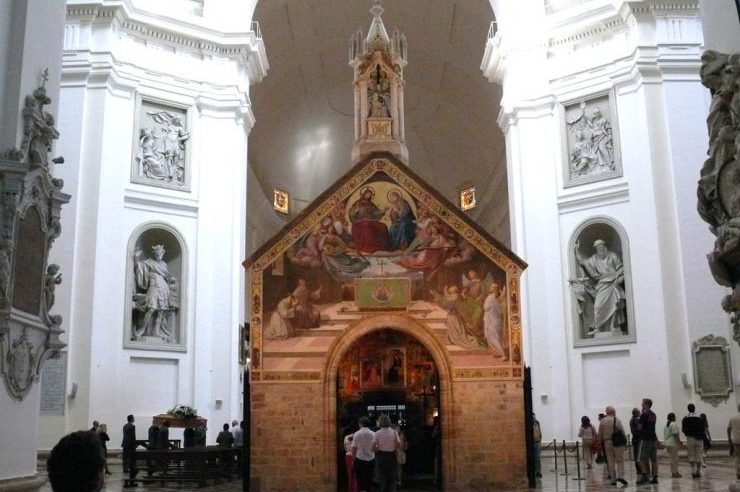
On Saint Mary of the Angels, called Porziuncola (“little portion“)

 1704 illustration from “Collis Paradisi Amœnitas, seu Sacri Conventus Assisiensis Historiæ“, as found on p.107 of “The Story of Assisi” by Lina Duff Gordon

If we dig a bit, we find a nice summary by Pope Benedict XV on the salient points regarding this very special place, which we summarize below:

  • It is taught that in the days of Pope Liberius (IV century) pilgrims from Palestine brought here a fragment of the sepulcher of the Blessed Virgin Mary, that is to say, the place of the Assumption, and thus was the place named Saint Mary of the Angels.
  • Here St. Francis wrote the rule approved by Pope Innocent III (“admonished by divine vision”, writes Benedict XV).
  • Here Clare, the noble virgin of Assisi, having forsaken the world, was clothed in the poor Franciscan habit, and instituted the second Order.
  • Here also originated the Third Franciscan Order [note of clarification: that of the Penitents, whose ancient rule we follow].
  • By this place were the first Chapters of the Franciscan order, including the famous “Chapter of Matts” of Pentecost.
  • Here St. Francis, after refusing six times, finally agreed that he and the brothers would share a meal with St. Clare and the sisters. It is recounted that their souls glared so brightly that the people from the surrounding areas thought the forest was ablaze.
  • Here St. Francis had a vision of the Lord and Our Lady, and went to Perugia to implore Pope Honorius III in 1216 for a most extraordinary and unusual favor: “that anyone who comes [to the Portiuncola] confessed and penitent be absolved from the punishment and guilt from the day of baptism to the day and hour of entrance in said church”. Such an indulgence was unheard of in those days! Yet, three times did the Supreme Pontiff give his assent. Upon the Saint rejoicing and departing his presence, came the Pope’s affectionate remark and the Saint’s moving reply:
    • You simpleton, where are you going? What proof do you carry?
    • Your word suffices to me! I seek no further instrument, other than the Virgin Mary be the parchment, Christ the notary, and the Angels the witnesses!”.
      • There is a pious story coming from the nephew of one of the early brothers, who accompanied Francis back from Perugia to Assisi. They stopped to rest a while and, upon awakening, St. Francis said: “Brother Masseo,I tell you from God that the Indulgence that the Supreme Pontiff gave me is confirmed in heaven!
  • Here Francis stood by the entrance after returning from Perugia and, stretching his fatherly arms, said to all:

“I want to send you all to heaven!

I announce to you an Indulgence

which I obtained from the mouth of the Supreme Pontiff…”

St. Francis at the Portiuncola, 1226
  • Here Francis implored his Guardian and his brothers to take him to die. 
    • “No, no! To Our Lady of the Angels! – Francis begged – I want to die where I began!” (from “The Perfect Joy of St. Francis”, by Timmermans)
  • Here that he dictated his wondrous Testament: https://ofm.org/wp-content/uploads/2016/11/Testament.pdf
  • Finally, here he died, naked on the floor (ref. Job 1:21), a broken, small 43-year-old man, marked with the Stigmata of the Lord he so loved, surrounded by his brothers who so loved him, under the loud warbling of hundreds of larks soaring heavenward…St. Francis of Assisi, whom Holy Church would call the Seraphic Father, the Alter Christus, but who, in his letters, introduced himself as little brother Francis….the little one….your servant…a worthless and weak man.

On the Great Pardon, or the Portiuncula Indulgence

One scholar wrote: 

“it seems incredible that a perpetual plenary indulgence with no attached condition of almsgiving or personal sacrifice should have been granted in favor of an obscure chapel in Umbria. Yet we have six sworn statements of contemporaries, regulations of the General Chapters of the Order, and 53 pontifical acts of the XIVth century either confirming it or defending it”.  

The Catholic Historical Review, Vol. 24, No. 4 (Jan., 1939), p. 466

This is just as St. Francis had told Pope Honorius: “If it is the work of God, He will make it manifest” – and this He has done – through His Church – through the centuries!

Of this plenary indulgence can benefit the faithful – for themselves or for a deceased as suffrage

(a) either by directly visiting Santa Maria degli Angeli and the Porziuncola shrine it contains (in Assisi)

or (b) by visiting, within the US (to our understanding) a minor basilica, a cathedral, or a parish church.

The conditions, to our understanding, are as follows:

  • Receive absolution in sacramental Confession
    • (in the time period including the 8 days before and the 8 days after the visit of the church)
  • Attend Holy Mass and receive Holy Communion within the same time period
    • (although it is convenient that this occur on the day the work is performed)
(CNS photo/Paul Haring)
  • Visit the church
    • …where they will renew the profession of faith through the recitation of the Credo (which, to our understanding, can be either the Apostle’s Creed or the Nicene-Constantinopolitan Creed…).
    • …and they will recite a Pater (Our Father) to reaffirm their dignity as children of God received in Baptism
    • …and they will pray for the intentions of the Supreme Pontiff, condition which is satisfied by reciting one Pater and one Ave, although one may also recite any other prayer if recited for this intention. This would also be fittingly performed on the same day.

On Indulgences in general, and Plenary Indulgences in particular – or, how to gain one

To benefit from an indulgence, the person must be baptized, must not be excommunicated, and hopefully in the state of grace. Furthermore, one must have the general intention of gaining the indulgence, and of course carry out the works mentioned above.

Most importantly, however, for the indulgence to be plenary and not partial, it requires the exclusion of all attachment to sin, even venial sin

This has been historically considered the most complex of the conditions: no man, however holy, can call himself free of sin, but many can honestly call themselves free of affection towards sin, to the best of their knowledge!

In 2004, the Apostolic Penitentiary used the following language:

…as long as they are totally free from any desire to relapse into sin…

https://www.vatican.va/roman_curia/tribunals/apost_penit/documents/rc_trib_appen_doc_20041225_miraculorum-maximum_en.html

On SpiritualDirection.com (an apostolate of the Avila Institute by our kind friend Dan Burke) , Fr. Edward McIlmail, LC writes (we paraphrase!):

“The requirement is not “freedom from all sin“, rather, that “there is no sin which the soul is unwilling to renounce”.

A person should know if he’s in compliance, because an attachment implies a refusal to fix a situation – as when sometimes, deep down, we don’t want to let go of certain sins, even if “small”.

This is quite different from weakness, or habitual sin that is being battled…to souls in these situations, the Church is ready to aid!”

Confession, Reparation…and Indulgences – or, how they are closely related!

Pray to the good Lord to take away any desire, albeit small or hidden, for sins both grave and venial, and go as far as to bring forth in your heart a salutary hatred of sin, remembering that God is all-good and all-loving and that even the smallest sin displeases him. 

After all, what is an indulgence if not but a “continuation” of the Sacrament of Penance? That is to say, “a remission before God of temporal punishment for sins whose guilt is already forgiven”? 

We know that the matter of sacramental Confession is the acts of the penitent: contrition, confession and satisfaction.

say NO to sin!

We should strive to a perfect contrition (CCC 1452) and perfect contrition builds more and more on detachment from sin, first from the “great” sins and then from the “small” ones! A devout soul, then, should not find much difficulty in complying with the requirement to be detached from all sin. The rest of us should simply keep working our way there, knowing that it is entirely up to us to not want to sin, while it is entirely a gift of God to bless us with the grace needed to overcome sin. “Without me – says the Lord – you can do nothing” (Jn 15:5), but He also says, “be perfect, as your heavenly Father is perfect” (Mt 5:48), and later, to St. Paul, “my grace is enough for you” (2Cor 12:9).

In the form of the Sacrament, “I absolve you, assuming the penitent did not put any obstacles, such as willfully lying or withholding, or later failing to do any satisfaction, but rather that the penitent had a sincere sorrow for their sins and a firm resolution to avoid them in the future, all their sins from the very moment of Baptism (or from their last Absolution) till that moment are forgiven and remitted through the power of the Keys – even sins that you may have forgotten to mention!

The pains of Purgatory in a painting by Fontebasso

Yet, such forgiveness and remission of sin does not imply the forgiveness of the temporal punishment due to every sin.

Sin carries both a stain and a punishment. When the stain is cleansed from the soul by sacramental absolution, the temporal punishment is not always remitted, except through the remedy of satisfaction, by avoiding near occasions of sin, resolving to sin no more, and doing works of penance. Such satisfaction also atones to our Mother the Church, whom we often forget is injured by our sins, and it also deters others from sin by way of example.

Last but not least, temporal punishment is the reason for Purgatory…the ecclesia dolens… Someone reported that St. Padre Pio once said: “let us do our Purgatory here on earthby accepting everything from God’s hand“. (ref. Job 1:21…again…)

Interiorly, satisfaction heals the wound caused by sin. St. Bernard taught that “the stain is removed from the soul by God’s mercy, while the wound is healed through the remedy of penance…and even then, some scar remains”.

In this we see the great love and care of Holy Mother Church, Bride of Christ and as such minister of Redemption, custodian of that great treasury of expiatory works of Christ and the Saints! By granting an Indulgence, our Mother the Church is coming to our help in ridding us of the temporal punishment we have accumulated by our sins – or, when we apply the indulgence to a faithful departed, to help us help one another!

St. John Paul II summarized this wonderfully in 1999:

“[indulgence] is a sensitive subject, which has suffered historical misunderstandings […]

The starting-point for understanding indulgences is the abundance of God’s mercy revealed in the Cross of Christ. The crucified Jesus is the great “indulgence” that the Father has offered humanity through the forgiveness of sins […]   in the logic of the covenant, which is the heart of the whole economy of salvation, this gift does not reach us without our acceptance and response. […] 

[I]t is not difficult to understand how reconciliation with God, although based on a free and abundant offer of mercy, at the same time implies an arduous process which involves the individual’s personal effort and the Church’s sacramental work.

For the forgiveness of sins committed after Baptism, this process is centered on the sacrament of Penance, but it continues after the sacramental celebration. The person must be gradually “healed” of the negative effects which sin has caused in him (what the theological tradition calls the “punishments” […] Precisely for the sake of complete healing, the sinner is called to undertake a journey of conversion towards the fullness of love.

The temporal punishment itself serves as “medicine” to the extent that the person allows it to challenge him to undertake his own profound conversion. This is the meaning of the “satisfaction” required in the sacrament of Penance.

The meaning of indulgences must be seen against this background of man’s total renewal by the grace of Christ the Redeemer through the Church’s ministry.

The Church has a treasury, then, which is “dispensed” as it were through indulgences. This “distribution” should not be understood as a sort of automatic transfer, as if we were speaking of “things”. It is instead the expression of the Church’s full confidence of being heard by the Father when – in view of Christ’s merits and, by his gift, those of Our Lady and the saints – she asks Him to mitigate or cancel the painful aspect of punishment by fostering its medicinal aspect through other channels of grace. In the unfathomable mystery of divine wisdom, this gift of intercession can also benefit the faithful departed […]

We can see, then, how indulgences, far from being a sort of “discount” on the duty of conversion, are instead an aid to its prompt, generous and radical fulfilment. This is required to such an extent that the spiritual condition for receiving a plenary indulgence is the exclusion “of all attachment to sin, even venial sin” […]

Therefore, it would be a mistake to think that we can receive this gift by simply performing certain outward acts. On the contrary, they are required as the expression and support of our progress in conversion. They particularly show our faith in God’s mercy and in the marvellous reality of communion, which Christ has achieved by indissolubly uniting the Church to himself as his Body and Bride.”

St. John Paul II, PP – General Audience – 29 Sep 1999
“Virgo Ecclesia Facta” – the Church is our loving Mother

My Sins and The Nails that Pierced Christ


Holy Week is an invitation by Christ and the Church to meditate not only on the suffering of Christ on the cross, but especially on the cause of Christ’s Passion.  For centuries, we Christians have proclaimed that Christ died on the cross to redeem us.  But very rarely do we say It is my sins that led Christ to be executed by the cruelest form of capital punishment of the time.

Today we hear many sermons and read many spiritual books on God’s love for us and our obligation to love God and others.  These points are true.  However, we rarely hear Your sins contributed to the cruel passion of Christ.  It has become unfashionable to speak to people directly about personal sin.  The excuse that we most frequently hear is It is not for me to judge.  It is true that it is not for us to judge the state of another person’s soul.  But we certainly have a duty to reflect on the state of our soul.  

It is not enough to say I have always been a good person, or I have always tried to do the best that I could in any given situation.  These statements are like the clouds that block the light of the sun from reaching us on a dreary day.  I am a good person is often cloud cover.

When mediating on the suffering of Christ and His Blessed Mother we must ask ourselves some very important questions, such as:

  1. Do I tell myself that God is a loving god who, in the end, will pardon my sins and welcome me to heaven?

That is presuming God’s mercy while not considering his justice.  The mercy of God is an absolute truth. So is His justice.  We must pay for our sins.  Otherwise, we are guilty of the sin of presumption.

  1. Have I ever believed myself or my community to be superior to others?

Looking down at others is a sin of arrogance.  It may be true that I live a more virtuous life than the person next door.  But we can only see external acts, we do not see what God sees.  He sees the whole person.  He does not measure a person’s value by their race, culture, achievements, sexual orientation, parentage, or religion.  God knows about all these things and what He blesses and what He condemns.  However, Christ tells us, “do not judge, or you too will be judged” (Matt 7:1).

  1. Do I truly believe doctrine and moral law that the Church teaches, or do I create my own doctrine and my own moral law?  

Maybe I question the Church’s teaching on same sex marriage, abortion, birth control, marriage of divorcees, sex outside of marriage celibacy. 

Maybe I believe that Christ is in the host, but not that the host is the real body and blood of Christ.  However, the host is not an outer shell within which hides the Lord Jesus Christ…the consecrate host is the Lord Jesus Christ.  Christ makes this very clear when He told his followers, Whoever eats my flesh and drinks my blood has eternal life . . . “(Jn 6:54).

  1. Do I look down on non-Catholics or maybe I do not ever think about non-Catholics?

Catholics are often indifferent to other religions, believe that all religions are the same, or are hostile toward non-Catholics.  When we are indifferent about the existence of other religions, we are indifferent about our own Catholic religion.  We fail to see the need to bring others into the fulness of the Gospel which subsists only in the Catholic Church. 

To subscribe to the idea that all religions are the same is as intelligent as believing that all cultures are the same.  They are not the same.  Other religions have some beliefs that are the same as Catholic beliefs, and some beliefs that are completely mistaken because they ignore or distort Truth. 

Hostility toward people of other faiths contradicts what Jesus has taught us.

Jesus was asked, “what must I do to inherit eternal life?”

“What is written in the Law?” he replied. “How do you read it?”

“‘Love the Lord your God with all your heart and with all your soul and with all your strength and with all your mind’; and ‘Love your neighbor as yourself.” “

Do this and you will live.” (Lk 10:25-28)

I must never stay silent in the face of error for the sake of political correctness.  To do so is to give consent to the error.  But I must never consider myself above others.  Truth comes from Christ, not from man.

If I consider myself above non-Catholics, then I am as wrong as they are.  Because my Catholic faith is not of my creation, but a gift from God.  I must share this gift whenever the situation presents itself, with respect and kindness.  Never with aggression or condescension. 

In conclusion, let us not think only those sins which are observable: adultery, impurity, injustice, slander, rudeness, vulgarity, passing up an opportunity to practice charity…  We are guilty of many sins that are not easily observable and which we believe can be swept under the rugs.  Yet, no sin in hidden from the sight of God. The nails that pierced the hands and feet of Christ are my sins along with those of others.

The Case for the Mask – on God’s Care for our Health


The Christmas season is upon us, and I find myself with a few days of “vacation” allowing me to reflect on a number of issues I ordinarily entrust entirely to the Divine Providence. Br. Jay always teaches us, “do not get upset at things you cannot control, focus on preserving interior peace at all times”. Yet these days I have meditated upon some such matters – matters “great, too difficult for me”, if only to remind myself that I am not – and should not – be in control.

During this process, which also involved some online reading, I stumbled upon an article trying to make a case against wearing masks in times of Covid through the arguments of faith and philosophy. I have heard and overheard many arguments for or against masks over the past year, but never had I seen such a bold attempt, and I was moved to address it here. Life calls out to life, and I feel urged to speak in defense of it, inasmuch as I am keenly aware that not wearing masks (among many other precautions) directly increases the spread of this deadly virus.

The article, when read according to the light of the Catholic faith and not someone’s political agenda, actually helps those who strive to be good Christians to understand a few important things, in spite of its flawed conclusions. There are a few key points I wish to quote and go over, not for argumentation but merely for the sake of reflection.


(0) “There is not a consensus among doctors and scientists, at the end of 2020, about the infectious nature of [Covid-19] or the efficacy of wearing masks.”

In other words, there is debate about how helpful it is, due to the question of how exactly does the virus work. However, there is no debate as to the fact that masks help. It is a basic tenet of the Faith that people should clearly do what they can to help others, even when it is burdensome to themselves. The crown of thorns was much more burdensome to wear.


(1) “It is wholly un-Christian to consider any other human person first as a threat to oneself. Man is called to love his neighbor and to be in communion with him.”

When we encounter our brothers and sisters, we should not consider them a danger to us. Our attitude should be one of love and communion.

Furthermore, we are not called to be apprehensive when we see another human being – unless there is an overt threat to our safety. We are not considering the person to be a threat – the threat is there, invisible, and it is the threat that we single out as a danger, not the person. This is not unlike an early Christian who may have felt fear when seeing an approaching Roman soldier – not so much in his person but in the potential threat of persecution and death. And do not reply that “perfect charity casteth out fear“, for the Good Lord himself “began to fear and to be heavy” at the prospect of His Passion, so much so that he sweat blood, yet He remained firm in the Father’s will, teaching us that it is natural to fear danger, and there is supernatural merit in facing it with God’s help.


(2) “Charity is any action we do for God or do for others for the sake of God. If we do not act for the sake of God, the action, while good, is not charity. Is charity actually the reason why many wear masks?

When encountering our brothers and sisters, a loving attitude of communion is reflected when we think that perhaps I may be a carrier unbeknownst to all – even me – and wearing a face mask lowers the risk that my coughing or sneezing or even just talking would expose my neighbor to a potentially deadly disease. My wearing a mask says to my neighbor ” I love you, therefore I am doing something to care for you“. It is both a physical and a spiritual act of charity – physical inasmuch as it aims to protect my neighbor’s health, spiritual inasmuch as I am acting out of love of God and neighbor. I am certainly grateful when a surgeon wears gloves, so let us be grateful when we see each other wearing a face mask.


(3) “Masks indirectly promote thinking of others in terms of oneself. ‘You are not wearing a mask; you are a danger to me. You are making me feel uncomfortable by failing to wear a mask.’

Yet a good Christian does indeed focus on himself rather than others, inasmuch as he is called to a personal obedience of God’s will. I must not focus on whether the other is not wearing a mask, but on whether I am. For it is my duty to help, nay, even to lay down my very life for my neighbor. Let us not forget that just yesterday we commemorated St. Stephen, whose last words were to the Father regarding his unjust oppressors, who were killing him: “Lord, lay not this sin to their charge!” In spite of the “discomfort” that they made him feel, the Protomartyr acted towards them in faith and love.

Does our neighbor’s failure to act on wearing the mask make us feel uncomfortable? I would say that all manners of sin (should) make us feel uncomfortable, whether the sin is an objective reality or a mere subjective understanding of our mind. We see this very clearly in the many occasions when men are scandalized by the actions of the Lord or the Apostles, whom they thought were contravening the Law, and never does the Lord or the Apostles rebuke them, but always do they instruct them to an objective and orthodox understanding of things. Sin is only that which offends the Divine Will, not the will of men. When I see my neighbor failing to wear a mask, and I am stirred to discomfort in what appears to be sin (considering that this act of omission exposes others to potential dangers and also scandalously manifests one’s potential lack of care and concern for neighbor) I must first and foremost be reminded of the Lord who once said: “Do not judge! Thou hypocrite, first cast out the beam out of thine own eye; and then shalt thou see clearly”… My attitude must also be devoid of all pride: just because I happen to be wearing a mask while others fail to do so (or advocate against it), I must not imitate the proud man who says “O God, I give thee thanks that I am not as the rest of men”, but rather I must obey the Divine Precept that commands us, “when you shall have done all these things that are commanded you, say: We are unprofitable servants; we have done that which we ought to do.”


(4) “Physical health is neither the primary nor the sole determinant of a man’s actions. There are more important realities than bodily health, especially spiritual health.”

Yet it is written, “The light of thy body is thy eye”, and also, “know you not, that your members are the temple of the Holy Ghost, who is in you, whom you have from God; and you are not your own?”. The preservation of physical health is part of the Lord’s Holy Will, as he said, “Love your neighbor as you love yourself”. It is not above the spiritual health, it is wholly part of spiritual health.

Hence, Christ on the Sabbath allowed His Apostles to contravene the law and pick grains, for they hungered, and the Divine Teacher manifested that in the eyes of God, such an act was fully lawful, as it was already manifested in the days of King David.

The Incarnate Word once rebuked Satan’s temptation by declaring that “Not in bread alone doth man live, but in every word that proceedeth from the mouth of God.” Yet after He Himself having spoken to the people, He said to the Apostles, “I have compassion on the multitudes, because they continue with me now three days, and have not what to eat, and I will not send them away fasting, lest they faint in the way.” And lo, He went and performed the astounding sign that is the multiplication of the loaves and the fishes.

Let us not forget other equally wholesome examples such as the Passover Meal, the provision of Manna in the desert, the splitting of the rock to provide water, and many other ways in which God’s Divine Providence has time and again tended to the care of our physical health.

Therefore, a man’s duty to preserve physical health becomes wholly aligned with the Lord’s will when done out of love of God and neighbor and out of reverence for deeper, invisible spiritual realities inherent to man being both flesh and spirit by the Divine Will.

If you are not fully convinced of this argument, consider that consuming wine at a wedding is not a health nor a nutritional necessity, yet the good Lord deigns to provide wine at Cana in a miraculous way, thus meeting a much simpler need – yet we know that there was a profound spiritual significance to His action.
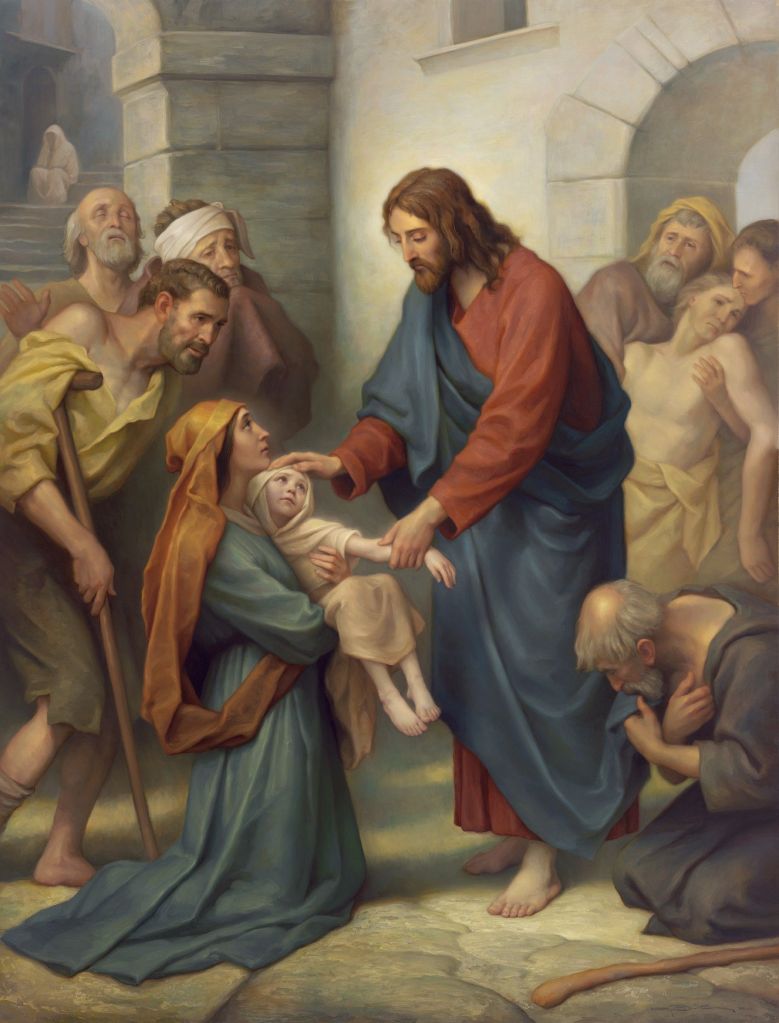
Let us also remember that we do not need to see, hear, or walk in order to go to Heaven – yet, time and again the Lord has mercifully healed such merely physical needs, and the Blessed Virgin herself deigned – and still deigns – to intercede for the healing of many at the miraculous spring of Lourdes.

Holy Church herself was gifted by Christ with a Sacrament specifically intended to heal the physical health: “Is any one of you sick? He should call the elders of the church to pray over him and anoint him with oil in the name of the Lord. And the prayer offered in faith will make the sick person well”. Clearly, there is a deep relationship between physical and spiritual health. “For which is easier to say, ‘Your sins are forgiven you,’ or ‘Arise and walk’?”


(5) “When one looks at the body, to the exclusion of the face, one encounters an object, a thing, rather than a person. Objects are meant to be used; that is, to be used as a means to an end. Persons are primarily subjects to be known and loved.”

We must always encounter and commune with our brothers and sisters in the way God intended us to: as our brothers, human beings with a body and

a soul. Different cultures and standards lead to wearing more – or less – articles of clothing, and it has been one of the sharpest thorns of modern secular culture to promote objectification by means of the removal of clothing, whereby most contradictorily to the original tenet, it is the lack of coverage and not its presence, which leads to objectification. When we encounter a fellow human being, whether he or she wears a mask or not, whether he or she wears something that makes us feel uncomfortable or not, we always approach them with the same love that Christ modeled for us. Why, I have no doubt that on his first encounters with the Touareg – their face fully covered by the tagelmust and their voice absent or altogether incomprehensible – Blessed Charles de Foucauld still managed to commune with them in the love of Christ, so much so that he became known to them as “the Christian Marabout” (“holy man”).


(6) “Man communicates most profoundly with his face—with words, looks, facial expressions. [The mask] muffles the human voice; it hides the human smile; it obscures the deeply human facial expressions which are integral to forming human friendships.”
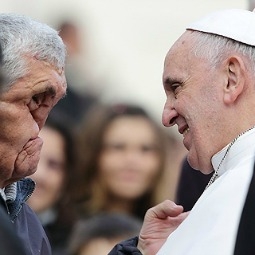
The Holy Father with Mr. Oreste Tornani

Yet the Seraphic Doctor recounts in his Vita Maior [p.1 c.1] that one day St. Francis met a leper and “felt sick at the sight of him”. Given this sharp description and the knowledge most of us have of the terrible progression of Hansen’s disease, it is fairly possible that the leper no longer had what we commonly describe as a face, or at least was unable to produce facial expressions beyond terrible distress. Yet Bonaventure recalls that Saint Francis “remembered his resolve to be perfect and the need to overcome himself first”, and proceeded to show brotherly love to the sick man.

This story, as do many others – I am reminded of the entire life of St. Damien of Molokai – show that the burden is on us to perceive, understand, and treat our neighbor with love, rather than blaming them – or their lack of facial expressions or voice – for “obstructing the development of genuine community“, as that article does (perhaps inadvertently).

The Holy Father with Mr. Vinicio Riva.

Let us strive in these difficult times to show ourselves ever more empathetic and comprehensive towards one another when we do not have the luxury of being able to expose our face without risk to our health – an experience quite common in places of extreme heat or cold, or in general in the field of healthcare.


In conclusion, let us cast aside – if only for a moment – all manner of ecclesial or secular politicking, and be reminded that it is but a small act of love to wear a face mask and keep a 6 ft distance from our neighbors during times of pandemic. It is on us to embrace these measures out of love of God and neighbor and to strive to show even more love and care than under usual circumstances to our brothers and sisters who – no doubt about it – live in a world that is making of fear one of its primary movers.

Please forgive any imprecisions in my writing – these are merely my thoughts – and please pray for the end of this health crisis through the special intercession of St. Joseph most obedient, terror of demons, patron of the Church,  mirror of patience. By the will of the Holy Father, we are now in his year, so let us reach out to him, now more than ever!

Br. Bernardo D’Carmine, a sinner.

St. Joseph, Pray For Us