The Surpassing Invisible Beauty of Truth


When we observe works of art, in particular sacred art, we are necessarily brought out of ourselves into a new perspective.

­­­­­­­­­­­­

Yet we often hear the claim that modern art is disconnected from beauty and, by extension, is unable to communicate the beauty of holiness. Pope Benedict XVI explained this as follows:

“We are experiencing not just a crisis of sacred art, but a crisis of art in general of unprecedented proportions. It is a symptom of the crisis of man’s very existence. The immense growth in man’s mastery of the material world has left him blind to the question of life’s meaning that transcend the material world.”

Atlas-Statue-Rockefeller-Plaza-Fifth-Avenue-HDR

Modern man defies the transcendent

Unfortunately, many have ran with similar statements too quickly and too far, arriving to claim that modern art is “ugly” and that modern sacred art is nothing but “secular (profane) artworks embedded in sacred spaces”.

Consequences of iconoclastic mindset

The iconoclastic mindset

Others, connecting many more dots than what prudence dictates, have claimed that modern art is ugly because modern souls belong to a global society falling into apostasy. At the extreme end of the spectrum we find the histrionic-schismatic mindset of those who claim that “the ugly images found in Novus Ordo churches are the final offense of the devil, an outrage that sums up all lesser offenses because it represents his goal of obliterating the image of the holy ones in the Church”.

Sadly, the proponents of these and similar statements are indeed upholding a tradition, but not the tradition of Catholic sacred art. They are, in a sense, the modern version of the ones who raised up their scandalized voices to the work of Michelangelo in the Sistine Chapel. Their claim? Michelangelo’s work was too modern.

Paul Barolsky, a  specialist in Italian Renaissance art, explains that contemporary critics of “the first modern artist” accused the Last Judgment of being disconnected from the norms of classical form and violating religious decorum.

Last_Judgment_Sistine_Chapel

However, “The images are not photographs…their whole point is to lead us beyond what can be apprehended at the merely material level to awaken new senses in us, and to teach us a new kind of seeing, which perceives the Invisible in the visible. The sacredness of the image consists precisely in the fact that it comes from an interior vision and thus leads us to such an interior vision. It must be a fruit of contemplation. Art is always a gift. Inspiration is not something one can choose for oneself. It has to be received. Before all things, it requires the gift of a new kind of seeing”.

Many modern art forms, even within sacred art, accomplish this wonderfully even though they may depart from more traditional artistic styles. They are not “modernist”, nor do they belong to that school that religious illustrator Matthew Alderman has called “the Other Modern”.

The Franciscans of Life are patronizing the work of a local artist whom we believe is a representative of the above, and we will feature his artwork for sale on a dedicated section of our website http://www.franciscansoflife.org The proceeds will go towards the education of our student brothers. This young artist specializes in concept illustration, book covers, and fictional fantasy. He has displayed remarkable talent in the production of sacred art using traditional and digital mediums.

Artwork in the community room at our mother house.

Artwork in the community room at our mother house.

St. John Paul II reminds us that modern artists are, just like artists of all ages, men passionately dedicated to the search for new “epiphanies” of beauty, admiring the work of their inspiration, sensing in it some echo of the mystery of creation. While acknowledging that in the modern era a new kind of humanism marked by the absence of and opposition to God has gradually asserted itself, the Church has not ceased to nurture great appreciation for the value of art, even beyond its typical religious expressions…for even when they explore the darkest depths of the soul or the most unsettling aspects of evil, artists give voice to the universal desire for redemption.

Julian_Pentecost

Pentecost

The pontiff reaffirms that just as the Church needs art to make perceptible and attractive the world of the invisible without emptying the message itself of its transcendent value and its aura of mystery, art also needs the Church for the great source of inspiration offered by the religious theme. This partnership has been a source of mutual spiritual enrichment and has led to a greater understanding of man, and to an opening of the human soul to the sense of the eternal.

Pope Francis, in his encyclical Laudato Si, reminds us that we must be able to look even beyond the traditional means of the craft:

Julian_Corpus_Christi

Corpus Christi

“Technoscience, when well directed, can also produce art and enable men…to leap into the world of beauty. Valuable works of art no make use of new technologies. So, in the beauty intended by the one who uses new technical instruments and in the contemplation of such beauty, a quantum leap occurs, resulting in a fulfillment which is uniquely human.”

It is therefore our hope that we will look at all expressions of modern art, and particularly at sacred art, with a renewed understanding of man’s quest for the beyond. There is much to be appreciated, as long as we are capable of casting aside prejudices and overly zealous attitudes.

Art indeed “goes beyond the search of the necessities of life…it expresses practical wisdom, uniting knowledge and skill, to give form to the truth of reality in a language accessible to sight, [and] sacred art is true and beautiful when it evokes and glorifies ….the surpassing invisible beauty of truth and love”.

These words come from a relatively recent book, the Catechism of the Catholic Church, but reflect a wisdom that is timeless. We find it echoed by the same Michelangelo, who affirmed that “every beauty which is seen here by persons resembles more than anything else that celestial source from which we all are come”.

Julian_St_Joseph_and_Christ

St Joseph and Christ in the Workshop
 

No Bikes Allowed In Heaven


I realize that it’s a little late to write Mother’s Day messages.  In my case, it may be a little late to write a eulogy for my mom who died 15 years ago.  Nonetheless, there is something that I would like to share with all of you who are parents and those who will be parents.

When a parent approaches the Lord for the final judgement, the most important question that he must face is whether or not he fulfilled his duty as a Christian and passed on the faith to his children.

Passing on the faith is more involved than sending kids to weekly CCD and putting them through the drills for First Confession, First Holy Communion and Confirmation.  The sacraments are not graduation ceremonies.  The sacraments are part of a journey.  This is where my mother comes into my spiritual picture.FLAMES

Whatever her faults, were many things that my mom did well.  But the one thing that she did with outstanding fidelity, love, courage and concern was to hand down the faith.  From the moment we were born we were incorporated into the faith community.  I say incorporated to mean that we didn’t just get dragged down to the church to be baptized or the temple to be blessed and “Goodbye”.  There was much more.  Faith was part of our domestic culture.

I remember that the first picture book that I ever read was the story of Moses.  From there, I read every other story in the bible.  Faith was part of our recreation, because bedtime reading was a ritual and a fun time for me.

Religious symbols were present in every room in our house.  I was taught to pay attention to them.  I remember my mother insisting that I bow my head each time I passed a crucifix that was in the entry foyer.  Bowing to the crucifix and altar in church were not new to me.

Morning, evening and night prayers were part of our family schedule.  We prayed before going to school.  When I was older, I prayed the Holy Rosary with my mom every day at 7PM.  I have no idea why it had to be at 7PM.  I can tell you this.  I have no idea what wasrosary on TV at 7PM.  That was time for evening prayer.  Then there were night prayers that were said at bedtime.  The very first prayer that I learned to say was the Lord’s Prayer.  Because I grew up in a bilingual home, my mother made sure that I could pray it in two languages.  After that, other prayers were added, including prayers at the table.
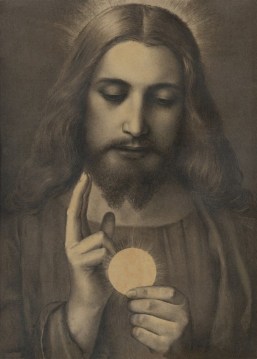
My mother taught us Judeo-Christian morality without proselytizing and without nagging.  I would come home and tell her about something I saw at school or on the street.  My mother would stop to listen.  If the action was good, she explained how I should imitate it, because it pleased God.  If the action was bad, she explained the importance of avoiding it, because it was a sin and sin could land you in hell.  My mom was not afraid of words like “sin” and “hell”.  Despite her use of those terms, I don’t suffer from PTSD.  If anything, I suffer from a guilty conscience when I mess up.

Not to drag this on too long, which I already have, when I was about 11 we had a fire that destroyed a good portion of our home.  It took several months to rebuild, paint and do whatever else they do when they rescue a house.  How would I know?  I was only 11.

I’ll never forget standing outside at 3:00 AM on a very cold March morning, in my PJs and a blanket, watching flames come out of one of the upstairs windows.  When the fire was finally out, I asked my mother, “What are we going to do?”  My mom was very quiet for a moment.  Then she said, “I have no idea.  Let’s not worry about that now.  Let’s find a warm place to sleep.  God always has a plan and he will tell us what to do when the time is right.”  This was a belief that she instilled in us from childhood.  “God has a plan.”  And “Only God knows.”  We were always assured that Providence was taking care of us.

Like any good Judeo-Christian, we worshipped every weekend and on holy days as well.  There was  no such thing as sleeping in and not going to Church until you were old enough to pay your own bills.

The best thing that I learned from my mother was love of God and love of neighbor.  I saw my mom take in kids whose parents could not care for them and they would live with us until the parents were ready to take them home.  One child lived with us about three months.  I saw my mother stop inside the church on her way home to visit the Blessed Sacrament.

12313767_1724552867778905_4437807418574257125_n

I was not asked if I wanted to come in.  I just naturally followed and knelt in front of the tabernacle.  There was no doubt that Christ lived in that little box.  There was no excuse for driving or walking by the church and not stopping to say hello to its sovereign resident.

Remembering these things, I believe that at the moment of her death, whatever faults my mother had were outshined by her perseveration when it came to handing down the faith to her children.  This is the first and most important vocation of parenting.

The roof over the head, the food on the table, the school tuition, and medical bills were all covered.  But as my mother once said, “Giving your kids the material things they need won’t get them to heaven.  No bikes allowed in heaven.  You have to give more.”

70 x 7 = ?


During the last few months we have been bombarded with all kinds of news about people’s personal sins, much of which is none of our business.  We have also seen an increase of attacks on the Holy Father, mostly by Catholics, to our shame.  He is attacked becafingerpointinguse he was not clear on “this” or because he does not say “that”, which we believe, he should say.  Some people have gone as far as to declare that his soul is lost and needs to be saved by “us”.  We make all kinds of statements about the sins of others.  Rarely do we blog or post about our own sins.

Where am I going with this?  It’s very simple.  When we are baptized our parents and sponsors are asked to respond on our behalf, “Do you believe what the Catholic Church teaches?”  We renew this profession several times during the year during different liturgical celebrations

As I was growing up, one of the beliefs that I was taught was very Catholic was God’s forgiveness and mercy.  God forgives and once he absolves, he does not hold on to the memory of our sins.

“Do not be angry beyond measure, Lord; do not remember our sins forever,” (Is 64:9).  The prophet reminds us that God DOES NOT remember our sins forever.  In plain English, He doesn’t hold a grudge against sinners.

This begs the question, why can’t Catholics “Be perfect, therefore, as [our] heavenly Father is perfect,” (Matt 5:48).

How many times do we whine, complain and criticize another person for being a sinner, before we realize that it’s time to drop it and move on?  Maybe we need a clicker to help us remember the number of times that we must forgive those who trespass as we want to be forgiven when we trespass the Law of God.

“Then Peter came and said to him, ‘Lord, if another member of the church sins against me, how often should I forgive? As many as seven times?’  Jesus said to him, ‘Not seven times, but, I tell you, seventy times seven.” (Matt 18: 21-22)

PopeFrancisConfession

Published in: on April 23, 2016 at 5:57 PM  Leave a Comment  

The Joy of Love and the Burden of Anger – Amoris Laetitia and Onus Irae


How-The-Human-Nervous-System-WorksI have to share this, because I must be missing something.  I’m more than half-way through Amoris Laetitia.  I just finished the “infamous” Chapter Eight.

As I read through this document, I can see some statements that need further clarification or better wording, simply because most people do not think in Spanish and write in Latin or Italian.  That’s an unusual cross-over.  As one who speaks Spanish and Italian, I reread those expressions that sounded odd to my Anglophone ear, repeating them to myself in Spanish and realized, “Oh, this is the way an Argentine would say X; whereas a European or an American would say it this other way.”

Contrary to what the Blogisterium is saying, I did find where the Holy Father makes some very precise points.  Marriage is indissoluble.  A relationship between homosexual persons can in no way be elevated to the level of marriage.  We cannot disregard the rules, just because time changes. And the exception is not the rule.

I can appreciate the fact that he describes what is happening in marriage and family life in First World countries and even in South American middle class society.  His description is quite accurate.  I can testify to this as one who has lived on three continents and four countries.  It’s not a pretty picture, but it is what it is and we, Catholics and non-Catholics, have to begin to help heal the wounded, where they’re at, while at the same time teach the younger generation what they need to know before marriage, to avoid more casualties in the future.  I believe this is the tone of this exhortation.  We have to fight to secularist perception of love and commitment.

I don’t get the impression that the Holy Father is trying to change rules, disciplines, traditions, moral laws or doctrines.  He means to paint a portrait of what love, marriage and family should be and what it is in many parts of our society.  We don’t like the picture, but it won’t go away because we don’t like it.  We have to attack the problem with a double barrel, palliative and preventative.

In short, I can’t find anything that is heretical or new, other than the pastoral approach that the Holy Father suggests.  I use that word, because he is suggesting, not demanding.

In addition, I don’t agree with the manner in which some people speak about the Holy Father and the exhortation.  There are many things that people in positions of authority do and say that may upset us.  That does not give us the right to call the Vicar of Christ a heretic, Modernist, agent of the devil, or any other such labels.

If there is one thing that our holy Father Saint Francis taught not only his brothers and sisters, but also the people of his day, was to speak and think about the pope, bishops and other clergy with reverence and humility.  He had no problems seeing weaknesses, nor did he have problems defending what he believed to be true.  But he had a very serious problem with any Franciscan or lay person who spoke disrespectfully about the pope or the rest of the clergy.

The argument, “I’m not a Franciscan,” doesn’t apply here; because Francis’ example of holiness, humility, charity, respect and submission was for the benefit of the entire Church, not just for those in his religious family.

When reading the exhortation, do not be afraid to disagree or to ask for clarification; but run away from the temptation to malign the good name of anyone, especially the Vicar of Christ.  He does not have to be perfect to command our respect.  This was made very clear by the Council of Trent and Vatican II.

Humble people who ask questions, offer suggestions, and show respect get further ahead than those who are hostile. Hostility creates distance between people.  It does not build bridges of communication and reflection.

Published in: on April 14, 2016 at 12:11 PM  Leave a Comment  

AMORIS LAETITIA: Advice for Mature Catholics


FRANCIS COAT OF ARMSI’ve been reading some commentaries on the Holy Father’s apostolic exhortation, “Amoris Laetitia”. I’d like to point out some errors that we have to avoid.

First — we need to read the document very carefully, pray over it, and read it again before we comment on it.

Second — let us remember that an apostolic exhortaion is not a catechism. Do not expect an apostolic exhortation to repeat what is already stated in every catechism of every generation. I use the admonitions of St. Francis of Assisi as an example. If you read them, you’ll not find anything in his admonitions that is already stated in the Rule and Constitutions. The admonitions are reflections that flow from the study and observance of the Gospel. The same principle applies to an apostolic exhortation.

Third — Do not let others determine what you should like or not like about the exhortation. Nor should you allow others to tell you that something is great or something is bad without giving you a specific example.

Fourth — If there is something that you find problematic, quote it when you share it. Dissect it so that others know what you find to be a problem. Leave an opening for others to agree or disagree with you. Dialogue is essential in understanding these writings.

Fifth — Because something is not mentioned in the apostolic exhortation, it does not mean that the Church has neglected a particular point or doctrine. Apostolic exhortations, like any other writing, must flow. Sometimes a specific statement or subject makes the writing sound awkward and does not add to what the Holy Father is saying.

Sixth — Remember, extreme reactions, to the left or to the right, are equally misguided. Extremes are circular. Eventually, the extreme left meets the extreme right at some point on the other side of the circle.

Seventh — Pay close attention to the citations that the exhortation includes from the writings of Blessed Paul VI, Saint John Paul II and other Church documents. This is an attempt to connect the present with the past. To understand the connections, one needs to read carefully.

Eighth — Notice that the exhortation makes three kinds of statements: admonitions, doctrine, and pastoral recommendations. We are used to apostolic exhortations being admonitions, pastoral or dogmatic. This particular exhortation blends the three.

Ninth — Remember respect. One is allowed to disagree with the pope. Saints and other theologians have done so in the past. However, none of them have ever been disrespectful in expressing their disagreements. We don’t hear them calling popes: Modernists, eretics, diabolical, dumb, mentally ill, or apostates. Name calling is never appropriate, especially when it applies to our parents, spouses, children and popes. Who of us would dare apply any of these labels to a loved one, because we believe him or her to be in error? Usually, we try to point out the error. This may lead to heated discussions, but the conversation limits itself to the subject on the table, not the character of the participants. We owe the Holy Father reverence, obedience and respect.

Tenth — Let us be humble and keep in mind that our opinions are not absolute truth, even when we quote truth. That which we quote may be true, but our understanding and application of said truth may be mistaken. We must be open to hearing opinions of those who do not think as we do. We must discuss our concerns with those who are knowledgeable in theology and who are authorized to teach it: parish priests, religious educators, Catholic theologians, Catholic theology teachers, many religious brothers and sisters who are trained in theology and Christian Spirituality.

I hope these points will help you as you navigate through this or any other papal writing.

http://w2.vatican.va/content/francesco/en/apost_exhortations/documents/papa-francesco_esortazione-ap_20160319_amoris-laetitia.html

Schizophrenic Mercy and Pregnancy Don’t Belong in the Same Sentence


The brothers have bSt_Francis_embraceeen following the development of a bill in Utah that requires anesthesia for any ‘fetus’ 20 weeks or older, before an abortion can take place.

Let’s get this right. According to these legislators and their medical advisers, the child in the womb, whom they choose to call by his developmental stage, fetus, instead of human being or child, . . . this child feels pain when being killed during a ‘late term’ abortion. The merciful thing to do is to dull the child’s brain so that he feels no pain as he is being killed.

This begs the question, “Since when do mercy and murder belong in the same sentence?”

If legislators and healthcare professionals believe that the fetus feels pain, then they know that it is very much alive and very much like any other child, just physically immature. Physical immaturity has never been a criterion for killing someone who has done no wrong to anyone, nor threatens anyone.

The weak argument ‘the health of the mother’ does not justify killing a child. If the mother’s life is in danger, it is not the child in the womb who has hurt her or made her sick. She is ill and in danger because of some biological problem that may have surfaced during the pregnancy or was present before the pregnancy. The mother is not under attack by the child.

Chucky is a fictitious and probably diabolical character. Pregnant women do not carry demonic little boys or girls in their womb.

Therefore, the idea that an abortion, especially a late term abortion, may be executed after the 20th week of pregnancy if the life of the mother is in danger is not merciful to the mother or the child. The child is not the cause of the danger. The medical problem does not necessarily go away once you kill the child. You may find yourself having to kill every child the woman conceives, unless the medical problem is addressed and remedied. The other option is sterilization or celibacy to avoid future pregnancies.

The very idea that we can kill a child in her mother’s womb, when she is not_disposableold enough to survive outside the womb, as an act of mercy toward the mother is crazy. To compound the insanity, this group in Utah has agreed to extend mercy to the little girl by passing a law that requires that the abortionist anesthetize the child before killing her.

This kind of mercy defies all logic. It defies human rights, the right to be born. It defies the natural end of medical care, “Do no harm.” It defies the advancements that we have made in technology and medicine that gives a little girl a fighting chance to live and would protect the life of a mother in danger.

Physicians can induce labor at 22 weeks of pregnancy or they can resort to Divine Physiciansurgically removing the baby from the womb and provide an artificial environment for her to thrive. We have the technology.

If universities and government spent less money on technology to spy on people and medical schools spent less money testing how to manipulate a human being’s genetic map, to please the parent who wants a little boy rather than a little girl, and invest money and time in artificial environments and other life preserving technology, we would not be having this discussion. We would simply do the second best thing to natural labor, remove the little boy from his mother’s womb and place him in an environment where he can mature.

Instead, we bastardize the word ‘mercy’ for the mother whose life is in danger and for the baby about to be executed by numbing an infant in order to kill it painlessly.

The truth of the matter is that the only thing being numbed is the conscience of legislators who are too cowardly to face the pro-abortion lobby and those abortionists who make a living from the exercise of “schizophrenic mercy.”

Life calls out to life

Life calls out to life

Disclaimer: I take full responsibility for the content of this post. None of the brothers contributed to it, nor did they know that I was going to write it.

Fraternally,

Br. Jay

Published in: on March 31, 2016 at 12:04 PM  Leave a Comment  

Experiencing the Proximity of God


desert-judea

All too often we go looking for God only to experience frustration at not finding Him. Hence the temptation to think that “God has more important concerns than me” begins to grab hold of us. We begin to believe that the habitual sins that torture us will always be our masters, because “God does not care. God is angry at me or I’m a lost cause”.

The real problem is that we go looking for that which is right next to us.lighthouses-lighthouse-looking-wide-open-sea-horizon-cloud

Imagine the man who tells you that he has lost his mind. Have you ever considered how ridiculous this expression sounds if it’s taken literally? In order to make such a statement as “I’ve lost my mind” one must make use of the very thing that he believes has been lost.

The proximity of God is very similar.

Man cannot look for that of which he has no idea what it is and no experience. If we are looking for God, it’s because we have a sense of His existence. We can’t have a sense of His existence without knowledge. Finding God is not about feeling His presence. Sensual perceptions of God are gifts for a select few who can handle them. Finding God is about knowledge. Only the man who knows that God is closer to him than his own mind can find God, because he knows that God never lost sight of him.

cartujo

Published in: on February 23, 2016 at 12:06 PM  Leave a Comment  

Disagreement ≠ Aggression


The Holy Mass in the Extraordinary Form, Gregorian chant, the Holy Rosary, Benediction and Adoration, and many other devotions has been part of our Catholic tradition for centuries.  They should be allowed to live, encouraged and be made available when possible.  These are part of our Catholic patrimony, just as is the Mass of St. John Chrysostom, the Ambrosian Rite, the Maronite Rite and the Ordinary Form of the mass.   At some point in history, all of these were in their embryonic state.  As time passed, the traditions became more ingrained in the Catholic community and the rites and customs became more polished.  In other words, none of the older forms and rites was born as we know them today.  Truth and mystery don’t change, but structure and order do.  It is foolhardy to believe that the Ordinary Form of the Mass, the change in styles in how the papacy operates and the birth of newer devotions should be perfect and without need for adjustment here and there.

Imagine what would have happened if Pope St. Pius V had decided to throw out the different rites and forms of the mass of his time.  But he didn’t choose to do that.  On the contrary, he chose to take what was the best of the tradition, polish that which could be polished and jettison that which did not reflect the faith of the Church and the true nature of God.  All of this took time and painstaking labor.  Rumor has it that while St.  Pius V was in the process of consolidating the Tridentine form of the mass that we often refer to as the TLM or the Extraordinary Form (EF), he was not popular with everyone.  He faced some resistance.  Very often, those who resisted him sinned not because they disagreed with the reforms and ideas of St. Pius.  Their sin was worse.  It was the sin of detraction.  They didn’t simply disagree with Pope Pius; they tried to make him look like a fool.

Unfortunately the are elements in the Traditionalist Movement that don’t simply disagree with the Holy Father’s style, his projects, his manner of proceeding or even his way of life.  There are elements in the Movement that have taken it upon themselves to destroy a good man’s reputation.  If one reads some of the Traditionalist sites, one find sentences such as these.

On the Pope’s meeting with the Patriarch of Moscow

“Pope Francis needed the Moscow Patriarch to force him to say some obvious things”

 “An Orthodox Patriarch was needed to make the Church speak up on the family, Christian roots, abortion, and the persecution of Christians…, to make us Catholics say that leaves are green or that two plus two makes four.”

Reaction to the commissioning of the the Missionaries of Mercy by Pope Francis

“Missionaries of Mercy….Another Round of Stupidity from His Humbleness”

“The Missionaries of Mercy, Coming Soon to a Theater Near You”

 “Pope Francis is setting in motion an action which will result in a predictable reaction and he is using his masterful knowledge of psychology to manipulate poor simple minds who are convinced that the Pope is doing the world a favor.”

 On the Holy Father’s vision for the Church and his “ulterior” motives

“For Pope Bergoglio, the papacy is a vehicle for achieving what he dreams, what he wants, what he prefers, as opposed to what has been handed down to him for safekeeping. He intends to leave his personal stamp on the Church in a manner he hopes will be irreversible,”

On the Holy Father’s dignity

 “Then, under a cloud of mystery and bafflement, came Jorge Cardinal Mario Bergoglio . . . and this is what we saw: Francis on [the] logia”

 “It was a man dressed as a simple bishop, whose first words were a thudding banality: “Brothers and sisters, good evening!” A bishop dressed in white, waving to the crowd and telling them, strangely, that he had been elected “Bishop of Rome” for “the evangelization of this beautiful city,” for which he pointedly requested “the prayer of the people for their Bishop.” He was denuded of the traditional symbols of papal authority, later donning the papal stole only long enough to bestow the Apostolic Benediction, promptly removing it once the words were uttered. Even his dull metal pectoral cross was the same one he had worn in Buenos Aires.”

 “Bergoglio is such a loose cannon he’s careered right through the deck and smashed through the hull. A (bleep) from a (bleepin’) country.”

 “But Francis does not think like a Catholic. . . . his pronouncements appear so dated as to be almost deranged”


This not the way that a virtuous man disagrees with another man; the key to healthy disagreement is respect for the dignity and position of the other person.  These comments not only show a lack of respect for the Vicar of Christ, but they incite anger and even hatred.  These are not statements of disagreement.  These statements sound like deliberate attempts to disparage the reputation of none other than the Vicar of Jesus Christ.

One can place the points of disagreement on the table and proceed to present one’s objections to each point, without bringing down the person.  Our holy father St. Francis never allowed the brothers to speak against authority.  But he did allow them to disagree with anything they felt was dangerous to the soul.  He set the example for Christian debate.

I feel sad having to warn our brothers and our friends to be careful of the evil mindset that very often invades extremes, be they extreme liberalism or extreme conservatism.  There is nothing wrong with the traditional elements of our faith.  There is nothing wrong in preserving and making use of the richness of these elements, because they move thee soul closer to God.

Beware of the poisonous talk and accusations that often hide underneath the shroud of righteousness.  Do not be sucked in to such way of thinking, be it from the right or from the left.  Poison is poison, no matter what flavor it comes in.  Anything that detracts from the dignity of another person, calls into question his integrity without proof, and does damage to the reputation of one who is doing good for so many is evil.  Unfortunately, those who are posting these and similar comments all over the Internet do not realize that they are cooperating with evil, rather than defending the holy, which is what they really want to do.

There is nothing to prohibit the Franciscans of Life from participating in activities and services within the Traditionalist community.  These things are part of our Catholic heritage and they serve as channels of grace.  Franciscans of Life are never to participate in detraction of any kind and anyone, especially the Vicar of Jesus Christ, nor are they to associate with those who engage in such evil behavior.  They may disagree and engage in intellectual debates about points of disagreement, always speaking of and treating the person with the opposing point of view as a son or daughter of God and our brother whom we are sent to serve, not to judge.


Atonement or chocolate?


Lent is about to begin and many of us are thinking about what we want to give up. Here is the irony of it all. Some people give up chocolate. In fact, chocolate is the most common Lenten sacrifice, followed by dessert.
chocolate2

Let’s take this in baby steps. The whole idea of Lent is that it is a time of atonement. Now let’s get this straight. We sin against purity, honesty, loyalty, charity, faith, justice, detachment and many other things and virtues. Then we try to atone for all of this by giving up Hershey’s Kisses or ice-cream and apple pie? Sometimes we have to ask ourselves whether our Lenten sacrifices are somewhat presumptuous. We hope to atone for a multitude of sins with a few candy bars and some dessert; if we remember, we abstain from meat on Fridays during Lent.

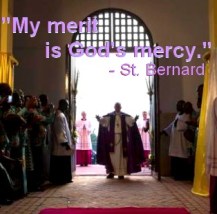
mercydoors

“My merit is God’s mercy.” -St. Bernard

Fortunately for us, God’s mercy far exceeds our foolishness. We often forget that Lent is a time of penance. Penance means atonement and conversion of manners.

We can never atone for our sins on our own. For this reason Lent culminates in Passion week, when Christ enters Jerusalem to be executed for our sins. Only the perfect man can offer the perfect act of atonement.

Our Lenten sacrifices must be offered with the ultimate sacrifice that Christ offered. During Lent we must be able to answer several questions with honesty.

1. Whether I am giving up chocolate or something else that I like, am I aware that I must also give up a specific sin? The external sacrifice is only a reminder of what we have to change. It does little good to give up a goody that we like while continuing to fall into the same sin.

2. If I add extra prayer or an extra mass to my weekly schedule do I take the time to meditate on the sin that I am trying to atone? Or do I offer the mass and prayers without much thought to what I have to change? The purpose of the extra mass and prayers is to bring us closer to God and draw us farther away from sin.

3. Finally, do I remember that Lent is to the Church what novitiate is to religious formation? During Lent I take a closer look at what needs improvement in my life and I work toward a conversion of manners. That is, a change in how I live my life with God and neighbor.

One cannot enter Lent with heart and soul without acknowledging one’s sins and the Passion of Christ, which restored to man the necessary graces to change and become like Adam before the Fall. If we ignore sin and the fact that we are sinners, Lent becomes just another tradition that leads nowhere. If we recognize sin, the Cross, and our need for a conversion of manners, Lent becomes a season of extraordinary grace.

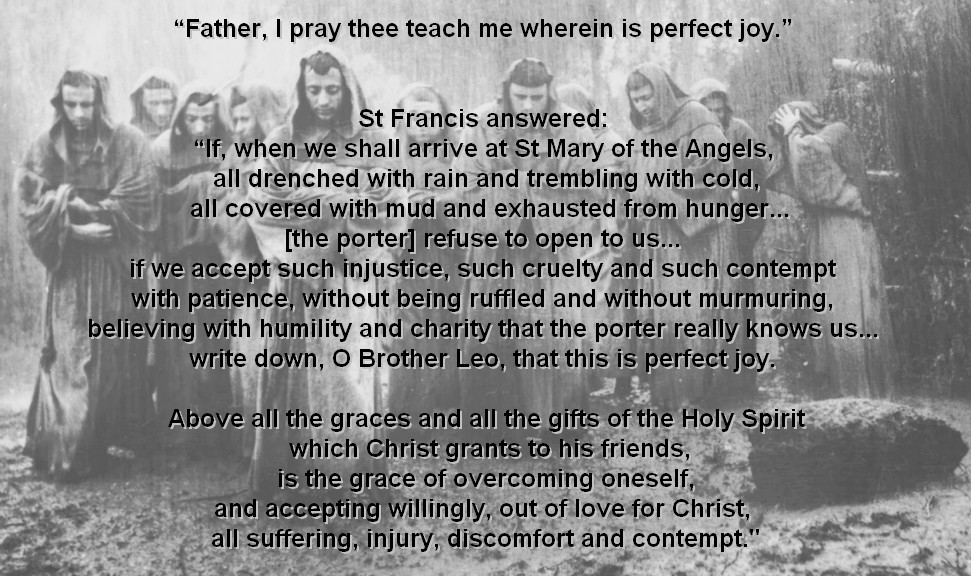
perfect_joy

The Perfect Joy of Saint Francis

Who said that you have to like the Pope?


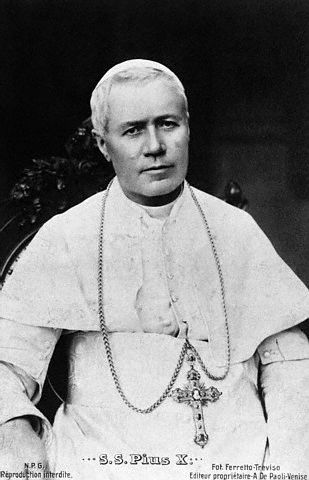
Saint Pius XI found this article to be very helpful and supportive of what I presented in an earlier post, “Under Whose Authority “

Apparently, I’m not the only one who is noticing that people are not making a distinction between what they like and what they don’t like but must learn to live with.

When I was growing up I hated almost every rule that my father imposed on us.  As far as I was concerned, he was a totalitarian despot.  I’ll let you in on a little secret.  I had no idea what a “totalitarian despot” meant.  But I had read the term in a social studies book in school and it sounded like an appropriate label for my dad.

As the years passed and I transitioned from a child to an adult, I came to realize that my father was just a very conservative man from a different generation.  The truth of the matter was that nothing that he imposed on us did any harm to our bodies, mind or souls.  Some of his rules and statements were arbitrary and others were right on the money.  As I became an adult, I jettisoned that which was arbitrary and incorporated into my script that which was truth.

The same applies the pope and others in the hierarchy.  Many times, just like our parents, they say things that are right on the money, but we don’t like what we’re hearing.  That does not mean they’re wrong.  Other times they say things using a language that is different, one that we’re not used to.  That does not mean that they’re wrong.  It simply means that we have to pay close attention to the nuances.  Finally, they may even say things that sound silly to us or not consistent with what came before.  That does not mean that they’re wrong either.  It means that they are speaking to a different generation, at a different time in history, using a different language, and building on what came before, not denying it.

If we don’t understand, it’s like not understanding our fathers or mothers.  We have to learn to respect the person and the office.  The rest is a matter of biting the bullet.  How many people would belittle their parents with such labels as “modernist, apostate, heretic, infidel, devil incarnate” and more, because the parent does not seem to tow the line with what we believe our parents should be saying or doing, in matters of home management, discipline and even faith formation of the children?

I remember that my father was a twice a year mass attendant.  It was not until my mother converted that he started to attend mass every Sunday.  My mom was a formidable woman.  If she said “We’re going to mass,” we were going to mass.  No discussions.  Having said that, I wouldn’t dare place my father on the stand and accuse him of being any of those things that some people attach to the Holy Father.  Respect and love do not depend on being right or being lovable.  Respect and love are a choice that we make to treat every man and woman as Christ did.  Let us never forget that even though Pilate was wrong, he was given authority from above to judge and execute Jesus.  Jesus acknowledged that authority.  He was not a fan of Pilate, but he was a loyal Son of the Father.

We too must learn to live in the Church as loyal sons of the Father.

One last note, this is not an attempt to bash Traditionalist Catholics or the Traditionalist movement.  There are many Catholics in the movement who are very holy people and exercise great self-control when they don’t like something and know how to speak with firmness and respect.  They are to be admired and applauded.

Some of you may like this article.  I thank Scott Eric Alt for sharing it.


Published in: on January 28, 2016 at 2:20 PM  Comments (1)