When scientists began to explore the world around them, they discovered that the Creator had given rules to the natural world: biology, physics, chemistry, earth science…it is contrary to the nature of the Creator to endow us with access to these rules so we may use them to destroy each other.
The question remains: “Why did the Creator intend humanity to explore the laws of nature and use their properties?” The God that called and keeps all things into existence, also ordered them throughout space and time to be observable and accessible to human beings, each at its proper time and place. God did not simply create nuclear physics as he created agriculture: how would nuclear physics enhance the lives of primitive human beings?
It stands to reason that the Creator, who lives outside of time and space, would have every branch of science “alive” in His mind for all eternity. God does not simply wake up one morning, yawn, trapse out of bed, and drag Himself to a kitchen for a cup of coffee before He can begin creating. Since God is alive beyond our space and time, He is continuously creating and informing nature of the laws and properties by which it is governed. He has given humanity the will to explore beyond our bubble, the intellect to comprehend what we find, and the virtues to govern how we use this knowledge.
We can identify an insurmountable amount of knowledge that man has discovered, wherein he abused his freedom, ignored virtue, and used what God has ingrained into nature to feed his obsession with power and wealth. Thus, we find ourselves engaged in wars and conflicts in Europe, Asia, Africa, the Middle East, the Americas, and the Pacific Ocean. Thanks to the irresponsible actions of scientists and politicians, almost everything that we have discovered is analyzed to determine if it can be weaponized for power and wealth. Not so often do scientists apply their discoveries for the good of humanity and world peace.
Take a count of the number of Russians and Ukrainians who have died, lost their families and homes, and financial resources, because two political opponents engage in a deadly military confrontation “for the nation’s good”. Ukrainians and Russians are using war machines that rely on the laws of physics and chemistry!
We should pray for the North Korean and American armed forces who engage daily in “tests” and military tease demonstrations meant to intimidate rather than invite each other to the table of honest fraternal dialogue that seeks the good – especially of those who would be passive victims of political and military conflict that runs the risk of destroying human beings who have no voice in science or politics.
Like our holy father Saint Francis, the Franciscans of Life subscribe to the same practice of virtue: “Most High, all-powerful, all-good Lord, all praise is Yours, all glory, all honor, and all blessings“. Everything has been created by the same God who created humanity. All the laws of the universe are created by the Lawgiver, the triune God – Father, Son, and Holy Spirit. As did our holy father Saint Francis of Assisi, we do not think, we know that every human being is our brother or sister, because we all came into existence by the Will of the Father, were redeemed by the Son, and are guided by the voice of the Holy Spirit (if we care to listen). “And God looked upon all that He had made and, indeed, it was very good” (Genesis 1:31)
We believe that every scientific discovery has existed in the mind of God throughout eternity, and is discovered by us at a time, place, and by people who can use their discovery to enhance and protect humanity and the world.
Whether or not we evolved from a lower lifeform, came into existence because of the “Big Bang”, or were created in six days, should not be the questions on the table right now. The question on the table is: what are the means that God has given us to cooperate with the Divine Will: “I came that all may have life, and have it in abundance”?
At the same time, we have recently become aware of some “pro-life groups” rising to the spotlight not for their sacrificial, redemptive suffering, but for their controversial, divisive efforts to bash pro-life laws and to demand legal prosecution of mothers who have had an abortion. Examples include “End Abortion Now International”, “Not A Victim” (who were kind enough to address a response to us here), and “Free The States”.
One has to wonder whether any such supposedly Christian group is merely a “bona fide” extremist fringe of the Pro-Life Movement, or if some are actual “fifth columns” of the opposition, started with the intent to bring disrepute to the Movement and cause disgregation from within…
Such an attitude is reminiscent of those who, at the foot of the Cross, believed themselves righteous in the eyes of both God and men in crucifying the Lord of glory.
The Gospel of life is life-saving and life-changing. Holy Mother Church has never endorsed such zealotry.
We are called to approach the Crucified Christ with compassion and empathy – like Our Lady and St. John – not with insidious intents, like those who scorned Him, or pierced the Sacred Heart with a spear.
The Pro-Life Movement has always focused on providing men and women in crisis pregnancies with the support they need to choose life, as well as post-abortion healing.
That is not a denial of basic truths. The Church has firmly declared that abortion is intrinsically evil, a position that “has not changed and remains unchangeable“. Those who procure an abortion not only commit a mortal sin, but incur automatic excommunication (can. 1397).
That being said: excommunication is not “shunning”, but a “medicinal penalty”…a call to repentance and conversion, so that the healing process may begin, and the person may be successfully reintegrated within the heart of the Church, the mystical body of Christ.
Furthermore, the Church – imitating Her Spouse in great mercy and compassion – has highlighted several factors that may prevent automatic excommunication (can. 1321-1325). For example:
“No one is punished unless the external violation of a law or precept, committed by the person, is gravely imputable by reason of malice or negligence.”
Also: “a person who acted due to physical force [or] coerced by grave fear” or “a person who has not yet completed the sixteenth year of age” do not incur this penalty.
As far as sin goes: there is a significant difference between objectivity and subjectivity.
We agree that a person is a person from the very instant of conception – this is not a religious dogma, but merely a common scientific fact – therefore the taking of an unborn person’s life is, objectively, murder.
For subjective guilt, however, the person must have full knowledge of the sin and deliberately consent to it – factors these that are often lacking when the mother is very young and/or subject to grave pressure (even abuse) from family or partner, or psychological pressure and fear due to abandonment, isolation, and poverty.
We do not wish to deny justice, but we do wish to affirm mercy and compassion.
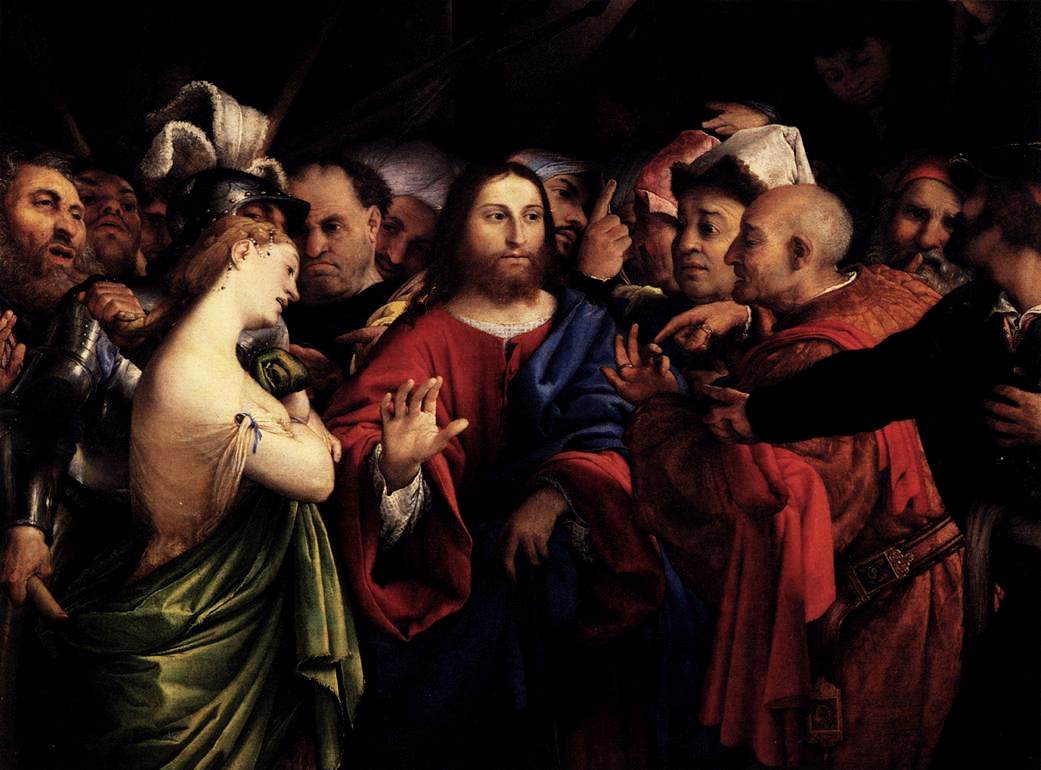
Meditate on how Christ kept the crowd from passing the sentence of law on the adulteress who stood guilty, and personally forgave her, commanding her to “go and sin no more”.
We are frankly much more concerned with those who profit from the death of the unborn, and in particular those who enable or commit such murder, failing to uphold the fundamental ethical standards of the medical field (doctors and nurses involved in the practice), and those who – as hard to write as it is to read – sell the aborted unborn’s body parts, or (mis)use them for unethical scientific research.
We constantly pray for, and invite them to practice medicine and scientific research in a life-affirming way. We also support organizations (such as And Then There Were None – Prolife Outreach) that specifically help abortion workers quit and find a different job that does not involve the killing of unborn children.
May the Lord of life strengthen us, protect us, and unite us, through the intercession of the Ever-Virgin Mary, our Immaculate Mother!
<<How good and pleasant it is when brethren live together in unity!>> – Psalm 132
“Love lives through sacrifice and is nourished by giving. Without sacrifice, there is no love.”
Today we celebrate someone whose short life was an embodiment of these words: St. Rose of Lima.
Born Isabel Flores in 1586 in Lima (Peru), she felt called by God from a very young age, consecrating herself to Him at the age of 10 and practicing great austerities which she offered as redemptive suffering. She wore a thick circlet of silver on her head which, unbeknownst to others, was studded on the inside like a crown of thorns.
Forensic reconstruction of the face of St. Rose (2015). Click for details.
She received Confirmation by St. Turibius with the name “Rose of St. Mary”, thus consecrating the nickname she bore from childhood. She bravely opposed her parents’ wishes in order to give herself entirely to Christ. With the eccentricity typical of many saints, she rejected the admiration of her beauty by cutting her hair and rubbing her face with pepper to produce disfiguring blotches.
Forbidden by her parents to become a nun, she imitated her model (St. Catherine of Siena) and joined the Third Order of St. Dominic. She then built and lived in a hermitage in the garden of the family home. A great penitent and mystic, she only left her hermitage to attend Church or to serve the needy – particularly the indios who suffered great discrimination. In time, she set up a room in the family house where she cared for homeless children, the elderly, and the sick. She would say:
<<When we serve the poor and the sick we serve Jesus. We must not fail to help our neighbors, because in them we serve Jesus.>>
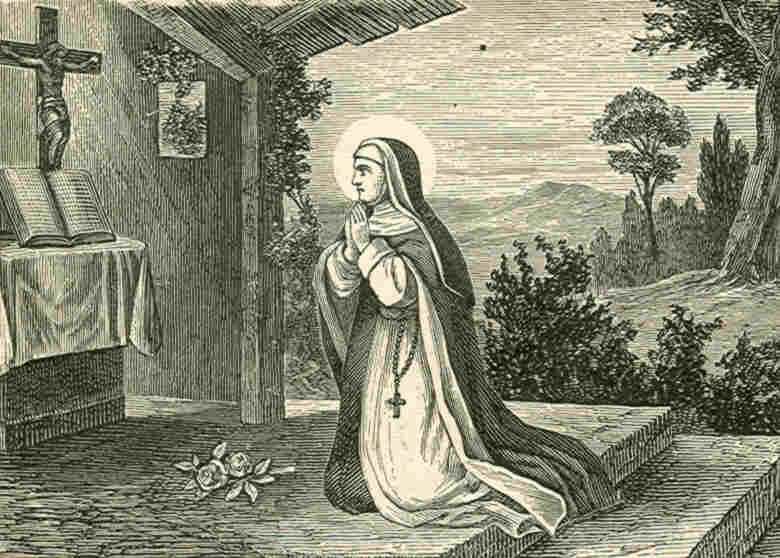
St. Rosa in her hermitage, source of engraving unknown. (Click for more)
On top of her penances and illnesses, she was often tormented by the devil, but she received reassurance by another Third Order Dominican from Lima: St. Martin de Porres. When someone brought her to the attention of Inquisition interrogators, they quickly affirmed that she was under the influence of divine grace. She had many visions of divine origin, including one in which the Lord called her “Rose of my heart“. She deeply and sincerely loved Christ, and once wrote:
<<Without the burden of afflictions it is impossible to reach the height of grace. The gift of grace increases as the struggle increases. Apart from the Cross, there is no other ladder by which we may get to Heaven.>>
In 1614, severely ill, she was forced by her family to relocate to the house of a devout family who tended to her care (currently, her Monastery stands in this place). There she died 3 years later, aged 31. Her holiness was so well-known, that such crowds gathered as to cause her funeral to be delayed by several days. She was privately buried in the cloister of the Church of St. Dominic at her own request.
St. Rose of Lima and St. Martin de Porres – author unknown
She was beatified in 1668 and canonized only 3 years later. She was proclaimed the Primary Patron of the New World, and was celebrated as the first canonized saint of the Americas.
Disclaimer: the information on this site is not intended or implied to be a substitute for professional medical or spiritual advice, diagnosis, or treatment. For physical / psychological issues, please discuss the matter with your P.C.P. and/or seek anger management or mental health counseling. There is absolutely nothing wrong with doing so, nor are you “crazy”, if you take proactive steps for the sake of your health and of your mind. For spiritual issues, please amend your life, increase your life of prayer (particularly Confession and Mass attendance, as well as reading the Gospels and praying the Rosary) and discuss matters with your pastor.
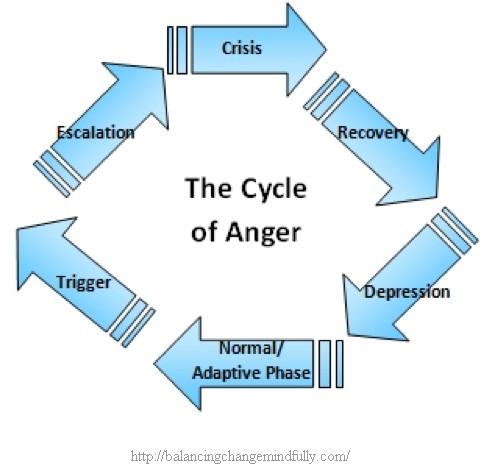
Hot-button issues bear one characteristic aspect: they incite emotional responses from the reader. Such responses can easily escalate into violence, either overtly or covertly, as we have been witnessing recently across the Nation.
We have to be very careful to monitor our emotions and regulate them so as not to lose control of ourselves and do things that will hurt ourselves – as well as others – and fuel our rage as time passes and our control over our passions becomes weaker.
Rage has a way of leading one to self-destruction in the search for peace. Sometimes it can lead to “self-medicating” with drugs or alcohol, or other addictive substances and behaviors. Their relief is short. The person then moves on to bigger and more “efficient” ways of expressing the anger. That is when anger can become physical: the destruction of property, for example.
If one is not stopped, such action only feeds the fire of Hell within, which keeps the anger burning with a flame that never runs out of fuel.
When destruction of property fails to suffocate the interior rage, the person then turns on living beings – animals first, then human beings – trying in every possible way to control them, provoke them, or bully them.
By that point, Satan is satisfied: he has been allowed to lead the person into serious evil. At this level, the person starts to make excuses instead of working on recovering interior peace. “See what you made me do?” or “If you had done it my way, we wouldn’t be having this problem“.
The demons sit back and laugh: the more one deflects the less they resolve their problem. The rage that has grown in the interior life distorts reality. If a real problem is distorted, any attempt to solve it is severely crippled.
To avoid all of the above, we must begin with ourselves. We must sit back and try to understand what is it that is truly provoking our rage. We usually see that what we are seeing is really the outer shell of a rotten egg… that rot can be something that has nothing to do with the target of one’s fury. It is only when we identify what really makes us angry that we can determine whether it has anything to do with us, or even if we are rightfully angry at all.
If we are justifiably angry, we have regained control over our emotions. Those feelings may not go away, but at least we can exert our free will and authority over our mind and emotions.
Any action that blinds our intelligence can lead us to the behaviors and damage that we described above.
Here are some additional online resources related to this topic.
In this videoMsgr. Rossetti – licensed psychologist and appointed exorcist – outlines in an introductory fashion what to do if you think you have demons affecting you: he discusses effective spiritual practices, including the use of sacraments, sacramentals, and appropriate deliverance prayers.
note –while this link has prayers cleared for laity, their website does have resources specifically intended for (and restricted to) clerics, whom we humbly encourage to read.
On this Solemnity of the Most Sacred Heart of Jesus, the Supreme Court of the United States has formally held that the United States Constitution does not confer a right to abortion.
Furthermore, SCOTUS overruled both “Roe v. Wade” and “Planned Parenthood v. Casey” and stated that, in the United States, “the authority to regulate abortion is returned to the people and their elected representatives“.
We wish to quote some salient points from the Statement:
the Constitution makes no express reference to a right to obtain an abortion
procuring an abortion is not a fundamental constitutional right
the right to abortion is not deeply rooted in the Nation’s history and tradition
the Fourteenth Amendment clearly does not protect the right to an abortion
Roe and Casey have led to the distortion of many important but unrelated legal doctrines…that effect provides further support for overruling those decisions
The Court emphasizes that this decision concerns the constitutional right to abortion and no other right.
A few more points worth quoting from the SCOTUS Statement:
until a few years before Roe, no federal or state court had recognized such a right. Nor had any scholarly treatise. Indeed, abortion had long been a crime in every single State.
by the time the Fourteenth Amendment was adopted, three-quarters of the States had made abortion a crime at any stage of pregnancy
Finally, the Court considers whether a right to obtain an abortion is part of a broader entrenched right that is supported by other precedents. The Court concludes the right to obtain an abortion cannot be justified as a component of such a right.
The nature of the Court’s error. Like the infamous decision in Plessy v. Ferguson, Roe was also egregiously wrong and on a collision course with the Constitution from the day it was decided. Casey perpetuated its errors
An even more glaring deficiency was Roe’s failure to justify the critical distinction it drew between pre- and post-viability abortions. The arbitrary viability line, which Casey termed Roe’s central rule, has not found much support among philosophers and ethicists […] viability has changed over time and is heavily dependent on factors—such as medical advances and the availability of quality medical care—that have nothing to do with the characteristics of a fetus.
Mississippi’s Gestational Age Act is supported by the Mississippi Legislature’s specific findings, which include the State’s asserted interest in “protecting the life of the unborn.” These legitimate interests provide a rational basis for the Gestational Age Act, and it follows that respondents’ constitutional challenge must fail.
Today’s decision of the US Supreme Court overturning the fateful Roe v. Wade is certainly welcomed by all those who recognize that human life begins at conception and that this is a scientific and biological fact and not merely a religious belief or ideological theory. As such the unborn child should be welcomed in life and protected by law. […]
We hope that dismantling Roe will allow legislation protecting the unborn to move forward in our state legislatures and to survive constitutional challenges in the future.
Abortion too often is seen as the solution to an unforeseen problem, a fall back position if contraception failed or was not used. But abortion is no solution — and it is no right. It is a wrong, a grievous wrong that has prematurely ended the lives of more than 60 million souls in this country alone since 1973.
A number of sources, among which we quote this one(without by this intending to endorse in any way the source) have summarized the current situation as far as individual States banning abortion:
Would ban most or all abortions.
Bbortion bans within one month
Abortion bans within weeks or months
Abortion bans uncertain
Abortion likely to remain for a while
(Click on map to enhance)
We encourage you to continue praying – in private, with your community, even with us – and to find out locally (as well as through the major Catholic institutions and associations) how you can continue supporting this aspect of the pro-life ministry at this crucial moment in the history of the United States.
The date chosen by Divine Providence is very fitting indeed. Today we celebrate Our Lord’s Most Sacred Heart, and tomorrow we celebrate the Immaculate Heart of Mary, ever-virgin, the most pure Theotokos who, when in her kindness she appeared at Fatima, promised triumph!
We continue united in prayer and action, against all violence and evil, proclaiming the sanctity of human life and reaching out – as much if not more than before – to women and men facing a crisis pregnancy.
Most pro-life eyes are currently focused on one particular issue, namely the reversal of Roe v. Wade, etc. Surely this is due to the great hopes it has generated, after decades of prayer, penance, and advocacy…but also in no small part because of the dismal violence ensuing from the pro-abortion hordes (even locally), for which we have started a Rosary Crusade.
However, there is another critical pro-life issue that is spreading subtly, like poison, throughout several U.S. legislatures: euthanasia (assisted suicide).
The letter below comes from Mr. Alex Schadenberg, Executive Director of the Euthanasia Prevention Coalition (which has a USA chapter). It provides an excellent summary of the situation here in America. With his permission to share, we invite you to read it in detail, bearing in mind that what we are beginning to witness in our Country is merely the tip of the iceberg.
Other countries either already have, or are in the process of approving laws that legalize this killing, not only of adults with full faculties but also of:
[For clarification on the map above, passive euthanasia refers to denying someone, who is not otherwise dying, the basic necessaries of life to intentionally cause their death – and it is notmorally acceptable. We will have a more in-depth article on these teachings published in the near future. ]
If we do not take action now – primarily and particularly through prayer and penance, followed by being proactive on these life issues in our ministries – when will we? Will we wait for euthanasia to (continue to) be legalized across the USA? Will it take a new kind ofRoe v Wade, this time Euthanasia-centered, for the pro-life movement to stand up and speak up in unison against these evils?
Bear in mind that the Church infallibly upholds the sanctity and dignity of all human life – from conception to natural death!
Without further ado, here’s the letter (click on each page to enlarge!)
More than half of the Justices of the Supreme Court of the United States have agreed on a draft that reviews the constitutionality of Roe v Way as it was written in 1973. The conclusive verdict is to be handed down later this spring or early summer.
As Franciscans of Life, this review has captured our attention. More importantly, we have become aware that people who object to this review have gathered to protest in front of the Justices’ homes, without regard for the safety of the families who live inside. As citizens, we have the right to protest and communicate our demands to the government in peaceful and safe demonstrations. There is, however, no moral justification for the dangers arising when angry mobs gather, especially before the homes of private citizens. Spouses, children, grandchildren, seniors living in the homes are not public figures. They have the right to a quiet and peaceful life as the rest of us. Disturbance of the peace and instilling fear in private citizens is immoral and – as we have stated above – dangerous to the collective safety.
I’m saying all of this because, as Franciscans of Life, we know that human life is sacred from conception to natural death. Life is the supernatural act of God in favor of humanity, a humanity that His Son, Jesus Christ, would assume at a precise moment in history, society, and ethnicity.
We believe that the Second Person of the Holy Trinity became man, developed in the womb of a human mother, was born of her, and was unjustly executed on the cross. Taking on our human nature side by side with His divine nature, and being executed, was an act of God’s love for humanity.
Our Country fought a civil war for many reasons, the most important being the belief that no human being can own another human being – not even one’s mother. We have no ownership of the person in the womb, thus killing an unborn baby is claiming ownership and authority that is not ours. Abortion is a false belief that the preborn child has less rights than a slave, and that the child in the womb is as much the property of the mother as a lung.
The Franciscans of Life are inviting everyone we know to join our Rosary Crusade, to pray that Congress and state governments will pass laws that protect the right to life of every person, from conception to natural death.
We invite you, your family, and friends to pray the Holy Rosary every Saturday, starting this Saturday, which the Church reserves for Our Heavenly Mother, until the Saturday before the Feast of the Assumption (August 13).
You don’t have to go to the parish church. You can pray from your home, car, or any quiet place. Just pray. The Rosary is the most powerful private prayer in our armory. Popes have called it “scourge of the devil,” “treasure of graces,” “heavenly instrument,” “glory of the Church”.
We have observed in the span of a few days, some major celebrations, namely the feast of our patron Saint Maximilian Kolbe OFM Conv., confessor and martyr, and the great Solemnity of the Assumption of Our Lady!
The fact that St. Max was martyred on the vigil of the Assumption and his body cremated in the ovens of Auschwitz is no coincidence. He spent his existence at the service of his Queen, striving to earn the two spiritual crowns She had offered him when just a boy – purity and martyrdom – and he once wrote to his brothers:
Would that my ashes might be scattered to the four winds in order to bring Jesus to souls, to bring to them the cause of His Mother and our Mary!
We invite you to read more about St. Max on our blog as well as on St. Max’s Parish website, but in this article we’d like to highlight the glory that is the Assumption (known in some places as the Dormition) of the Blessed Virgin Mary!
Had you attended the 11 AM Mass this morning at St. Max, you’d have heard a wonderful theological sermon on the subject by our good friend and “out of the ordinary” preacher, Dcn. Pierre. You were right – I should have taken notes!
We will however do our best to celebrate the momentous occurrence with a few words.
Fr. Ludwig Ott wrote in his eminent work on Dogmatic Theology, “it seems fitting that Mary’s body, which was by nature mortal, should be, in conformity with that of her Divine Son, subject to the general law of death…” and, on that same note, St. John Damascene wrote:
It was fitting that she, who had kept her virginity intact in childbirth, should keep her own body free from all corruption even after death. It was fitting that she, who had carried the Creator as a child at her breast, should dwell in the divine tabernacles. It was fitting that the spouse, whom the Father had taken to himself, should live in the divine mansions. It was fitting that she, who had seen her Son upon the cross and who had thereby received into her heart the sword of sorrow which she had escaped in the act of giving birth to him, should look upon him as he sits with the Father. It was fitting that God’s Mother should possess what belongs to her Son, and that she should be honored by every creature as the Mother and as the handmaid of God.
“Encomium in Dormitionem Dei Genetricis Semperque Virginis Mariae, Hom. II, n. 14” (as quoted by Ven. Pius XII)
and, in a more “eastern” tone, bishop Theoteknos of Livia wrote:
It was fitting that the most holy body of Mary, God-bearing body, receptacle of God, divinized, incorruptible, illuminated by divine grace and full glory, should be entrusted to the earth for a little while and raised up to heaven in Glory, with her soul pleasing to God.
The Venerable Pius XII, who infallibly defined what the Church always believed on this matter in his Apostolic Constitution “Muneficentissimus Deus” on November 1st, 1950, also wrote in the same document:
Immaculate in her conception, a most perfect virgin in her divine motherhood, the noble associate of the divine Redeemer who has won a complete triumph over sin and its consequences, finally obtained, as the supreme culmination of her privileges, that she should be preserved free from the corruption of the tomb and that, like her own Son, having overcome death, she might be taken up body and soul to the glory of heaven where, as Queen, she sits in splendor at the right hand of her Son, the immortal King of the Ages.
Such is a summary of a doctrine that was already believed and accepted by Christianity from the very beginning! Indeed Ven. Pius XII reminds us:
the liturgy of the Church does not engender the Catholic faith, but rather springs from it, in such a way that the practices of the sacred worship proceed from the faith as the fruit comes from the tree…it follows that the holy Fathers and the great Doctors, in the homilies and sermons they gave the people on this feast day, did not draw their teaching from the feast itself as from a primary source, but rather they spoke of this doctrine as something already known and accepted by Christ’s faithful
I delivered to you first of all, which I also received: how that Christ died for our sins, according to the scriptures: and that he was buried, and that he rose again the third day, according to the scriptures: and that he was seen by Cephas; and after that by the eleven.
[…] if the dead rise not again, neither is Christ risen again. And if Christ be not risen again, your faith is vain […] But now Christ is risen from the dead, the firstfruits of them that sleep […]
For by a man came death, and by a man the resurrection of the dead. And as in Adam all die, so also in Christ all shall be made alive. But every one in their own order: the firstfruits Christ, then they that are of Christ, who have believed in his coming.
Our Lord Jesus Christ never found more perfect believer in his coming that She who conceived Him in her immaculate womb, so much so that Christ Himself found it fitting to underscore this aspect of the Immaculata’s glory:
A certain woman from the crowd, lifting up her voice, said to him: “Blessed is the womb that bore thee…” But He said: “Rather, blessed are they who hear the word of God, and keep it!”
How does this happen to me, that the mother of my Lord should come to me? Blessed are you who believed that what was spoken to you by the Lord would be fulfilled!
This blessing, this glory, is in primis of Our Lady, the perfect disciple. In imitation of Christ, she died, was buried, rose again, and she was seen by so many witnesses (we bear in mind in a special way St. Francis, St. Maximilian Kolbe and St. Bernadette…though so many from the very early days of the Church attest to Her visits and support…).
Yet, a most kind mother, and in perfect alignment with the divine economy, she wills us to be her imitators in her belief until that glorious day when we, too, will be reunited to our glorified bodies and rejoice with the angels and the saints, God willing.
What Deacon Pierre stated this morning, St. Ambrose made extremely clear in one of his own homilies:
Elizabeth was filled with the Holy Spirit after conceiving a son; Mary was filled before. “You are blessed,” said Elizabeth, “because you have believed.”
You too are blessed because you have heard and believed. The soul of every believer conceives and brings forth the Word of God and recognizes his works. Let Mary’s soul be in each of you to glorify the Lord. Let her spirit be in each of you to rejoice in the Lord. Christ has only one Mother in the flesh, but we all bring forth Christ by faith. Every soul free from contamination of sin and inviolate in its purity can receive the Word of God.
Oh, Immaculata, beloved mother, who in your great sorrow consoled your Lord and Savior on the way to Calvary, rejoice and be glad, for today He in His great joy consoles you on the way to Eternity! Pray for us, your children, your servants! We are all yours, o Mary, this is our fiat to you, o Immaculata, that through your intercession we poor sinners may be made fit instruments to extend the kingdom of Christ!
Image edited by one of our brothers, based on the icon of the IV Station of the Cross at St Maximilian Kolbe Parish
“[A] lovely, subdued melody floated through the forest above the solitary and forsaken little chapel of Our Lady of the Angels, just when a shepherd was passing by with his sheep. The shepherd turned pale and looked up at the fallen-in roof, but there was nothing to be seen. “Have they got an organ now?” he wondered. He pushed the little door open. All was dark and still within. Overhead the music was becoming more and more heavenly, as a hundred golden voices seemed to mingle in counterpoint. “Lord, how beautiful! It’s enough to make one want to die, it’s so beautiful!” he thought, for he was so moved that he could not utter a word. His heart told him what was happening…”
August 2nd is coming along, and with it, two happy occasions – the “Great Pardon” (as the Portiuncula Indulgence is known in some places) and the “flocking” of the Franciscans of Life (regulars and externs) to the Motherhouse after a bit of a hiatus from community gatherings.
There will be a note of sadness, as our dearest brother Leo will not be with us for the first time…since his passing on May 26th of 2020. Four hundred years earlier, St. Philip Neri passed away on the very same day. Let’s pray for the repose of our dear brother Leo, and ask in a special way for the intercession of St. Philip, “Pippo Buono” as the Romans called him due to his kind and gentle disposition… All who knew our Brother Leo knew of his natural gentleness and kindness, which is what, perhaps, inspired our Superior to name him Leo at Novitiate, in honor of that first brother Leo, a gentle soul whom St. Francis used to call “ you little lamb of God”.
But this article – which from its prolixity you will most likely know is authored by brother Bernardo – is not so much about our community as it is about the Portiuncula Indulgence! We will go over the Porziuncola, “Santa Maria degli Angeli”, and then we will dig a bit more into the matter of indulgences – a matter of heavenly and motherly love – and its relationship to the wonderful Sacrament of Confession – so, please, stay with us!
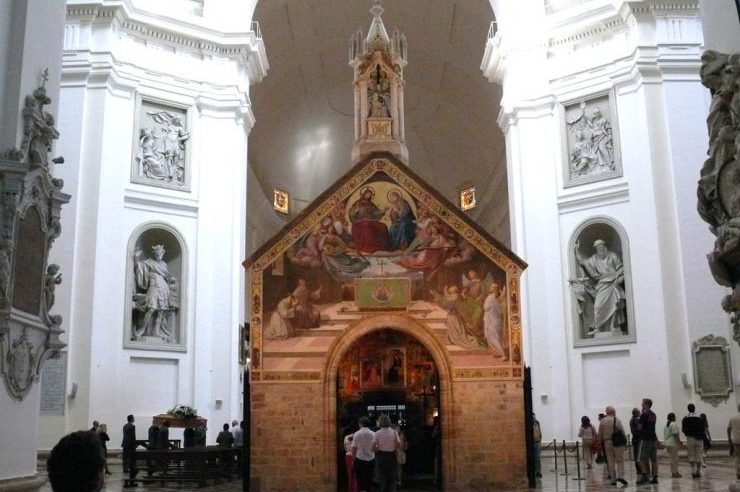
On Saint Mary of the Angels, called Porziuncola (“little portion“)
1704 illustration from “Collis Paradisi Amœnitas, seu Sacri Conventus Assisiensis Historiæ“, as found on p.107 of “The Story of Assisi” by Lina Duff Gordon
If we dig a bit, we find a nice summary by Pope Benedict XV on the salient points regarding this very special place, which we summarize below:
It is taught that in the days of Pope Liberius (IV century) pilgrims from Palestine brought here a fragment of the sepulcher of the Blessed Virgin Mary, that is to say, the place of the Assumption, and thus was the place named Saint Mary of the Angels.
Here St. Francis wrote the rule approved by Pope Innocent III (“admonished by divine vision”, writes Benedict XV).
Here Clare, the noble virgin of Assisi, having forsaken the world, was clothed in the poor Franciscan habit, and instituted the second Order.
Here also originated the Third Franciscan Order [note of clarification: that of the Penitents, whose ancient rule we follow].
By this place were the first Chapters of the Franciscan order, including the famous “Chapter of Matts” of Pentecost.
Here St. Francis, after refusing six times, finally agreed that he and the brothers would share a meal with St. Clare and the sisters. It is recounted that their souls glared so brightly that the people from the surrounding areas thought the forest was ablaze.
Here St. Francis had a vision of the Lord and Our Lady, and went to Perugia to implore Pope Honorius III in 1216 for a most extraordinary and unusual favor: “that anyone who comes [to the Portiuncola] confessed and penitent be absolved from the punishment and guilt from the day of baptism to the day and hour of entrance in said church”. Such an indulgence was unheard of in those days! Yet, three times did the Supreme Pontiff give his assent. Upon the Saint rejoicing and departing his presence, came the Pope’s affectionate remark and the Saint’s moving reply:
“You simpleton, where are you going? What proof do you carry?”
“Your word suffices to me! I seek no further instrument, other than the Virgin Mary be the parchment, Christ the notary, and the Angels the witnesses!”.
There is a pious story coming from the nephew of one of the early brothers, who accompanied Francis back from Perugia to Assisi. They stopped to rest a while and, upon awakening, St. Francis said: “Brother Masseo,I tell you from God that the Indulgence that the Supreme Pontiff gave me is confirmed in heaven!”
Here Francis stood by the entrance after returning from Perugia and, stretching his fatherly arms, said to all:
“I want to send you all to heaven!
I announce to you an Indulgence
which I obtained from the mouth of the Supreme Pontiff…”
St. Francis at the Portiuncola, 1226
Here Francis implored his Guardian and his brothers to take him to die.
“No, no! To Our Lady of the Angels! – Francis begged – I want to die where I began!” (from “The Perfect Joy of St. Francis”, by Timmermans)
Finally, here he died, naked on the floor (ref. Job 1:21), a broken, small 43-year-old man, marked with the Stigmata of the Lord he so loved, surrounded by his brothers who so loved him, under the loud warbling of hundreds of larks soaring heavenward…St. Francis of Assisi, whom Holy Church would call the Seraphic Father, the Alter Christus, but who, in his letters, introduced himself as little brother Francis….the little one….your servant…a worthless and weak man.
On the Great Pardon, or the Portiuncula Indulgence
One scholar wrote:
“it seems incredible that a perpetual plenary indulgence with no attached condition of almsgiving or personal sacrifice should have been granted in favor of an obscure chapel in Umbria. Yet we have six sworn statements of contemporaries, regulations of the General Chapters of the Order, and 53 pontifical acts of the XIVth century either confirming it or defending it”.
The Catholic Historical Review, Vol. 24, No. 4 (Jan., 1939), p. 466
This is just as St. Francis had told Pope Honorius: “If it is the work of God, He will make it manifest” – and this He has done – through His Church – through the centuries!
Of this plenary indulgence can benefit the faithful – for themselves or for a deceased as suffrage –
(a) either by directly visiting Santa Maria degli Angeli and the Porziuncola shrine it contains (in Assisi)
…and they will recite a Pater (Our Father) to reaffirm their dignity as children of God received in Baptism
…and they will pray for the intentions of the Supreme Pontiff, condition which is satisfied by reciting one Pater and one Ave, although one may also recite any other prayer if recited for this intention. This would also be fittingly performed on the same day.
On Indulgences in general, and Plenary Indulgences in particular – or, how to gain one
To benefit from an indulgence, the person must be baptized, must not be excommunicated, and hopefully in the state of grace. Furthermore, one must have the general intention of gaining the indulgence, and of course carry out the works mentioned above.
Most importantly, however, for the indulgence to be plenary and not partial, it requires the exclusion of all attachment to sin, even venial sin.
This has been historically considered the most complex of the conditions: no man, however holy, can call himself free of sin, but many can honestly call themselves free of affection towards sin, to the best of their knowledge!
In 2004, the Apostolic Penitentiary used the following language:
…as long as they are totally free from any desire to relapse into sin…
“The requirement is not “freedom from all sin“, rather, that “there is no sin which the soul is unwilling to renounce”.
A person should know if he’s in compliance, because an attachment implies a refusal to fix a situation – as when sometimes, deep down, we don’t want to let go of certain sins, even if “small”.
This is quite different from weakness, or habitual sin that is being battled…to souls in these situations, the Church is ready to aid!”
Confession, Reparation…and Indulgences – or, how they are closely related!
Pray to the good Lord to take away any desire, albeit small or hidden, for sins both grave and venial, and go as far as to bring forth in your heart a salutary hatred of sin, remembering that God is all-good and all-loving and that even the smallest sin displeases him.
After all, what is an indulgenceif not but a “continuation” of the Sacrament of Penance? That is to say, “a remission before God of temporal punishment for sins whose guilt is already forgiven”?
We know that the matter of sacramental Confession is the acts of the penitent: contrition, confession and satisfaction.
say NO to sin!
We should strive to a perfect contrition (CCC 1452) and perfect contrition builds more and more on detachment from sin, first from the “great” sins and then from the “small” ones! A devout soul, then, should not find much difficulty in complying with the requirement to be detached from all sin. The rest of us should simply keep working our way there, knowing that it is entirely up to us to not want to sin, while it is entirely a gift of God to bless us with the grace needed to overcome sin. “Without me – says the Lord – you can do nothing” (Jn 15:5), but He also says, “be perfect, as your heavenly Father is perfect” (Mt 5:48), and later, to St. Paul, “my grace is enough for you” (2Cor 12:9).
In the form of the Sacrament, “I absolve you”, assuming the penitent did not put any obstacles, such as willfully lying or withholding, or later failing to do any satisfaction, but rather that the penitent had a sincere sorrow for their sins and a firm resolution to avoid them in the future, all their sins from the very moment of Baptism (or from their last Absolution) till that moment are forgiven and remitted through the power of the Keys – even sins that you may have forgotten to mention!
Yet, such forgiveness and remission of sin does not imply the forgiveness of the temporal punishment due to every sin.
Sin carries both a stain and a punishment. When the stain is cleansed from the soul by sacramental absolution, the temporal punishment is not always remitted, except through the remedy of satisfaction, by avoiding near occasions of sin, resolving to sin no more, and doing works of penance. Such satisfaction also atones to our Mother the Church, whom we often forget is injured by our sins, and it also deters others from sin by way of example.
Last but not least, temporal punishment is the reason for Purgatory…the ecclesia dolens… Someone reported that St. Padre Pio once said: “let us do our Purgatory here on earth…by accepting everything from God’s hand“. (ref. Job 1:21…again…)
Interiorly, satisfaction heals the wound caused by sin. St. Bernard taught that “the stain is removed from the soul by God’s mercy, while the wound is healed through the remedy of penance…and even then, some scar remains”.
In this we see the great love and care of Holy Mother Church, Bride of Christ and as such minister of Redemption, custodian of that great treasury of expiatory works of Christ and the Saints! By granting an Indulgence, our Mother the Church is coming to our help in ridding us of the temporal punishment we have accumulated by our sins – or, when we apply the indulgence to a faithful departed, to help us help one another!
St. John Paul II summarized this wonderfully in 1999:
“[indulgence] is a sensitive subject, which has suffered historical misunderstandings […]
The starting-point for understanding indulgences is the abundance of God’s mercy revealed in the Cross of Christ. The crucified Jesus is the great “indulgence” that the Father has offered humanity through the forgiveness of sins […] in the logic of the covenant, which is the heart of the whole economy of salvation, this gift does not reach us without our acceptance and response. […]
[I]t is not difficult to understand how reconciliation with God, although based on a free and abundant offer of mercy, at the same time implies an arduous process which involves the individual’s personal effort and the Church’s sacramental work.
For the forgiveness of sins committed after Baptism, this process is centered on the sacrament of Penance, but it continues after the sacramental celebration. The person must be gradually “healed” of the negative effects which sin has caused in him (what the theological tradition calls the “punishments” […] Precisely for the sake of complete healing, the sinner is called to undertake a journey of conversion towards the fullness of love.
The temporal punishment itself serves as “medicine” to the extent that the person allows it to challenge him to undertake his own profound conversion. This is the meaning of the “satisfaction” required in the sacrament of Penance.
The meaning of indulgences must be seen against this background of man’s total renewal by the grace of Christ the Redeemer through the Church’s ministry.
The Church has a treasury, then, which is “dispensed” as it were through indulgences. This “distribution” should not be understood as a sort of automatic transfer, as if we were speaking of “things”. It is instead the expression of the Church’s full confidence of being heard by the Father when – in view of Christ’s merits and, by his gift, those of Our Lady and the saints – she asks Him to mitigate or cancel the painful aspect of punishment by fostering its medicinal aspect through other channels of grace. In the unfathomable mystery of divine wisdom, this gift of intercession can also benefit the faithful departed […]
We can see, then, how indulgences, far from being a sort of “discount” on the duty of conversion, are instead an aid to its prompt, generous and radical fulfilment. This is required to such an extent that the spiritual condition for receiving a plenary indulgence is the exclusion “of all attachment to sin, even venial sin” […]
Therefore, it would be a mistake to think that we can receive this gift by simply performing certain outward acts. On the contrary, they are required as the expression and support of our progress in conversion. They particularly show our faith in God’s mercy and in the marvellous reality of communion, which Christ has achieved by indissolubly uniting the Church to himself as his Body and Bride.”
Holy Week is an invitation by Christ and the Church to meditate not only on the suffering of Christ on the cross, but especially on the cause of Christ’s Passion. For centuries, we Christians have proclaimed that Christ died on the cross to redeem us. But very rarely do we say It is my sins that led Christ to be executed by the cruelest form of capital punishment of the time.
Today we hear many sermons and read many spiritual books on God’s love for us and our obligation to love God and others. These points are true. However, we rarely hear Your sins contributed to the cruel passion of Christ. It has become unfashionable to speak to people directly about personal sin. The excuse that we most frequently hear is It is not for me to judge. It is true that it is not for us to judge the state of another person’s soul. But we certainly have a duty to reflect on the state of our soul.
It is not enough to say I have always been a good person, or I have always tried to do the best that I could in any given situation. These statements are like the clouds that block the light of the sun from reaching us on a dreary day. I am a good person is often cloud cover.
When mediating on the suffering of Christ and His Blessed Mother we must ask ourselves some very important questions, such as:
Do I tell myself that God is a loving god who, in the end, will pardon my sins and welcome me to heaven?
That is presuming God’s mercy while not considering his justice. The mercy of God is an absolute truth. So is His justice. We must pay for our sins. Otherwise, we are guilty of the sin of presumption.
Have I ever believed myself or my community to be superior to others?
Looking down at others is a sin of arrogance. It may be true that I live a more virtuous life than the person next door. But we can only see external acts, we do not see what God sees. He sees the whole person. He does not measure a person’s value by their race, culture, achievements, sexual orientation, parentage, or religion. God knows about all these things and what He blesses and what He condemns. However, Christ tells us, “do not judge, or you too will be judged” (Matt 7:1).
Do I truly believe doctrine and moral law that the Church teaches, or do I create my own doctrine and my own moral law?
Maybe I question the Church’s teaching on same sex marriage, abortion, birth control, marriage of divorcees, sex outside of marriage celibacy.
Maybe I believe that Christ is in the host, but not that the host is the real body and blood of Christ. However, the host is not an outer shell within which hides the Lord Jesus Christ…the consecrate host is the Lord Jesus Christ. Christ makes this very clear when He told his followers, “Whoever eats my flesh and drinks my blood has eternal life . . . “(Jn 6:54).
Do I look down on non-Catholics or maybe I do not ever think about non-Catholics?
Catholics are often indifferent to other religions, believe that all religions are the same, or are hostile toward non-Catholics. When we are indifferent about the existence of other religions, we are indifferent about our own Catholic religion. We fail to see the need to bring others into the fulness of the Gospel which subsists only in the Catholic Church.
To subscribe to the idea that all religions are the same is as intelligent as believing that all cultures are the same. They are not the same. Other religions have some beliefs that are the same as Catholic beliefs, and some beliefs that are completely mistaken because they ignore or distort Truth.
Hostility toward people of other faiths contradicts what Jesus has taught us.
Jesus was asked, “what must I do to inherit eternal life?”
“What is written in the Law?” he replied. “How do you read it?”
“‘Love the Lord your God with all your heart and with all your soul and with all your strength and with all your mind’; and ‘Love your neighbor as yourself.” “
Do this and you will live.” (Lk 10:25-28)
I must never stay silent in the face of error for the sake of political correctness. To do so is to give consent to the error. But I must never consider myself above others. Truth comes from Christ, not from man.
If I consider myself above non-Catholics, then I am as wrong as they are. Because my Catholic faith is not of my creation, but a gift from God. I must share this gift whenever the situation presents itself, with respect and kindness. Never with aggression or condescension.
In conclusion, let us not think only those sins which are observable: adultery, impurity, injustice, slander, rudeness, vulgarity, passing up an opportunity to practice charity… We are guilty of many sins that are not easily observable and which we believe can be swept under the rugs. Yet, no sin in hidden from the sight of God. The nails that pierced the hands and feet of Christ are my sins along with those of others.




















 Franciscans of Life