Essay written in 2011
by +Dr. Franco Camarca (1950-2017)
Psychologist, Writer, Journalist
Father of Brother Bernardo, FFV
“The Providence, which rules the world…
…two Princes ordained in its behalf”.
Dante, Paradiso
Saint Francis of Assisi is perhaps the most “universal” Italian saint. We defined him “everyone’s Saint” to underscore this peculiarity of his person: venerated by Catholics but respected even by Muslims, when he joined a Crusade to preach the Good News, and studied by the Protestants, of whom Peter Sabatier wrote in 1893 the “Life” that has become a classic of world literature.
Assisi presents itself as a city dominated by a castle and surrounded by towers, fortified walls, and other constructions that immediately bring war to mind. Francis, of wealthy merchant family, contributed to those constructions, probably to defend the city against Perugia in one of the many wars that characterized his time. Francis lived between the 1100s and the 1200s: a time of wars between Christians and Saracens, Empire and Church, city and city, for prestige and commercial predominance. In the war against Perugia he was made prisoner for two years, 1202-03, and he was also sick for a long time. Once healed, he threw himself into a new adventure, but at Spoleto he was stopped by a new illness and by a vision that invited him to follow the example of Jesus and “rebuild the Church”.
What was the situation of the Church in that epoch?
Let’s briefly say that there was a deep popular displeasure against the excesses of wealth and corruption that characterized the high clergy. Preachers in the public squares condemned all of it, reminding all of the simple life preached by the Gospel. In Italy in the XI and XII centuries many social movements were born which united politics and religion, since political freedom and religious purity were values deeply sought after by the people.
Thus Dante wrote in Canto XI of “Paradiso”:
“The Providence, which rules the world…
…two Princes ordained in its behalf,
who should serve it as guides on either side.”
(Verses 28 & 35-36)
The “guides” to whom Dante refers are Saint Francis and Saint Dominic. Three more centuries awaited the necessary Reform of the Council of Trent, and a number of historians agree that without those powers of new purity triggered by the Franciscan and Dominican movements the Church would have suffered very grave damages.
His first companions and biographers called Francis “the herald of Christ”, “the invincible knight”, and the said he was “armed with the weapons of Christ”. In another contemporary work, “Speculum perfectionis”, he is compared with his disciples to the Knights of the Round Table. And the spouse – “dominam”, as one of his biographers says – of such knight was poverty, who appears symbolically in classical vestments in the frescoes of the great Giotto.
The Order of friars minor, his Rule, was approved by pope Innocent III, who also gave them permission to preach. Before we expose our thoughts on the Saint let us briefly mention some biographical notes, referring to the historical data of Martignetti (Italian Encyclopedia). Returned to Assisi, Francis founded with Saint Clare the “second order of the poor clares” and then went to preach the Gospel amidst the Saracens. His followers grew fast, reaching the thousands, but the Saint went back to preach to Egypt, where he was honored by the Sultan, and in Palestine. Returned to Italy in 1220 and leaving the direction of the Order to Pietro Cattani and eventually to friar Elias, he prepared the “first Rule” (1221) and then dictated the text of the “Second [Third] Rule” that pope Honorius III approved in 1223. Continuing in an intense spiritual life which included preaching – which did not impeded him to ‘invent’ in 1222 the Crèche that became one of the most intimate representations of Christmas – he founded the “Third order of the penitents”.
We thus reach 1224, when in a spiritual retreat of fasting on mount la Verna he received the stigmata.
Then we find his autograph writings, the “Laudes Dei” and the “Canticle of brother Sun” in which, according to authoritative reviewers, “the rigid Benedictine spirituality is overcome in favor of a new conception of Creation characterized by an exaltation of a sense of universal brotherhood”, and, we think, of a sort of mystical fusion with nature and thus with the omnipresent God.
The hymn begins with an invocation to God, followed by the sun “beautiful and radiant”, the moon and the stars “clear and precious and beautiful”; then the four elements: the earth, the water “useful and humble and precious and chaste”, the fire “beautiful and playful and robust and strong”, and the air.
Our Prezzolini, faculty of Columbia University, mentions that the adjectives applied by the Saint reveal a new interpretation of Nature and place it in a new relationship with Man. The hymn is not written in Latin but in the vulgate language of the people of Umbria, which for the first time assumes an artistic form, although preserving the simplicity and characteristics of the local dialect. The language is mixed with Latinized words; the verses do not have a regular metric yet there are many rhymes and assonances. The epilogue, according to Prezzolini, was added at the nearing of the Saint’s death in 1226, a death that Francis calls “sister”.
It is worth mentioning what Sapegno recalls in his History of literature: “It is certain that the hymn of grace, raised to the Creator by a beautiful world, admirable in its harmony and its ends, finds its roots not in an easy and superficial enthusiasm, but in the “labor pains” of ascesis and penance, from which the soul resurrects renewed, capable of contemplating the things and events of the earth with new, peaceful, and joyful eyes. The simple poetry of the Saint translates itself in the adjectives that accompany one step at a time the evocation of the creatures and they underscore the poetic aspect […] but the power and resonance of the hymn resides instead in the deep intimacy and novelty of the religious feeling that pervades it, outside and in a certain sense above pure poetry”.
The behavior of Saint Francis towards animals, with whom he spoke (like the wolf of Gubbio) opened a new field in painting: Giotto and his successors felt a great influence and even the architectonic structures of the churches of the Franciscan order displayed a new disposition of the altars, a new amplitude of the walls, a significant austerity in their entire edification.
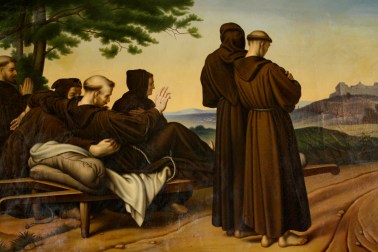
Towards the end of his life, with a serious illness in his eyes, Francis returned to Assisi and asked to be taken to Saint Mary of the Angels, where lying on the bare ground he reached the Lord that he so much loved in 1226.
Saint Francis was canonized by Gregory IX in 1228. His feast in the Catholic Church is October 4th and Pope Pius XII proclaimed him, with Saint Catherine of Siena, “Patron of Italy”.
It is interesting to note that many centuries later the charm and personality of Saint Francis still live. His fame is worldwide. Saint Francis remains one of those figures of Western civilization without whom our history would not be complete.
The Franciscans are today, and we witness it by our personal and direct experience, an imperishable and daily example for all the orders.
The letting go of Saint Francis was in actuality acquisition of a superior freedom and his poverty was the acquisition of spiritual wealth, and Jesus rewarded him with the gift of the stigmata.

 t of the brothers remained in Florida for Holy Week. Brother Bernardo and I flew to Virginia where we spend time with my daughter, son-in-law and my granddaughter, Katherine Marie Therese, who turned six-months during Holy Week. We also had a fantastic opportunity to surprise Brother Bernardo, whose birthday it was on April 13, Holy Thursday.
 s voluntarily stepped up to serve as Brother Superior’s caretaker and health monitor. He can tell when Brother Superior’s diabetes is too low or too high by looking at him and quickly dispenses the correct amount of insulin. He installed a railing on Father Superior’s bed after the superior fell twice during the night. Brother Superior’s vision is failing and everyday his legs grow weaker. He moves from a wheelchair, to a walker that Brother Bernardo purchased at a White Elephant Sale, to a cane with a cuff around the forearm. When Brother Jay must go anywhere, Brother Bernardo drives him and his medical equipment in the community’s van. This allows Brother Jay to run Project Joseph at the Archdiocesan level, give talks, teach religious education and work on his book.
 She breaks into a smile and reaches out to him as he approaches. We won’t mention that Brother Bernardo is quite attached to Katherine. He holds her, feeds her, rocks her to sleep and has even taken her on a short walk in her stroller.
 We have many good reasons for being forever grateful to Brother Bernardo. The least we could do was fly him to visit his beloved Katherine, feed him pizza for an entire day and formally incorporate him into the family. Brother Jay’s family has adopted him.
 an excellent physician and is properly cared for at home. We pray that he will be up and running soon. Brother Leo is one of those special souls who has a natural gift to bring peace, comfort and hope to the terminally ill and their families. He has served in hospice ministry for more than a decade. It’s an emotionally draining ministry.
 Divine Office five-times a day, quiet prayer and adoration, spiritual reading, mass, and service to the voiceless.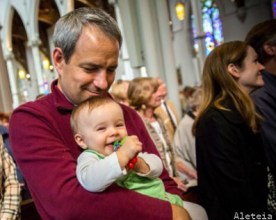




 Many people look at St. Francis of Assisi as someone to be admired, but too difficult to follow. We often hear, “St. Francis was a saint; I’m not.” That’s the point. St. Francis was not born a saint. He grew physically, emotionally, intellectually and spiritually. He became a saint through his efforts and the help of Grace.
 consecrated to the Immaculate and we make a fourth vow, to proclaim the Gospel of Life. Regular Brothers comes from the Latin “regula,” those who live in brotherhood guided by a rule of life.
 “You cannot glory; that, however, in which we may glory is in our infirmities, and in bearing daily the holy cross of our Lord Jesus Christ.” (Admonitions V, St. Francis of Assisi).
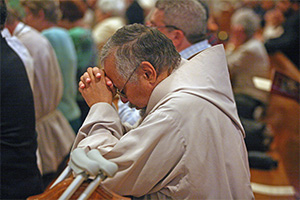 Divina, spiritual reading, silent prayer in solitude, keeping a log of our faults (the Culpa) and keeping a journal of God’s activity in our lives. Community worship, prayer, Eucharistic adoration, meals, recreation and apostolate are essential to the primitive Franciscan life.

 not do penance. A penitential life resounds a constant invitation to prayer and self-mastery
 that one is going to find much that is worthwhile on Facebook; but occasionally one runs into another person who thinks with clarity and shares his or her thoughts in such a way that encourages us to rise to higher moral ground and to a more intense life of virtue and prayer.
 a private relationship between the person who makes the vow, the people in his life and God. God does not call people into private relationships with him to the exclusion of everyone else. Even hermits, such as the Carthusians, embrace the cross in silence and solitude for the benefit of the Church as well as their benefit.
 something different from the rest of the baptized. He promises to do the same, but more perfectly or as close to perfection as is possible for him. In doing so he becomes a sign of life in the Kingdom of God.
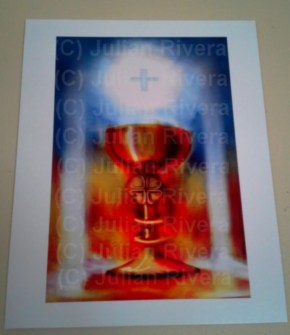 cartwheels to save us. He gives us the Scriptures. He gives us Himself through the Incarnation and the Eucharist. He shares His life with us through the sacraments. And he places many other sources of grace in the middle of the marketplace for the salvation of his people.
 rejecting the grace that God wishes to share with us through these states in life.
 rty and obedience to learn how to think and act with a pure heart, how to let go of the many things, people and places that redirect our attention away from God and we don’t need to be in vows to be bound to obey God as he reveals His will to us through Sacred Scripture, Jesus Christ and the Church.
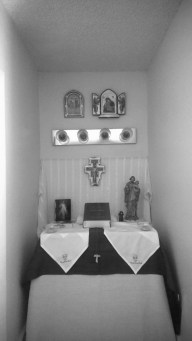 Those bound by a vow of obedience are to be the models of submission to the will of God, not the only people bound to submit to God’s will.

 the
the



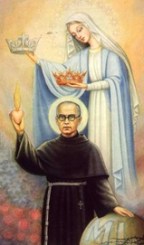 According to his parents’ and brother’s memories, Maximilian was typical pre-adolescent who had the ability to get under people’s skin like most kids in that age group. His mother often cried out in despair, “What’s to become of you Raymond? Note: He was born Raymond Kolbe. But there was something special about this apparent little magnet for trouble. His parents had taught him to pray. As a child, he knelt before Our Lady and asked her, “What is to become of me?” Our Lady gave him a choice between a crown of martyrdom and a crown of purity. Raymond chose both.
 First for youth – St. John Paul told the youth of the world, “Do not be afraid of Jesus Christ.” When Our Lady offered Raymond a choice between martyrdom and purity, he chose both. We think of this story and we swoon over this wonderful little boy who was so pious and so holy. We completely miss what God wants to teach us. Those who struggle, as did Raymond, are also called to a life of virtue and sacrifice. Prefabricated saints don’t need to practice heroic virtue or make heroic sacrifices. Sinners do.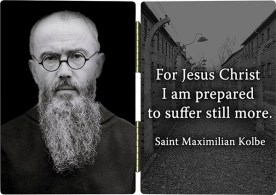
 remained open to the God of surprises rather than planning out their children’s lives in advance and trying to steer them into careers and marriages without consulting God’s plan for them. They educated their children in the faith, provided the academic education available to them and offered them guidance along the way. But they never owned their children. Their children belonged to God. When Christ called Raymond to become Brother Maximilian, it may have not been what Mr and Mrs Kolbe expected or planned, but they trusted. If this was truly the voice of God calling their son, he would be safe and they could offer him no better assurance of his happiness and salvation. If it was simply an illusion of youth, God would open their son’s eyes to the folly of his choice in life. Again, they trusted.
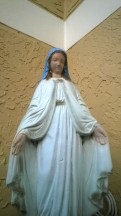 The lesson to be learned is that even when we are unsure what God wants from our children, if the choice is not a sinful one or a danger to to self or others, we can stand back and let the Immaculate guide. She can only guide our children to her Son. Her GPS is locked on Christ as the compass is locked on the North Pole. There is nothing to fear and much to be gained.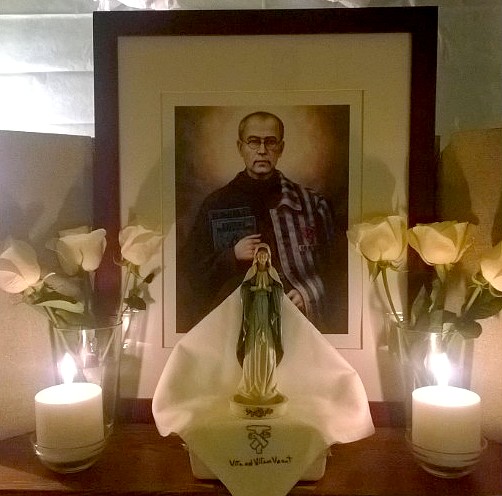
 3.
3. Franciscans of Life