Moral Reasoning Through the Complexity of Homosexuality


This is a very complex issue. It’s not as simple as people on both sides of the aisle want to make it. There are some basic principles that do help us understand what is right and wrong. Many people are not educated in these principles.

First: God reveals himself. He discloses himself to man through Sacred Scripture, also through sacred tradition, the baseball_throwingMagisterium of the Church, natural law, and logic.

We can’t just throw a bible verse at something and pretend we have it all figured out. All of these pieces must work together. They are all good, because they all come from the same divine origin.

Second: Faith enlightens reason. We must reason through these questions and let our faith inform us whether or not our reasoning is consistent with what God has revealed about his nature and the nature of man.

Third: People have to distinguish between the action and the person. They are not the same. When a five-year old kills his little brother with his father’s gun during a game of “cops and comicrobbers,” the action is contrary to the commandment, “Thou shall not kill.” However, the five-year old is not a murderer, because he neither intended to actually kill his sibling, nor is he knowledgeable of the commandment. The action remains evil; but the child is not culpable. We can condemn behaviors, but we have to be very careful not to judge people. That would be playing God.

Fourth: Juangel_appears_to_st_josephdging another person involves walking through his or her mind and conscience. One’s thoughts on any issue and one’s moral conscience are part of what is known as the “internal forum”. This is an area of human existence that no human being may trespass or attempt to read without an invitation from the individual who is the lawful guardian of his mind and conscience. We can explain why a certain action or behavior is wrong, but we may not pass judgment on the individual’s moral reasoning unless that person invites us to examine it with him, thus inviting us into the internal forum.


Fifth: There is a big difference between homosexual acts and homosexuality. A person with same sex attraction does not wake up one morning and decide to be gay. As he develops and goes through different life experiences, he becomes aware of his feelings in this area. On the other hand, people freely choose to engage in sexual behavior with a person of the same sex. Choosing to be attracted to the same sex is very rare. That which man does not choose can be neither a sin nor a virtue.

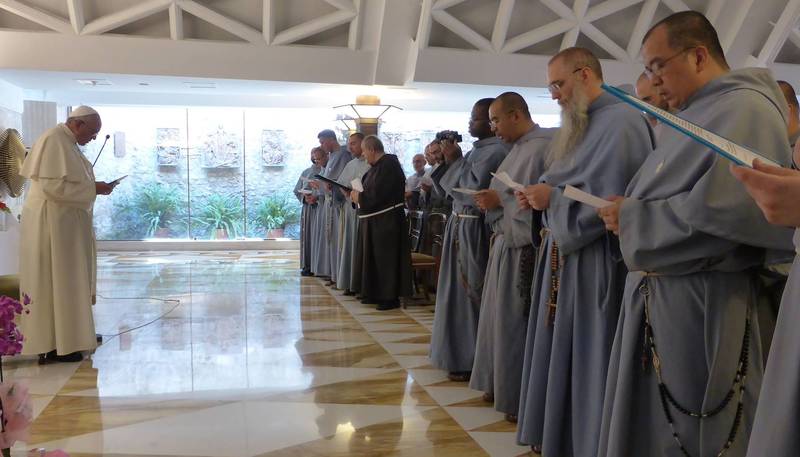
Pope_Francis_on_accompanying

Sixth: Homosexual acts, like heterosexual acts, are freely chosen by the parties involved (except in cases of violent force). The person(s) must use reason to determine whether an act is right or wrong. If the person is a man or woman of faith, that faith should confirm the correctness of his conclusion or point to its moral error.

right and wrongSeventh: Acting on faith and basing our actions on what God has disclosed to us about him, about us and about the relationship between the divine and the human is not the same as playing God. It is using that which makes us in the image and likeness of God to make right choices, that being knowledge of right and wrong.

Eighth: Standing in judgment of an action does not constitute godliness. It’s part of human reason and part of living in society. On the other hand, standing in judgment of the person involved in the action that we reject, IS playing God. No one has the right to judge the conscience of another human being, unless the other person opens up his heart and shares what is on his conscience.


[How to Help]

MEN AND WOMEN, LOVE AND SEX, GOD AND FREEDOM


I read a page on Facebook, of all places, that actually drew my attention to something wrong and something good.  I thought I’d share my thoughts on the subject.  The subject is pornography.

The page on Facebook correctly said that porn kills love.  It becomes an addiction that can destroy human relationships.  This is true.  To this must be added what this “new drug” does to our spiritual life.

cross_window_brick_wallAnything that becomes an obsession, porn, gambling, drinking or other disordered forms of pleasure and “recreation,” will create a wall between God and us.  It is not God who builds the wall.  On the contrary – God wants nothing more than to save us.  He has spent eternity tearing down the walls that man builds to keep Him out.

We believe that God made us in His image and likeness.  However, the porn industry tells us that we are created to take pleasure from each other.  Nowhere in the industry do we find the word, love.  Sex is completely divorced from love.  It is for pleasure and for profit.

Because we are made in the image and likeness of God, we are made to love.  God brought us into existence, not because he needs us, but because he loves us.  Out of love, he gives us knowledge, free will, the capacity to love, the ability to transcend from our world into eternity, and an immortal soul.  These are attributes that God shares with us.  Hence we are truly created in His image and likeness.

upset_coupleWhen someone caves in to porn or any other addictive and disturbing behavior, he or she starts down the path of slavery, because this becomes an obsession.  Gradually, our brain’s hardwiring is altered to the point that we no longer make a free choice regarding love, sex and interpersonal relationships.  We are driven by a hunger for something else; in this case it’s porn.

Here is the problem.  When man becomes driven by his obsessions, this drive erodes his free will to the point that the obsession becomes an addiction and that gift of free will that God gave us is forgotten.  We no longer choose to love.  On the contrary, in the case of this type of addiction, one is trapped in mythological love.  Myth is not real.  Therefore, what we see on the screen is not real love, but fantasy.  Since it is not real, it never fully satisfies our need to give and receive love.  When one’s need is not satisfied, one tends to seek a higher dosage and more frequent dosage of whatever drug one believes will “fix us”, hence the term, “a fix”.

Not all is lost.  On the contrary, there is hope and salvation from our addictions and disordered sexual drives.  The most powerful medicines are found in the sacraments.  Eucharist and confession are not magical solutions to life’s problems.  God is not a magician.  Eucharist and confession are acts of love.  Christ shares his life with us.  He restores us to health because he loves us.

Having said this, God builds on nature.  He does not change it.  There are some things that we have to do and that we can do to overcome our addictions and sexual obsessions.  We begin by examining how we view men and women.  A heterosexual male may see women as subordinate to men and see other men as antagonists.  021001-N-3228G-008He has to compete with other males or he has to refrain from seeing the good and the beautiful in other males, because it’s not the “manly” thing to do.  He has to prove to women that he is powerful. None of this is helpful thinking.

We must recover God’s vision of men and women.  We must remind ourselves tbride & groomhat men and women are our brothers and sisters.  They are equally beautiful and equally worth our attention and love.  Both sexes have much to offer through friendship, marriage, camaraderie, collegiality and other healthy relationships.
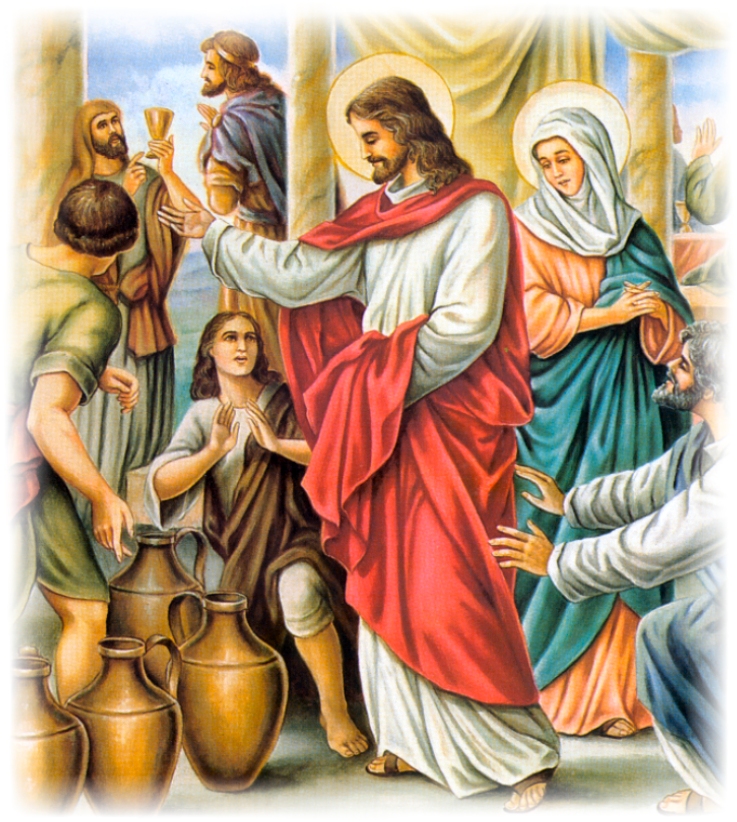
This must be followed by concrete action.  One must decide to change one’s behavior.  One of the best programs for people with addictions is the 12-Step program.  It works one day at a time.  Just as no one gets addicted to porn in 30 seconds or less, no one gets off it in 30 seconds or less either.  It’s a daily task.  The good thing is that God does not ask us to live more than one day at a time.  For all we know, today may be our last day on earth.  We must plan for today and as Jesus said, “Do not worry about tomorrow.”  When tomorrow becomes today, we plan for that day.  Each day, we plan to live that day free of our addiction.

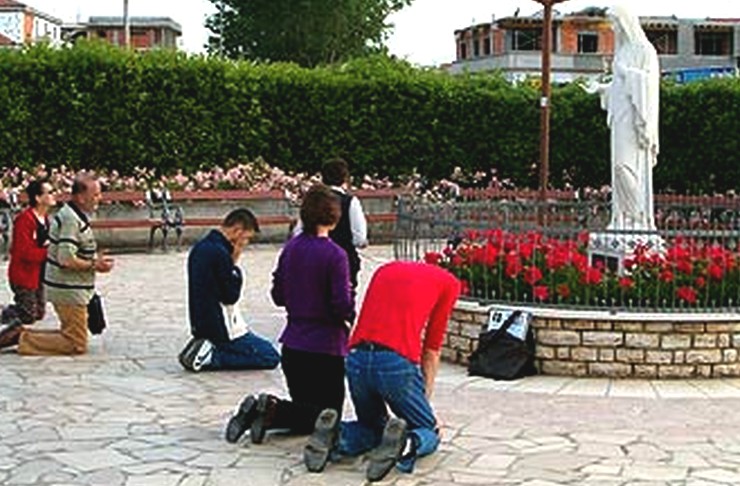
We must not forget the importance and the power of prayer.  Contrary to what some may believe, prayers are answered.  We may not always like the answer, but we receive an answer nonetheless.  The most powerful advocate and mentor in our struggle to live free of addictions and obsessions is the Immaculate.  She can stand as a barrier between us and that which can hurt us.  She soothes bruises that are often the product of our behavior.  Mary is the mother who reminds us that if we “do whatever he tells you” everything will be alright.

prayer_Our_Lady

I’d like to add the importance of community.  One need not join a community such as the Franciscans of Life to experience the common life.  But every man and woman must engage in relationships with other men and women.  These relationships must be productive; meaning that the relationship does well for the other person and for us.  We have to take the risk of friendship, real love, and openness to others.

It is true that human relationships are risky, because we can get hurt.  However, the hurt that we may experience in a human relationship is much easier to overcome than an addiction.  This hurt is the product of love.  We hurt because we first loved.  Had we not loved, we would not hurt.  Addiction is not the product of love, nor does it lead to love.  It’s not even self-serving.

When we remember that Christ is the firstborn of many brothers and sisters, we begin to heal as we view men and women through the eyes of Christ . . . as family, not prepackaged satisfaction.

B. Jay

Cana_joy

[How to Help]

Our new website is up!


We are proud to present our entirely re-designed community website!

new_website

Take a look at it at http://www.franciscansoflife.org and help yourself to donuts and soda while you are at it!

El discernimiento requiere de muchas rosquillas

He just visited our new website : )

A family celebration


This Saturday we had an interesting event, as both memorials of the Immaculate Heart of Mary and of St. Anthony of Padua coincided. For the Franciscan family, the day of St. Anthony is a feast. Since the Immaculate is our patroness, we wished to honor her in some way.

St_Anthony_and_Family

We decided to visit the Shrine of Our Lady of Charity by Biscayne Bay (Miami), where we would attend the midday mass in honor of the Immaculate Heart.

The legend of the statue of “la Caridad del Cobre”, as it is commonly known among the Cuban people, traces back to the 1500s, when it was found floating in the Nipe Bay (Holguin province) by three young slaves (“los tres Juanes”) from the copper mines. The statue was placed near the mines, first in a humble hut and eventually in a church. She was proclaimed the Patroness of Cuba in 1916 by Pope Benedict XV.

Our_Lady_of_Charity

The Cuban Exile to Miami retained its devotion to la Virgen de la Caridad, and one of its representatives, the Rev. Augustin Roman, began working with Archbishop Carroll to build a shrine in her honor.

Appointed Auxiliary Bishop of Miami in 1979, he would oversee its construction and serve as its rector up to the very last day of his life.

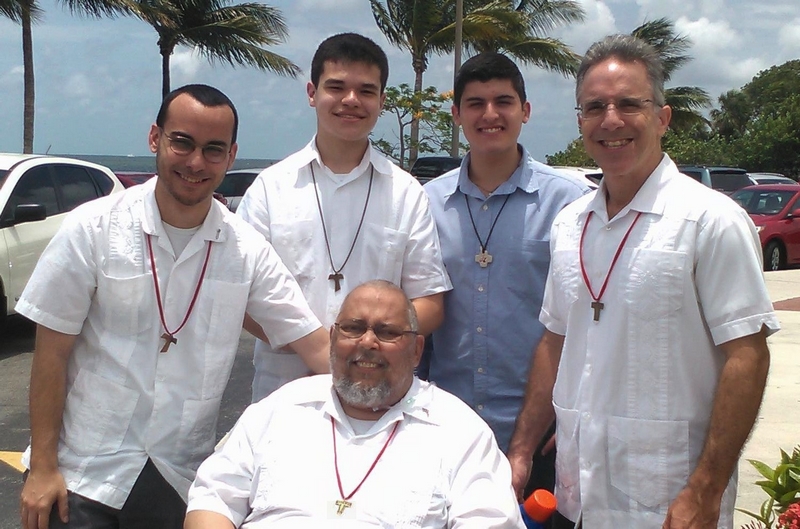
The brothers arrived at the Shrine around 11:30 am and were joined by a good friend.

WP_20150613_005b

Before Mass, presided by Fr. Rumin OFM, they had some time to admire the artwork inside the Shrine, along with the blessed replica of the statue that arrived from Cuba in 1961.

WP_20150613_003

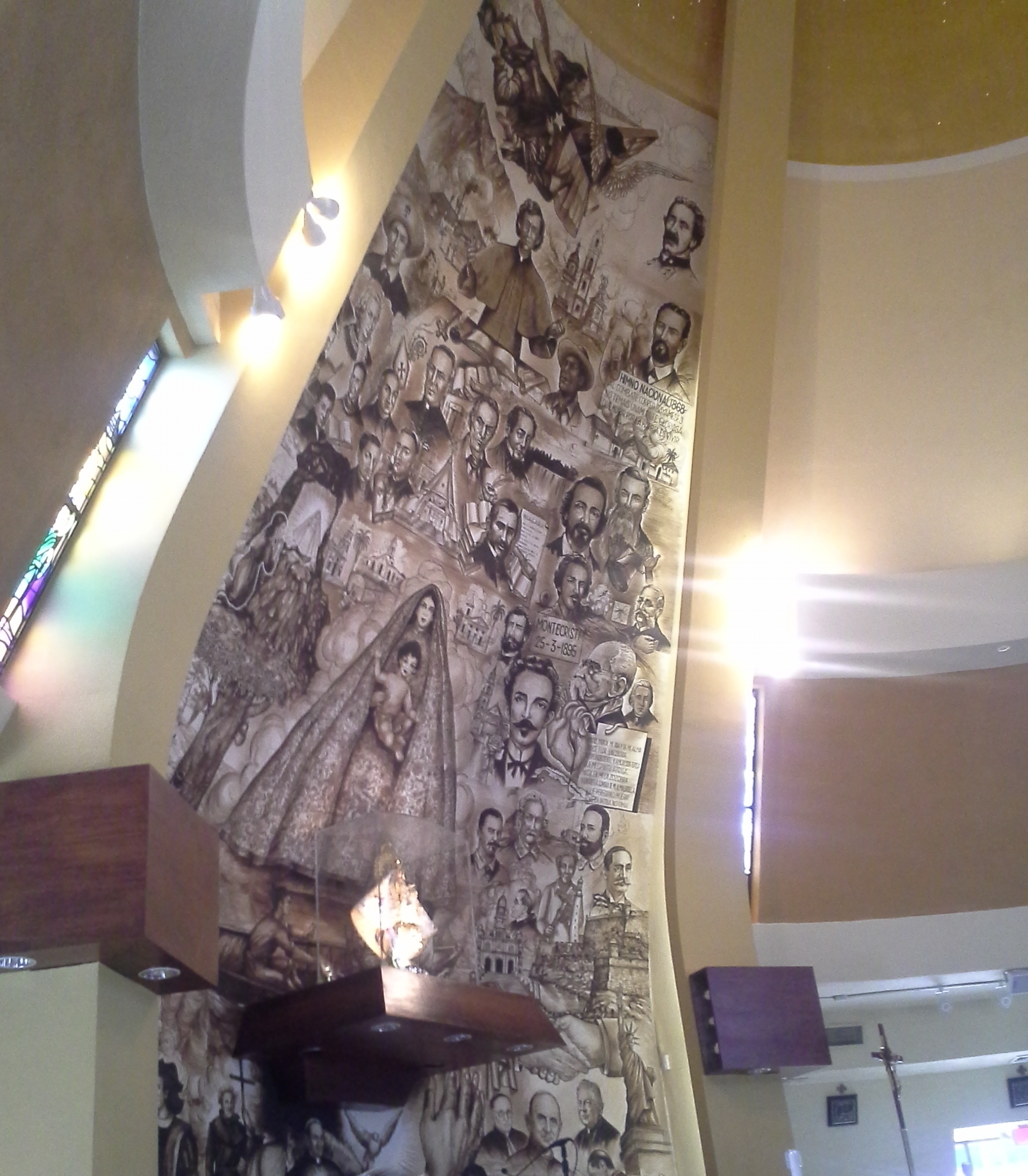
The mural behind the altar is a tribute to the faith of the Cuban people going all the way back to the 1500s. An overview of the different parts can be found on the website of the Shrine, here.

20150613_114820

Afterwards, we gathered at the little kiosk outside of the Shrine, where we enjoyed typical Cuban food, such as “guarapo” (a juice made from sugar cane), croquetas, and pan con jamon y queso 🙂 We were soon joined by a group of “spectators” who were quite interested in the crumbs left behind!

WP_20150613_007

[How to Help]

Life calls out to life


logoHello my friends:

After a month in the hospital, I’m finally home.  My old pastor said that I had used up another of my nine lives.  He’s known me since I was a teen.  Now he’s retired and living nearby.

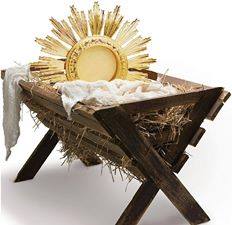
Some people would say that I’m “confined” to a wheelchair.  I don’t know if that’s the term that I would use.  I am certainly in a wheelchair.  I can no longer feel my legs.  However, there is an inner joy that comes with this.  I eucharist in crecheremember being at the hospital and receiving the sacraments of Penance, Eucharist and Anointing of the sick.  Anointing of the sick is a sacrament that many of us know about, but we rarely speak about it.  Not too many people report anything extraordinary after receiving it.

The day that I was anointed, I felt that it was my last day on earth.  I was sure that by the next morning I would be pushing daisies.  That night, I went to sleep as usual, still in the hospital.  After a few hours of sleep I awoke.  Without thinking I grabbed a sock and put it on.  I suddenly realized that I was putting on a sock and enjoying the challenge.  When your legs no longer work as they did before, you have to plan how to put on your socks, pants, shoes and so forth.  Activities that the brain would plan, coordinate and execute in nanoseconds now become projects that you have to figure out and plan before you begin. “If I put this there and pull my leg that way, then I can slide this over here,” and so forth.  In my line of work we call this motor planning.  You literally plan every movement before you engage.  We all do it, but we don’t pay much attention to the brain.  The brain does it so quickly that we don’t notice.

BOOKS ON HEAD

I’ve found out that all of the things I did before were not just random actions.  There are physical laws that the body must follow or you can get hurt.  The more I analyze and problems solve, the happier I feel.  I’m finally finding out the beauty and harmony that God created when he created man.  We function like a miracle.  We can dance and hold a conversation at the same time or get dressed and plan tomorrow’s dinner.

I am more convinced than ever before that there is a God.  This well-orchestrated body of ours cannot be a random accident. The fact that we can compensate when we lose a function, means that someone created laws that allow the physical world to function either on high speed using the brain body alone or on a slower speed using the brain, body and adaptive devices.  Because these things work each and every time, they can be considered laws.

However, I have discovered that where there is a law, there is also a law giver.  Whenever I have to face a new challenge these days, I begin to dying womananalyze the laws of physics and body movements.  This way I can execute whatever it is with a certain degree of confidence and order.  This knowledge that there is a law giver brings me a great sense of peace and gratitude.

It also brings me a little shame, because I have taken so many little things for granted.  I used to think that putting on a pair of shoes was not a big deal.  Now I know what the brain has to do in fractions of a second just to meet our demands.  This understanding increases my awe in the presence of God.

Archbishop Thomas Wenski celebrates Mass for Nascent Life

I don’t know how much of my legs I’m going to recover.  But I do know one thing.  Nothing is an accident. Everything is part of a divine plan.  The more I see myself as part of this plan, the happier and more peaceful I feel, even though my body seems twice my age.  LOL

I need to get back to rest.  Please keep me in your prayers and let us not forget to pray for those who take God’s gifts for granted,  as if they were random accidents.  Nothing is random.  Everything is a sign of life calling out to life.

VISITATION

“Life calls out to life”


A couple of months ago we mentioned that there would be some upcoming articles focusing on Project Joseph and on our family, the Franciscans of Life. The former we addressed in April. Today we continue this “mini series” by answering the question…

Who Are The Franciscans Of Life?

all_pic

   The Franciscans of Life is a private association of Catholic laymen who are celibate, singler, or married.  It is the hope of the society to become a public association of the faithful someday, maybe an institute of mixed life, where regular and secular meet.

   We exist with the permission and blessing of the Archbishop of Miami, the Most Reverend Thomas Wenski. Men from six countries, four language groups and three generations make up the fraternity.

   We attempt to replicate that brotherhood that grew up around Saint Francis of Assisi in the thirteenth century, where there were friars, nuns, married men and women, diocesan priests, widows and single people who followed the Gospel according to the Rule of Penance written by Saint Francis.  Today, our fraternity is comprised of men only.  There are “regular” brothers who live the evangelical counsels in private vows and “extern” brothers who live the evangelical counsels as single or married men.

Our Way of Life

life

The Franciscans of Life make a covenant to live the Gospel according to the Rule of Penance and the constitutions of the society.  Every brother, celibate, single, or married is a full member of the fraternity.  Therefore, each one binds himself to observe obedience to the Church and the superior of the fraternity, to live a life of detachment from material things and temporal honors, and to persevere in chastity in the celibate, single, or married life.

While all of the brothers in Franciscans of Life are lay and secular, we use the term “extern” to identify those brothers who are married or single and hoping to marry, and the term “regular” to identify those brothers who live in community, are in private vows and are celibate.

 Eucharist, Liturgy of the Hours, private prayer, fasting and abstinence are the guiding lights for the brothers.  Fraternity is a hallmark of Franciscan tradition.  Therefore, the brothers look to Christ and the apostles and endeavor to follow that model of fraternal life and service.

Common prayer, sharing, openness to each other, our families, and support for each other along the journey toward the perfection of charity are the means by which the brothers sanctify their lives and the lives of those they touch.  The brothers are faithful and obedient to the Catholic Church as she speaks to us through the successor of Peter and the local bishop.

Our Mission

mission

The mission of the fraternity is to proclaim the Gospel of Life through service to the voiceless, in particular the preborn child and his family, the terminally ill and the elderly, the immigrant poor who feels hopeless, and the person living with disabilities.

The brothers engage in a variety of apostolic activities in the Archdiocese of Miami. These include catechesis, campus ministry, Respect Life, prayer vigils at abortion mills, and serving fathers in crisis pregnancies through Project Joseph. Other apostolates are hospice and linking immigrant poor with community resources.

The invisible dimension of the brothers’ mission is a life of atonement for those who embrace the culture of death.

Extern Brothers


secular_brothers

The extern brothers live in the secular world, but are not of the world.  They are husbands, fathers, and single men.  The fraternity is also open to deacons and diocesan priests who have the permission of their bishop to join.

   These brothers hold typical jobs in the world and belong to different parishes in the Archdiocese.  However, they come together with each other and the regular brothers at the weekly family meeting, liturgical functions, prayer, and apostolic activities.

   Those who are husbands and fathers include their spouses and children in as many of the fraternal activities as possible.  In this way, the Franciscan spirit is carried into the family and the family is embraced by the fraternity.

   The extern brothers and their families engage in the proclamation of the Gospel of Life through participation in activities that promote the sanctity of life.

Regular Brothers


regular_brothers

These brothers live in community under the leadership of a superior.  They make private vows of obedience, poverty and chastity and are celibate for life.

None of the brothers owns anything individually or in common.  They rent their home, share their material resources, and work to provide for their material needs as prescribed by Saint Francis in his Testament.  When the income is not enough, the brothers beg as did the early Franciscans.

The daily life of these brothers is comprised of prayer, apostolic service to the voiceless, study, and labor that generates enough income to support the brothers and their work for the poor.

Under the guidance and encouragement of a superior also known as a guardian, the brothers strive to live as a family where brother serves brother as Christ served the apostles when he washed their feet at the Last Supper.  These brothers spend a great deal of time together at prayer, work, ministry, study, recreation and rest.


Trinitarian

Jerónimo_Ezquerra_Holy_Trinity


Like Saint Francis and the first generation Franciscans, the Franciscans of Life look to the Trinity for guidance and example in community, intimacy, love, unity and holiness.


Marian


heroes

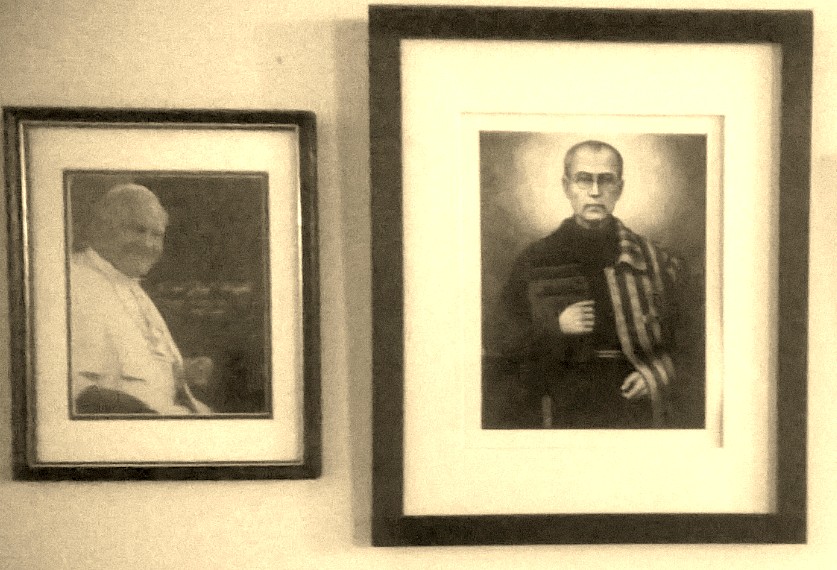
Saint Maximilian Kolbe and Saint John Paul II are the patrons of the Franciscans of Life.  From these saints we learn to live under the mantle  of the Immaculate and to protect the sanctity of life from conception to death.

Vita ad vitam vocat…”

Prayerfully consider whether the Lord is inviting you to walk the way with us. In doing so, bear in mind the sayings of our patron saints: “Do not be afraid…forget not love!”

We look forward to hearing from you!

[How to Help]

Ask whatever you will


As some of you may already know, I’m back in the hospital. I’ve been here almost two weeks and there is no discharge on the horizon. My major body systems are not cooperating with each other. You fix one and the others go into distress (kidneys, lungs, pancreas, heart, and circulation).

It is a very challenging week in our fraternity. First, I became ill. Then Brother Leo’s sister died this weekend. Please keep him and his family in prayer. He had to fly to Boston. We miss him dearly.

As if that were not enough, Brother Bernardo was left alone to care for me since Leo is in New England. The challenge . . .? Brother Bernardo has come down with his own case of tonsillitis and has final examinations this week. The poor man is trying to recover, to help me and to prepare for finals. Pray that God will reward him with peace and trust.

On the positive side, patients, staff and guests at the hospital are very curious about Franciscans of Life. They don’t get to see much of us, because we don’t do traditional parish work. Our day is broken down into segments of prayer, teaching and preaching the Gospel of Life through a variety of apostolates, atonement for the culture of death, and fraternal life among us, like that of the early Franciscans.

People are fascinated when we explain that we’re looking back to go forward. I believe this has caused some Catholics to look back as well. We get many people who suddenly remember being influenced by a Franciscan here and there. If these memories transport people into the presence of God, then it must be the good spirit’s leading. One never knows the extent and power of redemptive suffering.

If you abide in me, and my words abide in you, ask whatever you will, and it shall be done for you. By this my Father is glorified, that you bear much fruit, and so prove to be my disciples. As the Father has loved me, so have I loved you; abide in my love. 10 If you keep my commandments, you will abide in my love, just as I have kept my Father’s commandments and abide in his love. 11 These things I have spoken to you, that my joy may be in you, and that your joy may be full. (John 15:7-13).

Our other concern is finances. God has plenty of money but the service providers want the money from us. Flying to funerals, going to doctors’ visits, paying for meds and paying for co-insurance for my inpatient is a toll.

Saint Paul reminds us that we can do everything in Him who strengthens us. Jesus reminds us that with him all things are possible. As a fraternity, we are willing and able to weather this storm. But we have to be together again in South Florida. All of us over the map does not lend itself to presence. To be together to pay bills and have enough to share with voiceless. We need to be together to preserve the Trinitarian Communion that is essential to our way of life.

Pray for Brother Leo and his family that God will give them peace and bring him home soon. Pray for Brother Bernardo that God will give him spiritual and physical strength to follow His lead and that his condition improves so that he can do well on his final examination, this week.

As for me, pray that as superior I may lead by the example of the Suffering Servant.
God bless you.


 [How to Help]

Holy Week: a time to choose


Palm Sunday

As Holy Week moves along,palm-sunday-crosses-6 the Franciscans of Life are also moving right along with the liturgy and the celebration of the paschal mysteries.  The week began with the liturgy of Passion Sunday (Palm Sunday).  The brothers attended  the liturgy as family.  It was a very moving day for us, especially for those brothers who had never seen the liturgy of Palm Sunday in the Ordinary Form.  The beauty and solemnity of the liturgical celebration removed any doubt that the Ordinary Form can raise the heart and  mind to God as much as the Extraordinary Form.  In both, Christ does his part.  It is up to us to do our part.  The young men and women from LifeTeen reenacted the Lord’s passion as the Gospel was read. We were impressed to see how prayerful the kids looked and how well they memorized the many lines in the Gospel reading.  Of course the priest and the deacon helped out during the reading.

Meet Our New Postulant

Monday night was a very special night for the fraternity.  We received a new postulant, Alberto Emilio Rodriguez.  Alberto joined us as an aspirant several months ago.  He is the product of a solid Catholic home and

Alberto está a punto de comenzar el discernimiento

Postulant Alberto Rodriguez, FFV

Catholic education.  We thank his parents and the Marist Brothers for their investment in Alberto.  Postulant Alberto is active in the community, especially in youth retreats.  As a student the only thing we can say is that he is brilliant.  He was accepted by three leading universities in the United States, all of which offered him full scholarships.

Lazaro Rodriguez (father), Postulant Alberto, Br. Jay and Br. Luis sign the registry after Alberto is received as a posulant

However, Alberto has decided to study in Miami and form with the Franciscans of Life.  He has responded to what Jesus said to his apostles at the Last Supper when he washed their feet:

14 Now that I, your Lord and Teacher, have washed your feet, you also should wash one another’s feet. 15 I have set you an example that you should do as I have done for you. 16 Very truly I tell you, no servant is greater than his master, nor is a messenger greater than the one who sent him. 17 Now that you know these things, you will be blessed if you do them. (John 13:14-16).

As we have said, he is academically gifted, speaks two languages, is the class president at his school, has been a retreat speaker and altar server, is an excellent drummer and an aeronautics aficionado.  Most important, he is a man of great faith and a deep prayer life.

New Secular Franciscan of Life

We have also received a new brother as novice for the Secular Franciscans of Life, Brother Luis Charbel.

WP_20150323_030

Br. Luis Charbel, FFV was received as a novice at St. Maximilian Kolbe Chapel.

Br. Bernardo di Carmine and his mother, Mrs. Angela Torres


Brother Bernardo Di Carmine delivered a beautiful reflection during solemn vespers when Luis was received.

Luis is originally from Colombia.  He and his wife have made Miami their home along with their beautiful eight children.  Luis came to us driven by the Holy Spirit.  He has always experienced an attraction to the spirit of St. Francis.  His children serve the poor in a Franciscan ministry.  However, Luis had never done anything about his craving for Francis of Assisi and his way of life until he saw an article about Project Joseph, which the Franciscans of Life operate for Respect Life Ministry Archdiocese of Miami.  Docile to the Holy Spirit, he responded to Christ’s challenge to the apostles during his Passover with them:

12 Very truly I tell you, whoever believes in me will do the works I have been doing, and they will do even greater things than these. (Jn 14:12).

"Louis-ix" by El Greco - Transferred from en.wikipedia; transferred to Commons by User:Sfan00_IMG using CommonsHelper.Author: Original uploader was Uri at en.wikipedia. 2003-07-01 (original upload date). Licensed under Public Domain via Wikimedia Commons - http://commons.wikimedia.org/wiki/File:Louis-ix.jpg#/media/File:Louis-ix.jpg

St. Louis IX by El Greco

Like Alberto, Luis is also a man of profound faith and prayer.  His patron saints are Saint Louis King of France, the patron of the Third Order of St. Francis, and Saint Charbel Makhluf, Maronite monk and hermit, known for his intense life of prayer and asceticism.  Luis couldn’t have picked better patron saints.

Saint Louis IX was a contemporary of Saint Francis of Assisi and king of France.  He is one of the earliest secular brothers in the Franciscan family, a faithful husband and the father of eleven children.

Saint Charbel Makhlouf, O.L.M. The Wonder Worker

Saint Charbel was Maronite monk and hermit at the Monastery of Saint Maron where he lived a life of severe asceticism.  For those who may not understand the term asceticism, it has little to do with corporal penances and much to do with the practice of the virtues.  As an ascetic, Saint Charbel disciplined his mind and body to conform to the virtues of Christ and his Blessed Mother.

Like Saint Charbel, Luis has a very personal relationship with the Immaculate and recently completed his consecration to Mary in the Kolbe tradition.

Holy Week: time to reach out

John’s Gospel tells us that after Jesus had finished the Last Supper and had washed his disciples’ feet he said to them

“Love each other as I have loved you. 13 Greater love has no one than this: to lay down one’s life for one’s friends. 14 You are my friends if you do what I command. 15 I no longer call you servants, because a servant does not know his master’s business. Instead, I have called you friends, for everything that I learned from my Father I have made known to you. 16 You did not choose me, but I chose you and appointed you so that you might go and bear fruit—fruit that will last—and so that whatever you ask in my name the Father will give you. 17 This is my command: Love each other.”  (Jn 15:12b-17).

Holy Week is the perfect time to reflect on our universal vocation:  the perfection of love. It’s a time to examine what we do and who we are, keeping in mind the precedence of being over doing.

Jesus calls us friends, for that is our universal vocation.  He has loved us enough to call us his friends.  Brothers Alberto and Luis have taken the leap of faith.  Christ chose and extended his hand from the cross in friendship.  Like Saint Francis of Assisi, they responded.

 [How to Help]

Transformation


We had a great couple of days for Project Joseph and the Franciscans of Life!

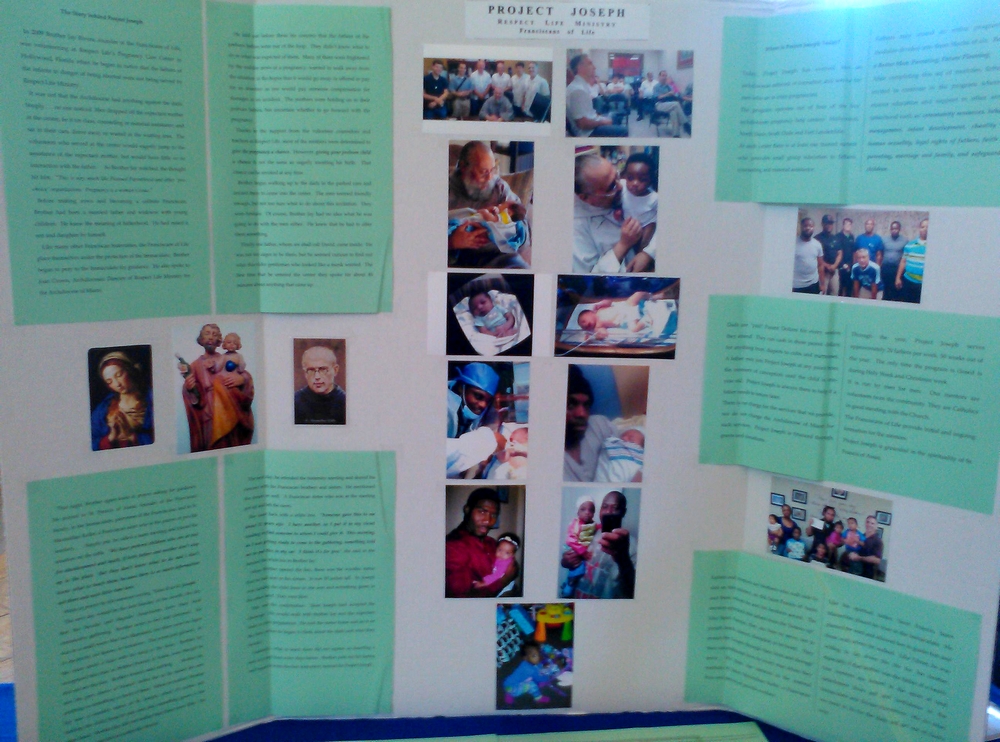
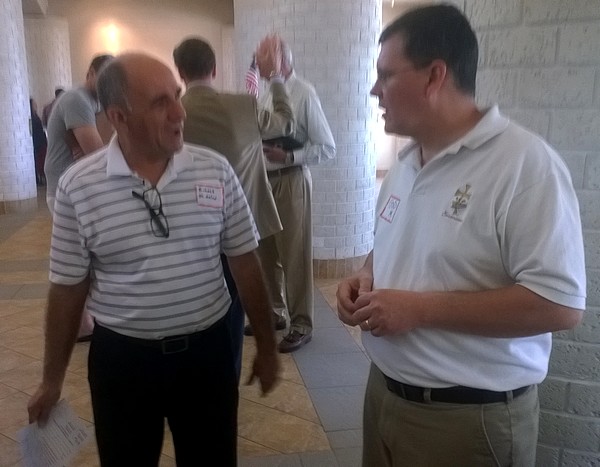
On Saturday, March 21st, the Franciscans of Life attended the 5th Catholic Men’s Conference of the Archdiocese of Miami. The event, which featured Catholic apologist Tim Staples, took place at St. Mark Catholic Church. We represented Project Joseph along with some of the mentors of Respect Life Ministry.

WP_20150321_004r

Our display included some literature and a poster describing the roots of Project Joseph and where it is today. It also featured pictures that the Project Joseph dads allowed us to share, either of their classes or of their beautiful children.

WP_20150321_009r

The event was well attended, and we had a chance to talk with several men, some of whom were dads themselves, and present to them information about Project Joseph, as well as invite them to our upcoming workshop.

mc04

mc02

mc01

mc03

On Monday, March 23rd we had the joy of receiving Brother Luis as a novice. He received the name Brother Luis Charbel, FFV.

As a secular brother, Br. Charbel exchanges the cord that holds the wooden tau around his neck from a brown one to a red one. The red signifies the Sacred Blood shed by Christ during His Passion, and constitutes for Br. Charbel a reminder that he is called to “obey as Christ obeyed, without murmuring, complaints and resentment”, in order to “live perfect charity as Christ taught us on the cross”.

The exchange of the color and the reception of a new name are for the secular Franciscan of Life “an outward sign of his desire for transformation from the old man enslaved by sin to the new man, liberated by the Passion and Resurrection of Jesus Christ”.WP_20150323_030It was a beautiful and moving reception, attended by the regular and secular Franciscans of Life and their families. Brother Jay directed the ceremony, and Brother Bernardo offered a reflection on the call and life of the secular brothers.

In the next days we will feature more news about FFV and Project Joseph…stay tuned! 🙂

[How to Help]

True and charitable obedience — pleasing to God and neighbor


Pope Francis and Franciscans of the Immaculate

Pope Francis and Franciscans of the Immaculate

It seems that these days everyone wants to gripe and whine about the pope, bishops, and the synod on the family, the Traditional Latin Mass (TLM) or the Mass of Paul VI (Novus Ordo).  Then there are such subjects as abortion, same-sex marriage, contraception, divorce, remarriage and Holy Communion and women’s ordination.

Yesterday, I saw another article claiming that Pope Francis has done great harm to Summorum Pontificum, the document written by Pope Benedict clarifying that the Tridentine form of the mass for the Roman Rite was changed a bit by Pope St. John XXIII, but never abrogated.  The gist of this complaint is that allegedly Pope Francis told the Franciscan Friars of the Immaculate that they may not celebrate the Tridentine Form without asking for specific permission to do so.  To some people, this is a form oppression and a violation of law.

To get past this point, let’s clarify that the Franciscans of the Immaculate were never founded to be a Traditional Latin Mass (TLM) community.  When they were founded, the Mass of Paul VI or Novus Ordo was the ordinary form of the mass for the Latin Church.  Secondly, Summorum Pontificum clearly states that the superior general alone can make rules about who and when the TLM is celebrated in public or in community, but he must make these rules in keeping with the proper laws of his institute.  This means that he must look at the constitutions of his institute and see what they say about the older rite and the newer rite, if they say anything at all.  In most cases the constitutions do not speak to this point, because they were written before this became a hot question.  Therefore, there is nothing in proper law that allows a superior permission to make the Extraordinary Form of the mass (TLM) to become the norm for his community.  The question needs to be put on the table to the community to vote on.  Once the community votes on it, the Holy See must approve the change that is to be made to the constitutions.

Let’s remember that the Franciscans of the Immaculate, like any other religious community owe obedience to the Holy Father.  At the end of the day, the Holy Father is the legitimate superior general of every institute in the Catholic Church, because he alone exercises universal jurisdiction.    Therefore, we cannot accuse the pope of overstepping his boundaries or of abusing power.  If you have the power to do something or to prohibit something and you make use of it, how can it be an abuse?

Some will argue that the pope cannot use his power to do harm.  This is true.  No one can use power to do harm.  Power is given to us for the common good.  There are times when we use power with the intention of doing something good and somewhere in the process something goes wrong and the end result hurts more than it helps.  This was not the intention of the person exercising the power.  This was the result of many random acts that were against the idea in the first place.    In this case, one can say that the end result was that the lay faithful who were benefiting from the TLM celebrated by the priests of the Franciscans of the Immaculate no longer had that benefit.  Obviously, they were hurt by Pope Francis’ decision to stop the TLM among the Franciscans of the Immaculate.  Did the Pope intend to hurt these folks?  I don’t think so.  He intended to put out a fire within the Franciscans of the Immaculate.

This does not mean that the TLM is prohibited or that the Franciscans of the Immaculate are being suppressed.  It means that people who had come to depend on the Franciscans of the Immaculate to provide a TLM mass have to look elsewhere, which is an inconvenience.    In fairness to the Pope and to the friars, this congregation was never founded for the explicit purpose of celebrating the mass in the Extraordinary Form (TLM Form).  The congregation’s mission is to walk the Gospel in the footsteps of St. Maximilian Kolbe and St. Francis of Assisi under the protection and patronage of the Immaculate.

Did something go wrong?  Yes.  I don’t know what went wrong.  I’m not a member of that community.  I can see what’s going wrong outside of the community.  Pope Benedict XVI started an investigation into the Franciscans of the Immaculate, not Pope Francis.  Pope Francis inherited it, but almost everyone blames Pope Francis for it.  Like most popes, Pope Francis is not too enthusiastic about people using the mass for their political battles.  Therefore he restricts the permission to use the Tridentine Form to those who have specific permission to use it.  He never said that it could not be used.  He said that one must ask first.

Whatever Summorum Pontificum says about what priest can celebrate the Extraordinary Form of the mass, we cannot forget that the Motu Proprio does not bind the pope, including the one who wrote it, much less the pope who succeeds him.  He is free to abrogate it, edit it and interpret it.  It is not up to us to tell the pope what he can or cannot do with law.

Boniface VIII in “Constit.” reminds us that the sovereign pontiff is the most fruitful source of . . . law; he can abrogate . . . legislate to the whole Church or part thereof, a country, or a given body of individuals . . . he is not legally obliged to obtain the consent of any other persons and his power is limited only by Divine law.

Another important point here is that this is a situation between a pope and a religious community of Pontifical Right.  Meaning . . . that the pope is the highest ranking superior, above whom there is no appeal and who has absolute authority over the religious community.  He need not speak ex cathedra to be obeyed.  If we look at the writings of St. Francis, he promises obedience to the Bishop of Rome, commands that all the brothers obey him and his canonically elected successors for all time.  In essence, Francis binds everyone to obey the pope, regardless of the matter involved, except sin.  To put it more bluntly, it’s not for any of us, outside of the Franciscans of the Immaculate, to demand to know what happens within the community or to speak as if we had the authority to make a judgment on a situation that does not fall under our jurisdiction.

We must not lose sight of the fact that the good brothers have not asked us for our help, comments, opinions and interventions.  These are well educated men, free to ask for help if they need it, and who have a good understanding of how the legal system in the Church works, should they choose to make use of it.  Instead, it seems that they have chosen to apply one of our Seraphic Father’s admonitions.

The Lord says in the Gospel: he “that doth not renounce all that he possesses cannot be” a “disciple “and “he that will save his life, shall lose it.”  That man leaves all he possesses and loses his body and his soul who abandons himself wholly to obedience in the hands of his superior, and whatever he does and says—provided he himself knows that what he does is good and not contrary to his [the superior’s] will—is true obedience. And if at times a subject sees things which would be better or more useful to his soul than those which the superior commands him, let him sacrifice his will to God, let him strive to fulfil the work enjoined by the superior. This is true and charitable obedience which is pleasing to God and to one’s neighbor.