Euthanasia in the USA is Alive!


Most pro-life eyes are currently focused on one particular issue, namely the reversal of Roe v. Wade, etc. Surely this is due to the great hopes it has generated, after decades of prayer, penance, and advocacy…but also in no small part because of the dismal violence ensuing from the pro-abortion hordes (even locally), for which we have started a Rosary Crusade.

However, there is another critical pro-life issue that is spreading subtly, like poison, throughout several U.S. legislatures: euthanasia (assisted suicide).

The letter below comes from Mr. Alex Schadenberg, Executive Director of the Euthanasia Prevention Coalition (which has a USA chapter). It provides an excellent summary of the situation here in America. With his permission to share, we invite you to read it in detail, bearing in mind that what we are beginning to witness in our Country is merely the tip of the iceberg.

Other countries either already have, or are in the process of approving laws that legalize this killing, not only of adults with full faculties but also of:

Not even (pro-life) religious institutions are a safe haven: some countries are already pushing laws forcing religiously affiliated medical institutions to provide euthanasia, and as recently as April we read of a pro-life hospice losing government funding and having its 10-bed hospice building expropriated due to their conscientious objection!

Here’s a visual reminder that Euthanasia is already legal, partially legal, or not illegal in most of the world:

Original file: Michael Jester, CC0, via Wikimedia Commons Edited by Br. Bernardo, FFV

[For clarification on the map above, passive euthanasia refers to denying someone, who is not otherwise dying, the basic necessaries of life to intentionally cause their death – and it is not morally acceptable. We will have a more in-depth article on these teachings published in the near future. ]

If we do not take action now – primarily and particularly through prayer and penance, followed by being proactive on these life issues in our ministries – when will we? Will we wait for euthanasia to (continue to) be legalized across the USA? Will it take a new kind of Roe v Wade, this time Euthanasia-centered, for the pro-life movement to stand up and speak up in unison against these evils?

Bear in mind that the Church infallibly upholds the sanctity and dignity of all human life – from conception to natural death!

Without further ado, here’s the letter (click on each page to enlarge!)

  [Link to Facebook group: https://www.facebook.com/EPCUSA/ Link to Oct. 15 event: https://bit.ly/38CtUYp  or click here Another link to promote the Oct. 15 National Conference: https://www.facebook.com/AssistedSuicideConference]

    (click to enlarge)

Consider registering for the October 15 conference. We also invite you to follow Mr. Schadenberg’s blog to stay up-to-date, and to consider supporting the EPC’s latest initiative opposing Child Euthanasia: Protect Children’s Lives  

Note: if you wish to reproduce something published by the Euthanasia Prevention Coalition, all you need to do is ask for permission to


Franciscans of Life
Vita ad Vitam Vocat
Website        Blog        Facebook Group

Click to donate
[tax disclosure]

THE FIRST LINK OF TOTALITARIANISM


I’ve read three disturbing articles this week.

IImage result for tyrannical staten the first article, leaders in Congress are promoting legislation that would make legal all abortions until the end of the pregnancy.  Who or what gives the the State absolute power over life and death?  It is man who has created the State, not the other way around.  The State exists at the service of humanity.  To grant the State absolute authority over life and death is the beginning of fascism.  Hitler, Lenin, Mao, Castro, and others have claimed absolute authority over their fellow citizens.  What was the outcome?  Death of millions of people, genocide, poverty, isolation, Communism, war, and the destruction of infrastructures that support human live and activity.

In the same breadth, certain legislators believe that a child born alive after an abortion attempt, need not be provided medical care or protection under the law.  In other words, the child is left to die (or helped to die!) which adds up to infanticide.

Another very well-known story is that of Vincent Lambert.

After a car accident he was in what is called “minimally conscious state”: not in coma and not connected to any machine, he was found responsive to a voluntary breathing test, as well as perceiving pain, emotions, and awareness of environment. Also he could not swallow correctly, therefore an artificial way to provide him with food was required to prevent starvation. In 2013, health care workers notice behavioral manifestations to Vincent’s toilet care, which they interpret as an “opposition” to said toilet care. The opinion of the medical team was a bit extreme: they resolved, solely on the basis of this impression, that Vincent “refused to live”! Factoring in a discriminatory opinion about his current severe state of disability, they decided to decrease hydration and stop feeding, essentially sentencing to a slow death.

Mr. Lambert died Thursday, July 12.  After being sedated into unconsciousness, he survived for nine days without food and water.  According to doctors and lawyers, he was in a vegetative state.  The term “vegetative state” has yet to have a conclusive definition.  One thing we know in this case.  This man breathed, had a pulse and to the best of our knowledge, his vital organs were functioning.    Vegetables do not breath, nor do they have a pulse.
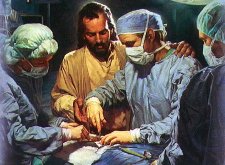
Once upon a time we believed that the role of healthcare was to cure and to give comfort to the suffering.  Human beings were never compared to vegetables no matter how disabled they might be.  Killing was never included in any philosophy of healthcare.

Not only does the denial of food and water accelerate the patient’s death, it also imposes a very heavy and painful experience on family members and loved ones for whom this person has a significant place in their hearts and lives.   It usually divides families and leaves profound scars.

This I know from personal experience, when my sister was denied food and water because she was dying.  The provision of food and water was considered extraordinary, as if food and water were not a human right given to us by the Creator.  Man does not create the laws that provide food and water.  Those laws are beyond our control.  Yet, many people believe that man has the authority to manipulate that which he has not created and does not own.  Nature, and nature’s God, provide food and water.

The third disconcerting article that I read is the story of a couple who became pregnant.  Sonograms revealed that the mother was carrying seven babies.  Like any human being in such a situation, the couple was in shock and worried.  The birth of twins, even triplets, though not frequent, is rarely a risk to the life of the parents or the children.  However, the birth of seven children puts parents in a position where they must cooperate as a couple to plan for the care and welfare of these seven human beings and their own.  They must work together to help the pregnancy progress.

The attending physician suggested to the shocked couple, selective reduction.  Selective reduction is an engineered Image result for multiple fetuses in the wombphrase to disguise random abortion.  The parent is given the opportunity to decide how many of the children in the mother’s womb must live and die.

Let’s examine the first problem. In selective abortion, what guarantee is there that the physician will extract the child the parents choose to terminate?  Do physicians have enough knowledge to distinguish the value of child A from child B to extract one of them?  Does such a distinction actually exist when the child is still in the womb? The answer to both questions is NO.  Medicine is not, and has never been, an absolute science: it is based on trial and error, and ever developing understanding of the human mind, body, and life.  Knowledge that we have yet to master.

Fortunately, the parents were not to be persuaded by the physician’s suggestion.  They chose to proceed with the pregnancy and let God decide the outcome.  Today those four men and three women are 20-years old and contributing to the world in which they live in a variety of ways.

Lastly, I would like to share my experience with my maternal family.  My grandmother had 17 live births.  One of these were twins, totaling to 18 children.  Three died at different points in childhood and 15 survived.  I often ask myself if my grandparents had opted to abort one or more of their children, would I be here.  Would my mother have survived?

Each of my uncles and aunts occupies a singular place in the heart of our family.   Those 15 adults gave my grandparents 65 grandchildren, 40 great grandchildren and several great-great grandchildren.  All have been well educated and no one has ever been arrested.

As we get older, members of my family have died.  The first to die was my mother.  I will always be grateful to my grandparents for my mother.  She was the perfect mother for her children.  She was intelligent, competent, disciplined, humorous, faithful, honest and above all, woman of great faith.  My siblings and I were the beneficiaries of these gifts.

Every time one of my aunts or uncles dies, I feel a great sense of loss.  Each of them was unique.  None of them could replace the other and I miss all of them, because I grew up close to them, protected by their love and generosity.

I’m 66-years old, the father of two and grandfather of one, Yet, neither of my children nor my granddaughter can fill the empty spot left by one of my deceased uncles and aunts.  Just as no one can occupy the place of my children and granddaughter.

The very idea of watching one of my loved ones die by of dehydration and starvation makes me nauseous, because I saw them do this to my sister.  We her brothers suffered a great sense of impotence against a legal system that protects euthanasia disguised as medical care.

I will never forget my last conversation with my sister.  While she was hospitalized, she called me, and she was crying.  I asked her what was wrong.  Her last words to me were, “I don’t want to die.” But the law was not on her side.  She became unconscious, with moments where she recognized family members and she rejoiced when her favorite niece flew in to visit her and to say goodbye.  “Look who’s here,” she said with a wide smile on her face.  This happened many years ago.  To this day, my family cannot forget watching her die and feeling helpless.

Abortion, euthanasia, assisted suicide, infanticide, war, hunger, and thirst are not natural.  If humanity understood that there is such a thing as absolute right and wrong, some of these evils would not exist.

We have absolutely abolished the concept of absolute truth, right and wrong.  We believe that we’re right in saying that truth, good and evil are relative.

When one man or woman is denied the right to be born or the right to die naturally, the first link in the chain of totalitarianism has been forged.
Image result for chain link

Published in: on July 14, 2019 at 9:50 PM  Leave a Comment  

ETHICS AND AUTOCRACY


There is much going on in our country and other countries which we must be aware of and keep in our prayers.

Abortion

Just this month, the State of New York passed the most extensive abortion law in the nation and the Commonwealth of Virginia is seeking to follow suit.  Under this new law, a pregnant mother living in the State of New York, and maybe soon, in the Commonwealth of Virginia, has the right to terminate the life of an unborn child up to the moment of labor.

Law makers and some healthcare professionals are justifying this new law, because it is useful if the life of the mother is in danger or the child is not viable.  There are two problems of justice here.

First the life of the mother is given preference over the life of her unborn child, about to be born.  We have two human beings and the law is choosing to save one and kill the other or let him be born and die.  This raises an important question.  What makes the life of the mother more important than the life of the child?  The answer is simple.  The possible death of the mother poses a grave loss to her and to her family.  But the child whose life is being terminated is also family.  Simply, he has yet to meet his living relatives.

The second issue of justice has to do with viability.  Allegedly, if a baby is not viable (capable of living outside the womb), he can be aborted.  There are two questions of justice here.  First, if mother and child were in a car accident and the child seemed to be a higher mortality risk, would anyone agree to terminate that child’s life and save the mother?  Would anyone agree to providing medical care for the mother, while forsaking the life of the child?  If you’re a conscientious person, you would probably answer “NO” to both questions.

A person who understands the right to life of every human being would insist that medical care be given to both mother and child to save both lives.  One may die while doctors try; but such a death is not provoked by the attending physician.  It is the result of the accident, illness, or other beyond human control.  No human being terminated that life.  In most places around the world, the physician would be in serious legal trouble, because he took one life and turned his back on that person for the sake of another.  An affirmative response to this question gives physicians the freedom to make godlike choices.  Does the physician have the moral authority to determine who lives?Image result for right to be born

In the case of a late term abortion, the mother and the physician are assigning, to themselves, authority that belongs only to God.  They are deciding that the child has no right to be born.  The international community and the constitution of many countries guarantees the right to life.  In this case, the law is saying that one has the right to life . . . but at what point:  just before birth or just after birth?  The right to life becomes arbitrary.

Euthanasia

Image result for euthanasia ethicsCall it assisted suicide, call it the right to die or any other name that sterilizes such an act.  The fact remains that living human beings are put to death at the discretion of other human beings, they do not die from causes beyond human control.

Children are euthanized because they have Down Syndrome.  People, young and old, are euthanized because suffer from depression and have lost all desire to live.  Terminally ill people and senior citizens are euthanized to avoid prolonged suffering.  The truth of the matter is that suffering is a normal part be life.  And supporting and comforting those who suffer is our moral duty.  No one, not even the person who is suffering, has the right to choose death if there are possible medical treatments that can save a life or give the person more time to be with loved ones.

In some countries, the state decides who is to be euthanized, because “it’s in the best interest of the citizen.”  Is it really in the best interest of the citizen to terminate his or her life, because they are sick, old, suffer a mental health problem or is naturally intellectually disabled?  The British courts said so when they denied the parents of a two-year old child permission to take the child out of the country to places that were offering medical assistance and hope.

What human being, be it a judge, a relative, a physician or other involved party has the natural authority to determine when one should die?  Where does society draw the line?  Is it OK to help a terminally ill person to die, but provide special services for one who is intellectually disabled or the other way around?

Is it right to draw a line on sickness?  How sick does one have to be that gives others authority to end our life or that of loved ones?

There are civil laws, but as the great philosophers of history have proven, there are natural laws that serve as the foundation of civil laws.  Human beings have the right to legislate when such legislation is consistent with natural law.  Who said that we have the right to circumvent natural law to terminate a life?

Someone may argue “is a kidney transplant natural?”  Is a prosthesis natural?  Neither are safeguarded by natural law; but neither are prohibited by natural law either.

Some states have passed laws that prohibit late-term abortion.  There are states that prohibit assisted suicide and euthanasia.  But the courts have determined that such laws are contrary to the right to choose.

We’re allowing the state the right of the individual to secure the rights of the majority.  But that’s not how morality and ethics work.  One must always choose the greater of two possible good, not what is acceptable to the majority.  The right to life is an unquestionable superior good.  If we make the right to life arbitrary, then all other rights granted to living beings are also relative.  There are no longer absolute rights.

We must pray for guidance for us, law makers and people in crisis situations.  We must also raise our voices to defend the right to be born and the right to live until death is unavoidable.  This includes accidents, wars, natural disasters, and crime.  The victim does not have the power to prevent his death or that of a loved one.  Such life terminating events happen very quickly and are not within our control.

Let us defend our collective right to vote on laws, rather than grant power to arbitrary persons who legislate the right to terminate human life at their discretion.   We have the right to be heard before those laws are ratified.  When the state appropriates citizen’s right to choose life, without the consent of the governed, it’s autocracy.

Related image

Published in: on February 20, 2019 at 8:29 PM  Leave a Comment  

New Year’s Thought from the Franciscans of Life


The Franciscans of Life wish every one of our family, friends, and benefactors a Happy and Blessed New Year.

We want to remind everyone that January first is not only New Year’s Day in the western calendar, but it’s also a special solemnity in honor of Our Lady.  It’s the Solemnity of the Mother of God.  It is the only feast day that we celebrate honoring Our Lady’s “divine maternity”.

In a world where motherhood and childbearing are often viewed as a burden or an inconvenience, at the very least, Catholics remember that motherhood is a gift from Heaven.  God becomes man and is born into a human family.  Every one of us has existed in the mind of God the Father for all eternity.  This “divine thought” becomes a human being at conception.  God has seen us in His image and likeness since the beginning.

Let us pray that this year, humanity will awaken from the nightmare of abortion and euthanasia.  Pray that nations come to respect life, from the womb to the tomb, as a mystery that comes from God and is destined to return to God at a time according to His plan.

Topic shift:  the Franciscans of Life have completed our year-end review.  We planned our days, schedules and activities for this new year, to allow us more time for silence, solitude, prayer, penance, a fraternal life.  Like every human family, a community of consecrated persons, religious or lay, is called to live as a family that reflects the community of the Holy Trinity.

It is very easy to get caught up in the “to do’s” of everyday life, to the point where doing becomes man’s only source of satisfaction and enrichment.  Unfortunately, becoming or being is forgotten and replaced by doing.  We hope that others will join us in the quest to become people of deeper prayer, more sacrificial penance, and joyful members of families, parishes, and communities.


Finally, it is with great joy that we announce that Brother Bernardo will profess perpetual vows on January 7, 2019.  I [Br. Jay] will have the honor of receiving those vows in the name of our community.

Brother will vow to live in obedience to God, the Church, and the constitutions and superior of our community.  He will surrender the right to own property and will vow to live the rest of his life without property, money, or special distinctions.  He will vow to live celibate chastity until death, so that he may devote every moment of his life to Christ, the Immaculate, and the people of God.

Franciscans of Life also make a fourth vow: to proclaim the Gospel of Life to the voiceless.  We follow the example of St. Francis and his command to the first Franciscans, to live in peace with all men, to have a special place in our hearts and their mission for the poor, elderly, sick and abandoned.  The Gospel of Life demands in a special way that we treat all travelers and immigrants with respect and charity.  Please pray for Brother Bernardo and for the Franciscans of Life, that we may be faithful to the end.

    —>   

May the new year bring many blessings into your lives.  Let us pray that it will be a year where man moves closer to peace, deals more justly with other people, and detaches from excessive material goods to the detriment of his soul.


[click to see full-scale picture]

The “Right” to Kill?


What is the dictionary definition of euthanasia?

The word “euthanasia” used in a medical context refers to an easy, painless, happy death, during which it was a “physician’s responsibility to alleviate the ‘physical sufferings’ of the body.”

The ethical problem with this definition, from a non-religious point of view, is found in the word “happy”.

– Who guarantees that the person will be happier dead than alive?

– Even the patient cannot know what lies on the other side of death. He or she can’t choose a “happiness” that is not guaranteed.  It is unethical for one to desire that which conflicts with natural law.  Nature has a time and a means for each of us to die.  In choosing euthanasia we’re assuming greater authority over life and death than nature.  If humans can have greater authority over life and death than nature, how do we explain that human beings can reproduce naturally or with medical assistance, but cannot create life out of nothing?

– Reproduction technology such as in vitro fertilization (IVF) replicates nature. Therefore, the laws that govern life are built into nature, not man or his technology.

How many forms of euthanasia are there?

We can identify 3 types of euthanasia.

  1. voluntary euthanasia (euthanasia performed with the patient’s consent).

We cannot govern when and how we are conceived; how can we determine when and how we are to die?  Man is naturally oriented toward the greater good.  If he or she chooses euthanasia, it’s because he or she has become convinced that death is a greater good than life.  But why?

Mental health professionals will tell us that a person who commits suicide is unstable.  Is the person who allows another to kill him, emotionally stable?  What is the difference, between me holding the gun to my head and me handing to another person a lethal injection and passively allowing him to inject a deadly chemical into my blood stream?

People who are advanced in years, or very ill, may desire death. Usually, they don’t desire to be killed.  There’s a big difference between yearning for the end of suffering and paying a medical professional to end his suffering by killing him.  The emotional stability of those who give a medical professional the authority to kill them can, and should, be questioned.  Is this not abdicating one’s right to experience the human condition?  Is this truly choosing to end pain or feelings of neglect, or is it taking the quick way out, so a not to deal with pain or old age, especially if the senior feels abandoned by his loved ones?

If the older person feels that life is not worth living, there has be a process that led him or her to this conclusion.  What is that process?  Is this valid reasoning?  There are many false conclusions derived from false premises.  These constitute invalid reasoning.

Photo (C) Christian Marta-nez Kempin