About 2,000 years ago, Jesus rode into Jerusalem to the cheers of the crowds honoring a king waving palms and laying their mantles on the ground to protect Jesus from the dirt in the city streets. But Jesus knew this would be his last entrance into Jerusalem. He was walking into the hands of his executioners. Armed with faith in the Father and the courage of the Holy Spirit, he entered the city where he would be scorned, insulted, brought to trial with false charges and eventually he would be killed.
On Thursday of that week Jesus borrowed an upper room where he was to eat the Passover meal with his friends, the 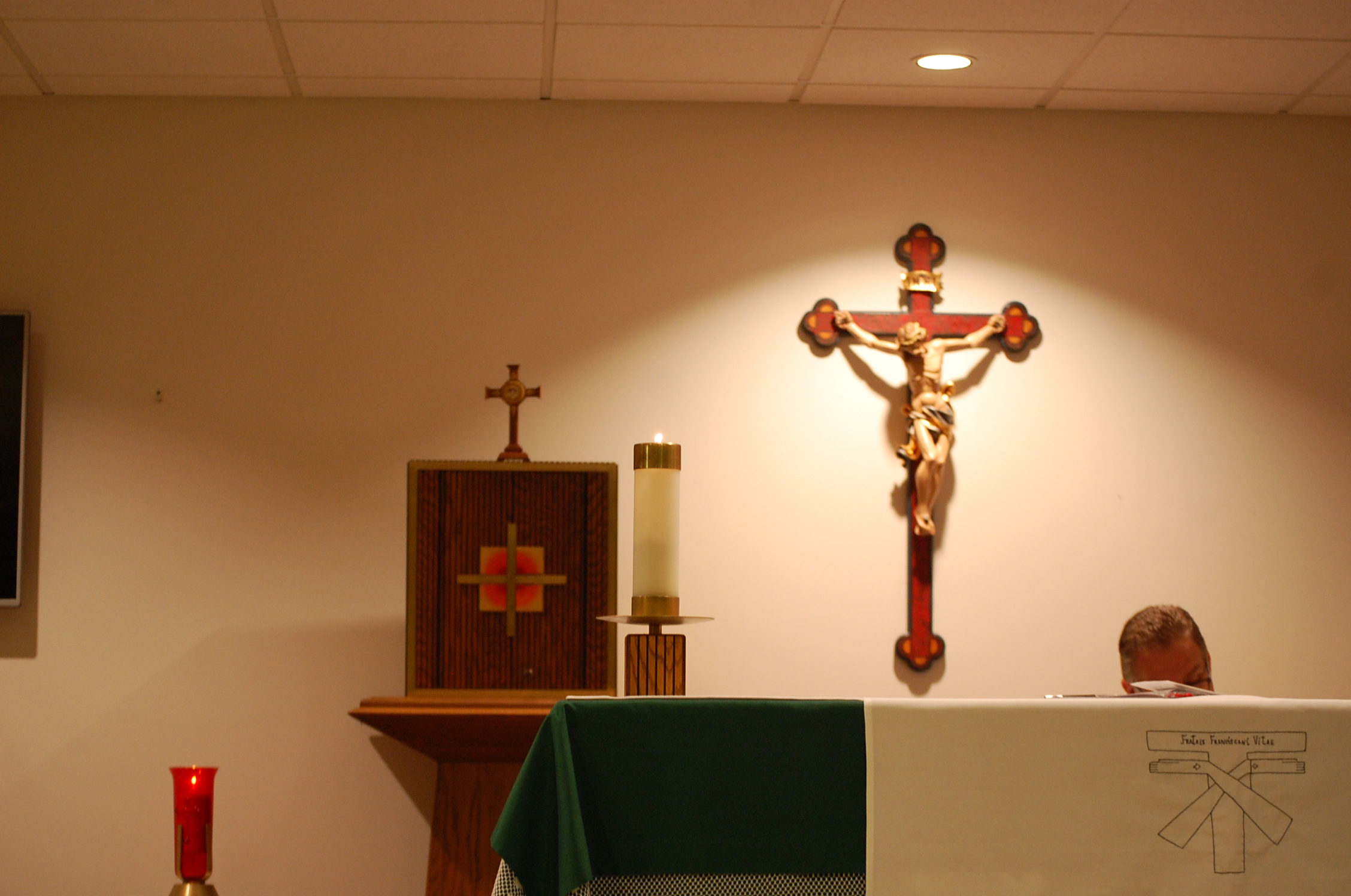 apostles. It was at the meal that he gave the Apostles the power to do as he had done, change bread and wine into his body and blood.
He gave this gift to his apostles, not only for their benefit, but for the benefit of all who would listen to the preaching of the Good News that the man executed on Friday walked out of his tomb on Sunday morning.
For the first 200 years or so after the passion, death and resurrection of Christ, many believers were executed in the cruelest forms, because they refused to deny the truth that they knew about Jesus the Christ. These martyrs were not morose men and women who wanted to die and who deliberately sought death. Like Jesus, they loved their friends, family, and home. But like Jesus, they could not deny the truth, even if it cost them their lives.
Today, millions of Christians around the world celebrate Palm Sunday, the day when Jesus made his triumphant entry into the city of execution. Unfortunately, many people regard it as a special day of the year when they received blessed palm branches. Churches are packed with people who would normally miss Sunday Mass. On this Sunday, they get something for free and fulfill a cultural and family tradition.
We have forgotten that Jesus did not enter Jerusalem to be honored with palms and “hosannas”. The palms were icing on the cake. Jesus entered Jerusalem to suffer and give his life to redeem mankind. He was willing to put up with false accusations, disrespect, scourging, a crown of thorns penetrating his head, and finally nails trespassing through his hands and feet.
Palm Sunday should remind us of Jesus’ obedience to the father, of his humility, his dignity, and his love for mankind. These were the forces that led him to the cross, not the political power of the high priests and the Romans.
Today, many of us respond with drama, vitriol and even violence when someone says or does something disrespectful. The common excuse is, “I’m not Jesus.”
True enough, none of us are Jesus. But Jesus says to us, “Take up your cross and follow me.” He makes this imperative several times in the Gospels. Yet, many of us recoil from the slightest offense, an illness, an unwanted pregnancy, poor health, and anything that could potentially inconvenience us or cause pain. Just as the martyrs did not seek death, nor did Jesus, the voice of God the Father must be heard and obeyed. We’re not commanded to be doormats, to seek to get sick, or to take an aggressive stand when we believe that we’re being humiliated.
We are called to be like Christ, to speak the truth when others try to hurt us or hurt another person; but we are not called to punish the world for its sins, cruelty, or foolishness. That’s not the man that we see entering Jerusalem on  Palm Sunday. Jesus simply spoke the truth and took the consequences for preaching the truth.
For those of us who attend mass on Palm Sunday, the question is, are we willing to speak the truth with dignity and respect? Are we willing to accept pain and suffering that is a natural part of life, without reneging, bullying others under the pretext of suffering, or casting doubt on God? Are we willing to keep silent, as Jesus did when he faced the Sanhedrin, realizing that there was nothing he could say that would change their mind and their arrogance? Are we willing to respond to others as Christ responded to the questions asked by Pontius Pilate, with dignity, honesty, respectfully and frankness, without argumentation or vitriol?
Palm Sunday is the first day of Holy Week. The week is holy because Christ’s words and actions were not driven by sin, desire to get revenge, an urge to punish the world, or an effort to hide his true mission. His humility, living the truth and his love for those who sinned as well as those who were holy never wavered. In the face of pain and death he says to the Father, “Not my will be done, but yours.”
On this great day of the liturgical year, we must think about how we respond to natural events that may be painful, how we respond to those who are rude or even cruel, how we respond to those who surround us when we’re sick or dying. Palm Sunday is the beginning of a week where we remember Christ’s life, death, and resurrection. Palms should be the needle of the compass to guides our lives. Holy Week is made holy by Christ’s passion and death. Those of us who act contrary to Christ’s actions, soil that which is holy.
 Let us never forget that Christ gives us the Holy Spirit who strengthens us with the necessary grace to face any difficulty. But we must be willing to do as Christ did. Seek opportunities for silence and avoid the distractions of the world, to hear the voice of the Holy Spirit guiding us to make every week of the year, holy.




 My son-in-law, who is an
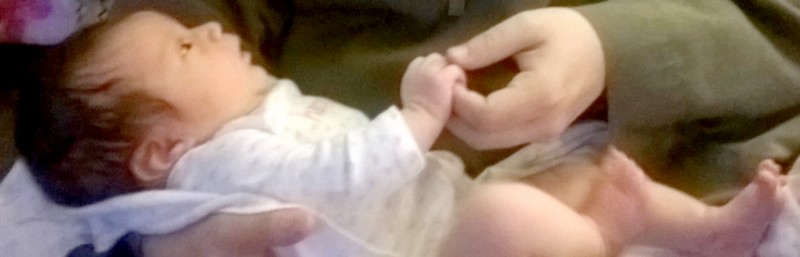
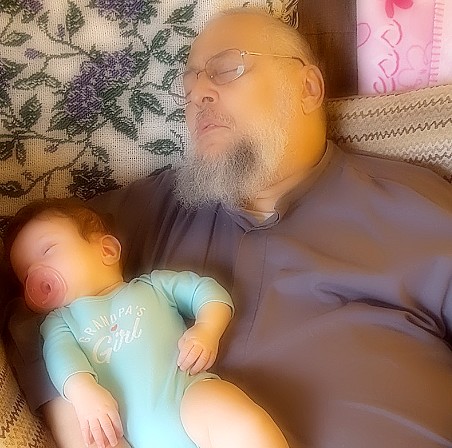
  Recently she has started to walk. She now picks up a book that’s interesting to her, takes it to her mother or father, climbs on the couch next to Mom or Dad and demands that they read to her. Dad captured one of these moments with his “dadmera” (Dad’s Camera). A few days later, came the short video. Katherine picked up a book of her choosing, opened it, and started to read it.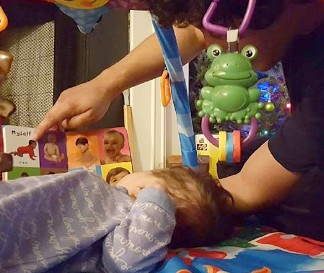
 My son-in-law deserves to be the “Fatherhood Poster Boy”. He’s an excellent father. He’s a black belt in Judo and has taught Katherine some of moves. She squeals in delight when Dad engages with her. As we have said, Katherine has a very intimate relationship with both parents. The bond of love expresses itself in reading, and squeals of delight doing Judo with Dad. It’s too early to try to analyze Katherine’s thoughts. We can only observe and report the interesting things that we see.




 a private relationship between the person who makes the vow, the people in his life and God. God does not call people into private relationships with him to the exclusion of everyone else. Even hermits, such as the Carthusians, embrace the cross in silence and solitude for the benefit of the Church as well as their benefit.
 something different from the rest of the baptized. He promises to do the same, but more perfectly or as close to perfection as is possible for him. In doing so he becomes a sign of life in the Kingdom of God.
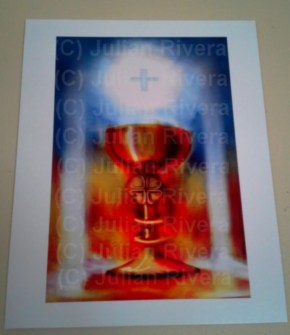 cartwheels to save us. He gives us the Scriptures. He gives us Himself through the Incarnation and the Eucharist. He shares His life with us through the sacraments. And he places many other sources of grace in the middle of the marketplace for the salvation of his people.
 rejecting the grace that God wishes to share with us through these states in life.
 rty and obedience to learn how to think and act with a pure heart, how to let go of the many things, people and places that redirect our attention away from God and we don’t need to be in vows to be bound to obey God as he reveals His will to us through Sacred Scripture, Jesus Christ and the Church.
 Those bound by a vow of obedience are to be the models of submission to the will of God, not the only people bound to submit to God’s will.

 the
the



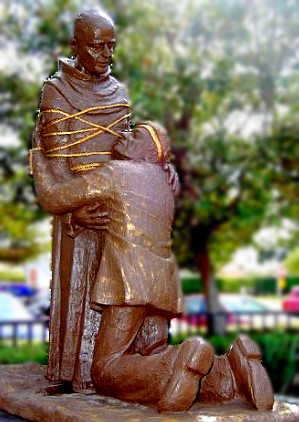
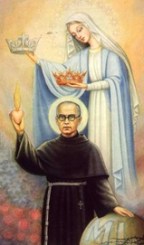 According to his parents’ and brother’s memories, Maximilian was typical pre-adolescent who had the ability to get under people’s skin like most kids in that age group. His mother often cried out in despair, “What’s to become of you Raymond? Note: He was born Raymond Kolbe. But there was something special about this apparent little magnet for trouble. His parents had taught him to pray. As a child, he knelt before Our Lady and asked her, “What is to become of me?” Our Lady gave him a choice between a crown of martyrdom and a crown of purity. Raymond chose both.
 First for youth – St. John Paul told the youth of the world, “Do not be afraid of Jesus Christ.” When Our Lady offered Raymond a choice between martyrdom and purity, he chose both. We think of this story and we swoon over this wonderful little boy who was so pious and so holy. We completely miss what God wants to teach us. Those who struggle, as did Raymond, are also called to a life of virtue and sacrifice. Prefabricated saints don’t need to practice heroic virtue or make heroic sacrifices. Sinners do.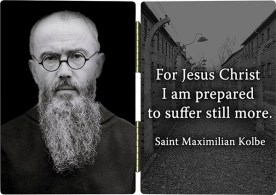
 remained open to the God of surprises rather than planning out their children’s lives in advance and trying to steer them into careers and marriages without consulting God’s plan for them. They educated their children in the faith, provided the academic education available to them and offered them guidance along the way. But they never owned their children. Their children belonged to God. When Christ called Raymond to become Brother Maximilian, it may have not been what Mr and Mrs Kolbe expected or planned, but they trusted. If this was truly the voice of God calling their son, he would be safe and they could offer him no better assurance of his happiness and salvation. If it was simply an illusion of youth, God would open their son’s eyes to the folly of his choice in life. Again, they trusted.
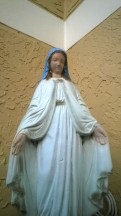 The lesson to be learned is that even when we are unsure what God wants from our children, if the choice is not a sinful one or a danger to to self or others, we can stand back and let the Immaculate guide. She can only guide our children to her Son. Her GPS is locked on Christ as the compass is locked on the North Pole. There is nothing to fear and much to be gained.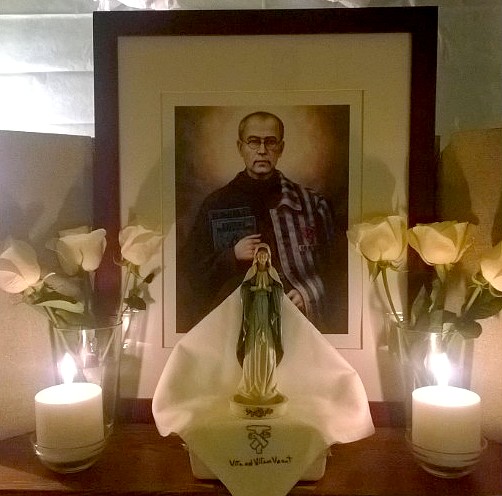
 3.
3. Franciscans of Life