My mother always said, “Darkness can never conquer light.” Looking at the world today things look dark if we don’t seek out the light.
Covid-19 has done more than making some people sick and kill others. It has thrown families into crisis. Some mourn a loved one. Others wonder about an elderly relative in a nursing home where visitors are not allowed. Spouses spend hours sitting, praying, and wondering if their partner is ever coming off the ventilator. Patients struggle to breathe. Their bodies ache. They have lost all sense of taste and even of smell. The endless coughing does not allow them a peaceful night’s sleep.
We must also consider how this virus has impacted the lives of healthcare professionals. They do not lose their humanity. Many have loved ones, including spouses, parents, children. Upon entering nursing school or medical school, they never dreamed that their lives would be on the line. Those things happened to people in the armed forces, not to healthcare professionals.

Long days on your feet were to be expected, but caring for more than ten patients was not a common occurrence among nurses. There was little fear of taking home a virus that could literally kill one of your children or elderly loved ones. As the number of nurses, doctors, medical technicians, and others contracted the virus, the workload became heavier. Instead of 12-hour shifts, some people were putting in 18-hour shifts. Yet, these people have spouses, children, parents, and even pets at home, waiting for them.
When your loved one is a patient in a hospital, a resident in a lockdown nursing home, a nurse, physician, or technicians, one doesn’t always enjoy a good night’s rest, wondering, worrying.
Also, the loss of income to many workers has stretched their resources beyond their means. When businesses are locked down, real people are home paying bills and buying groceries, with no idea when they will go back to work and bring home a paycheck. People who have worked hard all their lives to open a small retail store are now paying bills with no income.
Then there is also violence, looting, and confrontations on our streets. This has been one of the most active hurricane seasons in decades. Wildfires have left thousands of people homeless. Terrorism and military posturing have not taken vacations.
People wonder: “where is God in all of this? If God is so loving and merciful, why are so many people suffering? Does prayer really produce results?” Some are angry at God. They feel abandoned.

Given the picture of the world today, it is very natural to question one’s faith. God does not get angry because we doubt, or because we are angry at Him.
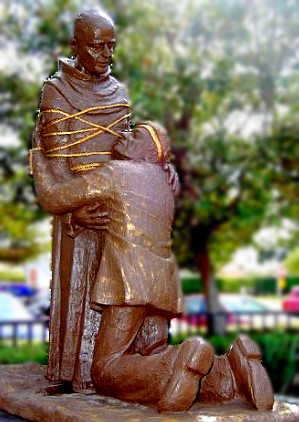
We find answers to our questions of faith when we reflect on the lives of men and women of faith such as: Saint Maximilian Maria Kolbe who died in a concentration camp to save the life a family man; Saint Teresa of Calcutta who left home at the age of 18 to become a missionary in one of the poorest countries in the world.
Then there are spouses and parents such as Saint Gianna Beretta Molla who chose to give her life rather than abort her preborn child. She delivered this child and died shortly after.
Speaking of people with strong faith, I can never forget what the Blessed Mother said to Saint Bernadette Soubirous of Lourdes, as she lay, dying of very painful bone disease, at the age of 35:
I cannot promise you happiness in this life, only in the next.
Christ never promised us that life in this world was going to be painless. As we enter the Christmas Season, we must meditate on the fact that the Son of God was born with a price on His head. Herod was looking to kill the little boy. His parents had to flee with Him into Egypt. Despite the threat of infanticide and later execution on a cross, God chose to be born into a world that offered Him no exemption from suffering and loss.
God chose to be born into a world filled with suffering and loss of many kinds. He navigated through this world always remembering that nothing is impossible for the Father. Let us never forget that God brought light into the world at a stable in Bethlehem and later at the resurrection from the dead.
Christmas is a commemoration of the time when God broke into the darkness of humanity to bring the light of faith, hope and charity. It is also a time of anticipation. Christ promised that He would return to judge the living and the dead. He will return to shed light on our sins and our acts of love.
Christ said the greatest act of love man can do is to lay down his life for his neighbor.
The chaos, fear, conflicts, and confusion that we’re experiencing can be moments of light if we reach out to those who suffer. We don’t have to give them anything. The shepherds who went to the manger to see the divine infant didn’t come bearing gifts. They were poor themselves. But they brought the greatest gift of all: support, love, and companionship to a young family in trouble.


 know, the first recorded Christmas crèche was created by St. Francis of Assisi, after his pilgrimage to the Holy Land. Some historians place this around the year 1223. For 794 years the Franciscan family has represented the nativity scene, as St. Francis understood it.
 Francis’ representation of the Nativity is wrong. On the contrary, it is the most reliable representation of the birth of Christ, because St. Francis pulled from several sources, including what he saw with his own eyes in the Holy Land. The more input one has into an event, the more points of consistency and the more differences between the narratives. Let’s be careful! We’re talking about differences in the narratives, not contradictions. None of the narratives of Christ’s birth contradicts the other. Each contains a piece of information that is not mentioned in another source: biblical, oral tradition or art. They fit together like pieces of a puzzle. This makes St. Francis’ representation of the Nativity one of the most reliable in history. He combined all of the sources that he knew, filling in the blanks in one source, with information from another source. One may ask himself, “Why is Brother telling us this?”
 Every year, churches and homes display the nativity using different artistic mediums. Unfortunately, some displays, even though they are beautiful, include elements that are not historical, such as Santa venerating the newborn Messiah or little towns, complete with trains. Even more common, is the addition of snow or the figures of the Magi venerating the newborn King.
 First: It was virtually impossible for Christians to enter the Holy Land on pilgrimage to the important sites in our salvation history. Many Christians had forgotten parts of the Christmas story and some people had added or deleted from the original story.
 s and huts unfit for a king]. From the moment that the Second Person of the Trinity broke into human history, he entered the world as a peasant who shared the lot of shepherds. It’s important to remember that the shepherds worked for someone else. They did not own the sheep. Jesus clearly reminded us that he had come to do the will of the One who sent him, not his will and that he is the Good Shepherd, meaning that he doesn’t own the sheep. The Father owns the sheep. We belong to the Father.
 and man. Unless we are born again as servants, instead of masters, we shall not find Christ among us.


 One the 11th of August, the Church remembers St. Clare of Assisi, the first woman to follow Francis of Assisi. We consider her the spiritual mother of the Franciscan family.
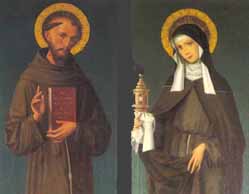 and to behave with grave reverence in the presence of a tabernacle.

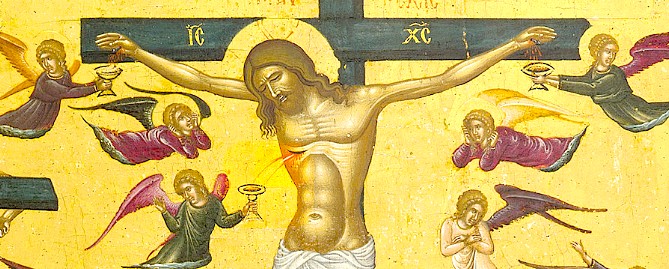
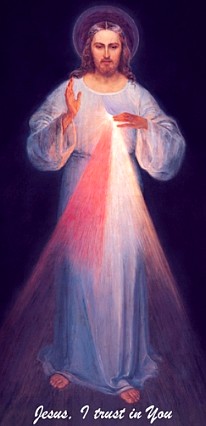

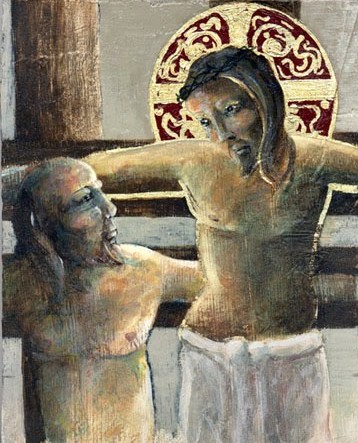
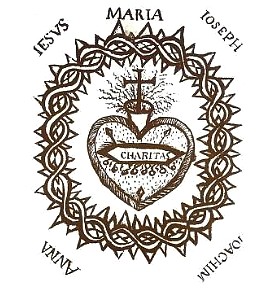

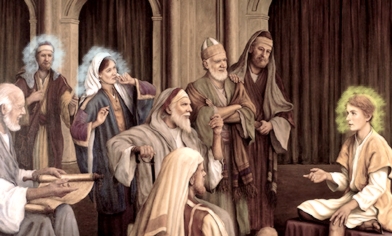

 During Lent, many of us agonize over what we should sacrifice during this holy period in preparation for the celebration of Easter. Chocolate seems to be the most common “expiatory lamb.”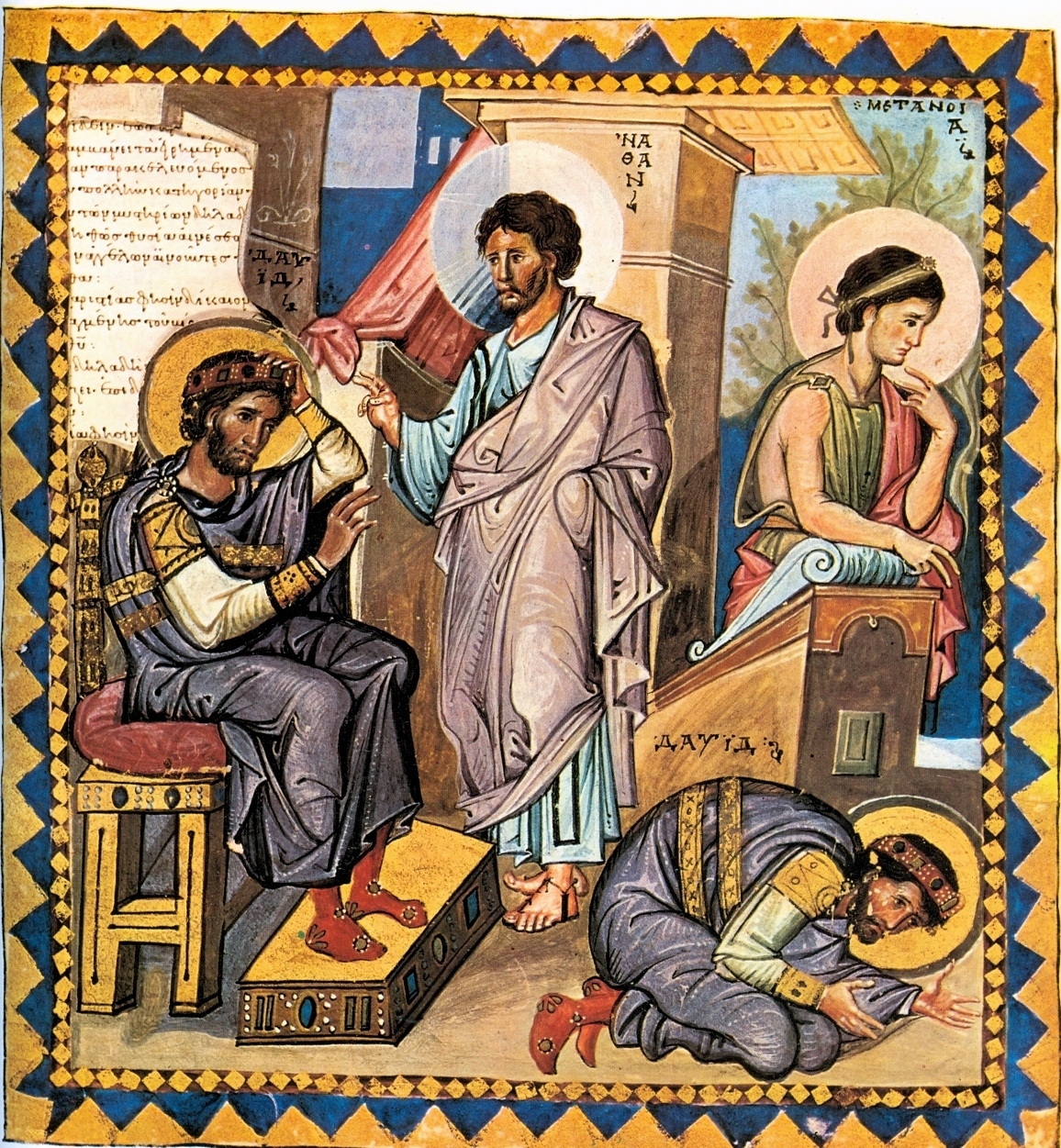



 3.
3. Franciscans of Life