Peace begins in the family
Normally, I prefer not to comment on the politics around me. I’m not indifferent to right and wrong. I’m indifferent to people who like to argue instead of engaging in a dialogue that arrives at some constructive conclusion. I’m afraid that this Christmas is being marred by so much hatred that it would be irresponsible for any Franciscan not to say something and continue to refer to himself as a man of peace.
On the national front, we have hate speech, conspiracy theories and a great deal of anger concerning the results of the elections. The fact is that no matter who won the election, there is no way that we would not be facing an uphill battle against sin and oppression of the voiceless, be they the preborn person or the immigrant and many others. We do not achieve peace by exacerbating conflict, by throwing fuel into the fire.
We achieve peace first and foremost through prayer. A man or woman who prays cultivates interior silence. He who cultivates interior silence opens an interior space where he can hear his brothers and sisters. The soul has many chambers. There is also another chamber where we find true Wisdom. In there, as well, one must be silent to hear the Word. It is the living Word that gives us the peace that the world cannot give, but that we can share with the world.
This is discernment through contemplation. It leads to answers that are appropriate for today’s concerns. Without proper discernment and contemplation, we run the risk of providing our own answers to the problems of today. So far, our answers have not taken us very far along the road to peace, interior and social peace.
There are Catholics who believe that they must provoke the Pope and the bishops until they bend or explode. Whether the Pope and the bishops bend to a certain point of view or they lash out in anger and frustration, the fact remains that the Church does not win. I’m not referring to the Mystical Body. The Mystical Body is holy. The Bride of Christ cannot be seduced to compromise with culture or to erupt in anger after being insulted and pushed around.
Those of us who make up the Body of Christ have not risen above our mortal nature. Shouting insults at the pope and bishops, calling the pope a heretic and a Communist leaves greater scars in the minds and hearts of the faithful who read the blogosphere and listen to the podcasterium of our time. Others who are not Catholic are looking at us and wondering, why in the world would they believe that we have the fullness of Truth, when we fail to give witness to charity, respect and humility. Where is the prize to be won by such aggressive behavior?
There are many serious questions on the table that we pray the Holy Father will address, for the sake of clarity. I believe that he is not a heretic and that it is not his intention to mislead the faithful and distort the faith. We hope and pray that he shed some light on the questions on the table.
It is equally important that the faithful: lay, clergy and religious, not take it upon ourselves to speak out as if we were a newly instituted magisterium. That’s giving in to the devil’s temptation to sow the seeds that divide rather than unite.
With terrorism surrounding us and taking innocent lives, is it necessary for Catholics and Americans to raise the level of anxiety with so much rhetoric that solves nothing and provokes every sin against virtue?

 that one is going to find much that is worthwhile on Facebook; but occasionally one runs into another person who thinks with clarity and shares his or her thoughts in such a way that encourages us to rise to higher moral ground and to a more intense life of virtue and prayer.
 a private relationship between the person who makes the vow, the people in his life and God. God does not call people into private relationships with him to the exclusion of everyone else. Even hermits, such as the Carthusians, embrace the cross in silence and solitude for the benefit of the Church as well as their benefit.
 something different from the rest of the baptized. He promises to do the same, but more perfectly or as close to perfection as is possible for him. In doing so he becomes a sign of life in the Kingdom of God.
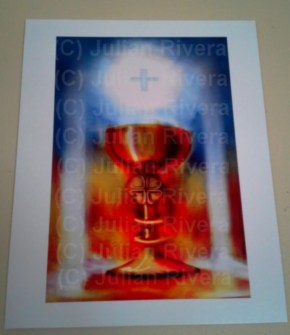 cartwheels to save us. He gives us the Scriptures. He gives us Himself through the Incarnation and the Eucharist. He shares His life with us through the sacraments. And he places many other sources of grace in the middle of the marketplace for the salvation of his people.
 rejecting the grace that God wishes to share with us through these states in life.
 rty and obedience to learn how to think and act with a pure heart, how to let go of the many things, people and places that redirect our attention away from God and we don’t need to be in vows to be bound to obey God as he reveals His will to us through Sacred Scripture, Jesus Christ and the Church.
 Those bound by a vow of obedience are to be the models of submission to the will of God, not the only people bound to submit to God’s will.

 the
the
 St. Francis of Assisi died on the evening of October 3, 1226; that is, 790 years ago. Nonetheless, he remains very much alive in the Church and the world today.
 Today, we are about one million around the world. No one really knows how many groups of Franciscans there are in the world. The family grew so much that it was impossible to keep it under one superior general and to govern everyone with the same expectations. Diversity in cultures, languages, political conditions and even geography made it necessary to breakdown into smaller communities that could be more easily governed and who were more cohesive.
 political persecutions, Church politics, poverty, wars, disease, misunderstanding, rejection, martyrdom, even heresy.
 should have been wiped out during the Protestant Reformation, maybe the Reign of Terror, Nazism, Communism, or the Americanist Heresy. The fact is that the Franciscan family is alive and growing.
 descendants are not just another group in the Church. We are a prophetic statement for believers and unbelievers alike. We foreshadow the triumph of Christ the King over all the odds and a new springtime for the Church.

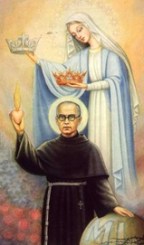 According to his parents’ and brother’s memories, Maximilian was typical pre-adolescent who had the ability to get under people’s skin like most kids in that age group. His mother often cried out in despair, “What’s to become of you Raymond? Note: He was born Raymond Kolbe. But there was something special about this apparent little magnet for trouble. His parents had taught him to pray. As a child, he knelt before Our Lady and asked her, “What is to become of me?” Our Lady gave him a choice between a crown of martyrdom and a crown of purity. Raymond chose both.
 First for youth – St. John Paul told the youth of the world, “Do not be afraid of Jesus Christ.” When Our Lady offered Raymond a choice between martyrdom and purity, he chose both. We think of this story and we swoon over this wonderful little boy who was so pious and so holy. We completely miss what God wants to teach us. Those who struggle, as did Raymond, are also called to a life of virtue and sacrifice. Prefabricated saints don’t need to practice heroic virtue or make heroic sacrifices. Sinners do.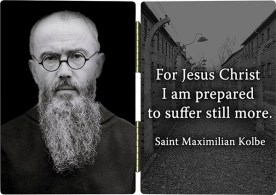
 remained open to the God of surprises rather than planning out their children’s lives in advance and trying to steer them into careers and marriages without consulting God’s plan for them. They educated their children in the faith, provided the academic education available to them and offered them guidance along the way. But they never owned their children. Their children belonged to God. When Christ called Raymond to become Brother Maximilian, it may have not been what Mr and Mrs Kolbe expected or planned, but they trusted. If this was truly the voice of God calling their son, he would be safe and they could offer him no better assurance of his happiness and salvation. If it was simply an illusion of youth, God would open their son’s eyes to the folly of his choice in life. Again, they trusted.
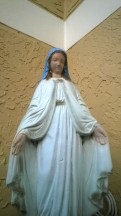 The lesson to be learned is that even when we are unsure what God wants from our children, if the choice is not a sinful one or a danger to to self or others, we can stand back and let the Immaculate guide. She can only guide our children to her Son. Her GPS is locked on Christ as the compass is locked on the North Pole. There is nothing to fear and much to be gained.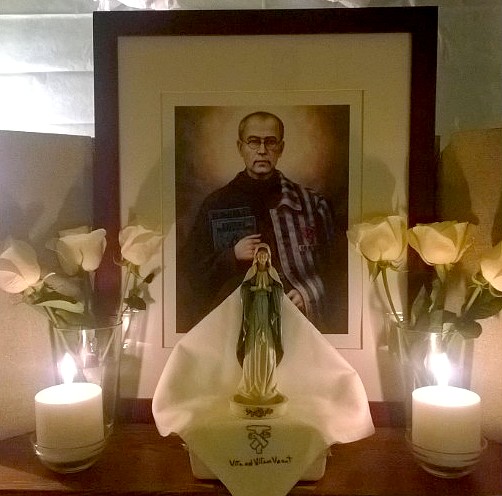








 3.
3. Franciscans of Life