Who said that you have to like the Pope?


Saint Pius XI found this article to be very helpful and supportive of what I presented in an earlier post, “Under Whose Authority “

Apparently, I’m not the only one who is noticing that people are not making a distinction between what they like and what they don’t like but must learn to live with.

When I was growing up I hated almost every rule that my father imposed on us.  As far as I was concerned, he was a totalitarian despot.  I’ll let you in on a little secret.  I had no idea what a “totalitarian despot” meant.  But I had read the term in a social studies book in school and it sounded like an appropriate label for my dad.

As the years passed and I transitioned from a child to an adult, I came to realize that my father was just a very conservative man from a different generation.  The truth of the matter was that nothing that he imposed on us did any harm to our bodies, mind or souls.  Some of his rules and statements were arbitrary and others were right on the money.  As I became an adult, I jettisoned that which was arbitrary and incorporated into my script that which was truth.

The same applies the pope and others in the hierarchy.  Many times, just like our parents, they say things that are right on the money, but we don’t like what we’re hearing.  That does not mean they’re wrong.  Other times they say things using a language that is different, one that we’re not used to.  That does not mean that they’re wrong.  It simply means that we have to pay close attention to the nuances.  Finally, they may even say things that sound silly to us or not consistent with what came before.  That does not mean that they’re wrong either.  It means that they are speaking to a different generation, at a different time in history, using a different language, and building on what came before, not denying it.

If we don’t understand, it’s like not understanding our fathers or mothers.  We have to learn to respect the person and the office.  The rest is a matter of biting the bullet.  How many people would belittle their parents with such labels as “modernist, apostate, heretic, infidel, devil incarnate” and more, because the parent does not seem to tow the line with what we believe our parents should be saying or doing, in matters of home management, discipline and even faith formation of the children?

I remember that my father was a twice a year mass attendant.  It was not until my mother converted that he started to attend mass every Sunday.  My mom was a formidable woman.  If she said “We’re going to mass,” we were going to mass.  No discussions.  Having said that, I wouldn’t dare place my father on the stand and accuse him of being any of those things that some people attach to the Holy Father.  Respect and love do not depend on being right or being lovable.  Respect and love are a choice that we make to treat every man and woman as Christ did.  Let us never forget that even though Pilate was wrong, he was given authority from above to judge and execute Jesus.  Jesus acknowledged that authority.  He was not a fan of Pilate, but he was a loyal Son of the Father.

We too must learn to live in the Church as loyal sons of the Father.

One last note, this is not an attempt to bash Traditionalist Catholics or the Traditionalist movement.  There are many Catholics in the movement who are very holy people and exercise great self-control when they don’t like something and know how to speak with firmness and respect.  They are to be admired and applauded.

Some of you may like this article.  I thank Scott Eric Alt for sharing it.


Published in: on January 28, 2016 at 2:20 PM  Comments (1)  

A Tradition of Hopelessness?


I’ve been reading certain blogs and newspapers online by Catholics who believe that the Church has lost her Catholic identity and her traditional roots.  I must admit that the reading is very depressing; but not because of the alleged crisis in the Church.  This is not to deny that there is a crisis of faith in the world, which affects people of all faith traditions.  We can address that in a later post in this blog.  For the time being, allow me to speak about the blogs and periodicals that are being posted online by Catholics.

When I was growing up, I was taught that in a democratic society, disagreement is a sign of health.  When disagreement triggers dialog, the possibility for growth is endless.  Along with such sage advice, my mother also taught me that disagreement must never rise to the level of disrespect for a person or his office.  Crude, disrespectful, dismissive or condescending behavior is simply arrogance.  Arrogance, like any other evil, has no rights.  Therefore, the arrogant person forfeits his right to a dialog with civilized and intelligent human beings.

What we have is certain Catholic journals and blogs publishing articles and posts that disagree with much of what Pope Francis does and say.  There is nothing wrong with that, as long as the Church is open for dialog, which she is on certain points.  However, they take the liberty to apply such terms as Modernist, apostate, heretic, Marxist, sacrilege, indifferentism, syncretism, and more to the Vicar of Christ.

Everyone knows that there has never been such a person as the perfect pontiff.  From the first day of its existence, the pontificate has been plagued by human weakness.  Yet, it has survived.  It has survived, because Grace has never been absent in the Church, especially in the Petrine Ministry.  The first pope denied his master three times.  He behaved with certain prejudices toward Jews and Gentiles, causing Paul to “lose it.”

However, when Paul lost it, he challenged Peter’s behavior and position.  But he also addressed him by his proper title, Cephas or Rock.  Paul did not cease to insist that Simon was the Rock upon which Christ built his Church.  Paul was smart enough to see the weakness in Peter’s behavior when it came to the conversion of Gentiles and smart enough to remember that despite it all, Peter was the Vicar of Christ, not him.  So . . . he took his argument to Peter and to the Council of Jerusalem.  But not once did he stick disparaging labels on Peter.

Some “Traditional Catholics” invoke Irenaeus as their model or Catherine of Siena.  Both of these people held on to the faith during times of crisis in the Church and the world.  Both were honest enough to speak their mind to the pope and point to the errors in the pope’s thinking.  Maybe, the reason why Irenaeus and Catherine share the label “saint” in front of their names, is not because they challenged and questioned, but because they loved and respected.  They acknowledged that whatever they saw as mistakes didn’t change the fact that the pope was the legitimate successor of Peter who was the Prince of the Apostles and the Vicar of Jesus Christ.  They spoke up without mocking, insulting, and labeling the pope or encouraging others to do so.  They communicated their protest with dignity, charity and humility.  I often find this lacking when writers in blogs and periodicals apply hurtful labels to the person of the pope and to his ministry.

Surely, we can learn from Catherine, Irenaeus and many other great men and women in Catholic history, how to speak about those things that are difficult and disturbing without arrogance, rudeness, and hopelessness.


Published in: on January 19, 2016 at 10:14 PM  Leave a Comment  

Let God do the driving


As everyone who follows us on our blog or on Facebook knows, we were in desperate need of a car.  Our car was totaled on December 26.  A few days after the accident, I remembered something that St. Francis said in his Testament.

Let those who know not [how to work] learn, not through desire to receive the price of labor but for the sake of example and to repel idleness. And when the price of labor is not given to us, let us have recourse to the table of the Lord, begging alms from door to door.

I know that we do not bring in enough money to purchase a car, not even a used one.  Other than a few hundred dollars from the insurance company, we had nothing.

However, God will never be outdone in generosity and in pity for us.  I remembered this passage from the Testament and decided to beg for help.

In less than 24 hours after posting our cry for help, we received three offers to help us.  The first was from an old friend who said, “I have a car that I want to give to you.”   Imagine our joy when we heard this good news.  But there is more . . .

An hour later, a dealer who supports our work for the Gospel of Life called me.  “Brother, I can help you.”

The next morning we received an email from another generous person.  “Pick the car you want.  I’ll pay for it.”

All of this is leading somewhere, so please stay with me.  The Franciscans of Life have just finished a three month process during which we reviewed our constitutions and did some editing for greater clarification.  The chapter on poverty required the greatest amount of attention.  For greater clarity we inserted an article into the chapter on poverty.

The brothers shall own only one car per house.  They may not own a new car, nor an old car that is commonly used by the wealthy.  They are to acquire used cars, either through their effort or the generosity of others.  Let these vehicles be such that they conform to what the working man or woman in the lower economic sectors would drive.  Let them not use said vehicles for recreation.  They are tools for service to the voiceless.

We now had an interesting situation.  We had a vendor who was willing to give us a very generous deal on a used car.  There was a benefactor who wanted to purchase a car of our choosing and there was the father of a family who was offering his car as a gift.

We, the brothers, discussed what to do and which offer to accept.  It was finally decided that the superior should decide.  I hate it when the brothers do that.  😦  Guess who has to decide?  😀

The question on the table was, “What would be the most natural for a poor man?”

This was easy.  People don’t usually call the poor and offer to purchase a vehicle of their choice for them.  That offer was now off the table; although we are very grateful.  The poor don’t get telephone calls from dealers offering them a bargain on a car, simply because they’re poor.  I wish this would happen more often.  Unfortunately, it does not happen often enough.  That offer was off the table as well.

This left one offer on the table.  The older family car that was offered to us free of charge.  I remembered that the first car I ever owned was a hand-me-down from my sister.  I was broke.  The only thing that I could afford was that old car.

The end of the story is that we have a car and it’s beautiful.  It’s a 2004 Dodge Grand Caravan with 156,000 miles and a few dents and scratches on the outside, but it’s perfect under the hood.

Here are the pictures.

There are several other dimensions to this story.

First:  The brother who was involved in the accident in one of our novices who is about to make vows this week.  The car was totaled; but Brother walked away without a scratch, not even a headache.  Not only was he not hurt, he was smiling when he arrived home.  His first words to me were, “I feel very peaceful.”  If this is not a sign of a man whom God has called to himself, I don’t know what is.

Second dimension:  During our review of the Constitutions, we asked The Immaculate to point us in the right direction.  “Are we doing the Will of God?  Is this way of life and this work what God wants from us?”  The Lord protected our novice from physical harm and blessed him with great peace and joy, despite the hardship.  Interior peace is the best sign that one is in compliance with God’s Will.

Finally, the third dimension to this story, without the car, our student brothers cannot travel to the university.  We cannot continue our work in hospice, pregnancy centers, university campus, religious education and among the immigrant poor.  We live in an area where public transportation is very poor.  It would take two hours to get to the university using public transit, when it takes 25 minutes by car.  A brother would spend four hours on the road to go to a class.  This is time that has to be stolen from prayer, community, and apostolate.

Not only did God’s providence come through for us through the generosity of others; but he confirmed us in our vocation.  God does not provide transportation to go where he does not want us to do so.

The last thing for today, we need to do some body work on the car.  We have $1,300.00.  We need about another $500.00.  If you can spare $1.00, it would help.  If you know someone who does body work in the Fort Lauderdale area and can hook us up with a good price, that would be very helpful.

While we’re on the subject of money.  We want to thank everyone who donates to Franciscans of Life.  Every month, we manage to reach the necessary dollar amount to pay our rent and utilities for that month.  Isn’t that awesome.  🙂

FFV Immigration Resources Page Well Received


We have noticed with great joy that ever since we published on our website a page with information and resources for immigrants and refugees ( http://www.franciscansoflife.org/inmigracion.html ), it has become our second most visited page, counting hundreds of visits every month.

resources_00

The link on franciscansoflife.org

Written entirely in Spanish, the page briefly describes the service of the Franciscans of Life to the immigrant poor. It also provides a list of services in Miami-Dade and Broward, such as emergency and abuse hotlines, low income medical care, community resources, public transit, internet, legal help, prison ministry, food and clothing, pregnancy help, housing, help to minors and refugees, and education.

resources_01

To make navigation easier, a series of intuitive icons allow the visitor to quickly go to the section of interest.

resources_02

Our website access statistics can only record a minimal part of the search phrases that led the visitors to our resource page. However, for those phrases that we have learned about, we are very moved to see how this page is able to meet the call for help of so many who are looking for very basic necessities.

In fact, out of curiosity we typed some of those phrases on popular search engines and much to our surprise we found that in many cases they are among the top results!

For instance:

  • #1 in “catholic churches in miami that help find medical help”
  • #2 in “help for immigrants in hollywood florida”
  • #4 in “immigration refugees hialeah”
  • #6 in “catholic medical services in miami”
  • #7 in “metro rail low income miami”
  • #7 in “clinics for people without medical insurance broward florida”
  • #9 in “abuse help broward”
  • #14 in “emergency help miami”
  • #21 in “help for immigrants miami”

Please help us reach a greater number of our immigrant brothers and sisters in Miami-Dade and Broward by sharing this simple list of information and resources.

http://www.franciscansoflife.org/inmigracion.html


Published in: on November 17, 2015 at 12:34 AM  Leave a Comment  

FFV Highlights


Pax et bonum!

The past few months have been quite busy 🙂 We wish to share with you some highlights, hoping that you will enjoy them and pray for us! Also pray for vocations. The Year of Consecrated Life is not over yet. Could the Lord be inviting you to build with us in the footsteps of St. Francis…?

20150906_004_X

The regular brothers wear the “corona” as a sign of consecrated celibacy.


20150814_004_X

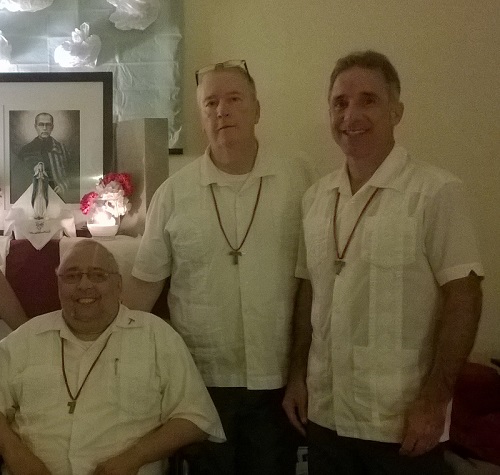
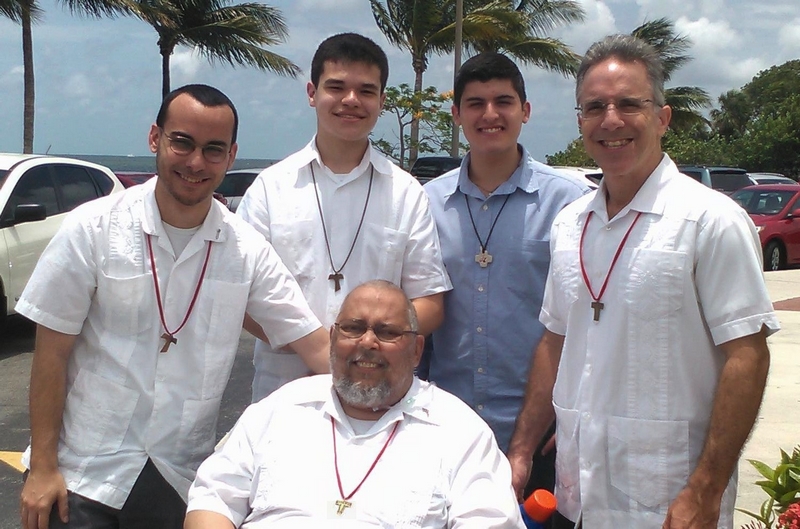
Extern Brother Chris Thomas More (right) renewed his Solemn Promise, and Regular Brother Leo (center) made his First Profession.


20150911_004_X

In September we celebrated the birthday of Father Superior by throwing a “surprise puppy”… 😉


20150921_121823_X

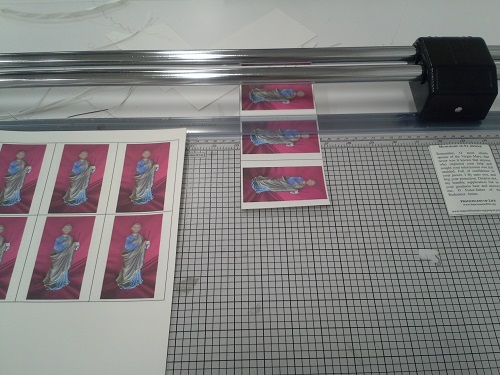
We crafted our first holy cards featuring a statue of St. Joseph donated to us by a generous benefactress. Some of the cards were blessed in Philadelphia by the Holy Father.


20150929_IMG_3531_X

We went in pilgrimage to D.C. and Philadelphia following the footsteps of the Holy Father. In the picture: Pope Francis preaches the homily at the closing of World Meeting of Families.


20151004_IMG_3560b_X

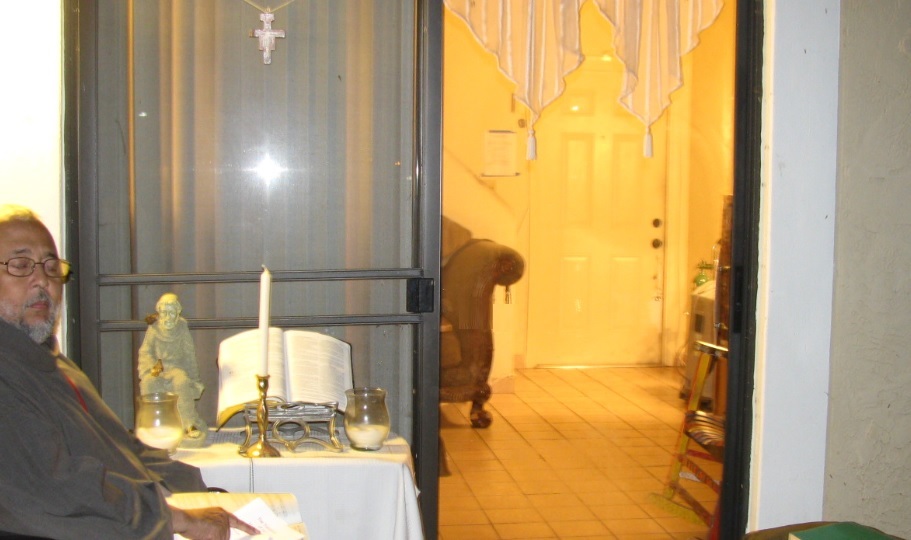
On the evening of October 3rd we celebrated the Transitus of our Seraphic Father, St. Francis outside of our mother house.


20151017_080043_X

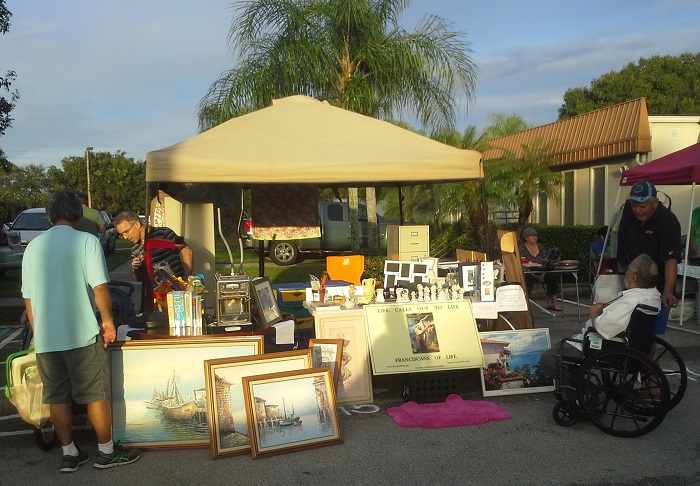
The brothers worked hard to raise funds at the Flea Market of St. Maximilian Kolbe Catholic Church. Most of the objects were donated to us for this purpose!


20151024_003_X     20151024_005_X

20151024_010_X

Tailor and cobbler workshop at the mother house 🙂 In the pictures, a brother sows a pair of pants and admires its seam, then proceeds to repair some sandals.


20151030_009_X

A big “thank you” to the generous donor who helped us purchase much-needed front tires for the community car!


20151031_001_X

Boo! 😀 On Halloween we “dressed up” the front door of the mother house for the joy of the little children who live in the neighborhood.


20151107_015_X

Franciscans of Life presented Project Joseph (Proyecto Jose’) at the II Respect Life Ministry Hispanic Conference.


20151107_V__E574_X

Mrs. Joan Crown, Executive Director of Respect Life Ministry Archdiocese of Miami, along with our Superior and Director of Project Joseph.


20151108_004_X

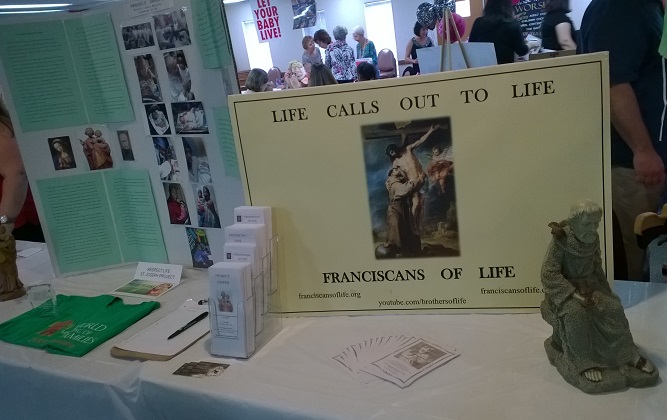
Franciscans of Life attended the Ministry Fair at St. Maximilian Kolbe Catholic Church, raising awareness for Project Joseph and its great need for mentors.


[How to Help]

Moral Reasoning Through the Complexity of Homosexuality


This is a very complex issue. It’s not as simple as people on both sides of the aisle want to make it. There are some basic principles that do help us understand what is right and wrong. Many people are not educated in these principles.

First: God reveals himself. He discloses himself to man through Sacred Scripture, also through sacred tradition, the baseball_throwingMagisterium of the Church, natural law, and logic.

We can’t just throw a bible verse at something and pretend we have it all figured out. All of these pieces must work together. They are all good, because they all come from the same divine origin.

Second: Faith enlightens reason. We must reason through these questions and let our faith inform us whether or not our reasoning is consistent with what God has revealed about his nature and the nature of man.

Third: People have to distinguish between the action and the person. They are not the same. When a five-year old kills his little brother with his father’s gun during a game of “cops and comicrobbers,” the action is contrary to the commandment, “Thou shall not kill.” However, the five-year old is not a murderer, because he neither intended to actually kill his sibling, nor is he knowledgeable of the commandment. The action remains evil; but the child is not culpable. We can condemn behaviors, but we have to be very careful not to judge people. That would be playing God.

Fourth: Juangel_appears_to_st_josephdging another person involves walking through his or her mind and conscience. One’s thoughts on any issue and one’s moral conscience are part of what is known as the “internal forum”. This is an area of human existence that no human being may trespass or attempt to read without an invitation from the individual who is the lawful guardian of his mind and conscience. We can explain why a certain action or behavior is wrong, but we may not pass judgment on the individual’s moral reasoning unless that person invites us to examine it with him, thus inviting us into the internal forum.


Fifth: There is a big difference between homosexual acts and homosexuality. A person with same sex attraction does not wake up one morning and decide to be gay. As he develops and goes through different life experiences, he becomes aware of his feelings in this area. On the other hand, people freely choose to engage in sexual behavior with a person of the same sex. Choosing to be attracted to the same sex is very rare. That which man does not choose can be neither a sin nor a virtue.

Pope_Francis_on_accompanying

Sixth: Homosexual acts, like heterosexual acts, are freely chosen by the parties involved (except in cases of violent force). The person(s) must use reason to determine whether an act is right or wrong. If the person is a man or woman of faith, that faith should confirm the correctness of his conclusion or point to its moral error.

right and wrongSeventh: Acting on faith and basing our actions on what God has disclosed to us about him, about us and about the relationship between the divine and the human is not the same as playing God. It is using that which makes us in the image and likeness of God to make right choices, that being knowledge of right and wrong.

Eighth: Standing in judgment of an action does not constitute godliness. It’s part of human reason and part of living in society. On the other hand, standing in judgment of the person involved in the action that we reject, IS playing God. No one has the right to judge the conscience of another human being, unless the other person opens up his heart and shares what is on his conscience.

[How to Help]

“Never Forget to Love”


St. Maximilian, Pray for us.

St. Maximilian,
Pray for us.

On Friday, 14 August, the Church celebrates the feast of Saint Maximilian Maria Kolbe.  Many know that Saint Maximilian Kolbe was a Conventual Franciscan friar who gave his life, in a concentration camp, to save the life of a young man who was a husband and father.  More here

Maximillian, along with the Immaculate and Saint John Paul II, is patron of the Franciscans of Life.  Maximilian also founded the Knights of the Immaculate, movement to promote devotion to the Mother of God, devotion that allows her to point to Christ as she did at Cana.  This he did after he consecrated his life to the Immaculate.    The Church has named Maximilian the Patron Saint of those who work for the Gospel of Life.

In honor of Saint Maximilian, the Franciscans of Life will gather for a festive supper and solemn vespers on the evening of August 14th.  There will be food, music, pictures, games and a great deal of fraternal spirit.  Please keep the Franciscans of Life in your prayers this day.

Man is called to a fullness of life which far exceeds the dimensions of his earthly existence, because it consists in sharing the very life of God. The loftiness of this supernatural vocation reveals the greatness and the inestimable value of human life . . .” (Evangelium Vitae).

A family celebration


This Saturday we had an interesting event, as both memorials of the Immaculate Heart of Mary and of St. Anthony of Padua coincided. For the Franciscan family, the day of St. Anthony is a feast. Since the Immaculate is our patroness, we wished to honor her in some way.

St_Anthony_and_Family

We decided to visit the Shrine of Our Lady of Charity by Biscayne Bay (Miami), where we would attend the midday mass in honor of the Immaculate Heart.

The legend of the statue of “la Caridad del Cobre”, as it is commonly known among the Cuban people, traces back to the 1500s, when it was found floating in the Nipe Bay (Holguin province) by three young slaves (“los tres Juanes”) from the copper mines. The statue was placed near the mines, first in a humble hut and eventually in a church. She was proclaimed the Patroness of Cuba in 1916 by Pope Benedict XV.

Our_Lady_of_Charity

The Cuban Exile to Miami retained its devotion to la Virgen de la Caridad, and one of its representatives, the Rev. Augustin Roman, began working with Archbishop Carroll to build a shrine in her honor.

Appointed Auxiliary Bishop of Miami in 1979, he would oversee its construction and serve as its rector up to the very last day of his life.

The brothers arrived at the Shrine around 11:30 am and were joined by a good friend.

WP_20150613_005b

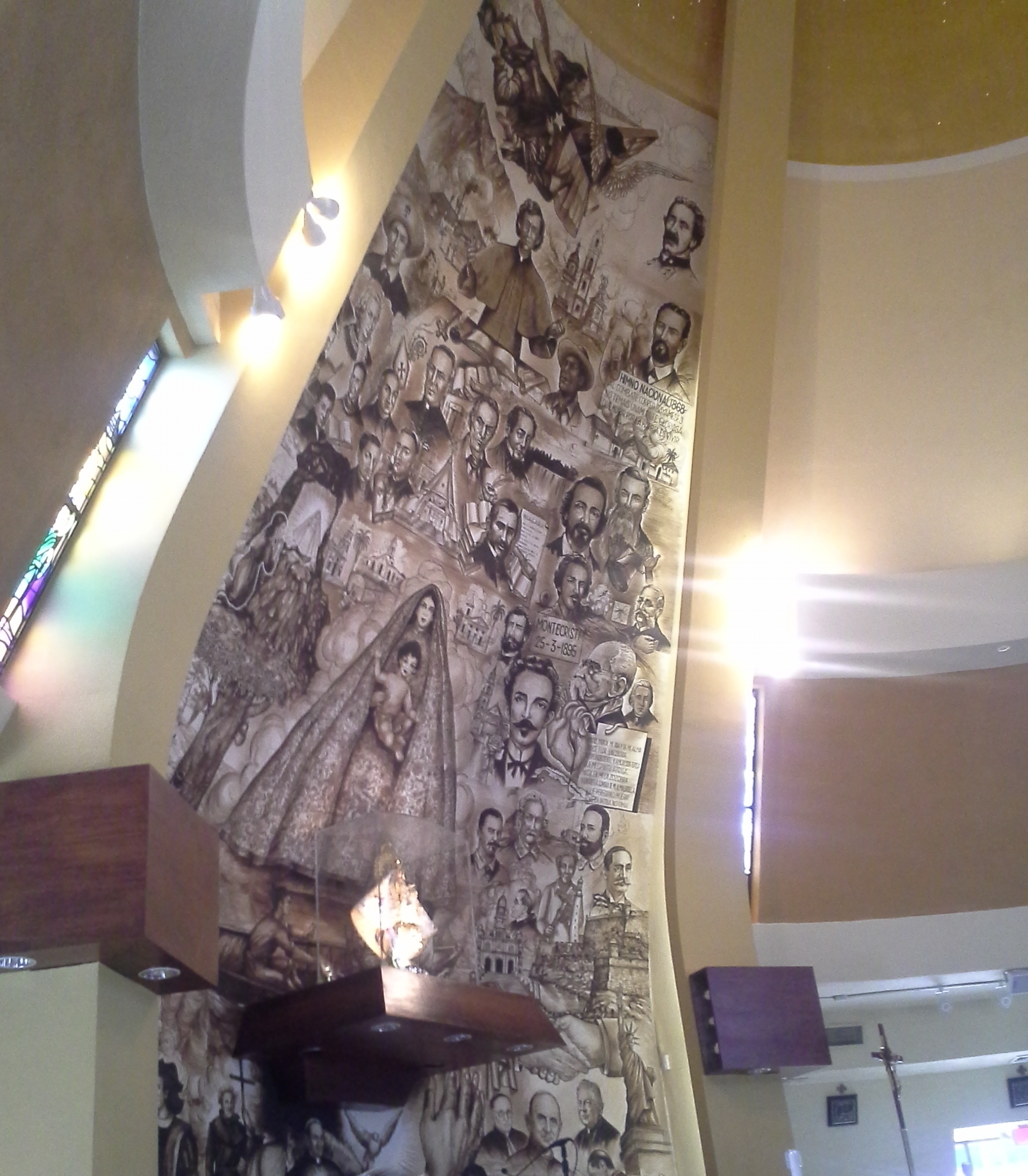
Before Mass, presided by Fr. Rumin OFM, they had some time to admire the artwork inside the Shrine, along with the blessed replica of the statue that arrived from Cuba in 1961.

WP_20150613_003

The mural behind the altar is a tribute to the faith of the Cuban people going all the way back to the 1500s. An overview of the different parts can be found on the website of the Shrine, here.

20150613_114820

Afterwards, we gathered at the little kiosk outside of the Shrine, where we enjoyed typical Cuban food, such as “guarapo” (a juice made from sugar cane), croquetas, and pan con jamon y queso 🙂 We were soon joined by a group of “spectators” who were quite interested in the crumbs left behind!

WP_20150613_007

[How to Help]

“To be held as precious”


Today the Latin Church celebrates the solemnity of Corpus Christi to commemorate the institution of the Eucharist.
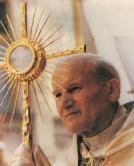
JPII W EUCHARIST

Although the Seraphic Father never experienced this feast, he and his brothers certainly had a special devotion to the Holy Eucharist during his lifetime. In fact, St. Francis focused his first Admonition on the Holy Eucharist, professing that

the Sacrament of the Body of Christ which is sanctified by the word of the Lord upon the altar by the hands of the priest in the form of bread and wine […] is really the most holy Body and Blood of our Lord Jesus Christ.

St. Francis emphasized that the Holy Eucharist shows the Lord’s great humility and simplicity, the same that He showed in the Incarnation:

Behold daily He humbles Himself as when from His “royal throne” He came into the womb of the Virgin; daily He Himself comes to us with like humility; daily He descends from the bosom of His Father upon the altar in the hands of the priest.
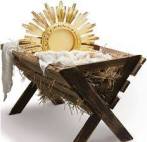
eucharist in creche

The awe inspired by the great love of the Word made Flesh, united to the awareness that in this world we can see nothing corporally of Christ except the Holy Eucharist (Testament) moves us to revere the Real Presence and, by association to show respect for “the chalices, corporals, ornaments of the altar, and all that pertain to the Sacrifice“. These, Francis reminds, us, must be held as precious (Letter to all the Custodes).

In the Latin Church, such reverence was expressed in ways that were typically European, according to the circumstances. Customary gestures arose, some of which acquired meaning, and others to which meaning began to be attributed.

The latter revealed a weakness: the meaning of reverence appeared from the outside in. One had to ask “Why?” in order to be told “it is a sign of reverence“.

Other customary gestures, however, allowed the action to speak for itself. Consider for instance the elevation after the consecration, a late medieval introduction intended to show the consecrated host to the people. When St. Elizabeth Ann Seton, prior to her conversion from Anglicanism, witnessed this for the first time, she was well aware of what was being done (since it existed in the Anglican rite), but the awe that accompanied it was what she perceived, an awe sparked by the Catholic belief in the Real Presence. This, and not the gesture per se, would eventually lead her to the Eucharist. Reverence, then, can be experienced or defined.

St_Seton

The Church, rather than rigidly defining reverence, mediates its experience by pointing to the value of that which is sacred. This she does in a twofold manner: expressing dismay when that which is sacred is treated carelessly, and showing forth the different degrees of reverence due to the sacred.

As an example of the former, the Church states that “sacred objects, which are designated for divine worship by dedication or blessing…are not to be employed for profane or inappropriate use” (CIC 1171), and that they be made of materials “truly noble in the common estimation within a given region, [being] reprobated…any practice of using…common vessels…or which are mere containers” (RS 117).

As an example of showing the different degrees of reverence that are due, consider the chalice. The minor clerics handled the empty chalice. The subdeacon handed the filled chalice to the deacon before consecration. The priest handled the consecrated chalice.

When for practical reasons laymen replaced the ministry of the minor orders and subdiaconate, the lay ministers handled the empty chalice, the deacon poured wine into the chalice and handed it to the priest, and the priest consecrated.

When order is restored, confusion disappears and once more reverence becomes visible.

If, however, we do not let reverence speak for itself, but rather focus on rigidly defining it, we risk embracing two imperfect mindsets.

In the first of these, we may apply gestures that express reverence in situations that do not call for it, which leads to an over-generalization or over-use of such gestures, so that eventually they lose their reverent meaning and become “common”.

An example of this is the practice of genuflection. In the Latin Church, genuflection became a common sign of reverence towards the Blessed Sacrament. Eventually, genuflections became common throughout the liturgy even when the Blessed Sacrament is neither present on the altar, nor reserved in the Tabernacle. This begs the question: “Why genuflect?” To which the answer comes: “As a sign of reverence“. This led to confusion, as the distinction between reverence due to the Blessed Sacrament and respect due to a sacred object (namely, the altar) became unclear. This of course can lead to such gestures being eventually discarded because they are no longer associated with the original context and thus  perceived as superfluous repetition.

The second of these mindsets, one may begin to perceive the absence of certain gestures as a “lack of reverence”, or the presence of certain gestures as a “need”, given our sinfulness or even “uncleanliness”.

Consider, for instance, the usage of gloves by altar servers. When the law of the Latin Church reserved, so to speak, the handling of the sacred vessels to the minor clerics, this came neither from divine revelation nor because of an intrinsic spiritual meaning. Certainly it was not the Church’s mindset that the laity was “unworthy because unholy”. It was done for very practical reasons. Furthermore, laymen and religious often functioned as sacristan. At times they handled the vessels with a piece of cloth, because it was fairly easy to transfer grease and dirt from their hands to the vessels.
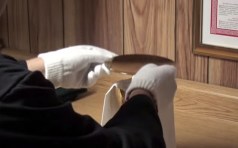
gloves

Yet by the 19th Century we read that if the sacristan is a layman rather than a minor cleric, “it is at least becoming that a veil be used in handling the chalice and the paten” (Collectio Rerum Liturgicarum). Statements such as these were understood in the negative, as implying that the gesture of a lay man or woman handling the chalice with bare hands is a lack of reverence, because the laity are somewhat “unclean”, hence the need to “restrict” them outside of the sacristy and to grant clerics alone the “privilege”of handling the sacred vessels. This, of course, confuses the way the Church intended to bring order and distorts the meaning of reverence. Even the previous Code of Canon Law stated that the sacred vessels could be handled by either the clerics or those who had their custody, including laity and religious (CIC/1917 1306), where the word “laity” made no distinction between male and female .
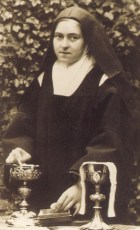
St-Therese-sacristan-2

St. Therese of Lisieux as sacristan

As for the honor due to the clergy, the Seraphic Father reminds us that it is “on account of their office and administration of the most holy Body and Blood of our Lord Jesus Christ, which they sacrifice on the altar and receive and administer to others” (Letter to all the Faithful). That is to say: we honor them because they are the ministers of the Eucharist; they are not the ministers of the Eucharist because of their holiness.

In brief: this mindset, which focuses on our sinfulness alone, fails to acknowledge the Incarnation. Yet, it can still be found today, even when minor orders are no longer present in the Latin Church (with a few exceptions) and their functions are performed by the laity.

To avoid the two slippery slopes that we have described, we should bear in mind that the Church does not rigidly define reverence, but rather orders roles and gestures according to the need. Again, when order is restored, confusion disappears and once more reverence becomes visible.

Consequently, the focus shifts from our sinfulness and unworthiness to the Incarnation. At that moment, the Word becomes Flesh and the Second Person of the Holy Trinity assumes our nature, breaking into human history and beginning the journey towards our redemption.

True reverence has its roots in the Incarnation and naturally returns to it. We reverence Our Lord Jesus Christ when we acknowledge Him as true God and true man, hence becoming aware of who He is, our very brother, and of who we are in relationship to Him, children of the Most High.
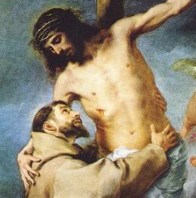
St_Francis_embrace


Br. Bernardo di Carmine

[How to Help]
Ask whatever you will


As some of you may already know, I’m back in the hospital. I’ve been here almost two weeks and there is no discharge on the horizon. My major body systems are not cooperating with each other. You fix one and the others go into distress (kidneys, lungs, pancreas, heart, and circulation).

It is a very challenging week in our fraternity. First, I became ill. Then Brother Leo’s sister died this weekend. Please keep him and his family in prayer. He had to fly to Boston. We miss him dearly.

As if that were not enough, Brother Bernardo was left alone to care for me since Leo is in New England. The challenge . . .? Brother Bernardo has come down with his own case of tonsillitis and has final examinations this week. The poor man is trying to recover, to help me and to prepare for finals. Pray that God will reward him with peace and trust.

On the positive side, patients, staff and guests at the hospital are very curious about Franciscans of Life. They don’t get to see much of us, because we don’t do traditional parish work. Our day is broken down into segments of prayer, teaching and preaching the Gospel of Life through a variety of apostolates, atonement for the culture of death, and fraternal life among us, like that of the early Franciscans.

People are fascinated when we explain that we’re looking back to go forward. I believe this has caused some Catholics to look back as well. We get many people who suddenly remember being influenced by a Franciscan here and there. If these memories transport people into the presence of God, then it must be the good spirit’s leading. One never knows the extent and power of redemptive suffering.

If you abide in me, and my words abide in you, ask whatever you will, and it shall be done for you. By this my Father is glorified, that you bear much fruit, and so prove to be my disciples. As the Father has loved me, so have I loved you; abide in my love. 10 If you keep my commandments, you will abide in my love, just as I have kept my Father’s commandments and abide in his love. 11 These things I have spoken to you, that my joy may be in you, and that your joy may be full. (John 15:7-13).

Our other concern is finances. God has plenty of money but the service providers want the money from us. Flying to funerals, going to doctors’ visits, paying for meds and paying for co-insurance for my inpatient is a toll.

Saint Paul reminds us that we can do everything in Him who strengthens us. Jesus reminds us that with him all things are possible. As a fraternity, we are willing and able to weather this storm. But we have to be together again in South Florida. All of us over the map does not lend itself to presence. To be together to pay bills and have enough to share with voiceless. We need to be together to preserve the Trinitarian Communion that is essential to our way of life.

Pray for Brother Leo and his family that God will give them peace and bring him home soon. Pray for Brother Bernardo that God will give him spiritual and physical strength to follow His lead and that his condition improves so that he can do well on his final examination, this week.

As for me, pray that as superior I may lead by the example of the Suffering Servant.
God bless you.


 [How to Help]