Community Spring Activities


Spring has been a busy season for the Franciscans of Life! Care to join us for a quick overview of some of our more outstanding activities?

Trip to Virginia

During Holy Week two of our brothers traveled up north to visit relatives whose child, baby Katherine Marie Therese, was turning 6 months. We posted a blog article mentioning the trip. The highlight was participating in the Holy Sacrament of Baptism for the new member of the Church and of our little family (since in our family-oriented Franciscan tradition the parents and relatives of one brother are the parents and relatives of all the brothers).

However, it was also a formation trip.One of the travelers is a student-brother, in his second year of temporary vows. He is also a Project Joseph mentor. To be welcomed by a new, young, Catholic family and witness firsthand the joys and (good) struggles involved in caring for an infant is a very good formation experience for a young Regular brother.

He witnessed examples of good Catholic parents, gentle but firm, welcoming advice from their parents but tracing a clear line around “their” new family, working hard but still making time to foster the parent-child and parent-parent relationships, and also adjusting to a newly-bought home. During the whole time, the parents never argued (in fact, they were always either smiling or making an effort to be very kind despite being tired), they worked like a great team, shared night shifts, and, above all, they made it clear that the first relationship in the hierarchy is with the Church, then with each other, and finally, with their newborn child – a lesson that is very difficult and at times heroic in our highly secularized “first world”.

Since this brother is also an only son, it was also a deeply personal experience as he could witness the joy that it is to have a “little sister”. She would smile and even laugh every time brother walked within sight range, so he was very happy to be her “court jester”.


Project Joseph Workshop

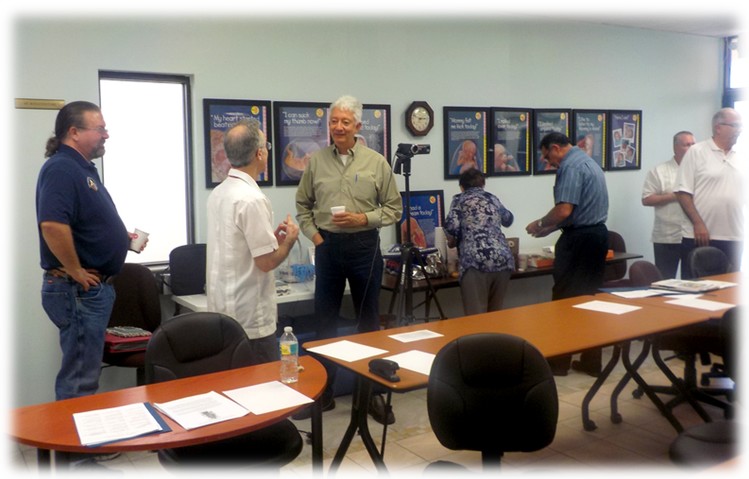
On April 29, the Franciscans of Life offered a workshop for men who want to become mentors of Project Joseph, the program for fathers facing an unwanted or unexpected pregnancy that we run in joint venture with Respect Life Ministry Archdiocese of Miami. We usually offer two such workshops a year.

This year we received much support. A number of parishes included notices in their bulletins (some even an entire bulletin page), the Archdiocese included the announcement on the Florida Catholic and on the Pastoral Bulletin, and the Knights of Columbus promoted it through the three Counties. In fact, we even had a Knight from St. Petersburg who heard about it and decided to come learn more about the idea of reaching out to men in crisis pregnancies and help them become better men, better fathers.

The 4-hour workshop was attended by the Project Joseph mentors and a number of other interested people, and it included an overview by the program founder and current director, our superior Br. Jay, as well as a review of the procedures and documentation involved for each client offered by Br. Bernardo. Br. Chris assisted in assembling the folders with the material for the participants and also in the making of a video recording of the workshop (currently in post-production). Br. Leo welcomed in the participants, many of whom were visiting for the first time the new South Broward (Hollywood) Pregnancy Help Center, which kindly hosted the workshop.

One of the attendants, Ed Suazo, a Knight of Columbus who has been a long-time supporter of Respect Life Ministry, is in the process of starting Project Joseph at the new South Dade Pregnancy Help Center, some 10 blocks south of the main campus of the ever-expanding FIU. We are very happy to have him on board as Project Joseph mentor!
 

“New Skills for Adults Room”

Towards the end of May, CollegeDirect, a tutoring center for which one of our brothers was working part-time, announced that it was closing its doors. The brother involved was discussing the matter with his superior while washing dishes after the morning meal when, suddenly, he was struck by an idea. He asked his Superior permission to discuss an inspiration he had suddenly received.

Our community has always been involved in education at several levels, both in the apostolate and in the secular sphere. Could this expertise be put at the service of the immigrant poor, with the intercession of the Immaculate and the support of a kind benefactor?

Our Superior addressed a letter to the Director of CollegeDirect, whose name happens to be Lourdes. In it, he described the concept of the “New Skills for Adults Room”, a very small project that the Franciscans of Life and some volunteers would run free of charge, to serve adults who are struggling with basic English, Math, and computer literacy. Upon completion of the program, they would have the basic skills needed to prepare a résumé, be ready for a job interview, and re-launch themselves in the workplace. We know from our daily interaction with the population of Miami-Dade and Broward as well as with the newly-arrived immigrants from Haiti, Latin America and the Caribbean, and Eurasia, that there is a great need for such a service.

We were hoping that CollegeDirect would donate a small part of their materials and assets towards the furnishing and startup of the “Room” (for it is our hope that the Immaculate will provide just one large room for us to run the program).

It turned out that Ms. Lourdes and the other parties involved in running CollegeDirect responded with the utmost kindness and generosity, providing us with a large donation of educational materials, a whiteboard, bookshelves, even some laptops and chairs, and they would have kindly donated more furniture except that we do not have the physical space to store the items!

As one of our brother continues to itemize everything we received from our kind benefactor and another brother prepares the Education Plan, we are very grateful to the Lord for the ushering of this wonderful little project and we now patiently await for the Immaculate to provide, whenever it be God’s will, the “Room” where our program will be able to help the immigrant poor and the refugee to “learn how to fish” in the vast ocean of a new country.


Prayer Days for Life and Jericho Walk

During the season of Lent, the Franciscans of Life individually prayed in front of abortuaries (places where abortion is performed). While in Broward a large number of vigils takes place before the Planned Parenthood abortuary in Pembroke Pines (also due to political reasons), the 40 Days for Life campaign focused on the abortuary in Hollywood, some 15 blocks east of the South Broward Respect Life Center, and the brothers focused on the relatively unknown abortuary of Miramar, “conveniently” located next to three fast-food stores, only some 10 blocks north-west of Saint Stephen parish. They also go to the other locations, but they focus on proclaiming the sanctity of life, offering support, and passing out literature of human development in the womb.

On one such occasion, one of our brothers noticed that the Center had locked its doors and was not letting clients in. The brother, who was holding a hand-made poster inviting people to reach out to him for support, took advantage of this window of opportunity to invite the clients standing by to go visit the nearby Respect Life Pregnancy Help Center. While some people ignored him and others called him a liar when he said we could help, brother kept making the point that they could always come back to the abortuary and they had nothing to lose in visiting the Pregnancy Help Center first.

The brother was about 100 feet away from the place, behind a railing, at the risk of falling into the canal running behind him, because the usual prayer spot is so far removed from the place that it offers virtually no chance of interacting with the clients. It turns out the brother was still too close… The abortuary, perhaps intimidated by brother’s imposing stature of 5 feet 5” and by his home-made poster board boldly stating in blue marker “WE CAN HELP YOU”, decided to lock down the center and call the police. Brother thought that as long as he kept behind the railing, he was not invading private property, but he was wrong. Two very kind officers approached brother and explained to him, with the help of digital imagery, that the lawful private property actually ended half-way inside the canal. That clarified why the prayer vigils were held on the other side of the canal! Brother apologized for his mistake and he was let go without any questioning, as he slowly tried not to embarrass himself by falling into the canal at the last moment. He is known to be clumsy.

After that, he moved to another abortion mill prayer spot where he could stand legitimately on the sidewalk about 15 feet from the entrance of the abortuary. He would offer fliers to the cars that stopped at the red light and to the people walking by. He even had a chance to interact with one of the staff members on lunch break. Brother, aware of the program run by pro-life advocate Abby Johnson to help clinic workers leave the abortion industry, spent the few seconds at his disposal to mention the program (abortionworker.com) and also to mention that he volunteers at a nearby pregnancy help center and distributes literature about human development in the womb. The worker was very kind and told brother: “I work there, but I wish more people would listen to you…”.

On another occasion, one of the brothers decided to simply read out loud the Letters of St. John and St. Paul in front of another abortion mill (relatively similar lawful distance). This time brother had a major surprise, as he interacted with a fellow pro-lifer who had come there with a sign as part as the 40 Days for Life campaign. During the short conversation, brother mentioned that he knew most people would ignore him, but that the Word of God is a seed planted, that gives fruit in due time, and that nobody knows if one of the clients of the abortion mill may, some thirty years down the road, realize the enormity of the evil of abortion and bitterly repent of her action carried out perhaps in the foolishness of youth and under the pressure of peers, parents, or partner. The fellow pro-lifer broke down in tears and “confessed” to brother that he was actually describing her – she had an abortion as a teenager and only decades later did she come to full knowledge of the Gospel of Life, repent of what she had done, and become a faithful Catholic and a dedicated supporter of the pro-life cause. Brother did not know what to say, other than to praise the Lord for His mercy and encourage her to continue on the journey of love and reparation that the Lord had led her on, in the certainty that He would bring to completion what He had begun.

After Lent, the brothers were involved in a number of other projects, but on June 11 they were invited to attend the “Jericho Walk”, a Eucharistic Procession sponsored by Respect Life Ministry and Nativity Catholic Church that involved walking seven times around the abortuary, peacefully and orderly, praying the Rosary while following the Most Blessed Sacrament and a statue of Our Lady.

Our superior Br. Jay insisted in attending the event, even though he has chronic pulmonary and cardiac conditions and has only left the wheelchair for a cane a few months ago. Pressured by the insistence of the brothers, he agreed to take a walker rather than the cane. He walked 30 blocks in total, without portable oxygen (nobody thought of picking up a portable tank on the way out of the motherhouse), and kindly refused a ride back from the abortuary to the Respect Life Center. The other brother that was with him was able to do a few more rounds and even to carry the wooden cross that followed behind the Blessed Sacrament and the statue of Our Lady.

Over a hundred people attended the march, which was very well organized, full of piety and reverence, rather than a crusade of self-appointed “warriors for life”. It seemed also that the political signs were absent, in favor of good old home-made signs that exalted the beauty of life and the help that was there for those who were in the often excruciating struggle of an unwanted or unplanned pregnancy. One sign, carried by a child ahead of the Most Blessed Sacrament, stole the brothers’ heart.

Other Events

You would think that three months would not be enough for more than what we have described, considering that the brothers spend most of their time in prayer and fraternity, and that they also work part-time as per the Testament or Last Will of Saint Francis. Yet, as one of the brothers always says, God made the time for more.

One of our pets, our little sister Tasha the Puggle, developed a worrisome cough and had to be taken to the vet and later tricked daily to take her medication (she is very smart and absolutely refused to take it unless it was wrapped in bread, cheese, pizza crust, or some other type of food, and she could not be easily fooled more than twice). Fortunately she is now fully recovered.

A video was produced for the short series “Musings of a Franciscan of Life” which offers a small window into the life of the brothers.

One of the brothers completed the Life in the Spirit seminar and was “baptized in the Holy Spirit”, as the Catholic Charismatic Renewal refers to the prayer service in which they pray that the Holy Spirit, received at Baptism and whose gifts were infused at Confirmation, would deign to stir the love of God in the heart of the participants and “renew their life” for the service of the Church.
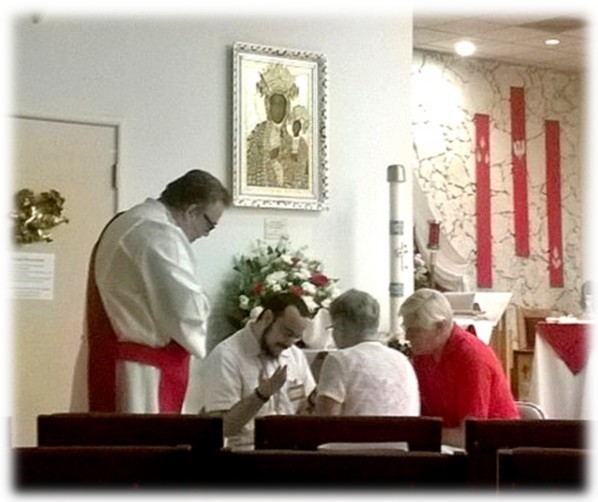
Br. Leo continues in his tireless work of prayer (he is our “prayer warrior”) while occasionally supporting the families of the hospice where he used to work. When Br. Bernardo’s father passed away, he came to serve at the funeral mass as cross-bearer even though the night before he had broken one of his toes and could only walk with great pain. He is an example of meekness and humility to the brothers.

The Extern brothers also kept busy, especially Br. Luis who recently welcomed his 10th child, Annamarie and has been supporting one of his daughters to start a pro-life group at her school, and Br. Chris, who besides all we mentioned above has also been helping in the training of a new Project Joseph mentor and other activities inherent to his role as Community Vicar. Our latest newcomer, Tom, worked hard on his formation as aspirant after a long period of discernment with the fraternity, and asked to be admitted as a Postulant. He is a kind, generous soul and, as Br. Bernardo loves to say, has a smile that lights up the room.


Coming Soon – Steps Forward in Formation

We would love to tell you all about Br. Tom and the others who are renewing their Solemn Promise or their Temporary Profession in May and June, but… we won’t 🙂 At least, not yet.

More on this, and on upcoming events, in a follow-up article: Steps Forward in Formation. Follow us on our blog (check the redesigned home page for the “Subscribe” button on the right-hand column), our Youtube channel, and our Facebook group!

Please keep us in your prayers to the Immaculate (would you say a Hail Mary for us every day?) and if you can, please see our latest post in which, in the tradition of St. Francis, realizing we could not make ends meet we are begging you for anything you can spare so we can keep going. We do not ask for much, as we do not need much. May the Lord reward you abundantly for your love.

We Need Your Help Again :)


CLICK TWICE ON THE LETTER BELOW TO ENLARGE

LINK TO DONATE

Published in: on June 10, 2017 at 11:17 PM  Comments (2)  

CANTEMOS AL AMOR


Kazimierowski_original_image_English_subtitleHay un himno clásico que dice, “Cantemos al amor de los amores . . . .”  En los momentos más difíciles de nuestra historia mundial y nuestra historia individual, estas palabras siempre han sido para mí palabras de gran aliento y ánimo.  En mi vida he perdido a seres queridos.  Algunos han muerto en tragedias, otros por edad, otros por enfermedad, y algunos por negligencia humana.  También he sufrido pérdidas económicas.

En una ocasión me encontraba viviendo y trabajando en un país de Suramérica donde ocurrió un golpe de estado.  Los extranjeros teníamos que salir del país cuanto antes posible.  Yo tenía una casa bien amueblada, dinero en el banco, recuerdos de muchos años: fotos, libros clásicos, documentos importantes.  Nada de eso podía sacar del país. Solo se nos permitía una maleta y una mochila por persona.  Si hubiese estado solo, quizás me hubiese quedado unos días más a ver como resultaban las cosas.  Pero no podía arriesgarlo. Mi hija se encontraba en otro país estudiando en la universidad.  Conmigo estaba mi hijo menor, que tenía doce años.  Sabía que tenía que salir hacia cualquier lugar donde mi niño y yo estaríamos a salvo y donde hubiera esperanza de volver a reunirnos con mi hija.

Es en este momento fue que Dios actuó en forma inesperada.  Cuando fui al cajero automático a retirar dinero para comprar los boletos en el aeropuerto, encontré que los bancos habían sido “congelados”.  No se podía retirar plata.  Llamé a uno de mis parientes mas proximos a pedirle que me ayudara, comprándome los boletos desde Estados Unidos.  Me respondió, “Eso no es asunto mío,” y comenzó a insultarme por mi “estupidez.”  “¿Quién te manda a servir a los pordioseros en un país del tercer mundo, pudiendo estar en Estados Unidos ganando buena plata y sin problemas políticos?”  No queriendo entrar en una discusión con él, simplemente le di las gracias y colgué el teléfono.

En ese momento, el diablo me tentó a la soberbia.  Me recordé cuando esa misma persona salió de la universidad sin trabajo, sin dinero y sin lugar donde vivir.  Durante seis meses vivió en mi casa.  Llegó el invierno y como no tenía un abrigo para el frío ni dinero para comprarlo, le compré uno como regalo de navidad.  Luego le di mi auto para que pudiera salir a entrevistas de trabajo.  Cuando me vinieron todas estas memorias, me di cuenta que no venían de Dios.  Dios no lleva contabilidad de las bendiciones que nos da.  Además, las bendiciones que Dios nos da son para el bien del prójimo.  En aquel entonces, el prójimo era él.  No podía negarle lo que Dios me había concedido para dar a otro cuando llegara el momento oportuno.

Sin pensarlo mucho, llamé a otro pariente proximo para pedirle ayuda.  Es un hombre adinerado.  Cuando le conté la situación y que tenía que salir del país urgentemente, me respondió, “Déjame pensarlo y yo te llamo.  El dinero que yo guardo es para mis hijos, no para darlo a otro.”   Yo sabía que esa avenida estaba cerrada.

Entonces me recordé de una buena amiga de muchos años.  Una viuda con dos hijas, que todavía vive en una casa humilde.  Me moría de pena, pero no me quedaba otro remedio que mendigar para salir de un país peligroso y sacar a mi hijo, aunque tuviera que dejar atrás miles de dólares en el banco y en propiedad.  No bien le conté mi situación a dicha amiga que me respondió, “No hay problema.  Ahora mismo llamo a la línea aérea y pago por teléfono con mi tarjeta de crédito.”

Al día siguiente, me encontré en un vuelo con destino a Miami, con mi niño de doce años que dormía con su cabeza apoyado de mí.  Por curiosidad, abrí su mochila y encontré un oso que su primo le regaló cuando cumplió un año y unos juegos de video.  Simplemente me sonreí, pues la Virgen protegió la inocencia de su niñez apesar de todo lo que estaba sucediendo.

En ese momento, mirando a las nubes sobre las cuales volábamos, escuche con los oídos de corazón, “Cantemos al amor de los amores.  Dios está aquí.”

La historia no termina ahí.  Al llegar a Miami, me recibió un pariente que yo había llamado para que me dejara pasar unos días en su casa en lo que encontraba trabajo y vivienda.  Cuando llegamos a la casa, nos asignó a dormir en un balcón encerrado, sin aire acondicionado…y a dormir en un sofá con mi hijo.  Así vivimos durante seis meses.  Cada noche, antes de dormir, el himno venía a mi mente.  “Cantemos al amor de los amores.  Dios está aquí.  Bendecid al Señor.”

Durante ese intervalo recibí una llamada de mi hermano.  “Mamá murió hace dos días.”  Me quedé atónito.  Era lo menos que esperaba.  Me encontraba sin techo, con un niño de doce años, sin trabajo y sin dinero, y ahora con la sorpresa que mi mamá había muerto.  Yo no tenía un centavo para comprar un pasaje y llegar a sus exequias.

Recuerdo haber acariciado el Tau (cruz franciscana en forma de la letra T).  Contacte’ un amigo que me presto el dinero para viajar al funeral de mi madre.  Por todo el camino, lo único que pasaba por mi mente era “Dios está Aquí.  Bendecid al Señor.”

Al fin conseguí empleo como profesor de ciencias en una escuela estatal.  La educación primaria no es mi especialidad, pero conozco las ciencias, así que pude enseñar el curso hasta encontrar un trabajo en mi campo.  Alquilamos una casita, que luego compramos.  Por un mes dormimos en el sofá que nuestro pariente no regaló, hasta cobrar mi primer mes y comprar camas para mi hijo y para mi.

Comparto todas estas cosas, no para que me tengan pena.  Al contrario, es mi gran deseo compartir con todo el que lea este blog que los golpes de la vida son golpes que Dios permite para purificar el alma.

Mientras más sufrimos en este mundo, con agradecimiento y sin ira y rebeldía, menos sufriremos nosotros y nuestros seres queridos en el Purgatorio.  Cada sufrimiento sirve para limpiarnos y purificar a nuestros seres queridos que están en el Purgatorio y dependen de nuestros sacrificios.  Nuestra rebeldía no les ayuda en nada.

Creo que es por eso que, a pesar de todos los momentos difíciles que he experimentado, tanto los que comparto aquí como los que no tengo tiempo para compartir, creo firmemente que no fueron casualidades.  Fueron oportunidades que Dios me dio para purificarme y para ayudar a purificar a las almas en el purgatorio.

Cuando se presentan estas oportunidades, no las debemos desperdiciar con ira y rebeldía.  Durante estos momentos Cristo Crucificado está muy cerca, permitiendo el sufrimiento y sosteniéndonos.  Aunque nos sentimos que nuestro corazón está rompiendose en pequeños pedacitos, nuestra alma es intocable y es afectada o por el pecado de rebeldía o por la gracia de la presencia de Dios… él es el amor de nuestros amores, y su presencia es nuestra verdadera posesión, no lo que hemos perdido o dejado atrás.  Todo eso le pertenece a Dios!

Cantemos al Amor de los Amores

¡cantemos al Señor!

Dios está aquí, venid adoradores…

¡Adoremos a Cristo Redentor!

POTPOURRI OF ALL THINGS POSSIBLE


Baptism In The Spirit

Last evening, I was privileged to attend the ritual called “Baptism In The Spirit” at St. Maximilian Kolbe Catholic Church in Pembroke Pines, Florida.  It was an amazing experience.

There are those who don’t know much about the Charismatic Movement and others who thinking they know denounce it as being “Protestant” or “pure drama.”  What I witnessed was far from Protestant, even High Protestant, and was very Catholic.  There was no charlatanry here.

The evening began with quiet prayer time while we listened to Gregorian Chant in the background.  The mood was “somber”, but not macabre.  Without a pause, the Holy Rosary followed the quiet prayer time.

Then came the clergy, the pastor and two deacons, wearing albs and stoles.  The pastor, Rev. Jeff McCormick, opened with prayer and reflection.  A reading from Luke’s account of the descent of the Holy Spirit upon the Apostles, from the Acts of the Apostles, chapter 2, followed.

I didn’t see any hysteria, shouting, rolling on the floor or levitation.  I saw more than 100 Catholic men and women, most of whom I have personally known for 15-years, quietly praying. 

The leaders placed a large basin of water and fresh towels at the front of the Church (not in the sanctuary). Rev. Mr. Scott Joiner, explained to the congregation that they were not receiving the sacraments of Baptism or Confirmation.  These they had already received, through which they received the Holy Spirit.  The purpose of reverently walking up to the front and placing one’s hands in the basin of water was a moment of recollection and thanksgiving for the presence of the Holy Spirit in our lives, effected in the Sacrament of Confirmation, which brings to fulfillment the journey of initiation into the Catholic Church that began at Baptism.

The congregation was encouraged to remain in prayer and to ask God to help each individual become aware of the presence of the indwelling Holy Spirit, aware of the gifts that we receive from the Holy Spirit and to ask God to help each person tap into whatever gift the Holy Spirit wants him or her to put at the service of the Church.

Rev. Mr. Scott Joiner

Rev. Mr. Pierre Douyon

Those who were to be “baptized in the Holy Spirit” were invited to come forward where the Rev. Mr. Scott Joiner and Rev. Mr. Pierre Douyon, signed them with the sign of the Holy Cross, reminding them of their Baptism and Confirmation, where they were welcomed into the Church and sealed with the Holy Spirit.  Now, they were being challenged to pray for the grace to tap into the gifts of the Holy Spirit and use whichever gift God wants to accentuate for the salvation of the individual’s soul and the good of the Church.

Finally, stations were set up in different parts of the Church.  Each candidate voluntarily approached a team who prayed with him and over him.  Some team members held the candidates hands, others place a hand on the candidate, and others simply prayed.  Any and all physical contact between the candidate and the team respected the candidate’s comfort level.  It was at this point where the Lord was asked to open the heart and mind of each candidate and to help him cast into the deep for the Gifts of the Holy Spirit already present in the soul through the sacraments.

Praying over Br. Bernardo

I saw flowing tears, bright smiles, faces that seemed relaxed and relieved of heavy burdens and other faces deep in silent contemplation.

A hymn and prayer followed the “Baptism”.  The evening concluded with everyone praising and thanking God for his love and mercy which endures forever.  Father Jeff gave the final blessing, which was followed by another song and lots of happy hugs and wishes for a goodnight.

Not only was I impressed by the depth of prayer that I witnessed, also how fully Catholic was the event.  I have never been to a prayer service at a Protestant community with Gregorian Chant, the Holy Rosary, and three validly ordained clerics, with a final blessing by a priest.

After the experience, one of our brothers, who had attended the six-week formation seminar that led to this beautiful and prayerful turning of the page, to begin a new chapter in the Christian journey, treated ourselves to a fish sandwich at McDonald’s while Brother explained his thoughts and experience.

While in prayer the Lord pointed out the areas in his life that need attention, confession, more prayer and thanksgiving for God’s many blessings.  St. Benedict would describe what Brother experienced as a plan for the “conversion of manners.”  Just to be clear, St. Benedict was not talking about Emily Post and etiquette, but the manner in which we live out our vocation.

I am grateful to God and the local Charismatic community.  I had been through “Baptism in the Holy Spirit” 23-years ago.  Last night reawakened my awareness of God’s proximity and the gifts that he places in our hearts, minds, and hands for the sanctification of the Body.

Symbol for St. John the Evangelist -- The Soaring Eagle

St. John the Evangelist — The Soaring Eagle

As John said in the last chapter of his Gospel, It is this disciple who testifies to these things and has written them, and we know that his testimony is true,” (Chap 21:24).

For whom are you looking?

Brother makes profession of vows in the hands of the superior

If you’re a man between the ages of 18 and 50, single, without dependent minors and feel that your life is missing something, maybe what you’re missing is COMMITMENT TO THE SACRED.

The Franciscans of Life have consecrated men who make vows of obedience, poverty and celibate chastity.  We live in a COVENANT RELATIONSHIP with the Voiceless Christ, in the manner prescribed by the Rule of St. Francis of Assisi.  All the brothers consecrate themselves to the Immaculate using the formula developed by our brother and patron, St. Maximilian Maria Kolbe, OFM Conv.

Cell

Our life is simple.  We own nothing.  We live in a borrowed home, share an old van, each brother has three sets of clothes, one pair of sandals and a pair of shoes.  No one has a private room.  We sleep in one room divided into cells by curtains.

Our Oratory

Each day the brothers pray five hours of the Divine Office, three of which they pray in community.  We have a period of silent prayer, spiritual reading, time to journal, and apostolic work with fathers in crisis pregnancies, the sick in the hospital, religious education, evangelization through the Internet, the terminally ill in hospice, and the immigrant poor.

Adoration of the Eucharist

The Sacrifice of the Mass is the highlight of our life of prayer and adoration of the Most Holy Eucharist.

We attend mass in both, the ordinary form of the Latin Rite and the Traditional Latin Mass.  Occasionally, we attend mass in one of the Eastern Catholic rites, in imitation of our Holy Father St. Francis, a truly Catholic man who embraced the entire Church.

Our life in fraternity is dear to us.  We are aware that St. Francis did not set out to found a religious order.  He entered into a covenant relationship where he was the lover and Christ the beloved.  Other men saw him and liking what they saw, they joined him.  Slowly, they formed a family, known today as the Franciscan Family, with more than 100 independent orders and congregations all living the Gospel according to the Rule of St. Francis, but with some differences according to the apostolic needs of time and place and the gifts that each Franciscan brings to the table.

If this sounds like a way of life for you, write to franciscansoflife@gmail.com or call 786-495-3426 and visit our web page, http:/franciscansoflife.org.

Help Needed

Single or married men (age 18 – 60) to open “a room” to provide educational services to the immigrant poor.  These services include, but are not limited to:

  • English,
  • using the computer,
  • mathematics for daily life,
  • resume writing and job application,
  • interviewing skills,
  • policies and procedures in community healthcare for low income individuals,
  • policies and procedures for enrollment of immigrant children in public schools,
  • and evangelization.

Spiritual Works of Mercy To Instruct and to counsel

This is not a school, and formal education program, nor a tutoring center.  It’s simply a space in the local community that we call “The Room”.  The Room is a special place where immigrant poor can go when they need to learn something important for their survival and integration.

It’s a God-given opportunity to share our Catholic faith with those who ask.

To help us create The Room, please write to us at franciscansoflife@gmail.com or call us a 786-495-3426.

If you own a large space (house or business) that is accessible by bus and would like to lend it to us, for free, the Immaculate will mediate many graces for you and your loved ones, especially a deceased relative or friend.

All things are possible, if you do whatever my Son tells you.

Greater than the Sum of the Parts


English     Castellano

The most commonly used weapon today is probably the most harmful to the user as well as the victim.  The weapon is “negativity.”

Modern man seems to have mastered the art of criticizing, insulting, and belittling, which is different from critique and constructive criticism.  He finds fault in whatever he does not like.  Truth be told, not everything that we dislike is flawed.  I hate asparagus; but that does not mean that there is something wrong with this vegetable or with its consumption.  I simply do not like its taste and texture.

In simple English, we need to tone it down when we disapprove of something.  To be pro-life is to be pro-person.  Every person is part of the whole, with his virtues and faults.

We who find fault in everything we dislike can land on a slippery moral slope and we don’t realize it.  We begin to sound like self-appointed judges, jury and executioners.  This is that last thing that any man or woman of faith should be.  Jesus said, “Let him who has no sin throw the first stone.”

Granted, criticizing another person’s pet, house, or dinner party is not on the same scale as passing judgment on one who may have committed adultery.  But the matter is serious, though not as serious as adultery.  There are two moral issues here:  justice and charity.  They are the opposite sides of the same coin and they are to be taken very seriously, because Jesus did so.

When we criticize, insult or offend without reason, we are violating justice. When we say something about a person, group, event, organization or even the State, without full knowledge, we violate justice and charity.  Paul reminds the Ephesians, “No foul language should come out of your mouths, but only such as is good for needed edification, that it may impart grace to those who hear, (4:29).

We tend to claim that life is flawed when things don’t go our way.  Even when the situation is not tragic or the situation is natural, like raining on a car that has just been washed.

Criticism becomes more serious when the person doing the criticizing lowers himself to using vulgarity and blasphemy.  Christ says it very clearly, “What goes into someone’s mouth does not defile them, but what comes out of their mouth, that is what defiles them,” (Matt 15:11).  We fall into this behavior very frequently.  When confronted about it, our immediate defense is to justify ourselves by punting the blame, “he made me do it,” or “she got me angry.”

Some people need to see and hear themselves on a DVD to know how they look and sound.  Most would be horrified.  Most human beings are decent people.  Many of these decent people have reckless tongues.  Thankfully, blasphemers and vulgar people do not make up much of any society.

A very reliable source once explained to me that in certain cultures, blasphemy is tolerated among adolescents as a sign of “manliness” or of approaching adulthood.  They take the name of the Lord in vain, they say vulgar things about the Holy Eucharist and the Virgin Mother of God.  Most of the time, these teens have no idea of the gravity involved here.  It does not change the fact that objectively they are committing mortal sin and that the adults around them have a moral duty to educated them on the Commandment, “You shall not invoke the name of the Lord, your God, in vain.  For the Lord will not leave unpunished anyone who invokes his name in vain,” (Ex 20:7).

We can’t go around speaking about God and other holy things as if God and neighbor were deaf.  Our neighbor may be deaf or daft, but God is neither.  Among the great religions of the world:  Christianity, Judaism and Islam, the name of God is sacred and some other names and titles are to be spoken with veneration, not anger, criticism, mockery or used to posture.  This begs the question.  Do we tolerate such inappropriate behavior because we fail to understand that culture should enhance human communication and respect for God and neighbor or is culture just about what’s “in” today?

Some of us have a nasty habit that needs to be controlled.  For some, it’s impossible to go a day without finding something wrong every hour on the hour for 24-hours.  Putting it mildly, we criticize, complain, insult, or curse something because we’re irritated.  Often, our irritation does not involve the target of our criticism or the target does not merit our criticism.

Some of us use negative comments to hide our feelings of inadequacy or to exalt ourselves.  Reckless criticism can be a very destructive form of pride.  It is so destructive that it pollutes the social environment in which we live and work.  If offends some and pushes away loved ones.

There are people who claim that they care not if others are offended.  This is a grave moral claim. St. Paul reminds the people of Corinth, Now you are Christ’s body, and individually parts of it,” (1Cor 12:27).  One must wonder if the person who cares very little about offending another is deflecting fault or truly does not care.  If he does not care, how does such a person explain being part of Christ’s body?

We must never forget that we are part of the body we criticize, that we condemn, that we curse, we disfigure with pride and judgment, that we humiliate with actions and words.  We must remember that the whole is greater than the sum of the parts.  The whole is Christ himself.


Mayor que la Suma de las Partes


English     Castellano

El arma mayormente usada hoy en día es probablemente la más dañina para ambos la víctima y quien la usa. Esa arma se llama “negatividad”.

El hombre moderno parece haber adquirido maestría en las artes de criticar, insultar, y empequeñecer al próximo, algo muy distinto de la crítica constructiva. Hallamos falta en todo lo que no nos gusta. En verdad, no todo lo que nos disgusta tiene defectos. Detesto comer espárragos; esto no significa que algo está mal con este vegetal o con su consumo. Simplemente no me gusta su sabor.

En Castellano sencillo: necesitamos suavizar el tono cuando no aprobamos de algo. Ser pro-vida es ser pro-persona. Toda persona es parte del todo, con sus virtudes y defectos.

Hallar falla en todo lo que nos suscita aversión nos pone en una situación resbaladiza sin que nos demos cuenta. De pronto nos parecemos juez, juria, y verdugo. Sin embargo, esto es lo último a lo que la persona de fe debería aspirar. Nuestro Señor Jesucristo dijo, “Que tire la primera piedra el que esté libre de pecado”.

Claro está que criticar el perro, la casa, o la cena de otra persona no está al mismo nivel que juzgar si alguien ha cometido adulterio. Sin embargo, la materia es grave – aunque no tan grave como lo del adulterio. Nos enfrentamos a dos situaciones morales: justicia y caridad. Son caras opuestas de una misma moneda, y deben de ser tomadas muy en serio, ya que así lo hizo y lo quiso, Nuestro Señor.

Cuando criticamos, insultamos, u ofendemos sin razón, fallamos en justicia. Cuando decimos algo sobre una persona, un grupo, un evento, una organización, o hasta el mismo Estado, sin tener pleno conocimiento, fallamos en justicia y en caridad. San Pablo le recuerda a los Efesios: “No salga de la boca de ustedes ninguna palabra mala, sino sólo la que sea buena para edificación, según la necesidad del momento, para que imparta gracia a los que escuchan” (4:12)

Nuestra tendencia es afirmar que la vida misma es problemática cuando las cosas no salen a nuestra manera – aun cuando la situación no sea trágica o hasta sea puramente natural, como la lluvia sobre el carro que acabamos de lavar.

La crítica se vuelve mucho más seria cuando el “criticón” se rebaja a utilizar vulgaridad y blasfemias. Nuestro Señor lo ha expresado con claridad: “no es lo que entra en la boca lo que contamina al hombre; sino lo que sale de la boca, eso es lo que contamina al hombre” (Mt 15:11).

¡Cuán frecuentemente caemos en este comportamiento! Y si alguien se atreve a comentarlo, cuán rápidamente nos justificamos con darle la culpa a otro: “él me enojó”, “ella me hizo…”.

Hay quienes deberían verse y oírse en DVD para de veras entender cómo actúan. Quedarían horrorizados. La mayoría de los seres humanos son personas decentes, pero muchos tienen lenguas inconsideradas. Gracias a Dios, los vulgares y blasfemos no constituyen sino que una pequeña parte de toda sociedad.

Una persona de confianza me explicó que en algunas culturas la blasfemia se tolera en los adolescentes como signo de “hombría” o pasaje a la edad adulta. Por esa razón toman el nombre del Señor en vano, dicen vulgaridades al respecto de la Santa Eucaristía y de la Virgen Madre de Dios, y no parecen tener ni la menor idea de la gravedad de la situación. Su ignorancia en este aspecto no cambia el hecho de que, objetivamente, caen en pecado mortal. Además, los adultos a su alrededor tienen el deber moral de educarlos en el Mandamiento: “No tomarás el nombre del Señor tu Dios en vano, porque el Señor no dejará sin castigo al que tome Su nombre en vano.” (Ex 20:7).

No podemos andar por ahí hablando de Dios y de lo sagrado como si Dios y el próximo estuviesen sordos. Las personas a nuestro alrededor puede que no oigan bien (y “no hay peor sordo de quien no quiere oír”), pero Dios no padece de sordera. En las religiones mayores (Cristianismo, Judaísmo, e Islam)  el nombre de Dios es sagrado y algún otro nombre o título ha de usarse al referirse a Él, y ha de usarse con veneración, no con rabia, criticismo, o burla. Esto conlleva a preguntarnos por qué toleramos tales comportamientos inapropiados. ¿Es que no entendemos que la cultura debe mejorar la comunicación humana y aumentar el respeto hacia Dios y el próximo? O ¿es que creemos que “cultura” es lo que es tendencia y moda hoy en día?

Varios entre nosotros tienen este desagradable vicio a controlar. Para algunos es virtualmente imposible transcurrir un día sin hallar falla cada hora de las 24 horas. Critican, se quejan, insultan, o maldicen porque están irritados. Para empeorar las cosas, su irritación muy frecuentemente nada tiene a que ver con el objeto de sus críticas, o dicho objeto no es merecedor de tales críticas.

Hay quienes usan comentarios negativos para ocultar sus sentimientos de insuficiencia o para exaltarse sobre medida. El criticismo desenfrenado puede ser una forma muy destructiva de orgullo – tan destructiva que hasta contamina el ambiente en el que vivimos y trabajamos. Ofende algunos y aleja a otros, particularmente a seres queridos.

Algunas personas no tienen vergüenza de afirmar que no les importa si los demás se ofenden. Esta afirmación es moralmente una falla muy grave. San Pablo le recuerda a los feligreses de Corintio: “Ahora ustedes son el cuerpo de Cristo, y cada uno individualmente un miembro de Él” (1Co 12:27). Hay que preguntarse si la persona a la que no le importa ofender al próximo de veras no le importa o acaso está desviando la culpa. Pues si no le importa, ¿cómo justifica esta persona su ser parte del cuerpo de Cristo?

No podemos olvidar que somos parte del cuerpo que criticamos, que condenamos, que maldecimos, que desfiguramos con nuestro orgullo y prejuicios, que humillamos en palabra y obra. Debemos recordar que el todo es mayor que la suma de las partes. El todo es Cristo.

Published in: on May 27, 2017 at 6:31 PM  Leave a Comment  

FRANCIS OF ASSISI, EVERYONE’S SAINT


 Essay written in 2011

by +Dr. Franco Camarca (1950-2017)

Psychologist, Writer, Journalist

Father of Brother Bernardo, FFV


“The Providence, which rules the world…

…two Princes ordained in its behalf”.

Dante, Paradiso

Saint Francis of Assisi is perhaps the most “universal” Italian saint. We defined him “everyone’s Saint” to underscore this peculiarity of his person: venerated by Catholics but respected even by Muslims, when he joined a Crusade to preach the Good News, and studied by the Protestants, of whom Peter Sabatier wrote in 1893 the “Life” that has become a classic of world literature.

Assisi presents itself as a city dominated by a castle and surrounded by towers, fortified walls, and other constructions that immediately bring war to mind. Francis, of wealthy merchant family, contributed to those constructions, probably to defend the city against Perugia in one of the many wars that characterized his time. Francis lived between the 1100s and the 1200s: a time of wars between Christians and Saracens, Empire and Church, city and city, for prestige and commercial predominance. In the war against Perugia he was made prisoner for two years, 1202-03, and he was also sick for a long time. Once healed, he threw himself into a new adventure, but at Spoleto he was stopped by a new illness and by a vision that invited him to follow the example of Jesus and “rebuild the Church”.

What was the situation of the Church in that epoch?

Let’s briefly say that there was a deep popular displeasure against the excesses of wealth and corruption that characterized the high clergy. Preachers in the public squares condemned all of it, reminding all of the simple life preached by the Gospel. In Italy in the XI and XII centuries many social movements were born which united politics and religion, since political freedom and religious purity were values deeply sought after by the people.

Thus Dante wrote in Canto XI of “Paradiso”:

The Providence, which rules the world…

…two Princes ordained in its behalf,

who should serve it as guides on either side.

 (Verses 28 & 35-36) 


The “guides” to whom Dante refers are Saint Francis and Saint Dominic. Three more centuries awaited the necessary Reform of the Council of Trent, and a number of historians agree that without those powers of new purity triggered by the Franciscan and Dominican movements the Church would have suffered very grave damages.

His first companions and biographers called Francis “the herald of Christ”, “the invincible knight”, and the said he was “armed with the weapons of Christ”. In another contemporary work, “Speculum perfectionis”, he is compared with his disciples to the Knights of the Round Table. And the spouse – “dominam”, as one of his biographers says – of such knight was poverty, who appears symbolically in classical vestments in the frescoes of the great Giotto.

The Order of friars minor, his Rule, was approved by pope Innocent III, who also gave them permission to preach. Before we expose our thoughts on the Saint let us briefly mention some biographical notes, referring to the historical data of Martignetti (Italian Encyclopedia). Returned to Assisi, Francis founded with Saint Clare the “second order of the poor clares” and then went to preach the Gospel amidst the Saracens. His followers grew fast, reaching the thousands, but the Saint went back to preach to Egypt, where he was honored by the Sultan, and in Palestine. Returned to Italy in 1220 and leaving the direction of the Order to Pietro Cattani and eventually to friar Elias, he prepared the “first Rule” (1221) and then dictated the text of the “Second [Third] Rule” that pope Honorius III approved in 1223. Continuing in an intense spiritual life which included preaching – which did not impeded him to ‘invent’ in 1222 the Crèche that became one of the most intimate representations of Christmas – he founded the “Third order of the penitents”.

We thus reach 1224, when in a spiritual retreat of fasting on mount la Verna he received the stigmata.

      Then we find his autograph writings, the “Laudes Dei” and the “Canticle of brother Sun” in which, according to authoritative reviewers, “the rigid Benedictine spirituality is overcome in favor of a new conception of Creation characterized by an exaltation of a sense of universal brotherhood”, and, we think, of a sort of mystical fusion with nature and thus with the omnipresent God.

The hymn begins with an invocation to God, followed by the sun “beautiful and radiant”, the moon and the stars “clear and precious and beautiful”; then the four elements: the earth, the water “useful and humble and precious and chaste”, the fire “beautiful and playful and robust and strong”, and the air.

Our Prezzolini, faculty of Columbia University, mentions that the adjectives applied by the Saint reveal a new interpretation of Nature and place it in a new relationship with Man. The hymn is not written in Latin but in the vulgate language of the people of Umbria, which for the first time assumes an artistic form, although preserving the simplicity and characteristics of the local dialect. The language is mixed with Latinized words; the verses do not have a regular metric yet there are many rhymes and assonances. The epilogue, according to Prezzolini, was added at the nearing of the Saint’s death in 1226, a death that Francis calls “sister”.

It is worth mentioning what Sapegno recalls in his History of literature: “It is certain that the hymn of grace, raised to the Creator by a beautiful world, admirable in its harmony and its ends, finds its roots not in an easy and superficial enthusiasm, but in the “labor pains” of ascesis and penance, from which the soul resurrects renewed, capable of contemplating the things and events of the earth with new, peaceful, and joyful eyes. The simple poetry of the Saint translates itself in the adjectives that accompany one step at a time the evocation of the creatures and they underscore the poetic aspect […] but the power and resonance of the hymn resides instead in the deep intimacy and novelty of the religious feeling that pervades it, outside and in a certain sense above pure poetry”.

The behavior of Saint Francis towards animals, with whom he spoke (like the wolf of Gubbio) opened a new field in painting: Giotto and his successors felt a great influence and even the architectonic structures of the churches of the Franciscan order displayed a new disposition of the altars, a new amplitude of the walls, a significant austerity in their entire edification.

Towards the end of his life, with a serious illness in his eyes, Francis returned to Assisi and asked to be taken to Saint Mary of the Angels, where lying on the bare ground he reached the Lord that he so much loved in 1226.

Saint Francis was canonized by Gregory IX in 1228. His feast in the Catholic Church is October 4th and Pope Pius XII proclaimed him, with Saint Catherine of Siena, “Patron of Italy”.

It is interesting to note that many centuries later the charm and personality of Saint Francis still live. His fame is worldwide. Saint Francis remains one of those figures of Western civilization without whom our history would not be complete.

The Franciscans are today, and we witness it by our personal and direct experience, an imperishable and daily example for all the orders.

The letting go of Saint Francis was in actuality acquisition of a superior freedom and his poverty was the acquisition of spiritual wealth, and Jesus rewarded him with the gift of the stigmata.

Published in: on May 9, 2017 at 3:09 AM  Comments Off on FRANCIS OF ASSISI, EVERYONE’S SAINT  

Divine Mercy Sunday – Remember Me


As we approach the Second Sunday of Easter, also known as Divine Mercy Sunday, it is important that we understand what the Lord Jesus meant when he spoke about mercy, in the Scriptures and to Sister Faustina.

There are some very conservative Catholics within the Traditionalist community who do not trust Sister Faustina’s visions and dialogue with Jesus.  At the other extreme, many Catholics focus solely on the humanitarian dimension of the Gospel and on the hot button issues of today; these Catholics have watered down God’s Mercy.  They have interpreted God’s mercy to mean the same as “good works”.  Neither group leaves room for God to be God.  God must do and speak according to a script as they conceive it.  In the end, both groups deny God’s freedom.

The extreme conservative asks for a reason behind Mercy Sunday.  After all, we have the Solemnity of the Sacred Heart.  The other extreme likes Divine Mercy Sunday, because it’s new and because it says what they want it to say about good works and it affirms their presumption of God’s forgiveness and mercy; so, they believe.

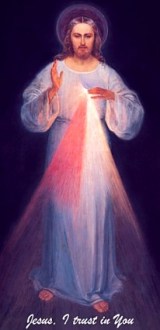
Original “Divine Mercy” painting prepared under the guidance of Sr. Faustina and her Spiritual Director

The truth is that God’s mercy is infinite and available to anyone who asks for it.  The infinity of God’s mercy should comfort us.  God’s mercy is infinitely greater than his creation.  Man is his crown jewel and we know that God is infinitely greater than man.  Sin is of man’s doing, not God’s doing.  Since it is man who sins, then man is superior to sin or greater than sin.  This greatness does not relieve him of his responsibility.  On the contrary, it points to man’s sinful will and his obligation to atone and ask for mercy.

God’s mercy is infinite.  Man is God’s creation.  God is infinitely greater than man.  Sin is man’s creation.  Man is greater than sin.  If God is infinitely greater than man, then he is infinitely greater than sin.  The only sin that God cannot forgive is the one that we believe surpasses God’s power to forgive.  Such a mindset places the supremacy of sin over the breadth and scope of God’s mercy.  Believing that this is the case, the sinner fails to confess his sin, express contrition and ask for forgiveness.

First painting of the Sacred Heart (1780, Batoni), disapproved by Congregation of Rites. The Sacred Heart was first depicted alone. The Congregation of Rites approved these for private devotion, but required the visible figure of the Heart represented externally on the breast of Our Lord for public exposition and veneration.

To benefit from God’s mercy, man must have something to offer in exchange.  He offers contrition and a resolve not to sin again. Some will say, “I know that I’m going to fall again.  I’m human,” or “I have an addiction to a certain sinful behavior.”  This is not the time to worry about this.  We must focus on the present moment and surrender ourselves to God as we are.  We are sinners.  We are contrite and willing to do penance.  We ask for absolution, particularly in the confessional.  From that moment, we are free of sin.

We must never live recklessly, but we must not live in fear of the “next time I sin.”  The more we worry about the next time, the more likely we are to fall sooner.  The enemy has a way of taking advantage of our fears and using them against us, to the point that what we believe to be moral caution is a temptation; because our minds are not free of a particular sin.  We must place ourselves in the hands of the Immaculate and go forward, doing whatever he asks us to do in the present moment.

Not only is God’s mercy infinite, but it is always available.  God never tires of forgiving us.  It is we who tire of begging for forgiveness.  Let us take the example of the “good thief”.  At the eleventh hour he said to Jesus, Remember me when you come into your Kingdom.”  The first two words say it all.  “Remember me”.  He believed in Christ’s mercy, even though he was about to die and no time to atone for his sins.

Painting of Christ and St. Dismas, the “Good Thief” – unknown author

Why does he request that Christ remember him?  Because deep in his heart he knows that Christ’s mercy is available for the asking, even when Christ himself was about to breathe his last dying breath.  Christ was on the cross to save the world, not to condemn it.  The Cross is the greatest sign of God’s mercy.

Only the perfect man can offer the perfect act of atonement for humanity’s sins.  Human parents could not conceive a perfect son.  However, God the Holy Spirit and Mary of Nazareth can and did do conceive such a perfect son.  He is Jesus Christ, the God-Man, the incarnation of the Second Person of the Most Holy Trinity.  Out of mercy, God becomes man.  From his side, he poured blood and water, his humanity and his divinity, poured out of mercy for us.  It was not for his benefit.  Who in human history, besides the Immaculate Conception, has no need to appeal to God’s mercy?

Divine Mercy Sunday is neither a feel-good day for our acts of charity and compassion for our neighbor; nor is it a replacement for the Solemnity of the Sacred Heart.  Mercy Sunday reminds us that we can trust Jesus, because he poured himself on the cross out of mercy for us and to prove the veracity of his sacrifice, he rose on the third day.  On Mercy Sunday, it is Jesus who speaks the words of the good thief, “Remember me.”  To which we respond, “Jesus I trust you.”

Depiction of the Sacred Heart attributed to St. Margaret Mary Alacoque (c. 1685).

Easter Wishes from the Brothers


The Franciscans of Life wish all our family, friends, and benefactors all the blessings that the Easter Season brings.  May the mother of the Risen Lord walk with us and increase in us the desire to atone for our sins and those who do not do penance and may she guide us to greater virtue so that we live with the Risen Christ through eternity.

Brother Bernardo’s Pizza Rush


MosDSCN0076t of the brothers remained in Florida for Holy Week.  Brother Bernardo and I flew to Virginia where we spend time with my daughter, son-in-law and my granddaughter, Katherine Marie Therese, who turned six-months during Holy Week.  We also had a fantastic opportunity to surprise Brother Bernardo, whose birthday it was on April 13, Holy Thursday. pizza_icon

Because it was the beginning of the Paschal Triduum, we kept the celebration simple and quiet.  Brother Bernardo’s favorite food is pizza.  Brother Jay’s daughter made sure that he was not disappointed.  She served him about nine bagel pizzas for breakfast, which he devoured.  For lunch, it was an individual DiGiorno pizza with rising crust.  In the evening, he was treated to not one, but two large pizzas with his favorite toppings and a musical card from Brother Jay’s family.

Brother Bernardo haCARAVAN 1s voluntarily stepped up to serve as Brother Superior’s caretaker and health monitor.  He can tell when Brother Superior’s diabetes is too low or too high by looking at him and quickly dispenses the correct amount of insulin.  He installed a railing on Father Superior’s bed after the superior fell twice during the night.  Brother Superior’s vision is failing and everyday his legs grow weaker.  He moves from a wheelchair, to a walker that Brother Bernardo purchased at a White Elephant Sale, to a cane with a cuff around the forearm.   When Brother Jay must go anywhere, Brother Bernardo drives him and his medical equipment in the community’s van.  This allows Brother Jay to run Project Joseph at the Archdiocesan level, give talks, teach religious education and work on his book.

None of this love and support has gone unnoticed by Brother Jay’s family.  Because Brother Bernardo has no nieces or nephews and has never been married, he does not have frequent interactions with infants.  Brother Jay’s granddaughter, who just turned six-months on the 15th of April, love Brother Bernardo.  katherine at easterShe breaks into a smile and reaches out to him as he approaches.  We won’t mention that Brother Bernardo is quite attached to Katherine.  He holds her, feeds her, rocks her to sleep and has even taken her on a short walk in her stroller.

Virginia_babyWe have many good reasons for being forever grateful to Brother Bernardo.  The least we could do was fly him to visit his beloved Katherine, feed him pizza for an entire day and formally incorporate him into the family.  Brother Jay’s family has adopted him.

We pray for Brother Bernardo, who is still in formation.  We ask the Immaculate, if it is her Son’s will, to walk with him to the end of his formation period, when he will make perpetual vows of obedience, poverty, chastity and fidelity to the Gospel of Life.

Prayers for Brother Leo

Our brother Leo has had health problems during most of 2016 and the first quarter of 2017.  He was unable to participate in the community’s Easter meal, because he is too ill to walk.  He’s under the care of

Br_Leo_nurse_san excellent physician and is properly cared for at home.  We pray that he will be up and running soon.  Brother Leo is one of those special souls who has a natural gift to bring peace, comfort and hope to the terminally ill and their families.  He has served in hospice ministry for more than a decade.  It’s an emotionally draining ministry.

Brother is a registered nurse and is also trained in Christian spirituality.  He brings medical and spiritual support to the bedside.  His greatest gift is listening.  Brother is always willing to listen to the concerns, fears and hope of the dying and their families.  His quiet and gentle manner communicates the Lord’s peace to people in terminal situations.  He also provides guidance when moral questions such as euthanasia, assisted suicide, and extraordinary means of life support arise.

Please join our prayer to the Immaculate that she will intercede for her son and our brother, Brother Leo, so that he can return to bring Christ’s comfort to those who are dying, their families and their healthcare providers.  Losing a patient is never easy for a doctor or nurse who is truly committed to preserving and respecting life from conception to natural death.

Project Joseph, Up and Running

On the 29th of April, we will have a workshop for all who volunteer to mentor our dads in crisis pregnancies.  We will also welcome and begin training new volunteers who wish to serve fathers who are struggling with unexpected and often unwanted pregnancies.  The brother bring light where there is darkness.  They provide education to help the dads become better dads.

BROS FORMATION

They also provide material assistance to poor moms and dads who come to our pregnancy centers.  This material assistance goes from things as simple, but important, as disposable diapers to cribs, stroller and every other contraption that modern parents need to keep their babies safe and occupied.  Don’t ask me what those contraptions are called, because I don’t know.  Lately, I have begun to feel very old when a five-year old helps me open a childproof bottle of pills.  CAN YOU BELIEVE THAT?  It’s supposed to be childproof but it takes a first-grader to help a 65-year old with several graduate degrees open a vial of pills.  Ugh, I’m aging faster than I thought!

Detachment

The Franciscans of Life don’t do much marketing for vocations, but I think it’s time that we invite men between 18 and 50 years of age to think about a life detached from the material cares of the world, totally dependent on God’s Divine Providence to support you and guide you, and a life attached to the Immaculate who always leads us to Christ in the Sacred Host for spiritual nutrition and contemplation.  The brotherhood is poor.  Every brother engages in some kind of part-time job over and beyond our apostolic commitments to eat and pay utilities, rent, food, healthcare.  We own nothing.  Like our father, St. Francis, we share all things in common and some things we simply don’t need; therefore, we don’t have them.

Our life of prayer is very rich.  The brothers engage in the ancient monastic tradition of praying the WP_20160130_004Divine Office five-times a day, quiet prayer and adoration, spiritual reading, mass, and service to the voiceless.


I promise you that we are very tired, but very happy building something beautiful for the Immaculate.  Like St. Maximilian Kolbe, we hope to present Christ a holy city where men, women and children live, work, study, play and sing confident that Christ is alive and very close.  This is not a physical city, but a spiritual city of people open to God’s embrace.

Single men between 18 and 50 are invited to come and discern if this is where they can best serve Christ, living and being one with, the voiceless and doing penance for those who have not entrusted themselves to God’s forgiveness and mercy.


At the Foot of the Cross with Our Mother


If we believe what we pray and we pray according to our belief, is it reasonable to imagine that at the hour of our death, or that of a loved one, Mary will remain silent?  Is it reasonable to think that she will not intercede for every soul as it leaves the body?  Is it even imaginable to think that she is far away from any of us?

Holy Mary,

Mother of God,

Pray for us, sinners,

NOW,

And at the hour of our death.

Amen!

The idea that the Mother of God would ignore our prayer for the soul of a loved one and for our own is irrational.

It is reasonable to feel the pain of loss that Mary felt watching her son die on the cross.  Who can watch a son or daughter die and not feel as if the heart is being ripped out of her?  “Many hearts will be revealed. And a sword will pierce your own soul” (Luke 2:35).

The Immaculate Mother of God was not spared the pain of loss.  However, she chose to hurt and trust at the same time.“Behold the handmaid of the Lord; be it done to me according to thy word,” (Luke 1:38).

The Sacred Scripture never says that the Blessed Virgin Mary didn’t suffer.

And seeing him, they wondered. And his mother said to him: Son, why hast thou done so to us? Behold your father and I have sought you with great anxiety” (Luke 2:48).

Feeling concern and anxiety for a loved one does not have to conflict with the Faith.  Suffering, for oneself or a loved one, is the most noble sign of our humanity.  Only the man who reaching his full stature as a human being can suffer for another and trust that Christ will always respond to his mother’s intercession.

“Then he went down with them and came to Nazareth, and was obedient to them (Luke 2:51).

 “When the wine gave out, the mother of Jesus said to him, ‘They have no wine.’ And Jesus said to her, ‘Woman, what concern is that to you and to me? My hour has not yet come.’

 His mother said to the servants, ‘Do whatever he tells you.’   Jesus said to them, ‘Fill the jars with water.’

 And they filled them up to the brim. He said to them, ‘Now draw some out, and take it to the chief steward.’ So, they took it. When the steward tasted the water that had become wine, and did not know where it came from (though the servants who had drawn the water knew),” (John 2:3-9).

With a single sentence, the Immaculate convinces her compassionate Son.

It is important to remember that the “reception” at a Jewish wedding lasted an entire week.  Mary intercedes when they have run out of wine.  They had been drinking for a while, maybe more than a day.

If the Immaculate can open the door to her son’s heart for people who were drinking, having fun, and probably not paying much attention to Him, we can rest in the certainty that she has the key to the Sacred Heart of Christ.  No one who asks her to “pray for us sinners” will be denied her intercession.  Our Lord Jesus Christ will always hear his mother’s prayers and do whatever is for the greater glory of his Father and the salvation of souls.

Those who have not spoken to the Immaculate in a very long time (or never) can always begin today.  She is the mother with the Immaculate Heart.  She forgives!  She understands human weakness.  She has seen man’s lack of faith for centuries.  And she has been a witness to man’s greatest acts of cruelty and injustice.  Despite this, Mary allows us to take her into our very human homes, as sinful as they may be.

She needed only the word from her Son to crush the head of the Serpent that haunts us all. From that moment forward, she remains in our home as Mother.

When Jesus saw his mother and the disciple whom he loved standing beside her, he said to his mother, ‘Woman, here is your son.’ Then he said to the disciple, ‘Here is your mother.’ And from that hour the disciple took her into his own home”(John 19:26-27).

The Immaculate Mother whom we contemplate at the foot of the Cross on Good Friday, is our Sorrowful Mother.  Her sorrow is caused by the sins that her Son must carry on his back and the penance that he must do purely out of love, not because he was guilty of any fault of his own.

There is a difference between a sorrowful mother and a pitiful mother.  The latter is one for whom we feel sorrow because she’s an imperfect and perhaps a mother who has not owned her maternity. Mary, on the other hand, is the mother who feels the pain of sin inflicted on her innocent Son.  She feels the weight of man’s sinfulness.  She experiences great sorrow, not for herself, but for the sinner redeemed by the suffering servant that she brought into the world.

There is no room in her Immaculate Heart for anything else than love, crushed by sorrow but never extinguished.  This makes it possible for her to enter our homes as Mother and mediate for us the graces that her Son earned through His most sorrowful Passion, till we reach that perfection of charity which is the perfect fulfillment of Our Lady’s one and only commandment: “Do whatever He tells you”. Let us make this our meditation as the Holy Week begins.


O Mary, conceived without sin,

pray for us that have recourse to you,

and for all those who do not have recourse to you,

especially the enemies of holy Church

and those recommended to you“.

-Prayer of the Knights of the Immaculate