Thinking about Lent and Penance


The Christmas Season ended a few weeks ago and we’re already for Lent.  Ash Wednesday is around the corner, the sixth March.

Birth of Jesus

It appears to us that the sacrifice of Christ on Calvary comes before his incarnation and birth at Christmas, at the end of the year.  But that’s not really the case at all.

The Church’s liturgical calendar begins with the first Sunday of Advent.  That is actually “New Years Day” on the liturgical calendar.  January 1st was adopted as the beginning of the New Year in 1752 when Pope Gregory XIII ratified the current calendar, which we call the Gregorian Calendar.

The first solemn Christocentric celebration occurs on December 25th when the Second Person the Most Holy Trinity breaks into human history as the child Jesus.  We celebrate Christmas with great joy and solemnity, because God has humbled himself to become human.

Lent follows the Christmas season on the liturgical calendar, beginning on Ash Wednesday.  It is a time of penitential preparation for the sacrifice of Christ on Good Friday and a time of expectation as we celebrate his resurrection on Easter Sunday.

Catholics have always sacrificed something during Lent.  Some people didn’t eat candy, others didn’t east dessert, many would not attend celebrations, carnivals and were not usually married during Lent. These things are good in the eyes of God.  God does not measure quantity, but the intent of the heart.

(c) Saul Loeb/AFP/Getty Images

However, if we look around us at today’s world, we have a lot of reasons to do penance for ourselves and those who don’t do penance.  We have had horrific scandals in the Church’s human element, because its divine character comes from Christ, not from man.  Christ is perfectly sinless.

Our country is split over politics and policies.  Everyday the back stabbing gets worse.  Terrorism has spread to Europe and North America.  Once upon a time it was contained in the Middle East.  That’s no longer the case.

People must abandon their homes out of fear.  They fear that they will be dragged out and killed.  While adults may feel strong enough to combat criminals, those who have children find it very difficult to do so.  What happens to my kid if I were killed in a resistant uprising?

A trailer park. (c) Caren Mack Photography

Poverty also triggers migration.  In the United States, poverty in some of our southern states is never mentioned, but it’s there.  People live in conditions not fit for human beings.  The people migrate to the coasts where they hope to find work and housing in the big cities.  Unfortunately, this is not always the case.  The same is true for people of many countries in Latin America, Africa, Asia, and the Middle East.  Families must emigrate from their homes because they don’t earn salaries to support themselves.
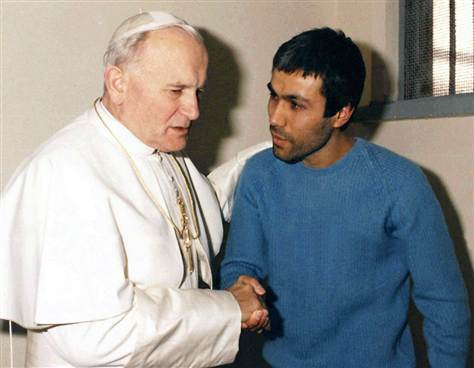
This leads to all kinds of problems in the host countries, from a shortage of resources to violence.  The violence is usually rooted in frustration, distrust, or simply there are individuals among the immigrants who have criminal history.  This cannot be avoided.  Every country, every race, every ethnic group has its fair share of criminals and delinquents.

The Franciscans of Life are encouraging all our relatives and friends to offer this Lent for a peaceful resolution to conflict and dishonesty in the world.  Will it happen?  Gabriel said to Mary, “Nothing is impossible for God.”  But let’s sacrifice something that really hurts, without doing damage to our mind or body.
Copyright: Franciscans of Life

Some suggestions for Lenten sacrifice:

1. Turn off the television or restrict its use to a specific time of the day without exceptions.

2. Turn off the game systems and computers.  If you can’t live 40 days without Facebook, try at least three days a week in honor of the Blessed Trinity.

3.  Stop smoking or drinking alcohol.  How many people die because of smoking cessation or because they reduced the amount of alcohol they put in their bodies?

4. Children and adolescents may pick up an extra chore around the house.  If one’s job is to take out the garbage and the parents must remind the young person to do his duty, taking out the garbage is not a Lenten sacrifice.  Taking out the garbage is justice.  It’s your contribution to family life.  Taking on an extra chore from Mom or Dad, is a sacrifice, even if it’s two days a week.

5.  Man has become an extension of his cell phone.  The cell phone is no longer used just for communication when you can’t get to a landline or a payphone.  It’s where people watch movies, play video games, use as time pieces, or status pieces.  There are people who pay their monthly visit to parents or grandparents via Skype.  We can reduce the use of the cell phone and limit it to communication.  It doesn’t have to be our diary, calendar, notebook, or library.  Any or all those applications can be sacrificed and offered in atonement for our sins and those of people who don’t to penance. 

6. For many people, healthy living is a penance:  going to bed early and rising early, going on a diet, engaging in physical activity, or sitting with your family for dinner, even though you know that the kids are going to bicker, complain, play, and do many things that we adults can’t imagine.  Using dinner time as a learning experience can be a healthy sacrifice. 

You may ask, “Why do penance for those who don’t do penance?”  The answer is simple.  What would have happened to our immortal souls if Christ had not offered his life for humanity?

Look at these suggestions and see if you can try one of them or come up with a penance that is truly a challenge for you.


Published in: on February 23, 2019 at 7:49 PM  Comments (1)  

ETHICS AND AUTOCRACY


There is much going on in our country and other countries which we must be aware of and keep in our prayers.

Abortion

Just this month, the State of New York passed the most extensive abortion law in the nation and the Commonwealth of Virginia is seeking to follow suit.  Under this new law, a pregnant mother living in the State of New York, and maybe soon, in the Commonwealth of Virginia, has the right to terminate the life of an unborn child up to the moment of labor.

Law makers and some healthcare professionals are justifying this new law, because it is useful if the life of the mother is in danger or the child is not viable.  There are two problems of justice here.

First the life of the mother is given preference over the life of her unborn child, about to be born.  We have two human beings and the law is choosing to save one and kill the other or let him be born and die.  This raises an important question.  What makes the life of the mother more important than the life of the child?  The answer is simple.  The possible death of the mother poses a grave loss to her and to her family.  But the child whose life is being terminated is also family.  Simply, he has yet to meet his living relatives.

The second issue of justice has to do with viability.  Allegedly, if a baby is not viable (capable of living outside the womb), he can be aborted.  There are two questions of justice here.  First, if mother and child were in a car accident and the child seemed to be a higher mortality risk, would anyone agree to terminate that child’s life and save the mother?  Would anyone agree to providing medical care for the mother, while forsaking the life of the child?  If you’re a conscientious person, you would probably answer “NO” to both questions.

A person who understands the right to life of every human being would insist that medical care be given to both mother and child to save both lives.  One may die while doctors try; but such a death is not provoked by the attending physician.  It is the result of the accident, illness, or other beyond human control.  No human being terminated that life.  In most places around the world, the physician would be in serious legal trouble, because he took one life and turned his back on that person for the sake of another.  An affirmative response to this question gives physicians the freedom to make godlike choices.  Does the physician have the moral authority to determine who lives?Image result for right to be born

In the case of a late term abortion, the mother and the physician are assigning, to themselves, authority that belongs only to God.  They are deciding that the child has no right to be born.  The international community and the constitution of many countries guarantees the right to life.  In this case, the law is saying that one has the right to life . . . but at what point:  just before birth or just after birth?  The right to life becomes arbitrary.

Euthanasia

Image result for euthanasia ethicsCall it assisted suicide, call it the right to die or any other name that sterilizes such an act.  The fact remains that living human beings are put to death at the discretion of other human beings, they do not die from causes beyond human control.

Children are euthanized because they have Down Syndrome.  People, young and old, are euthanized because suffer from depression and have lost all desire to live.  Terminally ill people and senior citizens are euthanized to avoid prolonged suffering.  The truth of the matter is that suffering is a normal part be life.  And supporting and comforting those who suffer is our moral duty.  No one, not even the person who is suffering, has the right to choose death if there are possible medical treatments that can save a life or give the person more time to be with loved ones.

In some countries, the state decides who is to be euthanized, because “it’s in the best interest of the citizen.”  Is it really in the best interest of the citizen to terminate his or her life, because they are sick, old, suffer a mental health problem or is naturally intellectually disabled?  The British courts said so when they denied the parents of a two-year old child permission to take the child out of the country to places that were offering medical assistance and hope.

What human being, be it a judge, a relative, a physician or other involved party has the natural authority to determine when one should die?  Where does society draw the line?  Is it OK to help a terminally ill person to die, but provide special services for one who is intellectually disabled or the other way around?

Is it right to draw a line on sickness?  How sick does one have to be that gives others authority to end our life or that of loved ones?

There are civil laws, but as the great philosophers of history have proven, there are natural laws that serve as the foundation of civil laws.  Human beings have the right to legislate when such legislation is consistent with natural law.  Who said that we have the right to circumvent natural law to terminate a life?

Someone may argue “is a kidney transplant natural?”  Is a prosthesis natural?  Neither are safeguarded by natural law; but neither are prohibited by natural law either.

Some states have passed laws that prohibit late-term abortion.  There are states that prohibit assisted suicide and euthanasia.  But the courts have determined that such laws are contrary to the right to choose.

We’re allowing the state the right of the individual to secure the rights of the majority.  But that’s not how morality and ethics work.  One must always choose the greater of two possible good, not what is acceptable to the majority.  The right to life is an unquestionable superior good.  If we make the right to life arbitrary, then all other rights granted to living beings are also relative.  There are no longer absolute rights.

We must pray for guidance for us, law makers and people in crisis situations.  We must also raise our voices to defend the right to be born and the right to live until death is unavoidable.  This includes accidents, wars, natural disasters, and crime.  The victim does not have the power to prevent his death or that of a loved one.  Such life terminating events happen very quickly and are not within our control.

Let us defend our collective right to vote on laws, rather than grant power to arbitrary persons who legislate the right to terminate human life at their discretion.   We have the right to be heard before those laws are ratified.  When the state appropriates citizen’s right to choose life, without the consent of the governed, it’s autocracy.

Related image

Published in: on February 20, 2019 at 8:29 PM  Leave a Comment  

Franciscans of Life Pray for a Moral Solution to Our Current National Crisis


256px-Luxembourgers_in_England-_Evacuees_in_Surrey,_1942_D11110Our country is going through a big political conflict that has serious moral concerns.  Eight hundred thousand government employees have been affected by the government shutdown.  We must remember that most of these 800,000 people are the main source of income for many families.  If we add immediate family members to the 800,000 workers, we’re talking about over one million people without a paycheck. 

          Among these people there are senior citizens and materially poor families who live in Section-8 housing; that is, housing that is subsidized by the government.  These subsidies come from the Federal Government and are contractual.  As the contracts reach maturity, the government and the landlord need to renew the contract.  For the contract to be renewed, there must be someone to negotiate and money to subsidize these families’ rent.  People in Section-8 housing are afraid of eviction, because they cannot afford the government’s share of the rent and there is no functioning government agency to fund new contracts.

          We are also facing some real dangers.  Many employees in the aviation industry are not being paid and some have been furloughed.  Those that must report to work are reported to be calling in sick.  Case in point, Miami International Airport had to close a terminal because airport authorities did not know if they would have enough TSA agents to staff check points.

          Likewise, the FDA cannot do a good job securing that our food and medication supply is safe for human consumption, because it too is affected by the shutdown and shortage of money to continue operating.

          Many people have taken to the media to point fingers at one party and that party points the finger at the first party.  The truth is that legislators have a MORAL OBLIGATION to protect the safety and interests of their citizens.  This may require a willingness to talk and reach some compromises in the best interest of the general public, not any political party or partisan plan.

          People who recognize the dignity of human life, at any stage and in any form, we must be concerned about issues such as safety, housing for the poor and senior citizens, and the families whose income has been cut short and are struggling to pay a mortgage or rent, not to mention money to pay for electricity and gas for heating during the current winter conditions in many states.

          It is also true that every nation has a right to protect its border and that immigrants have an obligation to comply with the laws of the receiving country.  It’s very easy to say, “Don’t build a wall and open up the government.”  But the truth is that there is more involved than opening the government or borders.  Many politicians seem to shy away from thinking outside the box for solutions, out of fear of losing the 2020 election.

          However, Jesus tells us, 34 ‘Then the King will say to those on his right, ‘Come, you who are blessed by my Father; take your inheritance, the kingdom prepared for you since the creation of the world. 35 For I was hungry and you gave me something to eat, I was thirsty and you gave me something to drink, I was a stranger and you invited me in, 36 I needed clothes and you clothed me, I was sick and you looked after me, I was in prison and you came to visit me.’” (Matt 25:34-36).

          It is necessary that people of faith, look at the current dilemma and try to see it as God sees it.  We must ask Our Lady to intercede as she did at the wedding feast in Cana and that she guides legislators from whatever party they belong to, “Do whatever he tells you.” (John 2:5).

          .  The debate concerning the border wall and the government shutdown stands on a moral slope that is very slippery.  Innocent people will suffer, while wealthy politicians argue back and forth, because they can pay their bills and support their families.  Let us raise our prayers to heaven for the necessary guidance to resolve this situation in a manner that is pleasing to God and just to man

Published in: on January 15, 2019 at 8:02 PM  Leave a Comment  

WHAT NEEDS TO BE ADDRESSED BY THE PRO-LIFE MOVEMENT?


This week, hundreds of thousands will be marching in many cities around the country in defense of life.  There are some important points to keep in mind these days.

First:  Abortion will not go away because people protest one day a year.  There must be a concerted effort on the part of all pro-life people to educate their neighbors and families on the issue.

Second:  Images of baby body parts are impressive, but they don’t tell the full story.  We must begin to tell the full story.  EVERY HUMAN BEING HAS THE RIGHT TO BE BORN GUARANTEED BY NATURAL LAW.  The fact that the Constitution does not cover the child in the womb, does not mean this child has no right to be born.  What it means is that the amendments and laws passed have been short-sighted and must offered protection to the pre-born person.

Third:  Christ said that certain demons could only be driven out by prayer and fasting.  We invite those who are interested to follow the Franciscans of Life in the matter.  We fast every Wednesday and Friday.   We abstain from meat on Fridays.  This is part of the sacrifice that we offer for the protection of life and the salvation of souls.

Fourth:  Abortion is not a religious issue.  It is an issue of justice.  Every woman has the right to medical care; but no one has the right to medical care at the expense of another person’s life.  The child in the womb has as much right to be in this world as do the parents.  Our struggle is not a struggle against abortion, but a struggle for justice for everyone from conception to natural death.

Fifth and final point:  There must be a national effort or campaign that promotes the right of men and women to be parents.  It seems that the argument against abortion is about a woman’s right to “medical care”, completely ignoring or even looking down on men and women who strongly believe that they have the right to conceive and parent a child.

Published in: on January 12, 2019 at 2:46 PM  Leave a Comment  

New Year’s Thought from the Franciscans of Life


The Franciscans of Life wish every one of our family, friends, and benefactors a Happy and Blessed New Year.

We want to remind everyone that January first is not only New Year’s Day in the western calendar, but it’s also a special solemnity in honor of Our Lady.  It’s the Solemnity of the Mother of God.  It is the only feast day that we celebrate honoring Our Lady’s “divine maternity”.

In a world where motherhood and childbearing are often viewed as a burden or an inconvenience, at the very least, Catholics remember that motherhood is a gift from Heaven.  God becomes man and is born into a human family.  Every one of us has existed in the mind of God the Father for all eternity.  This “divine thought” becomes a human being at conception.  God has seen us in His image and likeness since the beginning.

Let us pray that this year, humanity will awaken from the nightmare of abortion and euthanasia.  Pray that nations come to respect life, from the womb to the tomb, as a mystery that comes from God and is destined to return to God at a time according to His plan.

Topic shift:  the Franciscans of Life have completed our year-end review.  We planned our days, schedules and activities for this new year, to allow us more time for silence, solitude, prayer, penance, a fraternal life.  Like every human family, a community of consecrated persons, religious or lay, is called to live as a family that reflects the community of the Holy Trinity.

It is very easy to get caught up in the “to do’s” of everyday life, to the point where doing becomes man’s only source of satisfaction and enrichment.  Unfortunately, becoming or being is forgotten and replaced by doing.  We hope that others will join us in the quest to become people of deeper prayer, more sacrificial penance, and joyful members of families, parishes, and communities.


Finally, it is with great joy that we announce that Brother Bernardo will profess perpetual vows on January 7, 2019.  I [Br. Jay] will have the honor of receiving those vows in the name of our community.

Brother will vow to live in obedience to God, the Church, and the constitutions and superior of our community.  He will surrender the right to own property and will vow to live the rest of his life without property, money, or special distinctions.  He will vow to live celibate chastity until death, so that he may devote every moment of his life to Christ, the Immaculate, and the people of God.

Franciscans of Life also make a fourth vow: to proclaim the Gospel of Life to the voiceless.  We follow the example of St. Francis and his command to the first Franciscans, to live in peace with all men, to have a special place in our hearts and their mission for the poor, elderly, sick and abandoned.  The Gospel of Life demands in a special way that we treat all travelers and immigrants with respect and charity.  Please pray for Brother Bernardo and for the Franciscans of Life, that we may be faithful to the end.

    —>   

May the new year bring many blessings into your lives.  Let us pray that it will be a year where man moves closer to peace, deals more justly with other people, and detaches from excessive material goods to the detriment of his soul.


[click to see full-scale picture]

FRANCISCANS PREPARE FOR CHRISTMAS


The Franciscans of Life prepare for the Christmas celebration in several ways.  We hope that those who read this blog will be inspired to find their own way to prepare to celebrate Christmas.  Feel free to borrow from us.

The first step in preparation for Christmas is Reconciliation.

We acknowledge that we have sinned, that we have distanced ourselves from God by our thoughts, words and actions.  We approach the confessional with the same simplicity and humility as the peasant shepherds approached the newborn Messiah in the stable at Bethlehem.  We confess our sins, beg for forgiveness and kneel in adoration of a God who never denies us forgiveness, not matter what we may have done or failed to do, as long as we are truly sorry.

Second, we create an environment with periods of silence.

St. Joseph is our model.  As we read the account of Jesus’ birth, we notice that Joseph does not speak.  He contemplates the newborn Messiah and his Virgin Mother.  Like St. Joseph, we need periods of silence.  Periods of silence does not mean quietly working on the internet or some other project.  A period of silence involves total disconnection from the world around us.  These need not be long periods.  Several short periods during the day can be beneficial for those of us who are restless and can’t be quiet or still for an extended period.  Whether one chooses a long period of silence once a day or several shorter periods during the day, the important thing is to imitate St. Joseph.  We must reflect on the miracle of the incarnation and the nativity, reflect on how this event invites us to change the way we live, think and behave.  The Christ child invites us to draw from our innate desire to encounter God.

Third, order is necessary.

It is very difficult to experience internal silence, if we live in a disorganized environment.  Disorder can take the form of clutter and lack of order in our physical environment.  It can also be failure on our part to discipline ourselves: stop using profanity, find the good in every situation, give up skepticism and negativity, accept that we can’t change the world, the Church, our community or ourselves with the snap of a finger.  We must work at change.  Begin by harnessing anger.  Like the Wise men from the East who persevered following the star that led them to the Christ Child, we must continue to follow the star that leads to self-control and self-discipline, as that of the Wise men.  Order and internal silence are graces that we must actively pursue through concrete actions and insistently pray for the grace to move forward, even if it’s one step at a time.

Fourth, this is a time to reconnect with our families, communities, parish and colleagues.  We accept that nothing human is perfect, but we insist on finding the good in every situation.

Joseph was pressed for a solution when he could not find a place for Mary to deliver her firstborn and only son, Jesus Christ.  Yet he did the best he could.  He found a clean cave to serve as the delivery room for the

Birth of Jesus

Son of God and Son of Mary.  He did not express disappointment or frustration because the accommodations were less than

those at an inn or at the home of a relative.  On the contrary, he took what God had provided and made it the first tabernacle in history.  The cave housed the Son of God, body, blood, soul and divinity.  He and Mary welcomed the peasants and shepherds to their “tabernacle” under the rocks.

The birth of Christ proclaimed a new age, an age of redemption for all who were willing to believe and to join the community of believers in fraternity, without class, racial or gender distinctions.  The Holy Family in Bethlehem opened its doors to anyone who wanted to join them.  We too must be willing to open the doors that allow those who would normally be shunned or left out to join our family and with us, contemplate and serve the new born Son of God.  So, we reach out to family, friends, and others in a spirit of humility, acknowledging that it is not us whom others come to find, but the newborn King of Kings.

Prepare for Christmas:

  1. go to confession and do penance,
  2. seek out daily periods of silence,
  3. return order to your life, starting with your surroundings and continuing with your behaviors; and
  4. connect with family, friends, community members, fellow parishioners.  Reach out and welcome others into your spirit of Christmas.

A MERRY AND BLESSED CHRISTMAS TO OUR FRIENDS AND BENEFACTORS

Published in: on December 21, 2018 at 2:30 PM  Comments (1)  

What is the miracle of Christmas?


As I deal with more and more Catholics and other Christians in my ministry, I’ve noticed that many people see Jesus Christ either as “the Son of God”, but not God Himself or as God, but not the divine Second Person of the Trinity.

The Holy Scriptures, the apostles, and the early Church taught us that Jesus Christ is true man and true God.  He’s not one or the other.  Contrary to what some sects preach door to door, Jesus is not a “creature” superior to man, but subordinate to God.

“And the light shined in darkness, and the darkness did not comprehend it”

Jesus Christ is fully human and fully divine.  The early Christians called him the Homoousios, pronounced (oh-mow-oo-see-us).  In 325 the Council of Nicaea infallibly declared that Jesus Christ and God the Father are of the same substance (consubstantial).  God from God.

The Gospel of John presents us with this statement:  “In the beginning was the Word, and the Word was with God, and the Word was God.” (John 1:1)

John makes it clear that there is only one God, but there is a second person whom the Greek Christians referred to as the “Logos”, meaning the Word.  This Word is a person, not a set of consonants and vowels.  Notice that John refers to the Word as “Him”.

He was not created by God.  He always existed.  He became a human child born of the Virgin Mary.  But that is not the beginning of the Word of God.

“All things were made by him: and without HIM was nothing was made.” (John 1:3a)

If everything was made by Him and only what’s in his mind truly exists, then this Word is truly all powerful.  If the Word is all powerful, then it’s divine. Only God is divine.  The person who is truly God acted with another person who is also truly God.  Both are the one and only God, but not the same person.

In chapter John 14:6-7, Jesus says to his apostles: “If you had known me, you would without doubt have known my Father also. . . and from henceforth you shall know him, and you have seen him.”

When Philip asks Jesus to show them the Father and they will believe, Jesus responds: Have I been so long a time with you; and have you not known me? Philip, he who sees me sees the Father also.” (John 14:8-9).

We observe that Jesus is speaking in the first person, “ME” and about another person whom He refers to as “the Father.”  Where there is a Father, there is an offspring.  Jesus is the begotten Son of God, not the created son.

Jesus is making it very clear that he shares in the life of the Father.  That life is divine, because God’s is divine.  Therefore, Jesus is divine as well.  The Father has always existed, before time and will continue to exist after the end of time.  The Son, being the same God also existed eternally.  That’s what John points to “in the beginning was the Word.”  The Word existed before the beginning of everything.

Jesus tells them that we who see Him also see the Father.  John 10:30 drives home the point even further.  I and the Father are one.”   This takes us back to the first chapter of John’s Gospel.  “The Word was with God.  The Word was God.”  John’s prologue and Jesus’ statement to his apostles reaffirm the “oneness” of God, in more than one person.  “See ye that I alone am, and there is no other God besides me.” (Deuteronomy 32:39)

Jesus and the Father are one God, but two different persons.  But who did the apostles see?  They saw Jesus of Nazareth, son of the carpenter.

How does Jesus of Nazareth come to be?

“The angel Gabriel was sent from God into a city of Galilee, called Nazareth, to a virgin espoused to a man whose name was Joseph, of the house of David; and the virgin’s name was Mary.” (Luke 1:26)

“Behold thou shalt conceive in thy womb, and shalt bring forth a son; and thou shalt call his name Jesus.” (Luke 1:31).

Mary being a human being could only give her son, human nature, as any mother gives to her child from the moment of conception.

Nine months later, Joseph and Mary make the journey from Nazareth to Bethlehem, “and it came to pass, that when they were there, her days were accomplished, that she should be delivered.” (Luke

Birth of Jesus

2:6)

Mary gave birth to her son, a truly human baby who needed to be protected and cared for.  She named him Jesus, as the angel had said.

Thirty-years later, he is a man and who claims consistency with God the Father.  So we proclaim in the Creed, “Consubstantiatial with the Father”.

 Jesus is truly human, because he is the son of a human mother.  He is truly divine, because he is of the same substance as God the Father.  It’s important to understand that the human and the divine natures coexisted in the one person of Jesus Christ; but each nature remained truly human and truly divine.  The two natures do not blend like coffee and cream.  The union of the two natures is known as the hypostatic union, one person with two natures that are inseparable, but not blended.

Each nature retains its own attributes.  Jesus is the God-Man.  He is truly man and truly God.  We see this in his

The Crucifixion

passion.  He is executed like a common human criminal.  Three days later, he walks out of the tomb.  Something that no human being has ever done.

He is not an angel or another creature subordinate to God.  He is God.  Nor is he a creature superior to man.

He is man and; the Son of God, is himself God.  This is the miracle of Christmas.  Humanity and divinity enter the world in one person, to redeem humanity.

Published in: on December 11, 2018 at 2:20 PM  Comments (2)  

WHAT EVERY CATHOLIC MUST KNOW


December 8, 2018 Catholics celebrate the Solemnity of the Immaculate Conception.

The immaculate conception refers to the conception of Mary the mother of Jesus, even though Jesus was conceived without sin, his conception is celebrated March 25th during the Feast of the Incarnation or Feast of the Annunciation, depending on whether you’re in the Eastern or Western hemisphere.

From the early days of the Church, the Christian community held that Mary was conceived without Original Sin.  She was selected by God the Father, before the creation of the universe as we know it, to be the mother of the second person of the Holy Trinity, God the Son.  A conception that was to happen without human intervention, only by the power of the Holy Spirit.

For centuries theologians debated whether Mary was conceived without sin or was born without sin.

Conceived without original sin:  means that from the very moment that the egg and the sperm cell became a human being, this human being was free of original sin.

Born without original sin:  means that the fetus in the womb had original sin, but through an act of God, was cleansed of the stain of sin, before birth.

There were some biblical indicators that Mary was sinless.

And in the sixth month, the angel Gabriel was sent from God into a city of Galilee, called Nazareth,

To a virgin espoused to a man whose name was Joseph, of the house of David; and the virgin’s name was Mary.

And the angel being come in, said unto her: Hail, full of grace, the Lord is with thee: blessed art thou among women. (Luke 1:26-28)

Saint Luke and the first-generation Christians understood that one who is “full of grace” is filled with God’s life.  God’s life cannot share space with sin.  Gabriel confirms this when he tells Mary two things:  The Lord is with her and she is blessed among women.

Before Mary became pregnant with the child Jesus; God’s divine life filled her soul.  This does not make her divine.  Notice that we say, “God’s divine life”.

Secondly, Gabriel points out to Mary that she is “blessed among women”.  He is referring to every woman before Mary, during her life, and those women born in the future.  No one has been as blessed as Mary.

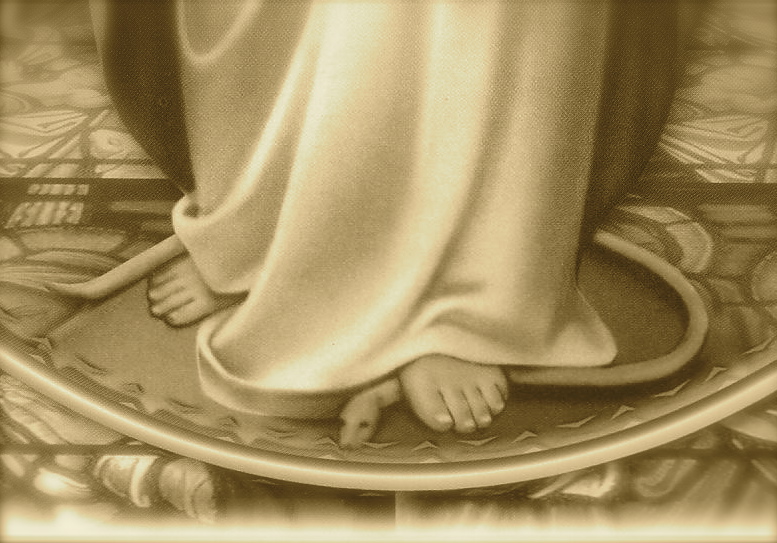
In Genesis 3:15 God speaks to Satan, represented by the serpent (snakes are not devils), he said,  I will put enmities between thee and the woman, and thy seed and her seed: she shall crush thy head, . . . “

By enmity it is understood that there was to be no interaction between “the woman” and Satan.  She was protected from the devil since time began.  When God sentences Adam and Eve, he predicts that there will be a woman whom Satan cannot touch, because there is a “buffer” of grace between the woman and the devil.  We understand this woman to be Mary.  Who else could be the enemy to “Satan’s seed” if it were not Jesus Christ, the seed of Mary?

Why would God create a woman who never had contact with sin, not even Original Sin?

Because she was the be his son’s mother.  Jesus is sinless.  Reason tells us that he would not be conceived in the womb of a woman who had any contact with sin, even if it was before she was born.  The womb that bore him who was to be the Unblemished Lamb had to be unblemished before he was conceived.  To prevent Mary’s womb from contamination with sin, she was conceived without Original Sin.

During the Middle Ages, a Franciscan scholar (Bl. John Scotus) pointed out:

God can do this.  It was appropriate that God do this, So, he did it.  Nothing is impossible for God.

Finally, in 1854, with the Bull Ineffabilis, Pope Pius IX solemnly proclaimed the dogma of the Immaculate Conception and put permanent closure on the discussion regarding Mary’s own conception and protection from Original Sin.

 “… We declare, pronounce and define that the doctrine which asserts that the Blessed Virgin Mary, from the first moment of her conception, by a singular grace and privilege of almighty God, and in view of the merits of Jesus Christ, Savior of the human race, was preserved free from every stain of original sin is a doctrine revealed by God and, for this reason, must be firmly and constantly believed by all the faithful”

Observe the words of Pope Pius IX:  declare, pronounce and define.  He is stating a fact, not a theological opinion.  He states that she was free of any stain of Original sin, “from the first moment of her conception.” 

Mary was not cleansed from Original Sin while in the womb.  She came into existence in the womb, free of Original Sin.  Christ’s sacrifice on the cross redeemed every man and woman before him, during his time, and those to come.  Christ redeems his mother before the soul enters the fertilized egg in Anne’s womb.

The Immaculate Conception is not an opinion or a theory, it is a fact that every Catholic must believe or you’re not Catholic.  At the time of our baptism, our parents swore that they believed everything that the Catholic Church teaches and believes.  They handed down their Catholic faith to us.  We cannot claim ignorance.

The Immaculate Conception of Mary is the Father’s gift to the Son, by the power of the Holy Spirit.

Published in: on December 3, 2018 at 5:06 PM  Comments (1)  

The “Right” to Kill?


What is the dictionary definition of euthanasia?

The word “euthanasia” used in a medical context refers to an easy, painless, happy death, during which it was a “physician’s responsibility to alleviate the ‘physical sufferings’ of the body.”

The ethical problem with this definition, from a non-religious point of view, is found in the word “happy”.

– Who guarantees that the person will be happier dead than alive?

– Even the patient cannot know what lies on the other side of death. He or she can’t choose a “happiness” that is not guaranteed.  It is unethical for one to desire that which conflicts with natural law.  Nature has a time and a means for each of us to die.  In choosing euthanasia we’re assuming greater authority over life and death than nature.  If humans can have greater authority over life and death than nature, how do we explain that human beings can reproduce naturally or with medical assistance, but cannot create life out of nothing?

– Reproduction technology such as in vitro fertilization (IVF) replicates nature. Therefore, the laws that govern life are built into nature, not man or his technology.

How many forms of euthanasia are there?

We can identify 3 types of euthanasia.

  1. voluntary euthanasia (euthanasia performed with the patient’s consent).

We cannot govern when and how we are conceived; how can we determine when and how we are to die?  Man is naturally oriented toward the greater good.  If he or she chooses euthanasia, it’s because he or she has become convinced that death is a greater good than life.  But why?

Mental health professionals will tell us that a person who commits suicide is unstable.  Is the person who allows another to kill him, emotionally stable?  What is the difference, between me holding the gun to my head and me handing to another person a lethal injection and passively allowing him to inject a deadly chemical into my blood stream?

People who are advanced in years, or very ill, may desire death. Usually, they don’t desire to be killed.  There’s a big difference between yearning for the end of suffering and paying a medical professional to end his suffering by killing him.  The emotional stability of those who give a medical professional the authority to kill them can, and should, be questioned.  Is this not abdicating one’s right to experience the human condition?  Is this truly choosing to end pain or feelings of neglect, or is it taking the quick way out, so a not to deal with pain or old age, especially if the senior feels abandoned by his loved ones?

If the older person feels that life is not worth living, there has be a process that led him or her to this conclusion.  What is that process?  Is this valid reasoning?  There are many false conclusions derived from false premises.  These constitute invalid reasoning.

Photo (C) Christian Marta-nez Kempin

Proclaiming Good News to the Poor


In 2009, a solitary Franciscan set out to serve families and individuals who struggle with abortion, euthanasia, assisted suicide, infanticide and capital punishment.  Most important we work for the salvation of soul and body.

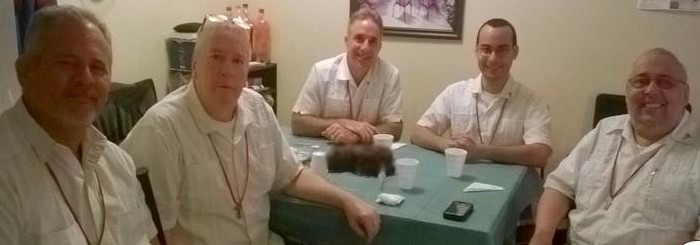
Today, there are six brothers.  Three are Regular Brothers and three are Extern Brothers.

The Regular Brothers make vows of chastity, poverty and obedience and a fourth vow, to proclaim the Gospel of Life.  The Extern brothers make a solemn promise, which they renew annually, to support pro life ministry, to live a life of prayer and penance, and to observe the Rule of Penitents, given to us by Saint Francis of Assisi in 1221.

The proclamation of the Gospel of Life demands that we appreciate every man, woman and child as a gift from God, in whom God resides.

The brothers run Project Joseph, for the Archdiocese of Miami Respect Life Ministry.  We are currently in four centers where we reach out to men who are considering abortion, who are too poor and are anxious about another mouth to feed, and men who are not aware that Christ loves every human being and will not leave us to struggle alone, though at times it may seem that way.

Our brothers teach the faith to children in religious education, where we present the Bible in the manner that St. Francis of Assisi taught it to his early brothers and friends.  One of our brothers is the community questor.  He teaches at a school for students whose needs cannot be met in the local public-school system.

His small stipend goes to paying rent, utilities, groceries, gasoline, car maintenance, medical bills and unexpected expenses.  The brothers try to be truly poor, not just appear to be poor.  Like St. Francis of Assisi, we leave behind family, jobs, careers, bank accounts, inheritance, friends and everything that draws us into the secular world, instead of drawing us closer to Christ.

To date, the Regular Brothers live in a room that is on loan to them by a family member.  The situation is crowded.  In return the brothers take care of housekeeping, cooking, laundry, and other household chores.  This allows them to pay a very small monthly rent of $325.00.

We pray that God will send us house where we can welcome new candidates who wish to serve the family, the terminally ill and the immigrant poor.  It would allow us to expand our ministry as the number of brothers grows.

We invite any Catholic man between 18 and 50 years of age to talk to us.  Maybe God is calling you to be one with the poor, as was Saint Francis and to proclaim the Gospel of Life through your works, teaching, community living and life of prayer.

“Life calls out to life.”

Contact us

franciscansoflife@gmail.com


Published in: on October 18, 2018 at 2:41 PM  Comments (1)